February 23 National Banana Bread Day: History, Recipes & Everything You Need to Know in 2026
- 0
- 14 Min Read
Last updated: February 23 , 2026
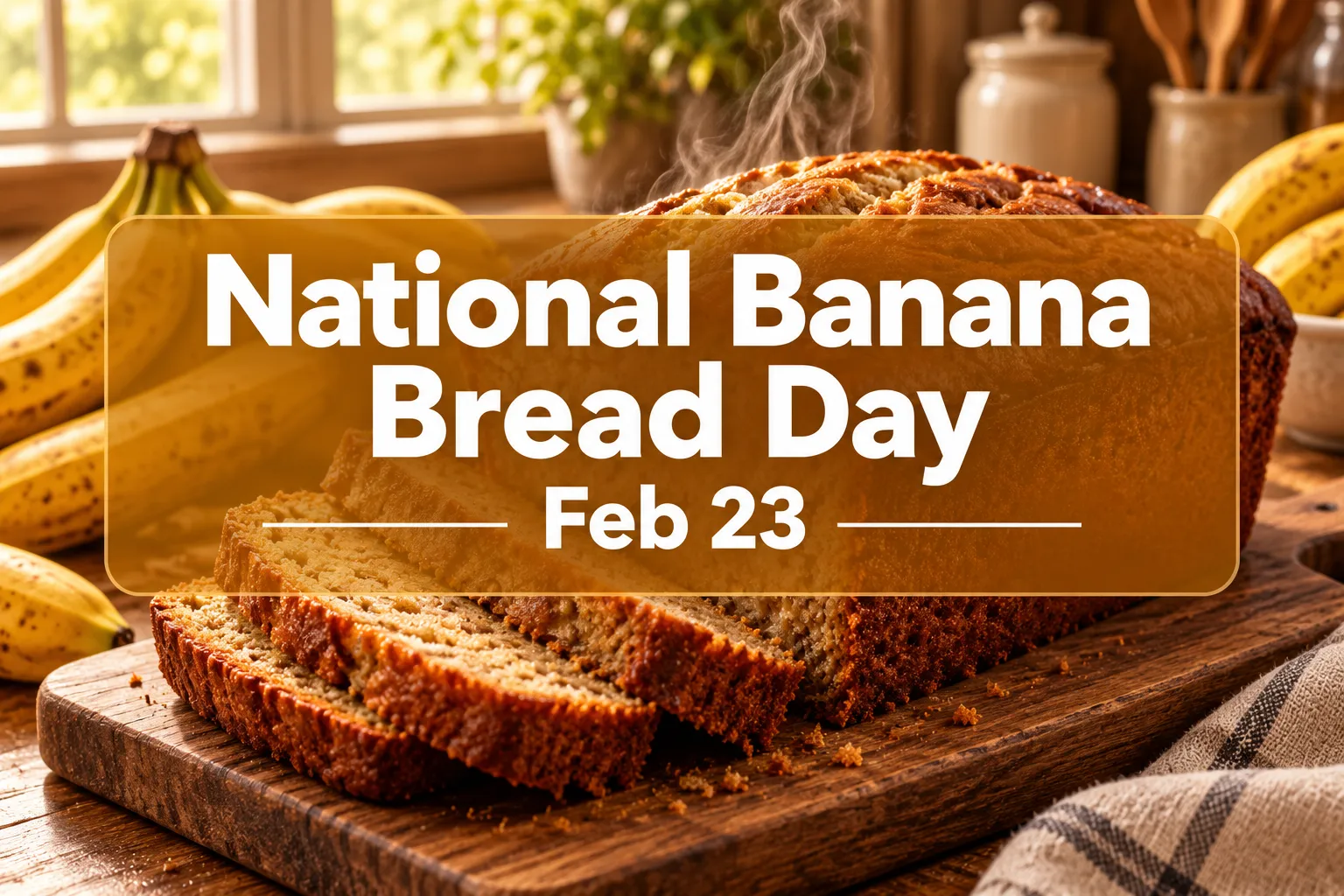
Quick Answer: February 23 National Banana Bread Day is an annual unofficial food holiday celebrated every February 23 in the United States. It honors one of America’s most beloved baked goods, a moist, sweet loaf made primarily from mashed ripe bananas. The day is not a federal or statutory observance, but it enjoys wide recognition across food communities, social media, and home kitchens nationwide. [2][6]
Key Takeaways
- February 23 is National Banana Bread Day, observed every year on this fixed date.
- The holiday is an unofficial food observance, not a government-recognized day.
- Overripe, heavily spotted bananas produce the sweetest, most flavorful banana bread.
- Banana bread differs from banana cake mainly in its denser crumb and lower sugar content.
- The most common baking mistake is overmixing the batter, which causes a dense, gummy loaf.
- Properly stored banana bread lasts 3 to 4 days at room temperature, up to 1 week refrigerated, and up to 3 months frozen.
- Gluten-free banana bread is achievable using almond flour or a certified gluten-free all-purpose flour blend.
- The day is widely shared on social media with #NationalBananaBreadDay and similar hashtags. [3]
What Is National Banana Bread Day?
National Banana Bread Day is an unofficial annual food holiday dedicated to celebrating banana bread in all its forms. It gives home bakers, food lovers, and social media communities a reason to bake, share, and enjoy this classic American quick bread. [6]
The day is not registered with any government body. Instead, it belongs to the growing tradition of informal food observances that spotlight beloved dishes and encourage people to cook at home. Similar celebrations include National Carrot Cake Day on February 3 and National Chocolate Fondue Day on February 5, which also draw enthusiastic participation without formal recognition.
What makes this day stand out: Banana bread has a uniquely democratic appeal. It requires no special equipment, uses ingredients most households already have, and solves the common problem of overripe bananas that would otherwise go to waste.
When Is National Banana Bread Day Celebrated?
National Banana Bread Day falls on February 23 every year without exception. It does not shift to the nearest Monday or float within a week. [2][4]
In 2026, February 23 falls on a Monday, making it a convenient start-of-week baking occasion. The holiday appears on major food calendar platforms and is confirmed for observance in 2026 and beyond through at least 2031. [4][5]
“February 23 is the fixed, permanent date for this celebration, no adjustments for weekends or leap years.”
Where Did Banana Bread Day Originate?
The precise origin of February 23 National Banana Bread Day is not attributed to a single individual or organization. Like many informal food holidays, it emerged organically from internet food culture and was gradually picked up by holiday calendar sites and food bloggers. [2][6]
What is documented is the broader history of banana bread itself. Banana bread recipes began appearing in American cookbooks in the 1930s, coinciding with the commercial availability of baking powder and baking soda. The economic pressures of the Great Depression encouraged home cooks to use every ingredient, including overripe bananas, which helped popularize the recipe. [6]
The holiday’s growth mirrors the rise of social media food culture in the 2010s, when food observances gained traction as shareable content. By the mid-2020s, February 23 was firmly established on major food holiday calendars. [4][5]
Why Is February 23 Banana Bread Day?
No single historical event ties banana bread specifically to February 23. The date was likely chosen and popularized by an early food holiday calendar or blogger, then reinforced through repetition across platforms until it became the accepted standard. [2][4]
This pattern is common across food holidays. The date itself is less important than the community consensus that has formed around it. Today, February 23 National Banana Bread Day is recognized by multiple independent food holiday databases, confirming its status as the canonical date. [5][6]
What Bananas Are Best for Banana Bread?
The best bananas for banana bread are heavily overripe bananas, ones with peels that are mostly or entirely black or deep brown. At this stage, the fruit’s starches have converted to sugars, producing maximum sweetness and a stronger banana flavor in the finished loaf.
Banana ripeness guide:
| Peel Color | Ripeness Stage | Suitability for Banana Bread |
|---|---|---|
| Yellow, no spots | Underripe | Poor, too starchy, low sweetness |
| Yellow with light spots | Ripe | Acceptable, mild flavor |
| Brown-spotted, soft | Overripe | Good, sweet and flavorful |
| Mostly black, very soft | Very overripe | Best, maximum sweetness and aroma |
Quick tip: If bananas are not ripe enough, place unpeeled bananas on a baking sheet and bake at 300°F (150°C) for 15 to 20 minutes until the skins turn black. Let them cool before using. This accelerates the ripening process without sacrificing flavor.
For more baking inspiration around this time of year, the February 10 Cream Cheese Brownie Day guide covers another crowd-pleasing bake worth adding to the February calendar.
Best Banana Bread Recipe for February 23 National Banana Bread Day
This classic recipe produces a moist, flavorful loaf with a golden crust. It serves as the foundation for countless variations.
Ingredients (makes one 9×5-inch loaf):
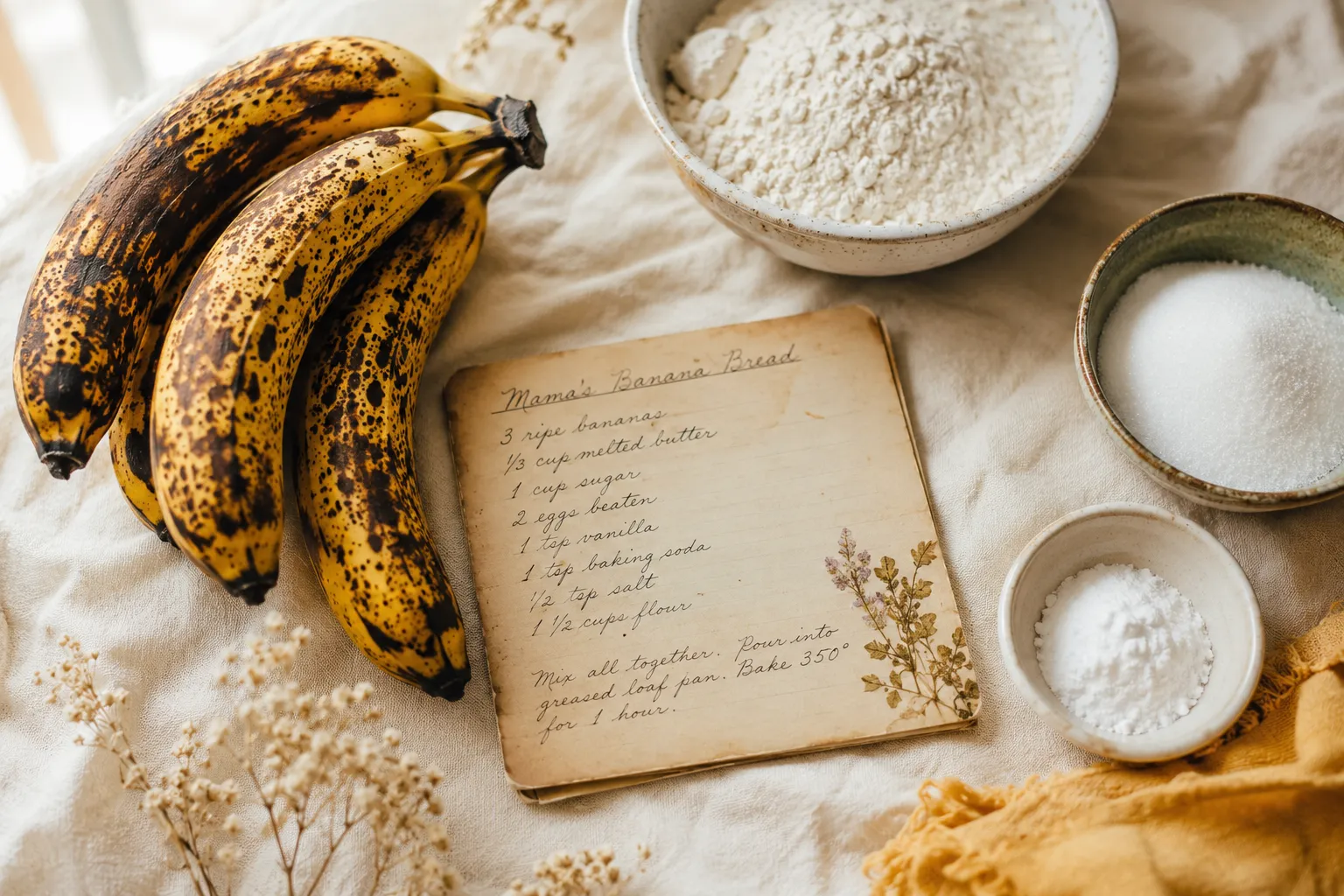
- 3 very ripe bananas, mashed (about 1.5 cups)
- 1/3 cup melted unsalted butter
- 3/4 cup granulated sugar (reduce to 1/2 cup for less sweetness)
- 1 large egg, beaten
- 1 teaspoon pure vanilla extract
- 1 teaspoon baking soda
- Pinch of salt
- 1 1/2 cups all-purpose flour
How to make banana bread from scratch:
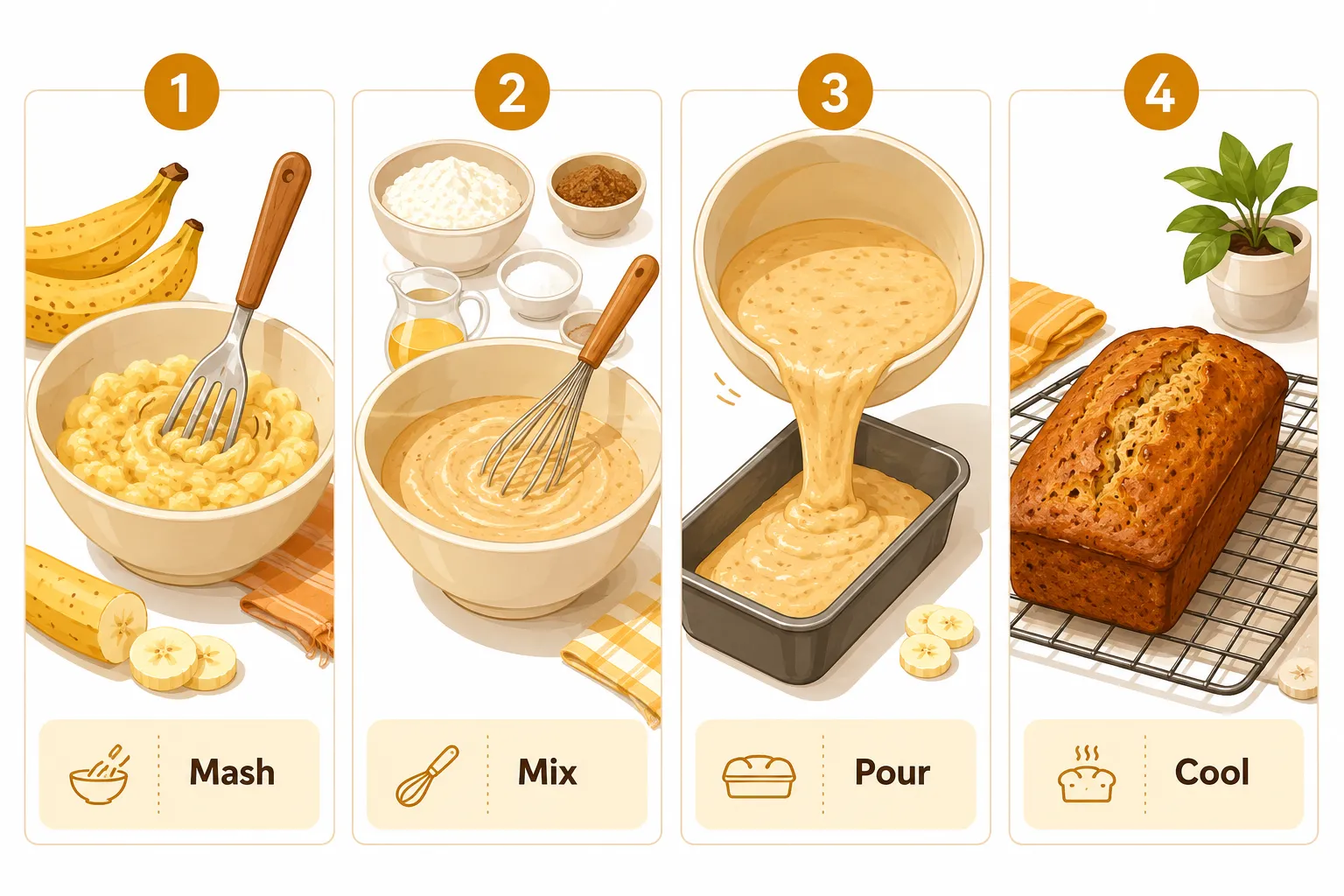
- Preheat the oven to 350°F (175°C). Grease a 9×5-inch loaf pan.
- Mash the bananas thoroughly in a large mixing bowl until almost no lumps remain.
- Stir in the melted butter until combined.
- Add the sugar, beaten egg, and vanilla extract. Mix until just incorporated.
- Sprinkle in the baking soda and salt. Stir briefly.
- Add the flour all at once. Fold gently with a spatula until no dry flour streaks remain. Do not overmix.
- Pour the batter into the prepared loaf pan.
- Bake for 55 to 65 minutes, or until a toothpick inserted in the center comes out clean.
- Cool in the pan for 10 minutes, then transfer to a wire rack.
Banana bread without nuts: Simply omit walnuts or pecans from any recipe. The loaf bakes identically. For added texture without nuts, fold in 1/2 cup of chocolate chips or dried fruit instead.
For those who enjoy exploring banana-forward recipes beyond the classic loaf, the banana cookbook collection at stillcooking.com offers a wide range of ideas.
Banana Bread vs Banana Cake: What Is the Difference?
Banana bread and banana cake share similar ingredients but differ in texture, sugar content, and how they are served. Banana bread is a quick bread, denser, less sweet, and typically baked in a loaf pan without frosting. Banana cake is lighter, airier, sweeter, and usually finished with cream cheese or buttercream frosting.
Key differences at a glance:
- Fat content: Banana cake uses more butter or oil and sometimes sour cream to create a tender crumb.
- Sugar: Banana cake recipes typically call for 25 to 50 percent more sugar than banana bread.
- Leavening: Banana cake often uses both baking powder and baking soda for a higher rise.
- Serving: Banana bread is sliced and served plain or with butter. Banana cake is layered and frosted.
Choose banana bread if you want a quick, low-fuss bake that doubles as breakfast or a snack. Choose banana cake if you are baking for a celebration and want a dessert presentation.
Gluten-Free Banana Bread Options
Gluten-free banana bread is entirely achievable and produces excellent results with the right flour substitutes. The natural moisture from bananas helps compensate for the structural differences in gluten-free flours.
Best gluten-free flour options:
- Certified gluten-free all-purpose flour blend (such as Bob’s Red Mill 1-to-1): Substitute cup for cup. This is the easiest swap.
- Almond flour: Produces a denser, moister loaf with a slightly nutty flavor. Use 2 cups almond flour in place of 1.5 cups all-purpose flour and add an extra egg for binding.
- Oat flour (certified gluten-free): Lighter texture, mild flavor. Works well as a 1-to-1 substitute.
Important note: Always verify that baking soda, vanilla extract, and any mix-ins are certified gluten-free if baking for someone with celiac disease or a serious gluten intolerance.
Common Banana Bread Mistakes to Avoid
The most common banana bread mistake is overmixing the batter after adding the flour, which develops gluten and results in a tough, dense loaf. Other frequent errors include using underripe bananas, incorrect oven temperature, and removing the bread too early.
Mistakes and fixes:
- Overmixing: Fold the flour in gently with a spatula. Stop as soon as no dry streaks remain.
- Underripe bananas: Use bananas with heavily spotted or black peels for the best flavor.
- Wrong pan size: A pan that is too large spreads the batter thin and produces a flat loaf. Stick to a 9×5-inch pan.
- Oven too hot: High heat causes the outside to set before the center cooks through. Bake at 350°F and test with a toothpick.
- Skipping the cooling step: Cutting into the loaf while hot causes it to appear gummy. Wait at least 20 minutes after removing from the oven.
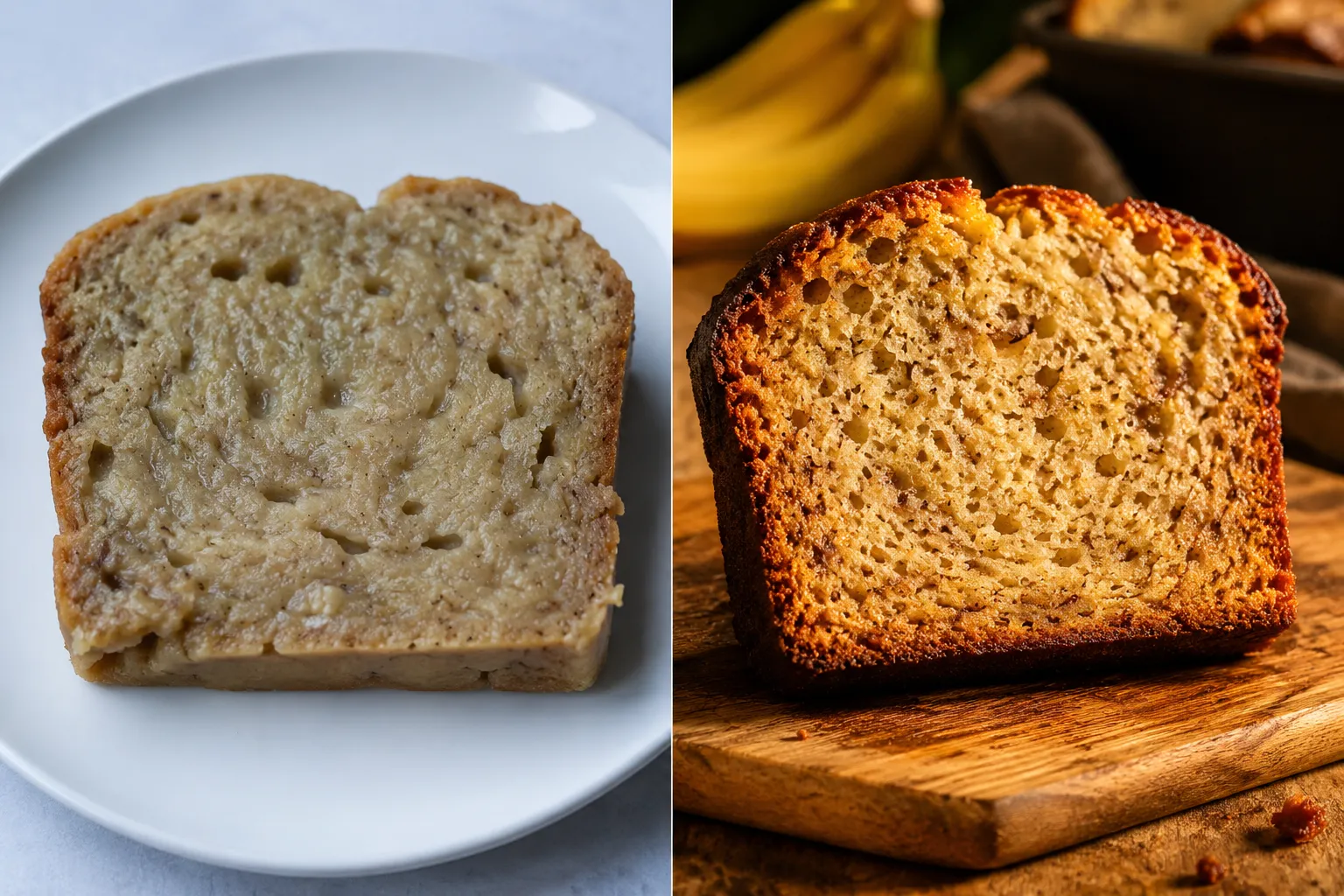
Banana Bread Troubleshooting: Why Is It Dense?
A dense banana bread is almost always caused by one of three problems: overmixing the batter, too much banana, or underbaking. Each issue has a straightforward fix.
- Overmixing: Develops excess gluten, creating a chewy, brick-like texture. Mix only until the flour disappears.
- Too much banana: More than 1.5 cups of mashed banana adds excess moisture and weight. Measure carefully.
- Underbaking: The center remains wet and collapses as it cools. Test with a toothpick inserted in the thickest part, it should come out with only a few moist crumbs, not wet batter.
- Old leavening agents: Baking soda loses potency over time. Test it by dropping a teaspoon into hot water, it should bubble vigorously. Replace if it does not.
Can You Freeze Banana Bread?
Yes, banana bread freezes exceptionally well and retains quality for up to 3 months when properly wrapped. This makes it one of the most practical baked goods to prepare in advance for February 23 National Banana Bread Day or any occasion.
How to freeze banana bread:
- Allow the loaf to cool completely, at least 1 hour at room temperature.
- Wrap the whole loaf or individual slices tightly in plastic wrap, pressing out any air.
- Place the wrapped bread in a zip-top freezer bag or airtight container.
- Label with the date and freeze for up to 3 months.
To thaw: Leave wrapped slices at room temperature for 1 to 2 hours, or microwave individual slices for 20 to 30 seconds.
Tip: Freezing slices individually is more practical than freezing a whole loaf, since you can thaw exactly what you need without defrosting the entire batch.
How Long Does Homemade Banana Bread Last?
Homemade banana bread lasts 3 to 4 days at room temperature, up to 1 week in the refrigerator, and up to 3 months in the freezer. Storage method and wrapping quality are the main factors that affect shelf life.
- Room temperature: Wrap tightly in plastic wrap or store in an airtight container. Avoid the refrigerator if consuming within 3 days, as refrigeration can dry the bread out.
- Refrigerator: Wrap well to prevent moisture loss. The cold environment extends freshness but slightly firms the texture.
- Freezer: Best for long-term storage. Properly frozen banana bread tastes nearly identical to fresh after thawing.
Signs of spoilage: Visible mold, an off smell, or a slimy texture mean the bread should be discarded regardless of the date.
How to Celebrate February 23 National Banana Bread Day in 2026
February 23 National Banana Bread Day is best celebrated by baking, sharing, and connecting with others over a common love of this simple, satisfying loaf. [5][6]
Practical ways to mark the day:
- Bake a loaf from scratch using the recipe above and share it with neighbors, coworkers, or family.
- Try a variation: Chocolate chip banana bread, peanut butter swirl banana bread, or a streusel-topped version all build on the classic base.
- Share on social media using #NationalBananaBreadDay to join the broader community conversation. [3]
- Host a bake-off: Challenge friends or family members to each bake a version and compare results.
- Donate: Bake extra loaves for a local food bank, community center, or neighbor.
February is a rich month for food holidays. If baking is a regular activity, the February 8 National Molasses Bar Day guide and the National Chocolate Cake Day guide for January 27 offer additional inspiration for the season. For those who enjoy exploring the full spectrum of baking, the bread cookbook collection at stillcooking.com is a practical resource worth bookmarking.
FAQ: February 23 National Banana Bread Day
Q: Is National Banana Bread Day always on February 23? Yes. February 23 is the fixed, permanent date. It does not move based on the day of the week or leap year status. [2][4]
Q: Is National Banana Bread Day an official U.S. holiday? No. It is an unofficial food observance with no government recognition. It is celebrated voluntarily by home bakers and food communities. [6]
Q: Can I use frozen bananas for banana bread? Yes. Thaw frozen bananas completely and drain any excess liquid before mashing. Frozen bananas are often more flavorful than fresh overripe ones because freezing breaks down cell walls and concentrates sugars.
Q: What is the best way to mash bananas for banana bread? Use a fork for a slightly chunky texture or a potato masher for a smoother consistency. A stand mixer can also be used on low speed, but avoid over-processing into a liquid.
Q: Can banana bread be made without eggs? Yes. Common egg substitutes include one flax egg (1 tablespoon ground flaxseed mixed with 3 tablespoons water, rested for 5 minutes), 1/4 cup unsweetened applesauce, or 1/4 cup plain yogurt per egg.
Q: Why does my banana bread sink in the middle? Sinking in the center usually indicates underbaking or too much leavening agent. Verify the bake time with a toothpick test and measure baking soda precisely, more is not better.
Q: How do I know when banana bread is fully baked? Insert a toothpick or thin skewer into the center of the loaf. It should come out with a few moist crumbs but no wet batter. The internal temperature should read approximately 200 to 205°F (93 to 96°C).
Q: Can banana bread be made in a muffin tin? Yes. Fill muffin cups about two-thirds full and bake at 350°F for 18 to 22 minutes. This is a practical option for portion control and faster baking.
Q: Is banana bread healthy? Banana bread made with the classic recipe is a moderate-calorie treat. It contains natural sugars from bananas and added sugar from the recipe. Healthier versions can reduce sugar, substitute whole wheat flour for part of the all-purpose flour, or use Greek yogurt in place of butter.
Q: What hashtags should I use on social media for this day? The most widely used tags are #NationalBananaBreadDay and #BananaBread. Posting on February 23 maximizes visibility within the day’s trending content. [3]
Conclusion
February 23 National Banana Bread Day is a simple but genuinely enjoyable annual tradition. It requires no special plans, no expensive ingredients, and no advanced baking skills, just ripe bananas, a few pantry staples, and about an hour of time.
Actionable next steps for 2026:
- Mark your calendar now for February 23 and set a reminder to buy bananas a few days early so they ripen in time.
- Choose your recipe variation, classic, nut-free, gluten-free, or chocolate chip, based on who you are baking for.
- Avoid the top mistake: Do not overmix the batter after adding flour.
- Freeze extras in individual slices so the effort lasts well beyond the holiday itself.
- Share the results on social media with #NationalBananaBreadDay to connect with a broader community of bakers doing the same thing.
Whether baking for the first time or the hundredth, February 23 is a reliable annual prompt to slow down, use those forgotten bananas on the counter, and share something homemade with the people around you.
References
[2] National Banana Bread Day – https://www.checkiday.com/6dda73c325f36cdd9af922fea593dd46/national-banana-bread-day
[3] Instagram post – https://www.instagram.com/p/DVFM6k3IIWn/
[4] National Banana Bread Day – https://www.holidaycalendar.io/holiday/national-banana-bread-day
[5] National Banana Bread Day – https://www.punchbowl.com/holidays/national-banana-bread-day
[6] National Banana Bread Day – https://nationaltoday.com/national-banana-bread-day/