
Last updated: July 2, 2026
Quick Answer
July 2 National Anisette Day is an annual food holiday celebrated in the United States on July 2 to honor anisette, the sweet anise-flavored liqueur with deep roots in Mediterranean and European drinking culture. The day encourages people to sip, mix, and discover one of the world’s oldest spirit categories. Whether you drink it straight, over ice, or in a cocktail, July 2 is the perfect occasion to explore what anisette has to offer.
Key Takeaways
- July 2 is recognized as National Anisette Day in the United States each year.
- Anisette is a sweet, anise-flavored liqueur typically bottled between 25% and 30% ABV, making it lower in alcohol than spirits like whiskey or vodka.
- The liqueur turns milky white when water is added, a reaction called the “louche effect.”
- Anisette differs from pastis (which contains licorice root) and ouzo (a Greek spirit with a drier profile).
- Popular brands include Marie Brizard, Sambuca Molinari, Bols Anisette, and Hiram Walker.
- Anisette pairs well with seafood, olives, aged cheeses, and Mediterranean dishes.
- A standard 750 ml bottle of anisette typically costs between $15 and $35 USD, depending on the brand.
- Traditional folk medicine associated anise with digestive relief, though these claims are not medically verified.
- Homemade anisette can be made by infusing vodka or grain alcohol with anise seeds and simple syrup.
- The holiday is informal and has no single founding organization on record.
What Is Anisette Liqueur?
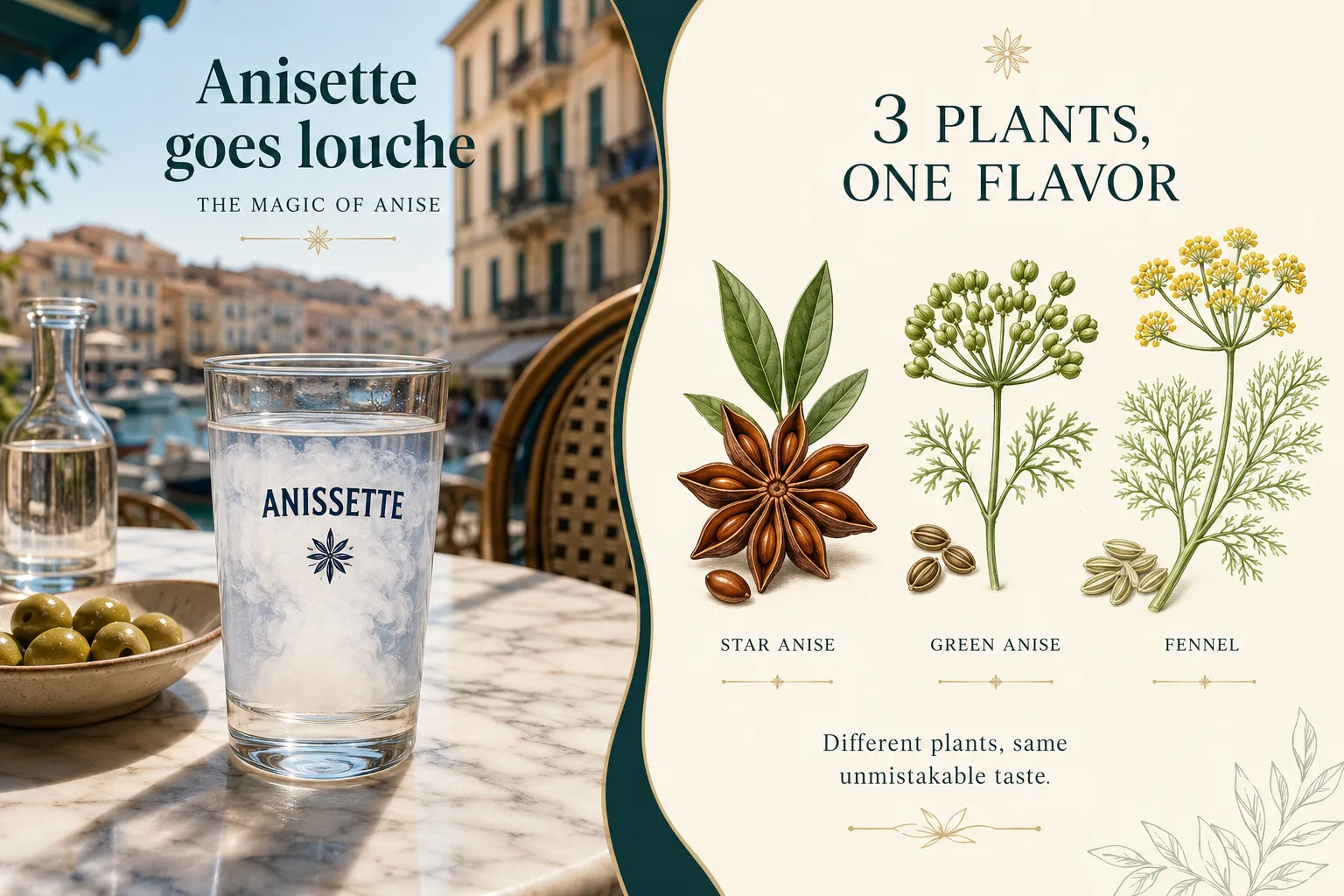
Anisette is a sweet, anise-flavored liqueur made by infusing or distilling anise seeds (and sometimes star anise or fennel) with a neutral spirit, then blending with sugar syrup. It originated in Mediterranean Europe, with France, Italy, and Spain each developing their own regional styles over centuries.
Key characteristics of anisette:
- Flavor: Sweet, herbal, and strongly anise-forward with notes of licorice
- Color: Clear to pale gold; turns opaque white (the “louche”) when mixed with water or ice
- ABV: Typically 25% to 30%, lower than most base spirits
- Texture: Slightly syrupy due to added sugar content
- Origin regions: France, Italy, Spain, Portugal, and parts of Latin America
Anisette is distinct from absinthe, which is much higher in alcohol (55-75% ABV) and contains wormwood. Anisette is sweeter and gentler, making it approachable for people who enjoy herbal or botanical flavors. If you enjoy exploring spirit-based food holidays, the March 27 International Whiskey Day guide offers a useful comparison in how heritage spirits are celebrated.
When Is National Anisette Day Celebrated?
National Anisette Day is celebrated every year on July 2 in the United States. The date falls in early July, making it a natural fit for summer entertaining, outdoor gatherings, and post-Independence Day celebrations.
The holiday is informal, meaning no federal body or single organization officially governs it. It appears on widely recognized food holiday calendars and has been observed consistently on July 2 for at least a decade. There is no alternate date or regional variation on record.
Why Is July 2 National Anisette Day?
The specific origin of July 2 as the date for National Anisette Day is not officially documented by any founding body. This is common for many food holidays in the United States, which often emerge from food bloggers, spirit industry promotions, or enthusiast communities rather than formal proclamations.
What makes July 2 a fitting choice is the timing. Summer is peak season for aperitif-style drinks across Mediterranean cultures, where anisette and its relatives (pastis, ouzo, arak) are traditionally consumed outdoors in warm weather. Placing the holiday in early July aligns with that cultural rhythm and with the broader summer cocktail season in the U.S.
“Anise-flavored spirits have been part of Mediterranean social culture for centuries, July 2 gives American drinkers a reason to explore that tradition.”
Anisette vs. Pastis: What Is the Difference?
Anisette and pastis are related but not the same. Anisette is made purely from anise seeds and sugar, while pastis also contains licorice root extract and additional herbs, giving it a more complex, slightly bitter finish.
| Feature | Anisette | Pastis |
|---|---|---|
| Main flavoring | Anise seeds | Anise + licorice root + herbs |
| Sweetness | Higher | Moderate |
| ABV | 25-30% | 40-45% |
| Origin | France, Italy, Spain | Provence, France |
| Famous brands | Marie Brizard, Bols | Ricard, Pernod |
| Louche effect | Yes | Yes |
Choose anisette if you want a sweeter, lower-alcohol option that is easier to sip on its own. Choose pastis if you prefer a drier, more herbaceous profile with higher alcohol content, closer to a classic French aperitif experience.
Is Anisette the Same as Ouzo?
No, anisette and ouzo are not the same, though both are anise-flavored spirits. Ouzo is a Greek spirit that must be produced in Greece under protected designation of origin rules. It is typically drier and higher in alcohol (37.5-50% ABV) than anisette, and it is distilled rather than simply infused.
Key differences:
- Anisette is sweet, lower ABV, and produced across multiple countries
- Ouzo is drier, higher ABV, and legally restricted to Greek production
- Sambuca (Italian) falls between the two in sweetness and is often served with coffee beans floating on top
All three share the louche effect when water is added, which is caused by anethole (the primary flavor compound in anise) coming out of solution at lower alcohol concentrations.
How Do You Drink Anisette?
Anisette is most commonly served neat, over ice, or diluted with cold water. Adding cold water is the traditional Mediterranean method, which triggers the louche effect and softens the sweetness.
Common serving methods:
- Neat: Pour 1-2 oz into a small liqueur glass at room temperature
- On the rocks: Pour over a single large ice cube to slowly dilute and chill
- With cold water: Add 3-5 parts cold water to 1 part anisette; watch it turn milky white
- As a digestif: Serve a small pour after dinner to aid digestion (a traditional European custom)
- In coffee: A splash in espresso is popular in Italian-American households
Avoid mixing anisette with citrus juice, as the acidity can clash with the sweetness and cause an unpleasant flavor. It works best with neutral or complementary mixers.
Anisette Cocktail Recipes
Anisette works well in several classic and modern cocktails. Its sweetness balances bitter or herbal ingredients, and its low ABV makes it a good modifier rather than a base spirit.
Three easy anisette cocktails for July 2 National Anisette Day:
1. Anisette Spritz
- 1.5 oz anisette
- 3 oz sparkling water or club soda
- Ice, garnish with a lemon twist
- Build in a glass over ice, stir gently
2. Anise Old Fashioned
- 2 oz bourbon
- 0.5 oz anisette
- 2 dashes Angostura bitters
- Stir with ice, strain over a large cube, orange peel garnish
3. Mediterranean Mule
- 1 oz anisette
- 1 oz vodka
- 3 oz ginger beer
- Squeeze of lime, serve over ice in a copper mug
For more inspiration on food and drink pairings for summer celebrations, the June 30 National Ice Cream Soda Day guide covers another July-adjacent drink holiday worth exploring.
Best Anisette Brands to Try
Several brands are widely available and well-regarded for quality and value. The best choice depends on how you plan to use the liqueur.
Top anisette brands in 2026:
- Marie Brizard Anisette (France): The benchmark French-style anisette, clean and balanced, widely available in the U.S. at roughly $18,$22 for 750 ml
- Bols Anisette (Netherlands): A sweeter, more accessible style, good for cocktails, typically $15,$18
- Hiram Walker Anisette (U.S.): Budget-friendly option, $12,$16, reliable for mixing
- Molinari Sambuca (Italy): Technically a sambuca, but a close relative worth including for its quality anise character, $20,$28
- Luxardo Sambuca dei Cesari (Italy): Premium Italian option with a clean, dry anise finish, $22,$30
Choose Marie Brizard if you want the most authentic French-style experience. Choose Bols if you are new to anisette and want something easy to mix. Choose Hiram Walker if budget is the priority.
How Much Does Anisette Cost?
Anisette is one of the more affordable liqueur categories. A standard 750 ml bottle ranges from approximately $12 to $35 USD depending on brand and region.
- Budget tier: $12,$18 (Hiram Walker, Bols)
- Mid-range: $18,$28 (Marie Brizard, Molinari)
- Premium: $28,$40 (Luxardo, specialty imports)
Prices vary by state due to liquor tax differences. Online retailers and local liquor stores typically carry at least one or two options in the budget-to-mid range.
Where to Buy Anisette Near Me
Anisette is available at most full-service liquor stores, wine and spirits shops, and some large grocery chains that carry a spirits section. In 2026, online delivery through platforms like Drizly, Total Wine, and ReserveBar has made it easier to find specific brands without visiting multiple stores.
Practical tips for finding anisette:
- Search “anisette” or “anise liqueur” on the retailer’s website before visiting in person
- Check the cordials and liqueurs aisle, not the whiskey or vodka section
- If anisette is unavailable, sambuca is the closest substitute
- Specialty Italian or French import shops often carry harder-to-find brands
Anisette Alcohol Content
Anisette typically contains between 25% and 30% alcohol by volume (ABV), which is 50 to 60 proof. This is lower than most base spirits (vodka, whiskey, rum are typically 40% ABV) but higher than wine or beer.
The lower ABV is one reason anisette is traditionally served as a digestif or aperitif in small pours rather than as a primary cocktail base. It is also why it works well as a modifier, adding flavor without overwhelming the alcohol balance of a drink.
How to Make Homemade Anisette
Homemade anisette is straightforward and requires only a few ingredients. The basic method involves cold infusion rather than distillation, so no special equipment is needed.
Basic homemade anisette recipe:
Ingredients:
- 2 cups vodka (80 proof / 40% ABV)
- 3 tablespoons whole anise seeds (or 2 tablespoons anise + 1 tablespoon star anise)
- 1 cup simple syrup (equal parts sugar and water, dissolved)
- Optional: 1 teaspoon fennel seeds for complexity
Steps:
- Combine vodka and anise seeds in a clean glass jar with a tight lid
- Seal and store at room temperature for 5 to 7 days, shaking once daily
- Taste on day 5; infuse longer for stronger flavor, up to 10 days
- Strain through a fine mesh sieve or cheesecloth to remove seeds
- Stir in simple syrup, adjusting sweetness to taste
- Bottle and refrigerate; best consumed within 3 months
The finished product will be approximately 20-25% ABV depending on how much syrup is added. It will produce the louche effect when mixed with water, just like commercial versions.
What Food Pairs with Anisette?
Anisette pairs best with salty, savory, and mildly fatty foods that balance its sweetness. Mediterranean cuisine is the natural match, given the shared cultural heritage.
Best food pairings for anisette:
- Seafood: Grilled shrimp, mussels, calamari, and fish, the anise flavor echoes classic Mediterranean seasoning. For a seafood-focused celebration, the May 10 National Shrimp Day guide offers recipe ideas that work beautifully alongside anisette.
- Olives and charcuterie: The brininess of olives cuts through anisette’s sweetness
- Aged cheeses: Manchego, Pecorino, or aged Gouda complement the herbal notes
- Fennel-based dishes: Roasted fennel, fennel salad, or fennel sausage amplify the anise theme
- Biscotti and almond cookies: A classic Italian pairing; see the April 9 National Chinese Almond Cookie Day guide for almond cookie inspiration
- Dark chocolate: The bitterness of 70%+ cocoa balances the sweetness well
Avoid pairing with: Heavily spiced dishes (chili, curry), citrus-dominant foods, or very sweet desserts, as these tend to clash with anisette’s flavor profile.
Anisette Health Benefits: What the Evidence Actually Says
Traditional European folk medicine associated anise and anisette with digestive benefits, including relief from bloating, gas, and indigestion. Anise seeds do contain anethole, a compound with demonstrated antimicrobial and mild antispasmodic properties in laboratory studies.
What is supported by evidence:
- Anise seed (not anisette the liqueur) has been studied for digestive support and mild antifungal properties in laboratory settings
- The European Medicines Agency recognizes anise seed as a traditional herbal remedy for mild digestive complaints
What is not supported:
- Drinking anisette as a health remedy is not medically recommended
- The sugar and alcohol content in anisette offset any potential benefit from the anise itself
- No clinical trials support anisette consumption for health outcomes
The honest takeaway: enjoy anisette for its flavor and cultural tradition, not as a health product.
How to Celebrate July 2 National Anisette Day
July 2 National Anisette Day is best celebrated by tasting, sharing, and learning. Here are practical ways to mark the occasion in 2026.
Ideas for individuals:
- Buy a bottle of anisette and try it three ways: neat, with water, and in a cocktail
- Host a small tasting with two or three different anise-flavored spirits side by side (anisette, pastis, ouzo)
- Cook a Mediterranean-inspired meal and serve anisette as an aperitif or digestif
Ideas for groups and events:
- Organize a cocktail-making session using the recipes listed above
- Pair anisette with a cheese and charcuterie board for a low-effort, high-impact gathering
- Share a post about the holiday on social media using #NationalAnisetteDay
If you enjoy food holiday celebrations, the June 26 National Chocolate Pudding Day guide and the June 29 National Almond Buttercrunch Day guide offer dessert ideas that pair well with an anisette-themed evening.
FAQ: July 2 National Anisette Day
Q: What is National Anisette Day? National Anisette Day is an informal U.S. food holiday celebrated on July 2 each year to honor anisette, the sweet anise-flavored liqueur with Mediterranean origins.
Q: Is anisette the same as sambuca? No. Sambuca is an Italian anise liqueur that is typically drier and higher in alcohol (38-42% ABV) than anisette. Both share an anise flavor profile, but sambuca often has a more intense, slightly bitter finish.
Q: Can you drink anisette straight? Yes. Anisette is commonly served neat in a small liqueur glass, especially as a digestif after meals. Its sweetness makes it more approachable straight than higher-ABV anise spirits.
Q: What does anisette taste like? Anisette tastes sweet and strongly of anise or licorice, with a smooth, slightly syrupy texture. The flavor is herbal and aromatic without the bitterness found in absinthe or pastis.
Q: Does anisette go bad? Unopened anisette has an indefinite shelf life if stored in a cool, dark place. Once opened, it is best consumed within 1 to 2 years. The flavor may fade slightly over time but it will not become unsafe to drink.
Q: What is the louche effect? The louche effect is the milky white cloudiness that appears when water or ice is added to anisette. It happens because anethole, the main flavor compound, is soluble in alcohol but not in water, so it precipitates out as tiny droplets when diluted.
Q: Is anisette gluten-free? Most commercial anisette is made from grain-neutral spirits, but the distillation process typically removes gluten proteins. People with celiac disease should check with the specific manufacturer, as standards vary by brand.
Q: How is anisette different from absinthe? Absinthe is much higher in alcohol (55-75% ABV), contains wormwood, and has a drier, more bitter flavor. Anisette is sweeter, lower in alcohol, and does not contain wormwood.
Q: What mixer goes best with anisette? Cold water is the traditional mixer and triggers the louche effect. Club soda, tonic water, and ginger beer also work well for longer drinks.
Q: Where did anisette originate? Anisette has roots in France, Italy, and Spain, where anise-flavored spirits have been produced for centuries. The French brand Marie Brizard, founded in Bordeaux in 1755, is one of the oldest and most recognized producers.
Conclusion
July 2 National Anisette Day is a straightforward opportunity to explore one of the world’s oldest and most culturally rich spirit categories. Anisette is affordable, widely available, and versatile enough to enjoy neat, with water, or in cocktails.
Actionable next steps for July 2:
- Pick up a bottle of Marie Brizard or Bols anisette from your local liquor store or order online
- Try it three ways on the day: neat, with cold water (watch the louche), and in a simple spritz
- Pair it with olives, seafood, or an almond-based dessert for a complete Mediterranean-inspired experience
- If you enjoy the flavor, branch out to pastis or ouzo to compare the broader anise spirit family
- Share the experience with friends, either in person or on social media with #NationalAnisetteDay
Anisette rewards curiosity. A bottle that costs less than $25 opens up centuries of Mediterranean drinking culture, and that is a worthwhile way to spend July 2.
