May 31 National Macaroon Day: History, Recipes, and How to Celebrate in 2026
- 0
- 12 Min Read
Last updated: May 31, 2026
Quick Answer
May 31 National Macaroon Day is an annual U.S. food holiday observed every year on May 31, dedicated to celebrating the coconut or nut-based macaroon cookie. In 2026, the holiday falls on a Sunday. It is a lighthearted, unofficial observance, not a federal public holiday, but widely recognized across food calendars, bakeries, and home kitchens nationwide [1][10].
Key Takeaways
- May 31 National Macaroon Day is observed annually on May 31; in 2026 it falls on a Sunday.
- The holiday celebrates macaroons (coconut or nut-based cookies), not French macarons, which are a distinct confection.
- The exact founding origin is unclear, but the observance appears on major U.S. holiday calendars and has been tracked for many years [5][10].
- Classic coconut macaroons contain only a few ingredients: shredded coconut, egg whites, sugar, and vanilla.
- Coconut macaroons are naturally gluten-free, making them suitable for people with celiac disease or gluten sensitivity.
- Vegan versions can be made by substituting aquafaba (chickpea brine) for egg whites.
- Many bakeries and specialty shops offer deals or themed products around May 31.
- Upcoming dates: May 31, 2027 (Monday); May 31, 2028 (Wednesday); May 31, 2029 (Thursday) [6][10].
- Macaroons store well at room temperature for up to a week or in the freezer for up to three months.
- The holiday is a great opportunity to bake at home, visit a local bakery, or host a dessert-tasting event.
What Is National Macaroon Day?
National Macaroon Day is an unofficial U.S. food holiday that celebrates the macaroon, a dense, chewy cookie typically made with shredded coconut, egg whites, and sugar. It is observed every year on May 31 and is recognized across dozens of food and holiday calendar platforms [3][5][10].
The holiday is not legislated by Congress and carries no legal status, but it functions as a cultural moment that encourages people to bake, buy, or share macaroons. It sits alongside hundreds of similar food observances on the American calendar, from National Muffin Day on February 20 to National Oatmeal Cookie Day on April 30.
Who it’s for: Anyone who enjoys baking, coconut desserts, or simply wants a reason to treat themselves at the end of May.
Macaroon Day History and Origin: When Did National Macaroon Day Start?
The precise founding date and creator of National Macaroon Day are not publicly documented, which is common for many informal U.S. food holidays. The observance has appeared consistently on May 31 across major holiday tracking sites for years, and multiple calendar platforms have continued to list and update it through 2026 [1][5][6][10].
What is well established is the broader history of the macaroon itself. The word “macaroon” traces back to the Italian “maccherone” and the French “macaron,” both referring to a paste of ground almonds or coconut. Early versions of the cookie appeared in Italian and French kitchens as far back as the 16th century, and coconut macaroons became especially popular in the United States during the 19th and 20th centuries, partly because they require no flour and keep well.
The holiday’s continued listing on sites updated as recently as mid-2026 suggests it will remain an annual observance for the foreseeable future, with projected dates tracked through at least 2030 [6][10].
The Difference Between Macaroons and Macarons
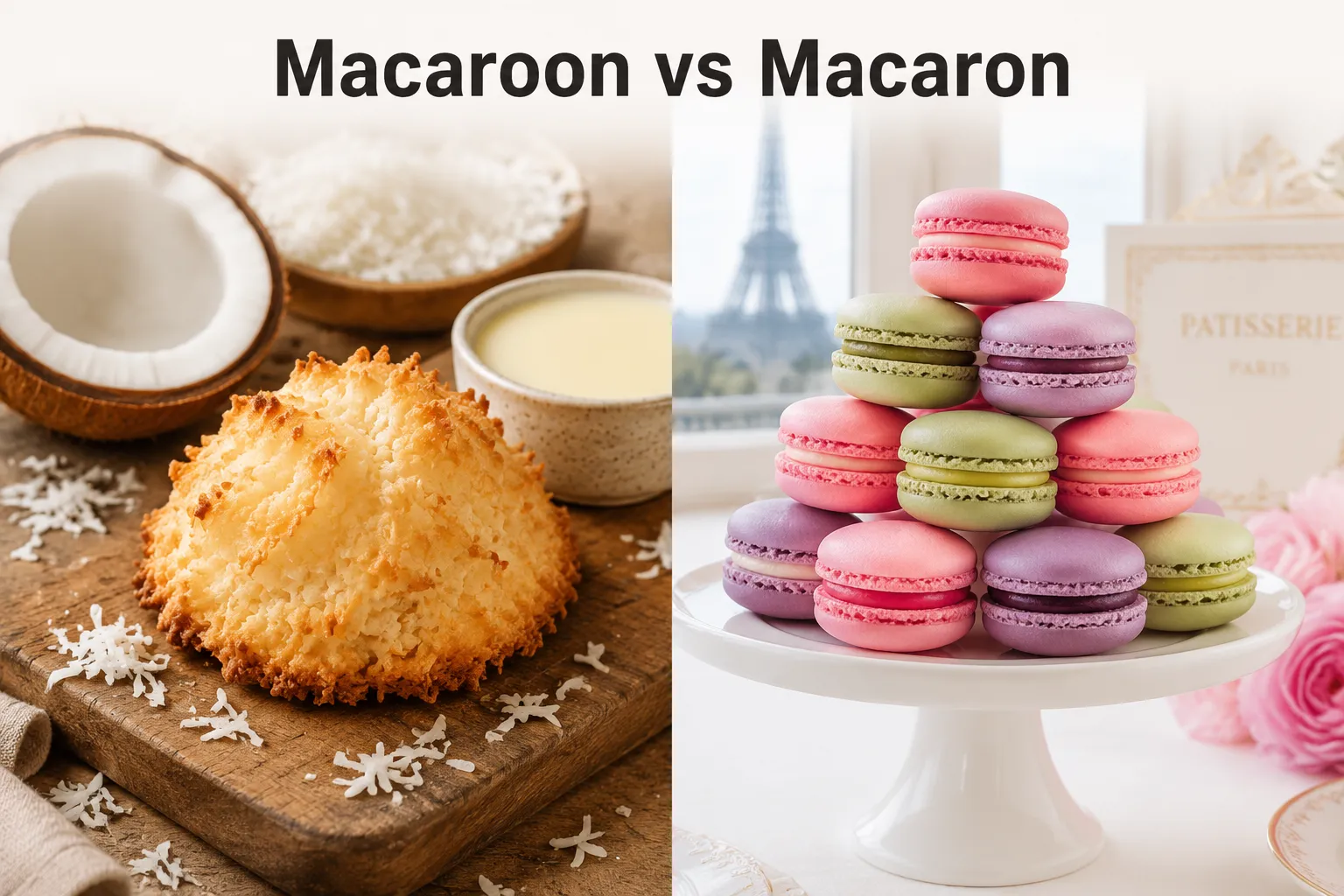
Macaroons and macarons are two completely different cookies that share a similar-sounding name. Confusing the two is the single most common mistake people make when searching for this holiday.
| Feature | Macaroon | French Macaron |
|---|---|---|
| Main ingredient | Shredded coconut (or nuts) | Almond flour |
| Texture | Dense, chewy, moist | Light, crisp shell, soft filling |
| Appearance | Rustic mound or dome | Smooth, colorful sandwich cookie |
| Origin | Italy/France, popularized in the U.S. | French patisserie tradition |
| Gluten-free | Yes (naturally) | Yes (naturally) |
| Filling | None (typically) | Buttercream, ganache, or jam |
The key distinction: A macaroon is a single, freestanding cookie built around coconut or nuts. A French macaron is a delicate sandwich cookie made from almond flour meringue shells. May 31 National Macaroon Day honors the former, the humble, chewy coconut cookie, not the latter [3][10].
If you enjoy French-style almond confections, the National Chinese Almond Cookie Day on April 9 is a related celebration worth noting.
Why Is May 31 Macaroon Day? The Coconut Macaroon Connection
May 31 was designated as National Macaroon Day on the U.S. food holiday calendar, though no single organization has publicly claimed credit for choosing that specific date [5][10]. The end of May placement may reflect the broader trend of scheduling food holidays throughout the year to maintain year-round engagement, rather than any specific historical event tied to macaroons on that date.
What makes the timing pleasant is practical: late May is warm enough to enjoy a light, no-bake-adjacent dessert, and the holiday lands just before the summer baking season kicks into full gear. Coconut macaroons also pair naturally with Memorial Day gatherings, which often fall in the same week.
Do Macaroons Have Gluten?
Classic coconut macaroons are naturally gluten-free. The standard recipe uses shredded coconut, egg whites, sugar, and vanilla, none of which contain gluten. This makes macaroons one of the more accessible dessert options for people managing celiac disease or non-celiac gluten sensitivity.
Important caveats:
- Cross-contamination: Store-bought macaroons may be produced in facilities that also process wheat. Always check the label if gluten is a medical concern.
- Added ingredients: Some recipes include flour as a binder. Always verify the recipe before serving to someone with a gluten intolerance.
- Chocolate-dipped varieties: The chocolate coating is usually gluten-free, but again, check the brand’s allergen statement.
For those looking for other naturally gluten-friendly baked goods to explore, National Almond Day on February 16 covers a key ingredient that also appears in gluten-free baking.
Best Macaroon Recipes for National Macaroon Day
The best macaroon recipe for May 31 National Macaroon Day depends on your dietary needs and flavor preferences. The classic coconut version requires only five ingredients and about 25 minutes from start to finish.
Classic Coconut Macaroons
Ingredients:
- 3 cups sweetened shredded coconut
- 2 large egg whites
- 1/3 cup granulated sugar
- 1 teaspoon vanilla extract
- Pinch of salt
Steps:
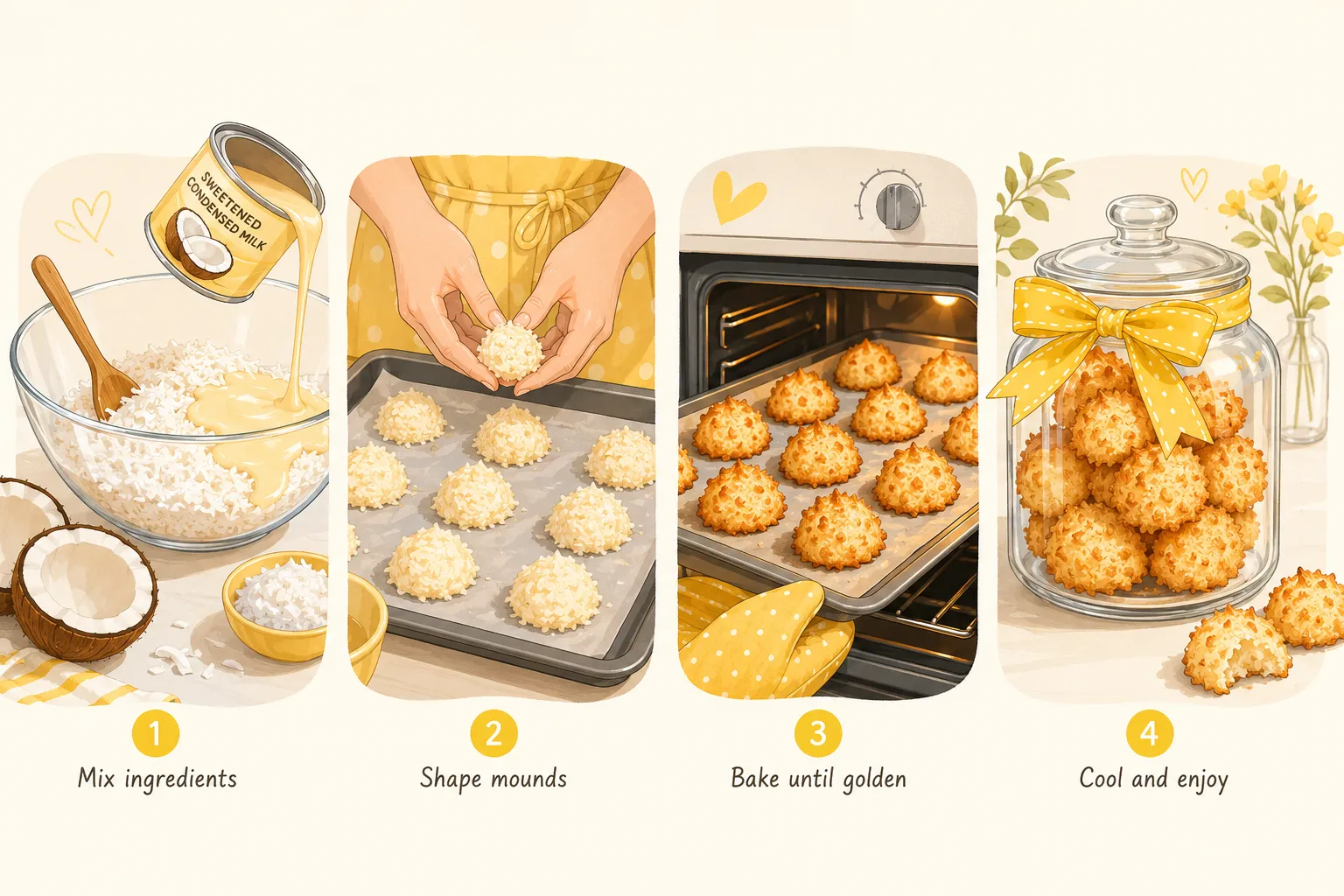
- Preheat oven to 325°F (165°C) and line a baking sheet with parchment paper.
- Whisk egg whites, sugar, vanilla, and salt until the mixture is frothy and the sugar begins to dissolve.
- Fold in the shredded coconut until evenly coated.
- Scoop tablespoon-sized mounds onto the prepared baking sheet, spacing them about an inch apart.
- Bake for 18 to 20 minutes until the edges and tops are golden brown.
- Cool completely on the pan before removing.
Variations to try:
- Chocolate-dipped: Dip cooled macaroons halfway into melted dark chocolate and set on parchment.
- Almond macaroons: Replace half the coconut with finely ground almonds for a denser texture.
- Citrus zest: Add a teaspoon of lemon or orange zest to the batter for brightness.
Vegan Macaroon Recipe
Vegan macaroons replace egg whites with aquafaba, the liquid from a can of chickpeas. Use 3 tablespoons of aquafaba per egg white called for in the recipe. Whip the aquafaba until it forms soft peaks before folding in the coconut. The result is nearly identical in texture to the egg-white version.
Choose this if: You are cooking for guests who avoid animal products, or if you simply run out of eggs.
How to Make Homemade Macaroons: Tips for Success
Homemade macaroons are one of the most forgiving cookies a baker can make. A few technique points make the difference between a flat, greasy result and a perfectly domed, golden cookie.
- Dry your coconut slightly: If the shredded coconut feels very moist, spread it on a baking sheet and toast it at 300°F for five minutes before mixing. This prevents flat, spreading macaroons.
- Do not overbake: Pull the macaroons when the edges are golden. The centers will firm up as they cool.
- Use parchment, not a greased pan: Macaroons release cleanly from parchment. A greased pan can cause the bottoms to brown unevenly.
- Pack the mounds firmly: Use your hands or a cookie scoop to press the mixture into compact mounds so they hold their shape.
For those who enjoy coconut-forward desserts, the National Coconut Torte Day on March 13 is another celebration worth bookmarking.
Where to Buy Macaroons on May 31
Macaroons are widely available at grocery stores, specialty bakeries, and online retailers, making May 31 National Macaroon Day easy to celebrate without baking. Here are the best places to look:
- Local bakeries: Many independent bakeries stock coconut macaroons year-round. Call ahead on May 31 to ask about themed specials or bulk pricing.
- Grocery store bakery sections: Chains like Whole Foods, Trader Joe’s, and Costco regularly carry pre-packaged coconut macaroons.
- Jewish delis and kosher bakeries: Macaroons have a long tradition in Passover baking (since they contain no leavening or flour), so kosher bakeries are reliable sources of high-quality versions.
- Online retailers: Specialty food sites ship macaroons nationwide, often in gift boxes.
National Macaroon Day Deals and Discounts
Formal national promotions tied specifically to May 31 National Macaroon Day are not as widespread as those for larger holidays, but deals do appear in predictable places. Bakeries and dessert shops sometimes offer a free macaroon with purchase, a discount on a dozen, or a social media promotion tied to the date [4][7].
How to find deals in 2026:
- Search “[your city] + National Macaroon Day” on Google or social media in the days leading up to May 31.
- Check bakery Instagram and Facebook pages for limited-time offers.
- Sign up for email lists at local dessert shops, which often send holiday-themed promotions.
- Look for coupon codes on food deal aggregator sites.
How to Store Macaroons Properly
Properly stored macaroons stay fresh and chewy for up to a week at room temperature. Here are the storage guidelines:
- Room temperature: Store in an airtight container, layered between sheets of parchment paper, for up to 7 days.
- Refrigerator: Extend freshness to 2 weeks. Bring to room temperature before serving for the best texture.
- Freezer: Freeze in a single layer on a baking sheet, then transfer to a zip-lock bag. Macaroons keep well frozen for up to 3 months. Thaw at room temperature for 30 to 60 minutes.
Avoid: Storing macaroons in open air or next to strong-smelling foods, as coconut readily absorbs odors.
Macaroon Day Events Near Me: How to Celebrate Locally
Organized public events specifically for May 31 National Macaroon Day are rare, but there are several ways to find or create a local celebration.
- Baking classes: Some culinary schools and community centers schedule cookie-baking workshops around food holidays. Search for classes in late May.
- Bakery pop-ups: Follow local food vendors on social media for one-day specials.
- Host a tasting: Invite friends to bring different macaroon varieties, chocolate-dipped, plain, almond, vegan, and do a side-by-side comparison.
- Charity bake sales: Use the holiday as a hook for a fundraiser. Macaroons are inexpensive to make in large batches and travel well.
If you enjoy celebrating food holidays with others, exploring the full national food holidays calendar is a good way to plan ahead for the rest of the year.
FAQ
Q: When is National Macaroon Day in 2026? May 31, 2026, which falls on a Sunday.
Q: Is National Macaroon Day a public holiday? No. It is an unofficial, informal food observance. Businesses and schools do not close for it [5][10].
Q: What is the difference between a macaroon and a macaron? A macaroon is a dense coconut or nut-based cookie. A French macaron is a delicate almond-flour sandwich cookie. They share a name root but are entirely different confections [3][10].
Q: Are coconut macaroons gluten-free? Yes, traditional coconut macaroons contain no wheat flour and are naturally gluten-free. Always check store-bought labels for cross-contamination warnings.
Q: Can macaroons be made vegan? Yes. Replace egg whites with whipped aquafaba (chickpea brine) at a ratio of 3 tablespoons per egg white.
Q: How long do homemade macaroons last? Up to 7 days at room temperature in an airtight container, 2 weeks refrigerated, or 3 months frozen.
Q: What are the future dates for National Macaroon Day? May 31, 2027 (Monday); May 31, 2028 (Wednesday); May 31, 2029 (Thursday); May 31, 2030 (Friday) [6][10].
Q: Where did macaroons originate? Macaroons trace their roots to Italian and French confectionery traditions, with coconut versions becoming especially popular in the United States over the past two centuries.
Q: Do bakeries offer deals on National Macaroon Day? Some do, particularly local and specialty bakeries. Check social media and email newsletters in the days before May 31 for promotions [4][7].
Q: Are macaroons the same as Passover cookies? Coconut macaroons are a traditional Passover treat because they contain no leavening or flour, making them compliant with Passover dietary rules. The holiday connection has helped keep macaroons popular in the U.S.
Q: Can I dip macaroons in chocolate? Yes. Dipping the bottoms or sides of cooled macaroons in melted dark or milk chocolate is one of the most popular variations and adds a complementary flavor contrast.
Q: Is there a National Macaron Day (French macaron) as well? Yes. National Macaron Day (for the French sandwich cookie) is a separate observance celebrated on a different date [2][9].
Conclusion
May 31 National Macaroon Day is a simple, joyful occasion that asks very little and delivers a lot. Whether the plan is to bake a batch of classic coconut macaroons from scratch, pick up a box from a local bakery, or experiment with a vegan or chocolate-dipped variation, the holiday is easy to mark in a meaningful way.
Actionable next steps for 2026:
- Bake ahead: Make a batch on the evening of May 30 so they are ready to share on May 31.
- Find a local deal: Search social media and bakery newsletters in the week before May 31 for promotions.
- Try one new variation: If classic coconut is the usual choice, try almond macaroons or a chocolate-dipped version this year.
- Share the holiday: Post a photo of homemade or store-bought macaroons on social media with the hashtag #NationalMacaroonDay to connect with other enthusiasts.
- Plan ahead: Mark May 31, 2027 on the calendar now so the holiday does not sneak up again.
For more food holiday inspiration throughout the year, explore other celebrations like National Frozen Yogurt Day on February 6 and the National Bavarian Crepes Day on March 22.
References
[1] National Macaroon Day 1804 – https://www.wikidates.org/holiday/national-macaroon-day_1804.html [2] National Macaron Day – https://www.holidaycalendar.io/holiday/national-macaron-day [3] diffordsguide – https://www.diffordsguide.com/on-this-day/may/31 [4] National Macaroon Day – https://www.punchbowl.com/holidays/national-macaroon-day [5] May 31st National Macaroon Day – https://www.listofnationaldays.com/may-31st-national-macaroon-day/ [6] National Macaroon Day – https://www.calendarr.com/united-states/national-macaroon-day/ [7] anydayguide – https://anydayguide.com/calendar/1057 [8] Tag Der Makronen – https://www.kuriose-feiertage.de/tag-der-makronen/ [9] National Macaron Day – https://nationaltoday.com/national-macaron-day/ [10] National Macaroon Day – https://nationaltoday.com/national-macaroon-day/