
Last updated: February 16 , 2026
Quick Answer: February 16 National Almond Day is an annual food holiday observed every February 16 in the United States to celebrate one of the world’s most popular tree nuts. The day encourages people to enjoy almonds in any form, raw, roasted, as almond butter, almond milk, or baked into recipes. No official government body created it; it grew from food industry and consumer enthusiasm, with organizations like the Almond Board of California and the Almond Alliance actively promoting it. [1][8]
Key Takeaways
- February 16 National Almond Day falls on February 16 every year, with the 2026 observance landing on a Monday.
- The holiday has no single verified founder but is closely associated with California’s almond industry, which produces roughly 80% of the world’s almond supply.
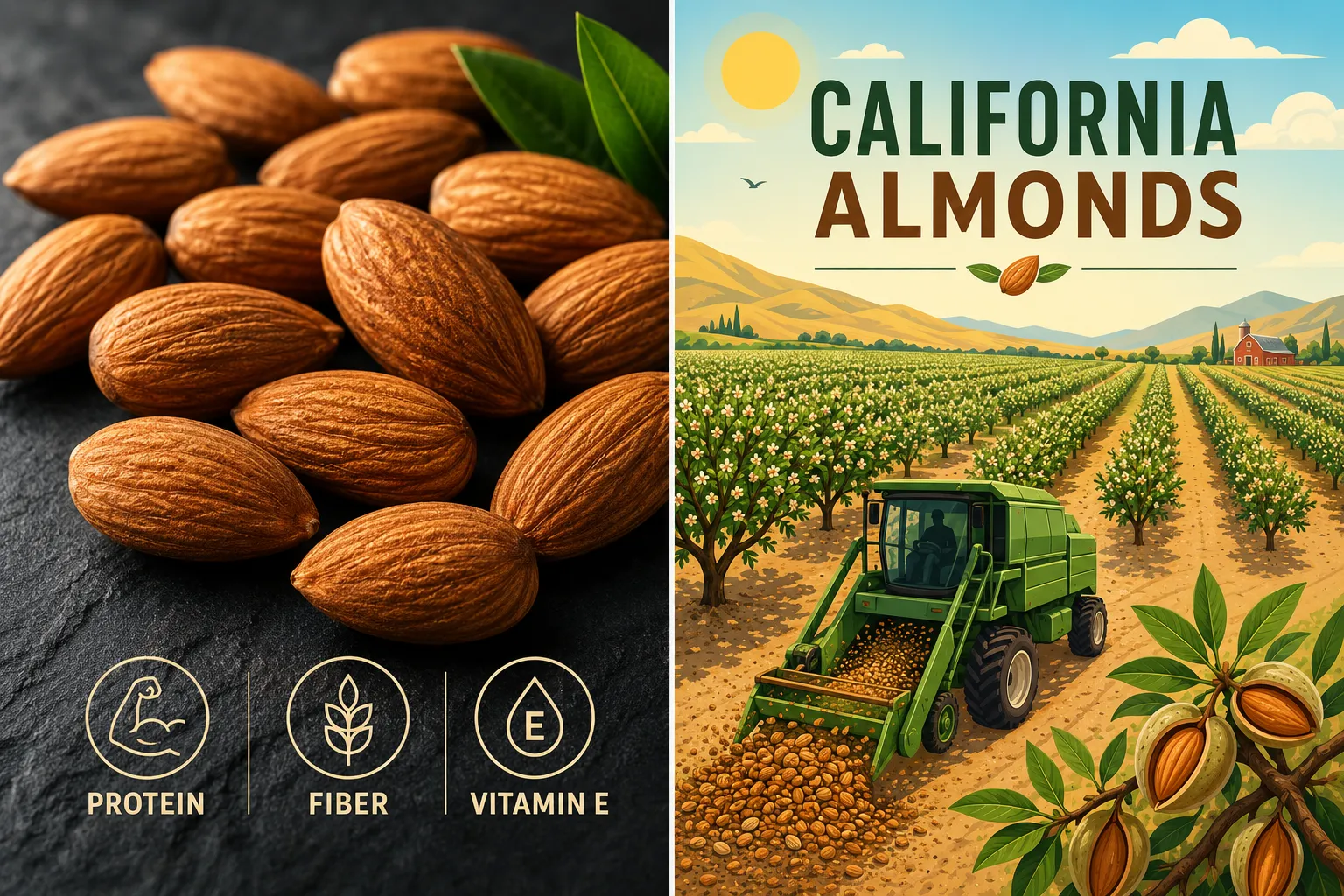
- Almonds are one of the most nutrient-dense tree nuts available, providing protein, fiber, healthy fats, vitamin E, and magnesium in a single one-ounce serving.
- Common ways to celebrate include cooking almond-based recipes, sharing almond snacks, posting on social media, and visiting local orchards or farmers markets.
- Almond allergies are among the most common tree nut allergies and require careful label reading, especially in processed foods.
- California’s Central Valley is the global center of almond farming, with harvest running from August through October each year.
- Almonds are botanically a drupe (a stone fruit), not a true nut, making them a close relative of peaches and cherries.
- The holiday pairs well with other February food observances, February is packed with food celebrations, from National Dark Chocolate Day on February 1 to National Frozen Yogurt Day on February 6.
What Is National Almond Day?
National Almond Day is an informal food holiday dedicated to celebrating almonds and raising awareness of their culinary versatility and nutritional value. It is observed annually in the United States on February 16 and has grown in visibility thanks to food bloggers, grocery retailers, and almond industry groups. [1][7]
The day is not a federal public holiday, so there are no days off or official ceremonies. Instead, it functions as a cultural food observance, a prompt for people to cook with almonds, share almond-based snacks, or simply learn more about where almonds come from and why they matter nutritionally. [3][9]
When Is National Almond Day Celebrated?
National Almond Day is celebrated on February 16 every year, without exception. In 2026, February 16 falls on a Monday. [8]
Because the date is fixed (unlike floating holidays tied to a specific weekday), planning is straightforward:
| Year | Date | Day of Week |
|---|---|---|
| 2024 | February 16 | Friday |
| 2025 | February 16 | Sunday |
| 2026 | February 16 | Monday |
| 2027 | February 16 | Tuesday |
The holiday sits in the middle of February, a month already rich with food observances. If you enjoy marking food holidays, check out the National Chocolate Fondue Day guide for February 5 and National Plum Pudding Day on February 12 for nearby celebrations.
Why Is February 16 National Almond Day? History and Origins
February 16 was designated as National Almond Day through informal food holiday tradition rather than a formal legislative act. The exact origin is not documented in a single verified source, but the date has been consistently recognized on food holiday calendars for many years. [2][9]
The Almond Alliance of California has actively promoted the day, using it as an opportunity to highlight the economic and nutritional importance of almonds to American consumers and growers. [6] The Almond Board of California, a federal marketing order organization representing California almond growers and handlers, also uses the occasion to promote almond consumption and share health messaging. [10]
Why February? Almonds bloom in California as early as February, making mid-February a symbolically fitting time to honor the crop. Almond blossoms are among the first signs of spring in the Central Valley, appearing before the trees even grow leaves. [4][5]
The holiday has no single corporate founder, unlike some food days that are traceable to a specific brand campaign. It appears to have emerged organically from the broader food holiday calendar culture that gained momentum in the United States during the late 20th century. [7]
Almond Health Benefits: Why Almonds Are Worth Celebrating
Almonds are one of the most nutritionally complete snack foods available. A standard one-ounce (28-gram) serving, roughly 23 whole almonds, delivers a meaningful combination of macronutrients and micronutrients in a compact package. [5]
Key health benefits supported by research:
- Heart health: Almonds contain monounsaturated fats and have been associated with reduced LDL (“bad”) cholesterol levels in multiple dietary studies. The FDA allows a qualified health claim linking tree nuts, including almonds, to reduced heart disease risk (FDA, 2003).
- Blood sugar management: The combination of fiber, protein, and healthy fat in almonds slows glucose absorption, which may help moderate blood sugar spikes after meals.
- Bone support: Almonds provide calcium and magnesium, both important for maintaining bone density.
- Skin health: Almonds are one of the richest food sources of vitamin E, an antioxidant that supports skin cell protection.
- Weight management: Despite being calorie-dense, almonds promote satiety. Research published in the European Journal of Nutrition (2014) found that almond snackers reported greater fullness and consumed fewer calories at subsequent meals compared to a carbohydrate-matched snack group.
“Almonds are one of the most nutrient-dense foods you can eat, delivering protein, fiber, and healthy fats in a single small handful.”, Almond Board of California [10]
Common mistake: Many people assume almonds are too high in calories for a healthy diet. While a one-ounce serving does contain around 160-170 calories, the fiber and protein content make them more filling per calorie than many processed snacks. The key is portion control.
Almond Nutrition Facts
One ounce (28g) of raw almonds contains approximately: [5]
| Nutrient | Amount per 1 oz (28g) |
|---|---|
| Calories | ~164 |
| Protein | ~6g |
| Total Fat | ~14g (mostly monounsaturated) |
| Carbohydrates | ~6g |
| Dietary Fiber | ~3.5g |
| Vitamin E | ~7.3mg (about 48% DV) |
| Magnesium | ~76mg (about 18% DV) |
| Calcium | ~76mg (about 6% DV) |
Source: USDA FoodData Central. DV = Daily Value based on a 2,000-calorie diet.
Almonds also contain riboflavin (B2), phosphorus, and manganese. Blanched almonds (skins removed) have slightly lower fiber content because a significant portion of almond fiber is in the skin.
Where Do Almonds Come From? Almond Farming and Production
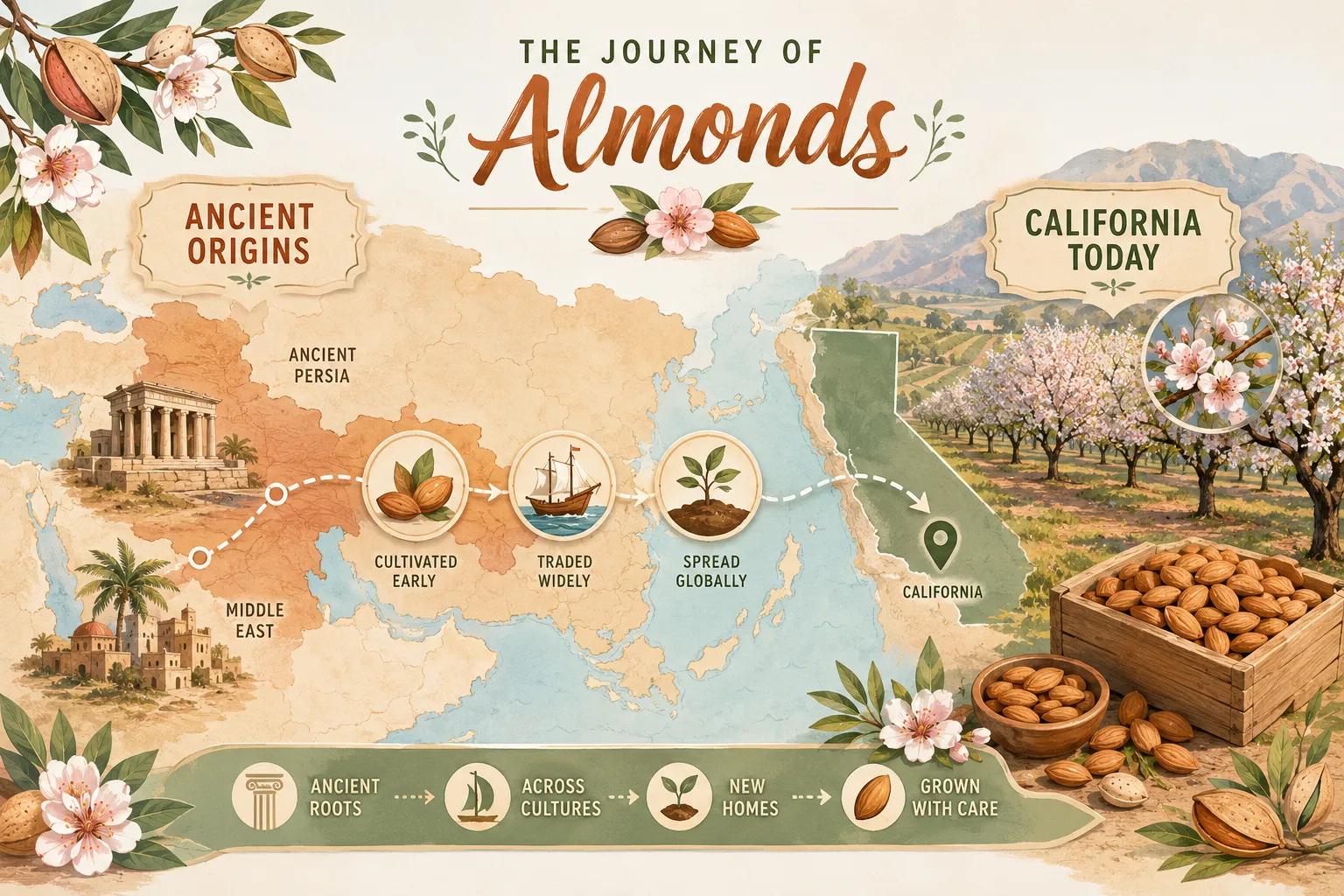
Almonds originated in the Middle East and South Asia, with evidence of cultivation dating back to ancient Mesopotamia and Egypt. They were traded along the Silk Road and became a staple in Mediterranean cuisines for thousands of years. [5]
Today, California’s Central Valley dominates global almond production. The state accounts for an estimated 80% of the world’s almond supply, with Spain ranking as the second-largest producer. [4][6] The Almond Alliance of California represents the growers, processors, and handlers who make up this industry. [6]
The California almond farming calendar:
- February: Almond trees bloom, the earliest blooming crop in California’s agricultural season.
- March, June: Pollination (heavily dependent on honeybee colonies) and nut development.
- August, October: Mechanical harvest, where shakers knock almonds from trees onto the orchard floor to dry.
- October, December: Processing, hulling, and shelling before distribution.
California almond orchards require significant water, which has made the crop a subject of ongoing sustainability discussions, particularly during drought years. The Almond Board of California has published water use benchmarks and efficiency goals as part of its sustainability commitment. [10]
How to Celebrate February 16 National Almond Day
Celebrating February 16 National Almond Day does not require elaborate planning. The simplest approach is to incorporate almonds into your day in a way that feels natural, whether as a snack, a meal ingredient, or a social activity. [1][7]
Practical ways to celebrate:
- Snack smart: Keep a small bag of raw or roasted almonds at your desk for a mid-morning or afternoon snack.
- Cook an almond recipe: Try almond-crusted chicken, almond flour pancakes, or a classic French financier (almond cake).
- Make almond milk at home: Blend soaked almonds with water, strain through a nut milk bag, and add a pinch of salt for a fresh, additive-free version.
- Share on social media: Post a photo of your almond dish or snack with the hashtag #NationalAlmondDay to join the broader conversation.
- Visit a farmers market: Many California-based farmers markets carry fresh or flavored almonds directly from local growers.
- Gift an almond product: Almond butter, chocolate-covered almonds, or a jar of marcona almonds make thoughtful, food-focused gifts.
- Explore an almond cookbook: For deeper inspiration, browse a dedicated almond cookbook collection for recipe ideas ranging from savory to sweet.
February 16 also falls close to Valentine’s Day, so chocolate-almond combinations (like dark chocolate almond bark or marzipan) are a natural fit for the season. Speaking of chocolate, if you missed National Dark Chocolate Day on February 1, pairing dark chocolate with almonds on February 16 is a fitting way to honor both.

Best Almond Recipes for National Almond Day
The best almond recipes for National Almond Day span sweet, savory, and drink categories, so there is an option for every skill level and preference. [4][7]
Beginner-friendly recipes:
- Honey-roasted almonds: Toss raw almonds with honey, a pinch of sea salt, and a dash of cinnamon. Roast at 325°F for 15-20 minutes, stirring once. Cool completely before serving.
- Almond butter toast: Spread natural almond butter on whole-grain toast, top with banana slices and a drizzle of honey.
- Almond milk smoothie: Blend almond milk, frozen banana, a tablespoon of almond butter, and a handful of spinach for a nutrient-dense breakfast.
Intermediate recipes:
- Almond-crusted salmon: Press sliced almonds onto salmon fillets, season with lemon zest and herbs, then bake at 400°F for 12-15 minutes.
- Almond flour banana bread: Substitute almond flour for all-purpose flour in a standard banana bread recipe for a gluten-friendly, protein-rich loaf.
- Romesco sauce: Blend roasted red peppers, almonds, garlic, olive oil, and smoked paprika for a classic Spanish sauce that works on grilled vegetables, fish, or bread.
Advanced / special occasion:
- French almond financiers: Small, buttery almond cakes made with browned butter and almond flour, elegant and deeply flavored.
- Marzipan: Ground almonds, sugar, and egg whites combined into a moldable confection with centuries of European tradition.
- Almond tart (Frangipane): A buttery pastry shell filled with almond cream, often topped with fresh fruit.
If you enjoy baking for food holidays, the National Carrot Cake Day guide for February 3 includes almond-friendly frosting variations worth exploring.
Different Types of Almonds
Not all almonds are the same. Several distinct varieties and processing styles are available, each suited to different uses. [5][9]
By variety:
- Nonpareil: The most widely grown California variety. Thin-skinned, light-colored, and mild in flavor. Best for snacking, blanching, and sliced almonds.
- Carmel: Slightly smaller than Nonpareil, with a harder shell. Often used in chocolate products.
- Marcona: A Spanish variety, rounder and softer than California almonds, with a sweeter, more buttery flavor. Typically sold roasted in olive oil and salt.
- Mission: Darker skin, stronger flavor, harder texture. Often used in roasted and flavored almond products.
By processing:
- Raw: Unroasted, with skin intact. Highest in fiber and antioxidants from the skin.
- Blanched: Skin removed by brief hot water treatment. Milder flavor, softer texture, lower fiber.
- Roasted (dry or oil): Enhanced flavor through heat. Dry-roasted almonds have no added fat; oil-roasted almonds are fried in vegetable oil.
- Smoked or flavored: Seasoned with spices, salt, or smoke for snacking.
Choose Nonpareil almonds if you want the most versatile option for cooking and snacking. Choose Marcona almonds if you want a premium, ready-to-eat snack with a distinct buttery character.
Almond Allergies and Safety
Tree nut allergies, including almond allergies, are among the eight major food allergens recognized by the FDA under the Food Allergen Labeling and Consumer Protection Act (FALCPA). This means almonds must be clearly labeled on all packaged foods sold in the United States. [5]
Key safety facts:
- Almond allergy symptoms can range from mild (hives, itching, stomach upset) to severe (anaphylaxis), depending on the individual’s sensitivity.
- People allergic to one tree nut are not automatically allergic to all tree nuts, but cross-reactivity is common. A board-certified allergist can perform specific testing.
- Almond extract (used in baking) contains concentrated almond protein and is not safe for people with almond allergies.
- “Natural almond flavor” in ingredient lists may or may not contain actual almond protein, always check with the manufacturer if you have a confirmed allergy.
- Almond milk and almond flour are not safe alternatives for people with almond allergies, despite being processed forms of the nut.
Edge case: Some people with latex allergies experience cross-reactive symptoms with almonds due to shared proteins. This is called latex-food syndrome and is worth discussing with an allergist if you have a known latex allergy.
Almond Prices and Where to Buy Almonds
Almond prices vary based on variety, processing, and retail channel. As of early 2026, raw whole almonds in the United States typically retail between $7 and $12 per pound at major grocery chains, with organic varieties and specialty types like Marcona commanding higher prices. [4]
Where to buy:
- Grocery stores: Most major supermarkets carry raw, roasted, blanched, and flavored almonds in the snack or baking aisle.
- Warehouse clubs (Costco, Sam’s Club): Bulk bags of raw or roasted almonds offer the best per-pound value for regular consumers.
- Farmers markets: Especially in California, farmers markets often sell fresh-crop almonds directly from growers, sometimes at competitive prices with superior freshness.
- Online retailers: Amazon, Thrive Market, and specialty food sites carry a wide range of almond products, including hard-to-find varieties like Marcona or flavored almonds.
- Natural food stores: Whole Foods, Sprouts, and similar retailers stock organic and specialty almond products, including almond butter made from single-origin nuts.
Money-saving tip: Buying raw almonds in bulk and roasting them at home is consistently cheaper than purchasing pre-roasted flavored almonds, and it allows full control over salt and seasoning levels.
Fun Facts About Almonds
Almonds have a surprisingly rich history and some genuinely unexpected characteristics that make February 16 National Almond Day even more interesting to observe. [2][5][7]
- Almonds are not technically nuts. They are drupes, stone fruits in the same botanical family as peaches, cherries, and plums. The almond we eat is the seed inside the fruit’s pit.
- Ancient Egyptians placed almonds in the tombs of pharaohs, including Tutankhamun, as food for the afterlife.
- It takes approximately 1.1 gallons of water to grow a single almond, a figure that has made water efficiency a central focus of California almond farming research.
- The almond tree is the first tree to bloom in California each spring, often as early as mid-February, which aligns directly with National Almond Day.
- Almonds were among the first cultivated foods, with evidence of domesticated almond orchards dating back over 5,000 years in the Fertile Crescent.
- The United States exports more almonds than any other country, with major markets in India, Spain, Germany, and China.
- Almond milk is now the best-selling plant-based milk in the United States, surpassing soy milk in sales volume.
- Blue Diamond Growers, a California-based cooperative, is the world’s largest almond processor and marketer, representing thousands of California almond growers.
For more food holiday discoveries throughout the year, browse the full national food holidays archive on StillCooking.
FAQ
Q: Is February 16 National Almond Day an official U.S. holiday? No. National Almond Day is an informal food observance, not a federal or state holiday. It is not recognized by Congress and does not result in any closures or official ceremonies.
Q: Who created National Almond Day? No single verified founder has been documented. The holiday grew organically through food holiday calendar culture and has been promoted by almond industry organizations including the Almond Alliance of California and the Almond Board of California. [6][10]
Q: Are almonds a nut or a seed? Almonds are technically seeds. They are the edible kernel inside the pit of a drupe (stone fruit), making them botanically more similar to peach pits than to true nuts like acorns.
Q: How many almonds should you eat per day? A standard serving is one ounce, or about 23 whole almonds. Most nutrition guidelines support one to two servings per day as part of a balanced diet, though individual calorie needs vary.
Q: Can people with gluten intolerance eat almonds? Yes. Whole almonds and almond flour are naturally gluten-free. However, flavored or processed almond products may be manufactured in facilities that also process wheat, so people with celiac disease should check labels for cross-contamination warnings.
Q: What is the difference between raw and roasted almonds nutritionally? Raw and dry-roasted almonds have very similar nutritional profiles. Roasting slightly reduces some heat-sensitive nutrients (like certain B vitamins) but does not significantly change fat, protein, or fiber content. Oil-roasted almonds add extra fat and calories from the frying oil.
Q: Do almonds need to be refrigerated? Whole raw almonds can be stored at room temperature in an airtight container for up to four months. For longer storage (up to one year), refrigeration or freezing is recommended to prevent the natural oils from going rancid.
Q: What is almond flour and how does it differ from almond meal? Almond flour is made from blanched (skinless) almonds ground to a fine powder, producing a light-colored, fine-textured product. Almond meal is made from whole almonds (with skins) and has a coarser texture and slightly stronger flavor. Almond flour is preferred for delicate baked goods; almond meal works well in heartier recipes.
Q: Are almonds safe for people with nut allergies? Not necessarily. Almonds are a tree nut, and people with tree nut allergies may react to almonds. Almond allergy is separate from peanut allergy (peanuts are legumes), but both can cause serious reactions. Always consult an allergist for personalized guidance.
Q: Where is the best place to find National Almond Day deals? Grocery chains, warehouse clubs, and online retailers often run promotions on almond products around February 16. Checking store apps, weekly circulars, and retailer websites in the days leading up to February 16 is the most reliable way to find discounts.
Conclusion
February 16 National Almond Day is more than a quirky calendar entry. It is a well-timed annual prompt to appreciate one of the world’s most nutritious, versatile, and historically significant foods. From ancient Egyptian tombs to California’s Central Valley orchards, almonds have traveled a remarkable path to become a staple in kitchens worldwide.
Actionable next steps for 2026:
- Mark your calendar for February 16 and plan at least one almond-based meal or snack.
- Try one new recipe, whether honey-roasted almonds, almond-crusted fish, or homemade almond milk, pick something outside your usual routine.
- Check labels if you are cooking for guests, since almond allergies are common and require clear communication.
- Buy in bulk from a warehouse club or farmers market to reduce per-serving cost and keep almonds accessible as a daily snack.
- Share the day on social media with #NationalAlmondDay to connect with other food enthusiasts and discover new recipe ideas.
For more February food holidays and recipe inspiration, explore the full range of national food holiday guides and check out the January 24 National Peanut Butter Day guide for another nut-focused celebration worth adding to your calendar.
References
[1] National Almond Day – https://www.awarenessdays.com/awareness-days-calendar/national-almond-day/ [2] National Almond Day 525 – https://www.wikidates.org/holiday/national-almond-day_525.html [3] National Almond Day – https://www.holidaycalendar.io/holiday/national-almond-day [4] Celebrate National Almond Day This February – https://ocj.com/2026/02/celebrate-national-almond-day-this-february/ [5] National Almond Day – https://www.trvst.world/mind-body/national-almond-day/ [6] Almond Alliance Celebrates National Almond Day – https://almondalliance.org/2023/03/almond-alliance-celebrates-national-almond-day/ [7] National Almond Day – https://www.punchbowl.com/holidays/national-almond-day [8] February 16 – https://www.nationaldaycalendar.com/february/february-16 [9] National Almond Day – https://www.calendarr.com/united-states/national-almond-day/ [10] Almond Board of California – https://www.linkedin.com/posts/almond-board-of-california_do-healthy-almonds-your-way-this-international-activity-7429297857972805632-Xfwk