
Last updated: March 13, 2026
Quick Answer: March 13 National Coconut Torte Day is an unofficial U.S. food holiday observed every year on March 13 to celebrate the coconut torte, a rich, multi-layered dessert combining European torte traditions with tropical coconut flavors. In 2026, it falls on a Friday. There is no government recognition behind the day, but it appears consistently across major holiday calendars and gives bakers and dessert lovers a dedicated reason to bake, buy, or share this indulgent treat.
Key Takeaways
- March 13 National Coconut Torte Day is observed annually on March 13; in 2026 it falls on a Friday.
- A torte differs from a standard cake: it uses little or no flour, relies on ground nuts or breadcrumbs for structure, and is typically denser and richer.
- The day is an unofficial food holiday with no known single founder or government sponsor.
- Coconut tortes can be made gluten-free relatively easily because traditional torte recipes already minimize flour.
- A homemade coconut torte costs roughly $15 to $25 in ingredients; bakery versions typically range from $30 to $65 depending on size and region.
- Common mistakes include over-mixing the batter, skipping the toasting step for coconut, and assembling layers before they have fully cooled.
- The torte keeps well for 3 to 4 days refrigerated; freezing extends shelf life to about 2 months.
- Vegan and egg-free versions are achievable using aquafaba or flax eggs as binders.
What Is a Coconut Torte?
A coconut torte is a dense, multi-layered dessert built on a European torte base and flavored throughout with coconut. Unlike a standard sponge cake, a torte traditionally uses ground nuts, almond flour, or breadcrumbs instead of all-purpose flour as the primary dry ingredient. This gives it a compact, moist crumb and a richer mouthfeel. Coconut tortes typically feature layers of coconut-flavored sponge or nut-based cake filled with coconut cream, buttercream, or jam, then finished with toasted coconut flakes on the outside.
The word “torte” comes from the German and Austrian baking tradition, where it describes a rich, often flourless cake served in thin slices. The Black Forest cake and Sachertorte are well-known relatives. Adding coconut to this format creates a dessert that blends Central European technique with tropical flavor.
Key characteristics of a coconut torte:
- Dense, moist layers (not airy like a chiffon cake)
- Coconut flavoring in the batter, filling, and decoration
- Usually 2 to 4 layers with cream or buttercream between each
- Toasted or shredded coconut pressed onto the exterior
Difference Between Coconut Torte and Coconut Cake
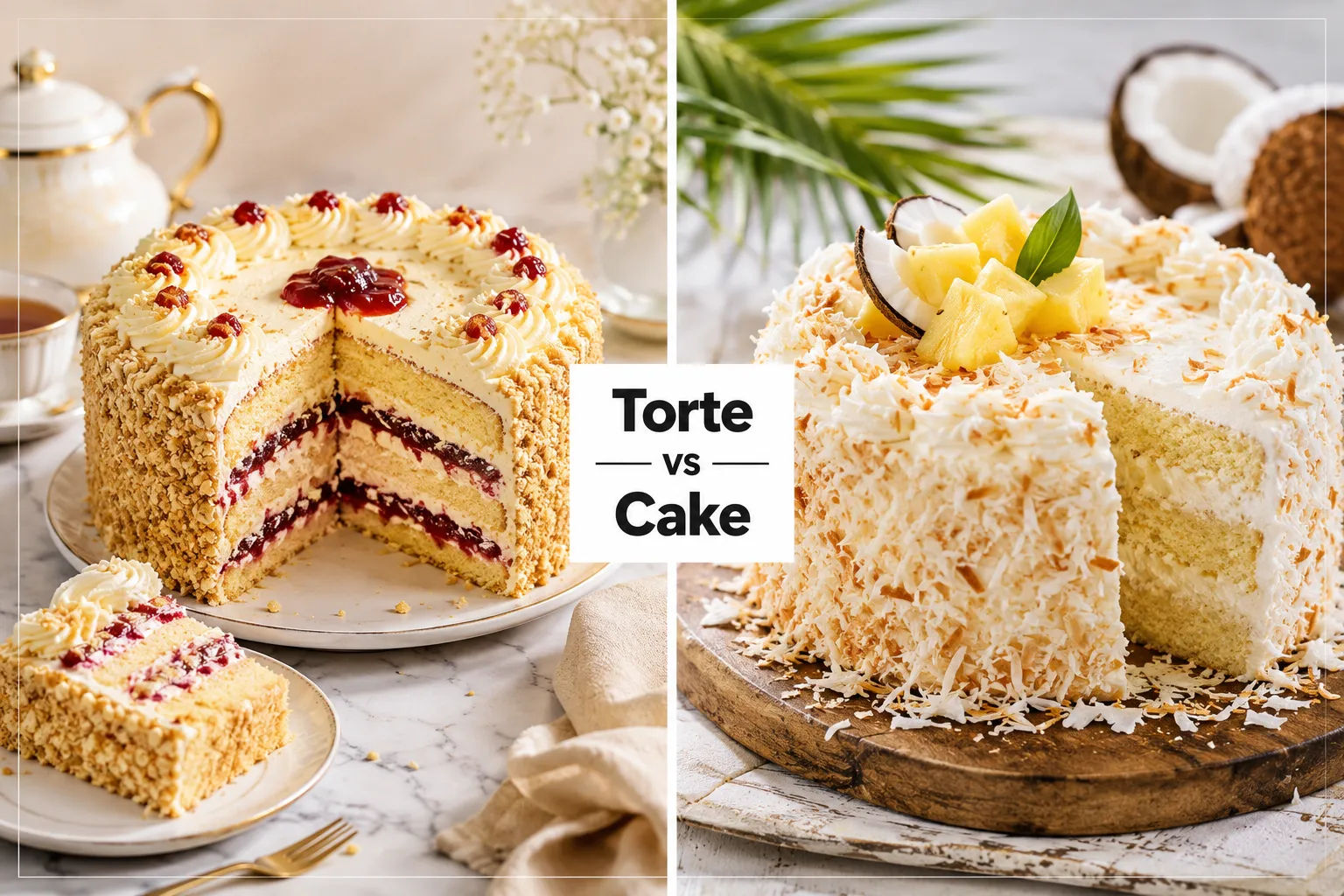
The main difference is structure and ingredient ratio. A coconut cake uses standard all-purpose flour as its base and tends to be lighter and fluffier. A coconut torte uses little to no flour, relying instead on ground nuts or breadcrumbs, which produces a denser, richer result.
| Feature | Coconut Torte | Coconut Cake |
|---|---|---|
| Primary dry ingredient | Ground nuts or breadcrumbs | All-purpose flour |
| Texture | Dense, moist, compact | Light, fluffy, airy |
| Layers | Typically 2 to 4, thin | Often 2 to 3, thicker |
| Serving size | Smaller slices (richer) | Larger slices |
| Gluten-free potential | Naturally easier to adapt | Requires flour substitutes |
Some sources, including DaysPedia, refer to March 13 as “National Coconut Cake Day,” but the majority of holiday calendars, including National Today, calendarr.com, and Days of the Year, use the name “National Coconut Torte Day.” [1][4][9] The distinction matters for baking: if the goal is to honor the holiday correctly, a torte-style preparation is the more accurate choice.
Choose a coconut cake if you want a crowd-pleasing, easier bake for a large group. Choose a coconut torte if you want a more sophisticated, restaurant-style dessert with a richer flavor profile.
Why Is March 13 National Coconut Torte Day?
March 13 National Coconut Torte Day is observed on March 13 each year, but no verified record exists naming the person or organization that first established it. [1][5] This is common among informal U.S. food holidays, many of which were created by food bloggers, trade associations, or enthusiast groups without formal documentation.
What is clear is that the day has appeared consistently on major holiday tracking sites for years, and 2026 calendar listings from calendarr.com, HolidayCalendar.io, and Days of the Year all confirm March 13 as the date. [4][8][9] The holiday functions as a cultural prompt: a reason to bake, visit a bakery, or share a coconut dessert with friends and family.
March placement makes some practical sense. Mid-March sits between Valentine’s Day baking season and the spring holiday rush, giving the day its own space on the calendar. It also falls close to the start of spring in the Northern Hemisphere, when tropical flavors like coconut start to feel seasonally appropriate.
For a broader look at how national food holidays work and how they are celebrated, the national food holidays tag on stillcooking.com covers dozens of similar observances throughout the year.
Who Invented the Coconut Torte?
No single inventor of the coconut torte has been reliably documented. The torte format itself has deep roots in Austrian and German baking, dating back centuries, while coconut became widely available in North America and Europe through 19th-century trade routes. The combination of the two likely emerged gradually rather than through one defined moment.
Shredded and desiccated coconut became a common pantry ingredient in the United States in the late 1800s, and coconut-based desserts grew popular through the early 20th century. The coconut torte as a recognizable dessert category probably solidified during this period, as home bakers and pastry chefs began applying European torte techniques to tropical ingredients.
Bottom line: The coconut torte is a fusion product of European baking tradition and tropical ingredient availability, with no single credited inventor.
How to Make Coconut Torte from Scratch: Best Recipe Guide
A classic coconut torte requires about 90 minutes from start to finish, including baking and cooling time. Below is a reliable base recipe framework.
Ingredients (serves 8 to 10):
- 1 cup finely ground almonds or almond flour
- 1/2 cup fine breadcrumbs (or additional almond flour for gluten-free)
- 1 cup sweetened shredded coconut, toasted
- 5 large eggs, separated
- 3/4 cup granulated sugar
- 1 teaspoon vanilla extract
- 1/4 teaspoon salt
- 1 cup heavy cream (for filling)
- 1/2 cup coconut cream
- 1 cup toasted coconut flakes (for exterior decoration)
Steps:
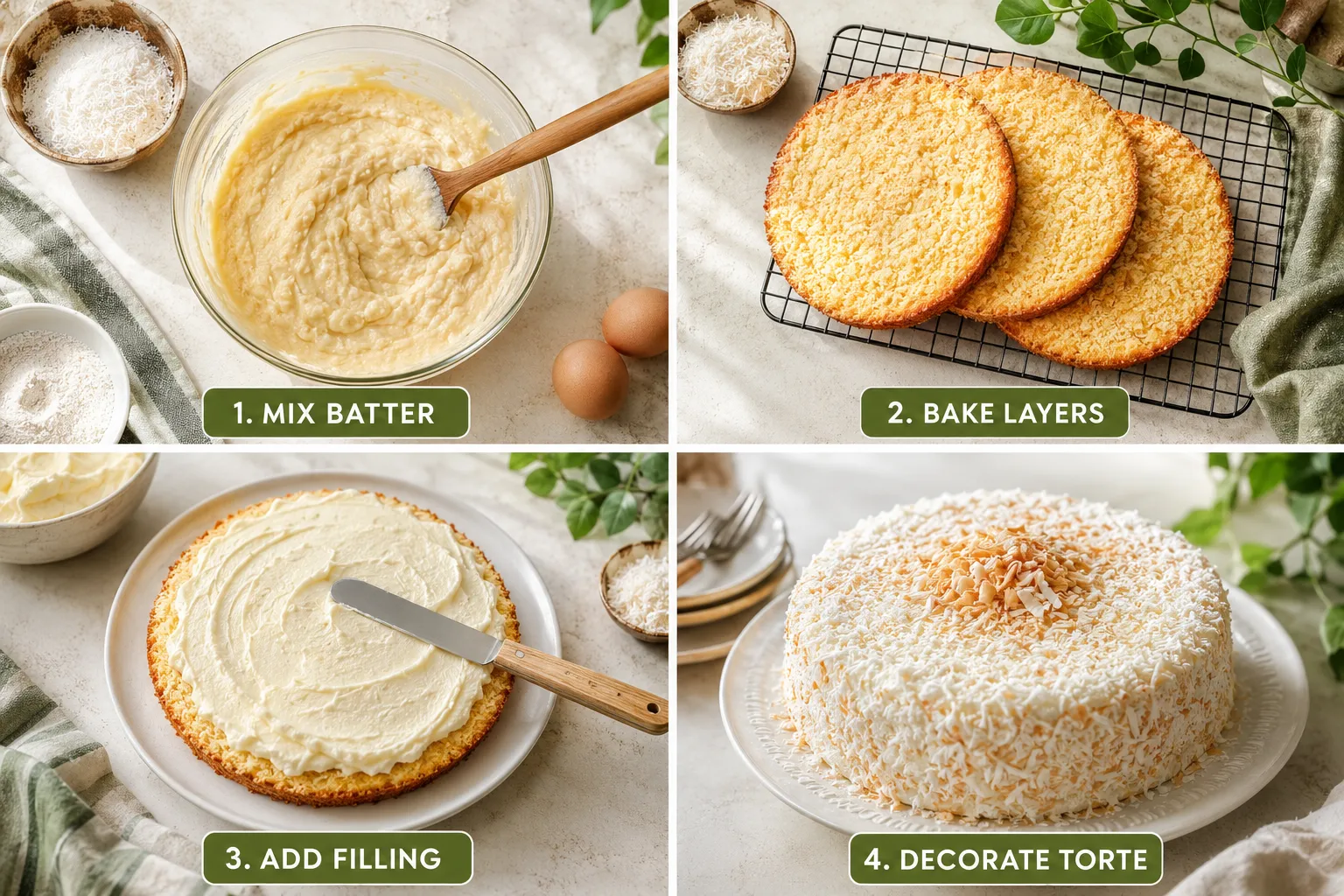
- Preheat oven to 350°F (175°C). Grease two 9-inch round cake pans and line with parchment.
- Beat egg yolks and sugar until pale and thick, about 4 minutes.
- Fold in ground almonds, breadcrumbs, toasted shredded coconut, and vanilla.
- In a separate bowl, beat egg whites with salt to stiff peaks.
- Gently fold egg whites into the batter in three additions to preserve volume.
- Divide batter evenly between pans and bake 25 to 30 minutes, until a toothpick comes out clean.
- Cool completely on a wire rack before removing from pans (at least 45 minutes).
- Whip heavy cream with coconut cream to soft peaks. Spread between layers.
- Frost the outside with remaining coconut cream and press toasted coconut flakes onto all surfaces.
- Refrigerate at least 1 hour before slicing.
Common mistakes to avoid:
- Assembling while layers are still warm (the filling melts and layers slide)
- Skipping the toasting step for coconut (raw coconut lacks depth of flavor)
- Over-folding the egg whites (deflates the batter, producing a flat, dense result)
- Using sweetened coconut for the exterior decoration without balancing sugar in the filling
For more baking inspiration around national food holidays, the guide to National Carrot Cake Day on February 3 and the National Chocolate Cake Day on January 27 both cover layered cake techniques that translate well to torte baking.
Is Coconut Torte Gluten-Free?
A traditional coconut torte is naturally closer to gluten-free than most cakes because the recipe relies on ground nuts rather than wheat flour. However, recipes that include breadcrumbs are not gluten-free unless certified gluten-free breadcrumbs are used.
To make a fully gluten-free coconut torte:
- Replace any breadcrumbs with additional almond flour or certified gluten-free oat flour
- Verify that all packaged coconut products (shredded coconut, coconut cream) are processed in gluten-free facilities
- Use a dedicated gluten-free baking pan to avoid cross-contamination
The result is a dessert that is naturally grain-light and easy to adapt, making it a good choice for guests with gluten sensitivities. Always confirm with guests whether they have celiac disease (requiring strict cross-contamination controls) versus a general gluten preference.
Coconut Torte Without Eggs
An egg-free coconut torte is achievable, though eggs play two structural roles in a traditional recipe: the yolks add richness and the whipped whites provide lift. Replacing both requires a two-part substitution.
Best egg substitutes for coconut torte:
- Aquafaba (liquid from canned chickpeas): 3 tablespoons per egg white, whipped to stiff peaks. Works well for the meringue component.
- Flax egg: 1 tablespoon ground flaxseed plus 3 tablespoons water per whole egg. Adds binding but not lift; best combined with a small amount of baking powder.
- Commercial egg replacer: Products like Bob’s Red Mill Egg Replacer work reliably in dense baked goods.
Egg-free versions tend to be slightly denser and may need an extra 5 to 10 minutes of baking time. The flavor remains largely unchanged because coconut is the dominant note.
Coconut Torte vs German Chocolate Cake
These two desserts share a rich, layered profile but differ significantly in flavor and technique.
Coconut torte: Coconut-forward throughout, uses a nut-based batter, lighter in color, cream or coconut cream filling, decorated with toasted coconut.
German chocolate cake: Chocolate-forward, uses a standard flour-based chocolate sponge, filled with a distinctive pecan-coconut caramel frosting (the “German chocolate” refers to a mild sweet chocolate, not the country), typically frosted with chocolate buttercream on the sides.
The coconut torte is the better choice for guests who want a tropical, coconut-dominant dessert. German chocolate cake is the right pick for chocolate lovers who enjoy coconut as a secondary note. Both are layered, celebration-worthy desserts, but they are not interchangeable in flavor profile.
For other rich, indulgent holiday desserts worth exploring, the National Chocolate Fondue Day guide and the National Dark Chocolate Day overview offer useful context on chocolate-based celebrations.
Where to Buy Coconut Torte and How Much Does It Cost
Coconut tortes are available at European-style bakeries, specialty cake shops, and some grocery store bakery departments. They are less common than standard coconut layer cakes, so calling ahead to confirm availability is advisable.
Where to look:
- Local European or Austrian-style bakeries (most likely to carry an authentic torte)
- Specialty dessert shops and patisseries
- Whole Foods Market and similar upscale grocery bakery counters (seasonal availability)
- Online bakeries that ship nationally (search “coconut torte delivery”)
Typical price ranges (estimates based on general bakery pricing as of 2026):
- Whole 8-inch torte from a specialty bakery: $35 to $65
- Individual slice at a cafe or bakery: $6 to $12
- Homemade (ingredient cost only): $15 to $25
Prices vary by region, bakery type, and whether the torte uses premium ingredients like fresh coconut cream or imported chocolate. Urban specialty bakeries in major cities tend to price at the higher end of these ranges.
Coconut Torte Shelf Life: How Long Does It Last?
A coconut torte with cream filling lasts 3 to 4 days when stored in an airtight container in the refrigerator. Cream-filled tortes should not be left at room temperature for more than 2 hours.
Storage guidelines:
- Refrigerator: 3 to 4 days, covered tightly
- Freezer (unfrosted layers): Up to 2 months, wrapped in plastic and then foil
- Freezer (assembled and frosted): Up to 1 month; texture of the cream filling may change slightly after thawing
- Room temperature: Safe for up to 2 hours during serving; not suitable for overnight storage
To freeze individual slices, place them on a parchment-lined tray until solid, then transfer to a freezer bag. Thaw overnight in the refrigerator for best texture.
Coconut Torte Decoration Ideas
The exterior of a coconut torte is one of its most visually striking features. Toasted coconut flakes pressed onto the sides and top are the classic finish, but several other approaches work well.
Decoration options:
- Toasted coconut flakes: The standard; golden color, nutty aroma, textural contrast
- Coconut macaroon rosettes: Pipe small macaroon-style mounds around the top edge
- Fresh tropical fruit: Mango slices, pineapple chunks, or passion fruit pulp on top for a modern presentation
- Edible flowers: Orchids or hibiscus flowers add color and elegance for special occasions
- Chocolate drizzle: A thin dark chocolate drizzle over toasted coconut creates a contrast that echoes German chocolate cake aesthetics
- Coconut cream swirls: Use a star tip to pipe coconut cream rosettes on top before adding coconut flakes
For a celebration-worthy presentation, combine toasted coconut on the sides with piped coconut cream rosettes and a few edible flowers on top. This approach photographs well and signals effort without requiring advanced decorating skills.

How to Celebrate March 13 National Coconut Torte Day
March 13 National Coconut Torte Day is best celebrated by baking, buying, or sharing a coconut torte. The day is informal, so there are no official events, but several approaches work well.
Ways to celebrate in 2026:
- Bake a coconut torte from scratch using the recipe framework above and share it with coworkers, neighbors, or family
- Visit a local European-style bakery and order a slice or a whole torte
- Host a small dessert gathering and serve coconut torte alongside coffee or tea
- Post a photo of your torte on social media using the hashtag #NationalCoconutTorteDay
- Try a vegan or gluten-free version to make the celebration inclusive for guests with dietary restrictions
- Pair the torte with a complementary drink; coconut flavors work well with light roast coffee, jasmine tea, or a tropical cocktail
If you enjoy celebrating national food days throughout the year, the National Pie Day guide for January 23 and the National Plum Pudding Day feature for February 12 offer similar celebrations worth bookmarking.
FAQ: March 13 National Coconut Torte Day
What day is National Coconut Torte Day in 2026? National Coconut Torte Day falls on Friday, March 13, 2026. [4]
Is National Coconut Torte Day an official U.S. holiday? No. It is an unofficial food observance with no government recognition or legal standing. It appears on popular holiday calendars as a cultural celebration. [1][8]
What is the difference between a torte and a cake? A torte uses ground nuts or breadcrumbs as the primary dry ingredient instead of flour, producing a denser, richer texture. A cake typically relies on all-purpose flour for structure and has a lighter, fluffier crumb.
Can I make a coconut torte without nuts? Yes. Replace ground almonds with certified gluten-free breadcrumbs or a combination of coconut flour and fine breadcrumbs. The texture will be slightly different but still dense and moist.
How far in advance can I make a coconut torte? You can bake the layers up to 2 days ahead and store them wrapped at room temperature. Assemble and frost the day before serving, then refrigerate overnight. This actually improves the flavor as the layers absorb moisture from the filling.
Is coconut torte the same as a Bounty cake? Not exactly. A Bounty-inspired cake mimics the chocolate-coconut candy bar and typically includes a chocolate ganache layer. A coconut torte is coconut-forward without necessarily including chocolate, though chocolate can be added as an accent.
What does coconut torte taste like? It tastes rich, sweet, and strongly of coconut, with a dense, moist crumb and a creamy filling. The toasted coconut exterior adds a slightly nutty, caramelized note that balances the sweetness.
Where did the torte originate? The torte format originated in Central Europe, particularly Austria and Germany, where flourless or low-flour cakes have been a baking tradition for centuries. The Sachertorte and Linzer torte are among the most famous examples.
Can children eat coconut torte? Yes, as long as there are no nut allergies (many recipes use almond flour). Check all ingredients for allergens before serving to children.
What drinks pair well with coconut torte? Light roast coffee, jasmine or green tea, coconut water, or a mild tropical cocktail all complement coconut torte without overpowering its flavor.
Conclusion
March 13 National Coconut Torte Day is a straightforward but genuinely enjoyable food holiday. It highlights a dessert that deserves more attention: the coconut torte is richer and more nuanced than a standard coconut cake, naturally adaptable for gluten-free diets, and visually impressive without requiring professional decorating skills.
Actionable next steps for 2026:
- Mark March 13 on your calendar now so you have time to gather ingredients or locate a local bakery.
- Decide whether you will bake from scratch or buy; if baking, source almond flour and coconut cream at least a day ahead.
- If you have guests with dietary restrictions, plan for a gluten-free or egg-free version using the substitutions outlined above.
- Prepare the layers the day before and assemble on the morning of March 13 for the best texture.
- Share the finished torte and tag it on social media to connect with others celebrating the day.
Whether the goal is a showstopper dessert for a dinner party or a simple weeknight bake to mark the occasion, a coconut torte is a worthwhile project that produces results well beyond its effort level.
References
[1] National Coconut Torte Day – https://nationaltoday.com/national-coconut-torte-day/ [2] dayspedia – https://dayspedia.com/us/calendar/holiday/1173/ [3] National Coconut Torte Day 785 – https://www.wikidates.org/holiday/national-coconut-torte-day_785.html [4] National Coconut Torte Day – https://www.calendarr.com/united-states/national-coconut-torte-day/ [5] National Coconut Torte Day – https://www.holidayscalendar.com/event/national-coconut-torte-day/ [6] Coconut Torte Day – https://www.cooksinfo.com/coconut-torte-day [7] Its National Coconut Torte Day March 13 2025 – https://medium.com/@checkiday/its-national-coconut-torte-day-march-13-2025-db199baf662c [8] National Coconut Torte Day – https://www.holidaycalendar.io/holiday/national-coconut-torte-day [9] daysoftheyear – https://www.daysoftheyear.com/days/mar/13/