
Last updated: May 4, 2026
Quick Answer
May 4 National Orange Juice Day is an unofficial American food holiday celebrated every year on May 4 to honor one of the most popular breakfast beverages in the United States. The day encourages people to enjoy a glass of orange juice, explore fresh-squeezed options, and learn about the nutritional value of this citrus staple. No single governing body owns the holiday, but it is widely recognized across food blogs, social media, and grocery retailers.
Key Takeaways
- May 4 is recognized as National Orange Juice Day in the United States every year.
- The holiday has no single verified founder, but it gained traction through national day calendar sites and social media in the 2010s.
- Orange juice is one of the most consumed fruit juices in the US, with the Florida Department of Citrus reporting it as a multi-billion-dollar industry.
- A standard 8-ounce serving of 100% orange juice contains roughly 110 calories, 26 grams of carbohydrates, and a full day’s supply of vitamin C (based on USDA nutritional data).
- Fresh-squeezed orange juice retains more heat-sensitive nutrients than most pasteurized store-bought options, but both provide significant vitamin C.
- People with diabetes should consume orange juice in moderation due to its naturally high sugar content and relatively high glycemic index.
- Whole oranges are generally considered more nutritious than orange juice because they contain more dietary fiber.
- Celebrations range from making homemade juice to visiting local juice bars or sharing recipes on social media.
- Many grocery chains and juice brands offer discounts and promotions around the holiday.
- Orange juice pairs well with brunch foods, cocktails, and smoothies, making it easy to incorporate into May 4 festivities.
What Is National Orange Juice Day?
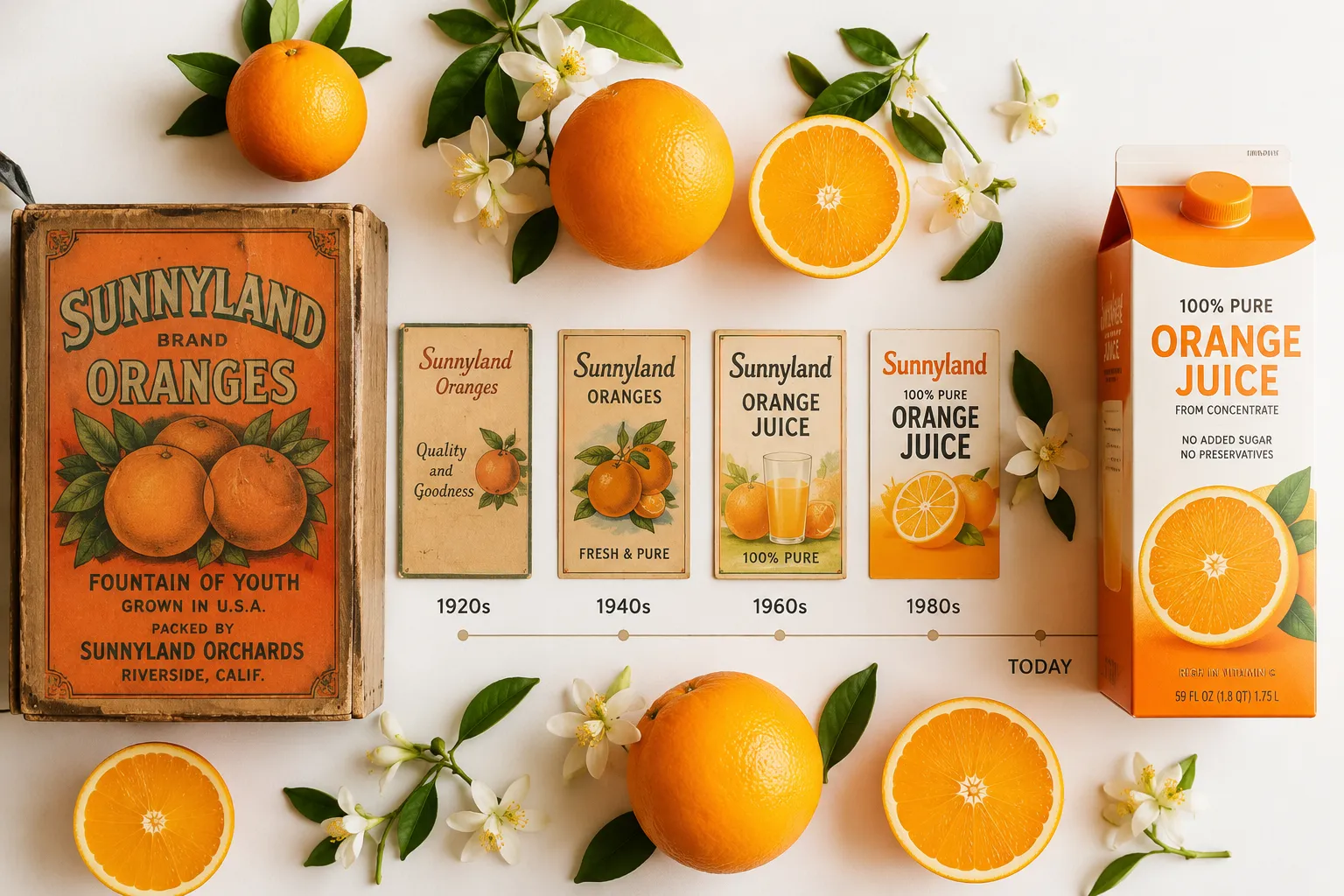
National Orange Juice Day is an informal food holiday in the United States dedicated to celebrating orange juice in all its forms. It falls on May 4 each year and serves as a lighthearted occasion for consumers, brands, and food enthusiasts to spotlight the drink’s history, nutrition, and culinary versatility.
The holiday is not federally recognized, but it appears consistently on national day calendar websites and generates significant social media activity each May. Restaurants, juice bars, and grocery retailers often use the date as a marketing hook to offer promotions and feature orange juice prominently.
If you enjoy tracking food and drink holidays throughout the year, you might also appreciate National Gourmet Coffee Day on January 18 and National Hot Chocolate Day on January 31 as companion beverage celebrations.
When Did National Orange Juice Day Start and Why Is May 4 the Date?
The exact origin of May 4 National Orange Juice Day is not officially documented, and no single organization has claimed credit for establishing it. Like many unofficial food holidays, it likely emerged through grassroots promotion on national day calendar websites during the early-to-mid 2010s and spread through social media sharing.
May 4 may have been chosen partly because spring marks the tail end of Florida’s citrus harvest season, making fresh oranges widely available and top of mind for consumers. It also falls during a period when warmer weather makes cold, refreshing beverages more appealing.
The lack of a formal founder is common among food holidays. Similar unofficial celebrations, such as those found across the national food holidays calendar, follow the same pattern of organic adoption rather than institutional declaration.
How Do People Celebrate May 4 National Orange Juice Day?
Celebrating May 4 National Orange Juice Day is straightforward because orange juice is inexpensive, widely available, and easy to prepare. The most popular ways to mark the day include:
- Make fresh-squeezed juice at home using a manual or electric citrus juicer and navel or Valencia oranges.
- Visit a local juice bar and order a custom citrus blend.
- Try a new orange juice brand from a grocery store, particularly one you have not tasted before.
- Mix a brunch cocktail such as a mimosa or a screwdriver using quality OJ.
- Share on social media using hashtags like #NationalOrangeJuiceDay or #OJDay to connect with other enthusiasts.
- Pair orange juice with brunch foods such as pancakes, eggs, or pastries for a full morning spread.
For brunch inspiration, pairing fresh OJ with foods from the National Blueberry Pancake Day recipe collection or a fresh National Croissant Day spread makes for a well-rounded morning celebration.
Best Orange Juice Brands to Try on Orange Juice Day
Several well-established brands consistently rank highly in consumer taste tests and nutritional comparisons. Choosing the right one depends on your priorities: taste, pulp level, added vitamins, or price.
| Brand | Type | Notable Feature |
|---|---|---|
| Tropicana Pure Premium | Not-from-concentrate | Widely available, smooth taste |
| Simply Orange | Not-from-concentrate | Minimal processing, clean flavor |
| Florida’s Natural | Not-from-concentrate | Florida-grown oranges |
| Natalie’s Orchid Island | Fresh-squeezed | Premium, refrigerated, short shelf life |
| Minute Maid | From-concentrate | Budget-friendly, widely available |
| Lakewood Organic | Cold-pressed | USDA organic certified |
Choose fresh-squeezed or cold-pressed if you want maximum nutrient retention and are willing to pay a premium. Choose not-from-concentrate if you want a balance of quality and convenience. Choose from-concentrate if budget is the primary concern.
Fresh-Squeezed vs. Store-Bought Orange Juice: Which Is Better?
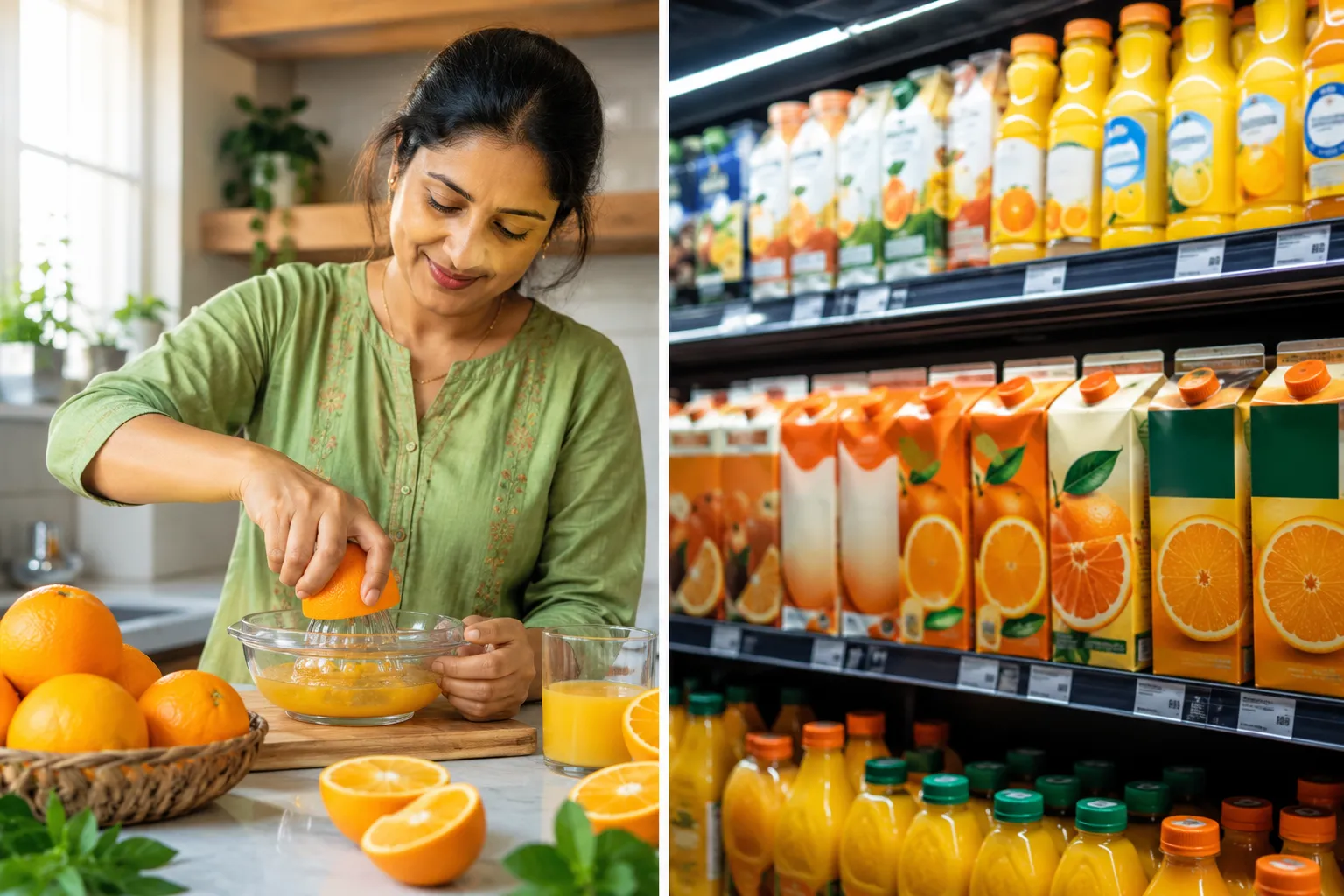
Fresh-squeezed orange juice generally retains more heat-sensitive nutrients, particularly vitamin C and certain flavonoids, because it skips the pasteurization process. Store-bought juice is pasteurized to extend shelf life, which reduces some nutrient content, though most brands add vitamin C back after processing.
Key differences to consider:
- Nutrient retention: Fresh-squeezed wins, especially for heat-sensitive compounds.
- Shelf life: Store-bought lasts weeks to months; fresh-squeezed should be consumed within 2 to 3 days.
- Cost: Fresh-squeezed costs significantly more per serving, whether made at home or purchased from a juice bar.
- Convenience: Store-bought is far more practical for daily use.
- Sugar content: Both contain similar amounts of natural sugar per serving; neither is lower-sugar by default.
- Additives: Some store-bought brands add flavor packs or preservatives; check the label for “100% juice” with no added sugars.
Bottom line: For everyday use, a quality not-from-concentrate 100% orange juice is a practical and nutritious choice. For a special occasion like May 4 National Orange Juice Day, fresh-squeezed is worth the extra effort.
Health Benefits of Drinking Orange Juice
Orange juice provides several well-documented health benefits when consumed as part of a balanced diet. It is one of the most efficient dietary sources of vitamin C, which supports immune function, skin health, and iron absorption.
Key health benefits backed by nutritional science:
- Vitamin C: One 8-ounce serving typically provides 100% or more of the recommended daily intake for adults (based on USDA data).
- Potassium: Supports healthy blood pressure and heart function.
- Folate: Important for cell growth and particularly valuable during pregnancy.
- Flavonoids: Compounds like hesperidin found in orange juice have been studied for potential anti-inflammatory and cardiovascular benefits.
- Hydration: Orange juice is roughly 88% water, contributing to daily fluid intake.
Important caveat: Orange juice is also high in natural sugar and calories. The health benefits are most relevant when OJ replaces less nutritious beverages, not when it is added on top of an already high-sugar diet.
Orange Juice Nutrition Facts and Calories
A standard 8-ounce (240 ml) serving of 100% orange juice (not-from-concentrate, no added sugar) contains approximately the following, according to USDA FoodData Central:
- Calories: 110
- Total carbohydrates: 26 g
- Natural sugars: 21 g
- Dietary fiber: 0.5 g (minimal compared to whole fruit)
- Protein: 2 g
- Fat: 0 g
- Vitamin C: 93-124 mg (roughly 100-138% of the daily value)
- Potassium: 496 mg (about 11% of daily value)
- Folate: 74 mcg (about 19% of daily value)
These values vary slightly by brand and orange variety. Pulp-included versions contain marginally more fiber.
How Much Orange Juice Is Too Much to Drink Daily?
Most nutrition guidelines suggest limiting orange juice to one 4-to-8-ounce serving per day for most healthy adults. Drinking more than 8 ounces daily on a regular basis can contribute excess sugar and calories to the diet without providing the fiber that would come from eating whole fruit.
The American Heart Association recommends limiting added and free sugars broadly, and while orange juice contains natural sugars rather than added ones, the effect on blood glucose is similar. For children, the American Academy of Pediatrics (AAP) recommends no more than 4 ounces per day for children ages 1 to 3, and no more than 4 to 6 ounces for children ages 4 to 6.
Edge case: Athletes and people with high caloric needs may tolerate more without negative effects, since the carbohydrates in OJ can serve as a fast energy source around exercise.
Can You Drink Orange Juice If You Have Diabetes?
People with diabetes can drink orange juice, but portion control is essential. Orange juice has a glycemic index of approximately 50 (medium range), and an 8-ounce serving delivers around 21 grams of natural sugar, which can raise blood glucose relatively quickly.
Practical guidance for people with diabetes:
- Limit servings to 4 ounces or less at a time.
- Pair OJ with protein or fat (such as eggs or nuts) to slow glucose absorption.
- Monitor blood glucose response, as individual reactions vary.
- Consider eating a whole orange instead, since the fiber slows sugar absorption.
- Consult a registered dietitian or endocrinologist for personalized guidance.
Choose whole oranges over juice if blood sugar management is a priority. The fiber in whole fruit meaningfully reduces the glycemic impact.
Orange Juice vs. Whole Orange: Which Is Healthier?
Whole oranges are generally the healthier choice because they contain significantly more dietary fiber than orange juice. A medium orange provides about 3 grams of fiber, compared to less than 1 gram in a typical serving of juice. Fiber slows sugar absorption, supports digestive health, and contributes to satiety.
That said, orange juice is not unhealthy. It delivers concentrated vitamins and minerals efficiently and is a practical option for people who struggle to eat enough fruit. The choice comes down to context:
- Choose whole oranges if you are managing blood sugar, watching calorie intake, or want more fiber.
- Choose orange juice if you need a quick source of vitamin C, are recovering from illness, or want a convenient nutrient boost.
For more ideas on using citrus in cooking and baking, the 692 Orange Cookbook on stillcooking.com offers a wide range of orange-based recipes beyond the glass.
Homemade Orange Juice Recipes for Orange Juice Day
Making fresh orange juice at home requires minimal equipment and takes under 10 minutes. Here are three approaches suited to different preferences:
Classic Fresh-Squeezed OJ
- Select 4 to 6 ripe navel or Valencia oranges.
- Roll each orange firmly on the counter to break down the inner membranes.
- Cut in half and press on a manual or electric citrus juicer.
- Strain if you prefer pulp-free juice; leave unstrained for more fiber.
- Serve immediately over ice.
Orange-Ginger Wellness Shot
- Juice 2 oranges, 1 small knob of fresh ginger (about 1 inch), and half a lemon together.
- Strain and serve in a shot glass. Rich in vitamin C and anti-inflammatory compounds.
Orange Sunrise Smoothie
- Blend 1 cup fresh OJ, 1 frozen banana, half a cup of frozen mango, and a tablespoon of chia seeds.
- Thick, filling, and high in potassium and fiber.
Mimosa (for adults)
- Combine equal parts chilled 100% orange juice and dry sparkling wine or champagne.
- Serve in a flute. A classic brunch cocktail that pairs well with the holiday spirit.
If you enjoy exploring beverage-based food holidays, the drink holidays tag on stillcooking.com covers a wide range of similar celebrations throughout the year.
Where to Buy Fresh Orange Juice Near Me and Orange Juice Day Deals in 2026
Fresh orange juice is available at several types of outlets, depending on how premium an experience you want:
- Grocery stores: Most major chains (Whole Foods, Kroger, Publix, Trader Joe’s) carry fresh-squeezed or cold-pressed OJ in the refrigerated section near produce.
- Juice bars and smoothie chains: Jamba Juice, Pressed Juicery, and local independent juice bars typically offer freshly made citrus juice.
- Farmers markets: Local citrus growers in Florida, California, and Texas often sell fresh-squeezed juice directly.
- Online delivery: Services like Instacart and Amazon Fresh can deliver premium juice brands same-day in many metro areas.
For deals in 2026: Watch for May 4 promotions from brands like Tropicana, Simply Orange, and Florida’s Natural on their social media channels. Grocery chains often run buy-one-get-one deals on refrigerated juice around food holidays. Juice bar chains may offer a free upgrade or discounted size on May 4. Signing up for email lists from your favorite brands before the holiday is the most reliable way to catch limited-time offers.
Frequently Asked Questions About May 4 National Orange Juice Day
Q: Is May 4 National Orange Juice Day an official US holiday? No. It is an unofficial food holiday with no federal or state recognition. It is observed informally through social media, food blogs, and retail promotions.
Q: Is there more than one National Orange Juice Day? Some sources list a second orange juice observance in October, but May 4 is the most widely recognized and consistently cited date across national day calendar platforms.
Q: Can I drink orange juice on an empty stomach? Yes, though some people experience mild acid reflux or stomach discomfort due to the acidity of orange juice. If you are sensitive to acidic foods, eating something small alongside it can help.
Q: Does orange juice count toward daily fruit servings? According to the USDA Dietary Guidelines, 4 ounces of 100% fruit juice counts as one half-cup fruit equivalent. However, guidelines recommend prioritizing whole fruit over juice for most servings due to the fiber content.
Q: What is the best orange variety for juicing? Valencia oranges are considered the gold standard for juicing because of their high juice content and balanced sweet-tart flavor. Navel oranges work well but can turn slightly bitter if the juice sits too long after squeezing.
Q: Is orange juice good for a cold? Orange juice provides a concentrated dose of vitamin C, which supports immune function. However, the evidence that vitamin C shortens colds is modest. It is a helpful addition to a recovery diet but not a cure on its own.
Q: How long does fresh-squeezed orange juice last? Fresh-squeezed orange juice should be stored in a sealed container in the refrigerator and consumed within 2 to 3 days for best flavor and nutrient retention.
Q: Is orange juice vegan? Yes, 100% orange juice is naturally vegan. Some calcium-fortified versions use fish-derived omega-3s or vitamin D3 sourced from lanolin; check the label if strict veganism is a concern.
Q: What is the difference between “not-from-concentrate” and “from-concentrate” OJ? Not-from-concentrate juice is squeezed, pasteurized, and packaged without removing water. From-concentrate juice has water removed during processing and then re-added before packaging. Not-from-concentrate generally has a fresher taste and slightly higher nutrient retention.
Q: Can children celebrate National Orange Juice Day? Yes, but portion size matters. The American Academy of Pediatrics recommends limiting juice to 4 ounces per day for young children. A small glass of 100% OJ is a perfectly appropriate way for kids to participate.
Conclusion
May 4 National Orange Juice Day is a simple but worthwhile occasion to reconnect with a beverage that has been a morning staple for generations. Whether you squeeze your own juice, pick up a premium cold-pressed bottle, or blend a citrus smoothie, the holiday offers a low-barrier way to celebrate good nutrition and seasonal flavors.
Actionable next steps for May 4, 2026:
- Pick up 6 to 8 Valencia or navel oranges from a local market and make fresh-squeezed juice the morning of May 4.
- Compare a fresh-squeezed glass against your usual store-bought brand to notice the flavor difference firsthand.
- Check the social media pages of your favorite OJ brands for May 4 discount codes or promotions.
- If you have children, involve them in the juicing process as a hands-on kitchen activity.
- Share your OJ creation on social media with the hashtag #NationalOrangeJuiceDay to join the broader conversation.
For more food holiday inspiration throughout the year, explore the national food days collection on stillcooking.com and discover what is worth celebrating next.