
Last updated: June 24, 2026
Quick Answer
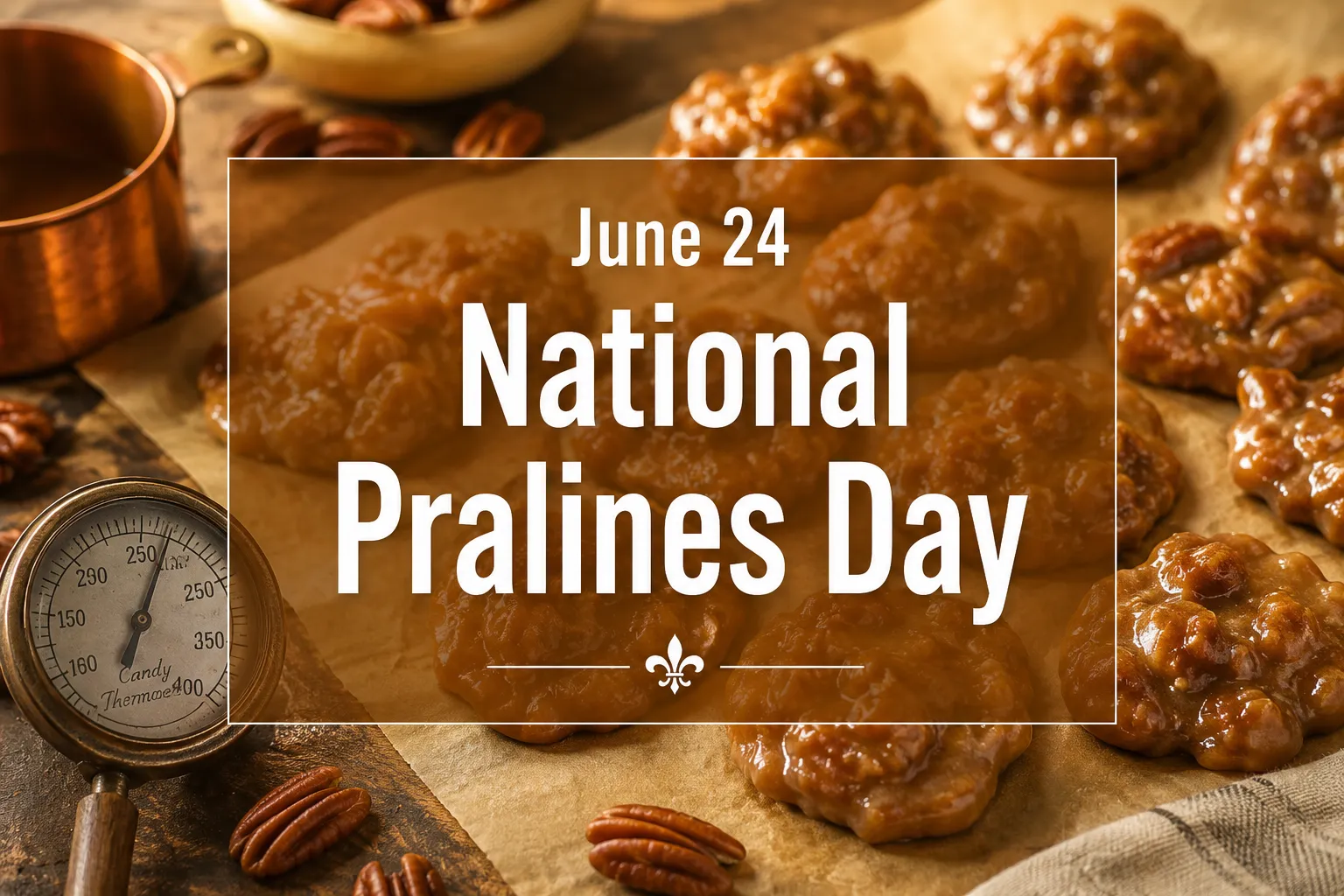
June 24 National Pralines Day is an annual food holiday celebrated every June 24 in the United States, dedicated to one of America’s most beloved confections: the praline. Pralines are sugar-based candies made with nuts (most commonly pecans in the American South), cream, and butter, cooked to a soft, fudge-like texture. The day invites candy lovers to make pralines at home, buy from specialty shops, or simply enjoy this rich, nutty treat.
Key Takeaways
- June 24 is National Pralines Day in the United States, observed annually [2]
- American pralines differ significantly from their French and Belgian counterparts
- The candy traces its roots to 17th-century France, then evolved in New Orleans
- Core ingredients are sugar, cream or milk, butter, and pecans
- Pralines can go grainy if the sugar crystallizes too early during cooking
- Most commercial pralines are naturally gluten free, but always check labels
- Homemade pralines cost very little to make, roughly $5 to $10 for a full batch (estimate based on typical grocery prices)
- Store pralines at room temperature in an airtight container for up to two weeks
- You can make pralines without nuts using seeds or dried fruit as substitutes
- New Orleans is considered the praline capital of the United States [2]
When Is National Pralines Day Celebrated?
National Pralines Day falls on June 24 every year [1][2]. It is a U.S.-based observance and does not have an official government designation, but it is widely recognized across food holiday calendars and celebrated by candy makers, confectionery shops, and home cooks alike [3][5].
June 24 sits in the heart of summer, making pralines a fitting treat, they pair well with iced coffee, cold milk, or a scoop of vanilla ice cream on a warm afternoon.
Who Invented Pralines?
Pralines were invented in France in the early 17th century. The candy is named after French diplomat César de Choiseul, Comte du Plessis-Praslin, whose personal chef reportedly created the original recipe around 1630 by coating almonds in caramelized sugar [2][6]. That original French version was a hard, crunchy almond candy.
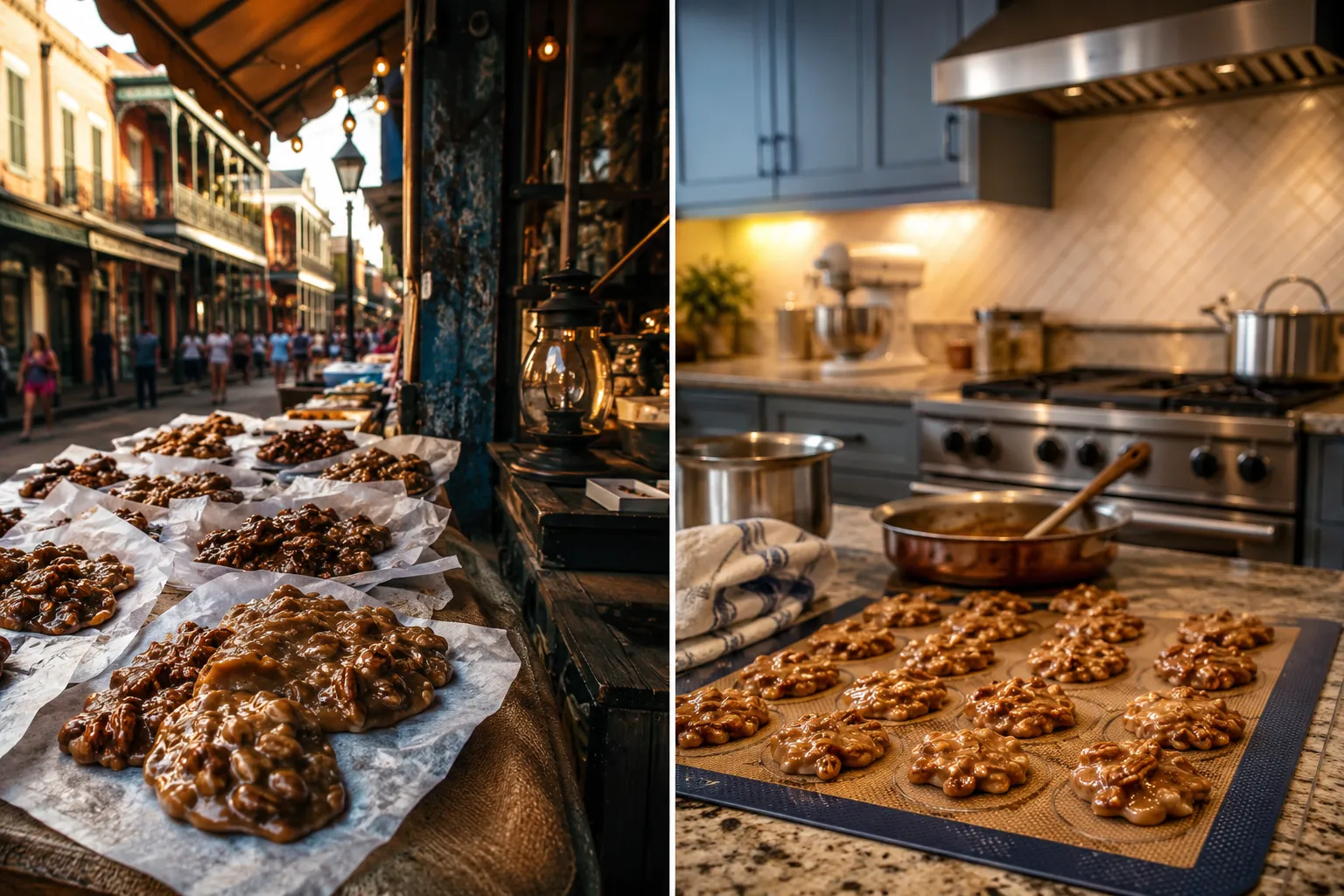
When French colonists arrived in Louisiana, they adapted the recipe using locally abundant pecans instead of almonds and added cream to create a softer, creamier texture. New Orleans candy makers, many of them Creole women who sold pralines on the streets, transformed the confection into the distinctly American version recognized today [2][7].
“New Orleans pralines are a direct product of cultural exchange: French technique, Southern ingredients, and Creole entrepreneurship.”
What Are Pralines Made Of?
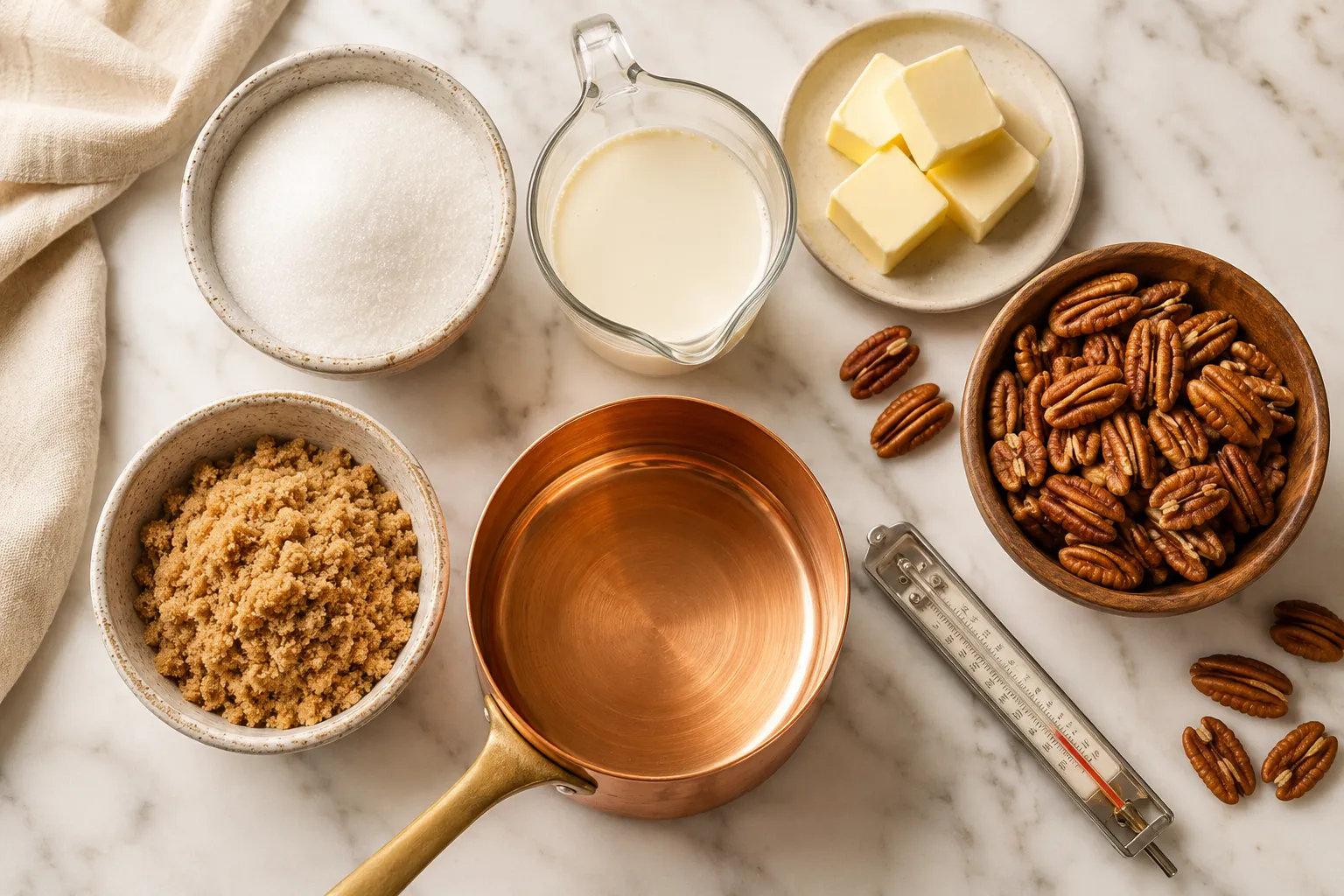
American pralines are made from four core ingredients: sugar, brown sugar, heavy cream (or evaporated milk), butter, and pecans. Some recipes add vanilla extract or a pinch of salt to deepen the flavor [6][8].
The basic formula:
- 1 cup granulated white sugar
- 1 cup packed brown sugar
- 1/2 cup heavy cream or whole milk
- 2 tablespoons unsalted butter
- 1 1/2 cups pecan halves
- 1 teaspoon vanilla extract
The mixture is cooked on the stovetop to the “soft ball” stage (235 to 240 degrees Fahrenheit on a candy thermometer), then beaten off heat until it thickens and is spooned onto parchment paper to set.
French pralines use almonds coated in hard caramel. Belgian pralines are chocolate confections with a soft filling, a completely different product that shares only the name.
Difference Between Pralines and Other Candies
Pralines are distinct from most other candies in texture, method, and ingredients. Here is how they compare:
| Candy | Base | Texture | Key Difference |
|---|---|---|---|
| American Praline | Sugar + cream + pecans | Soft, fudge-like | Creamy, crumbly, nut-forward |
| Fudge | Sugar + cream + chocolate | Dense, smooth | Usually chocolate-based |
| Toffee | Sugar + butter | Hard, brittle | No cream; cooked to hard crack stage |
| Caramel | Sugar + cream + butter | Chewy or soft | No nuts; lower cook temperature |
| Brittle | Sugar + nuts | Hard, snappy | No cream; cooked to hard crack stage |
If you enjoy similar nutty confections, also check out our guide to National Nutty Fudge Day on May 12 and the National Pecan Day celebration on April 14.
How to Make Homemade Pralines
Making pralines at home is straightforward, but temperature control is critical. Follow these steps for a reliable batch:
What you need:
- Candy thermometer
- Heavy-bottomed saucepan (3-quart minimum)
- Parchment paper or a silicone baking mat
- Wooden spoon or silicone spatula
Step-by-step process:
- Line two baking sheets with parchment paper and set aside.
- Combine both sugars, cream, and butter in the saucepan over medium heat.
- Stir constantly until the sugar dissolves, then stop stirring.
- Clip the candy thermometer to the pan and cook until the mixture reaches 238 to 240 degrees Fahrenheit (soft ball stage).
- Remove from heat immediately. Add pecans and vanilla.
- Beat vigorously with a wooden spoon for 2 to 3 minutes until the mixture thickens and loses its gloss.
- Working quickly, drop spoonfuls onto the parchment paper.
- Allow to cool and set at room temperature for 20 to 30 minutes.
Common mistake: Stirring the mixture after it reaches a boil causes premature sugar crystallization, which leads to grainy pralines (more on that below).
Why Do Pralines Get Grainy?
Grainy pralines result from sugar recrystallizing too early in the cooking process. This happens when sugar crystals form on the sides of the pan and fall back into the mixture, or when the candy is stirred after it begins boiling [8].
How to prevent it:
- Use a pastry brush dipped in water to wash down any sugar crystals from the pan sides during cooking
- Do not stir once the mixture reaches a boil
- Make sure your pan and utensils are completely clean before starting
- Cook in low humidity, humid weather is the enemy of candy making
If your pralines do turn grainy, they are still edible. Crumble them over ice cream or stir them into oatmeal as a topping.
Pralines vs Pecans in Candy: What Is the Difference?
Pralines are a finished candy product; pecans are simply the nut used inside them. The confusion arises because “pecan pralines” and “pralines” are used interchangeably in the American South [2][7].
A praline refers to the entire confection: the cooked sugar-cream base plus the nuts. A candied pecan or glazed pecan, by contrast, is a single pecan coated in sugar or syrup without the creamy fudge base. Pralines are softer, richer, and more complex in flavor than simple candied nuts.
Are Pralines Gluten Free?
Most traditional American pralines are naturally gluten free because the core ingredients, sugar, cream, butter, and pecans, contain no gluten [6]. However, always check labels on store-bought pralines, as some manufacturers may process them in facilities that also handle wheat products, creating cross-contamination risk.
Choose pralines labeled gluten free if:
- You have celiac disease or a diagnosed gluten sensitivity
- The product is made in a shared facility
- The recipe includes added flavorings or coatings that may contain gluten
Homemade pralines using pure ingredients are a safe option for most people avoiding gluten, provided all tools and surfaces are clean.
Can You Make Pralines Without Nuts?
Yes, pralines can be made without nuts, though the result is technically a plain sugar candy rather than a traditional praline. Nut-free alternatives include:
- Sunflower seeds or pumpkin seeds for a similar crunch without tree nuts
- Dried cranberries or cherries for a fruity variation
- Shredded toasted coconut for a tropical spin
- Crushed pretzels added after cooking for a salty-sweet version
People with nut allergies should note that most commercial pralines are made in facilities that process tree nuts, so homemade versions are the safest route.
For more candy-making inspiration, see our National Truffles Day guide for May 2 and the National Taffy Day article for May 23.
How to Store Pralines So They Don’t Go Bad
Store pralines at room temperature in an airtight container, with layers separated by wax paper or parchment [8]. Properly stored, they last up to two weeks.
Storage tips:
- Keep away from heat and direct sunlight, which can cause them to melt or become sticky
- Do not refrigerate, cold air draws moisture, making pralines sticky and soft
- Freeze for up to three months by wrapping each piece individually in plastic wrap, then placing in a freezer bag
- Thaw frozen pralines at room temperature for 30 minutes before serving
Best Pralines Brands to Buy and Where to Find Them
Several well-regarded brands specialize in Southern-style pralines [5][7]:
- Aunt Sally’s Pralines (New Orleans), one of the most recognized names in traditional Creole pralines, available online and at their French Quarter shop
- Southern Candymakers (New Orleans), handmade pralines in classic and flavored varieties
- Evans Creole Candy Factory (New Orleans), a historic maker with a strong regional reputation
- Savannah’s Candy Kitchen (Savannah, GA), ships nationwide and offers pecan pralines alongside other Southern sweets
Where to buy pralines near you:
- Specialty candy shops and confectioneries in the American South
- Farmers markets and food festivals
- Online retailers including Amazon, Goldbelly, and brand websites
- Grocery stores in Louisiana, Georgia, and Texas often stock local brands
Pralines Price and Cost
Praline prices vary by source and quantity [5][9]:
- Homemade batch (12 to 16 pieces): Approximately $5 to $10 in ingredients (estimate based on typical U.S. grocery prices for sugar, cream, butter, and pecans)
- Artisan/specialty shop: $2 to $4 per individual praline
- Gift boxes (12 pieces): $18 to $35 from premium brands
- Bulk orders (for events): $50 to $150+ depending on quantity and customization
The praline confectionery market is a significant segment of the specialty candy industry, with consumer demand concentrated in the Gulf Coast states and growing through e-commerce channels [9].
How to Celebrate June 24 National Pralines Day in 2026
June 24 National Pralines Day is best celebrated by doing one or more of the following:
At home:
- Make a classic pecan praline recipe from scratch using the steps above
- Host a candy-making session with friends or family
- Try a flavored variation: bourbon pralines, chocolate-drizzled pralines, or spiced pralines with cinnamon and cayenne
Out and about:
- Visit a local candy shop or confectionery and ask if they are running National Pralines Day specials
- Order a gift box of New Orleans-style pralines online to share at work or give as a gift
- Share your praline photos on social media using #NationalPrainesDay and #June24
Pair pralines with:
- A strong cup of iced coffee (see our National Iced Coffee Day guide for pairing ideas)
- Vanilla ice cream or gelato
- A warm butterscotch brownie (check out National Butterscotch Brownie Day on May 9)
Candy lovers who enjoy exploring food holidays will also appreciate the National Chocolate Caramel Day celebration on March 19 and the February 14 National Creme-Filled Chocolates Day guide.
FAQ
What day is National Pralines Day? National Pralines Day is celebrated on June 24 every year in the United States.
Are pralines the same as caramels? No. Pralines are cooked to a higher temperature and include nuts, resulting in a crumbly, fudge-like texture. Caramels are chewy and typically contain no nuts.
What kind of nuts are in pralines? American pralines traditionally use pecans. French pralines use almonds. Some modern recipes substitute cashews or walnuts.
Can pralines be made dairy free? Yes. Substitute full-fat coconut milk for heavy cream and use vegan butter. The texture will be slightly different but still acceptable.
How do you know when pralines are done cooking? The mixture is ready when it reaches 238 to 240 degrees Fahrenheit on a candy thermometer (soft ball stage). Without a thermometer, drop a small amount into cold water, it should form a soft, pliable ball.
Why are my pralines too soft and won’t set? The sugar mixture did not reach a high enough temperature. Reheat the batch gently and cook to the proper soft ball stage, then beat and re-drop.
Are pralines the same thing in France and the U.S.? No. French pralines are hard caramelized almonds. Belgian pralines are chocolate shells with soft fillings. American pralines are soft, creamy pecan candies.
How long do homemade pralines last? Up to two weeks at room temperature in an airtight container, or up to three months in the freezer.
Do pralines contain gluten? Traditional pralines made from sugar, cream, butter, and pecans are gluten free. Always verify labels on commercial products for cross-contamination warnings.
What is the best way to package pralines as gifts? Wrap each praline individually in wax paper, then place in a decorative tin or box lined with tissue paper. Include a small card noting the flavor and any allergen information.
Conclusion
June 24 National Pralines Day is more than a quirky calendar entry, it is a genuine opportunity to connect with a centuries-old candy tradition that spans French aristocratic kitchens, New Orleans street markets, and modern home confectioneries. Whether you make a batch from scratch, order from a beloved Southern brand, or simply share a box with colleagues, the day rewards anyone willing to engage with it.
Actionable next steps for 2026:
- Mark June 24 on your calendar now and gather ingredients (sugar, brown sugar, cream, butter, pecans) a day ahead.
- Use a candy thermometer, it is the single most important tool for consistent results.
- Avoid stirring after the boil begins to prevent grainy texture.
- Share your results on social media with #NationalPrainesDay to join the wider community.
- If baking is not your thing, order from Aunt Sally’s or Southern Candymakers online and have pralines delivered in time for June 24.
Pralines reward patience and precision. Get the temperature right, beat at the right moment, and the result is a candy that has endured for nearly 400 years, for very good reason.
References
[1] National Pralines Day – https://www.holidaycalendar.io/holiday/national-pralines-day [2] National Pralines Day – https://nationaltoday.com/national-pralines-day/ [3] anydayguide – https://anydayguide.com/calendar/1110 [4] dayspedia – https://dayspedia.com/us/calendar/holiday/1503/ [5] National Pralines Day – https://www.calendarr.com/united-states/national-pralines-day/ [6] National Pralines Day – https://www.punchbowl.com/holidays/national-pralines-day [7] National Pralines Day – https://holidaytoday.org/national-pralines-day/ [8] National Pralines Day – https://www.checkiday.com/8e2c0363ac13f8c3015d250e96204a2c/national-pralines-day [9] Praline Market Report – https://www.datainsightsmarket.com/reports/praline-1252614