
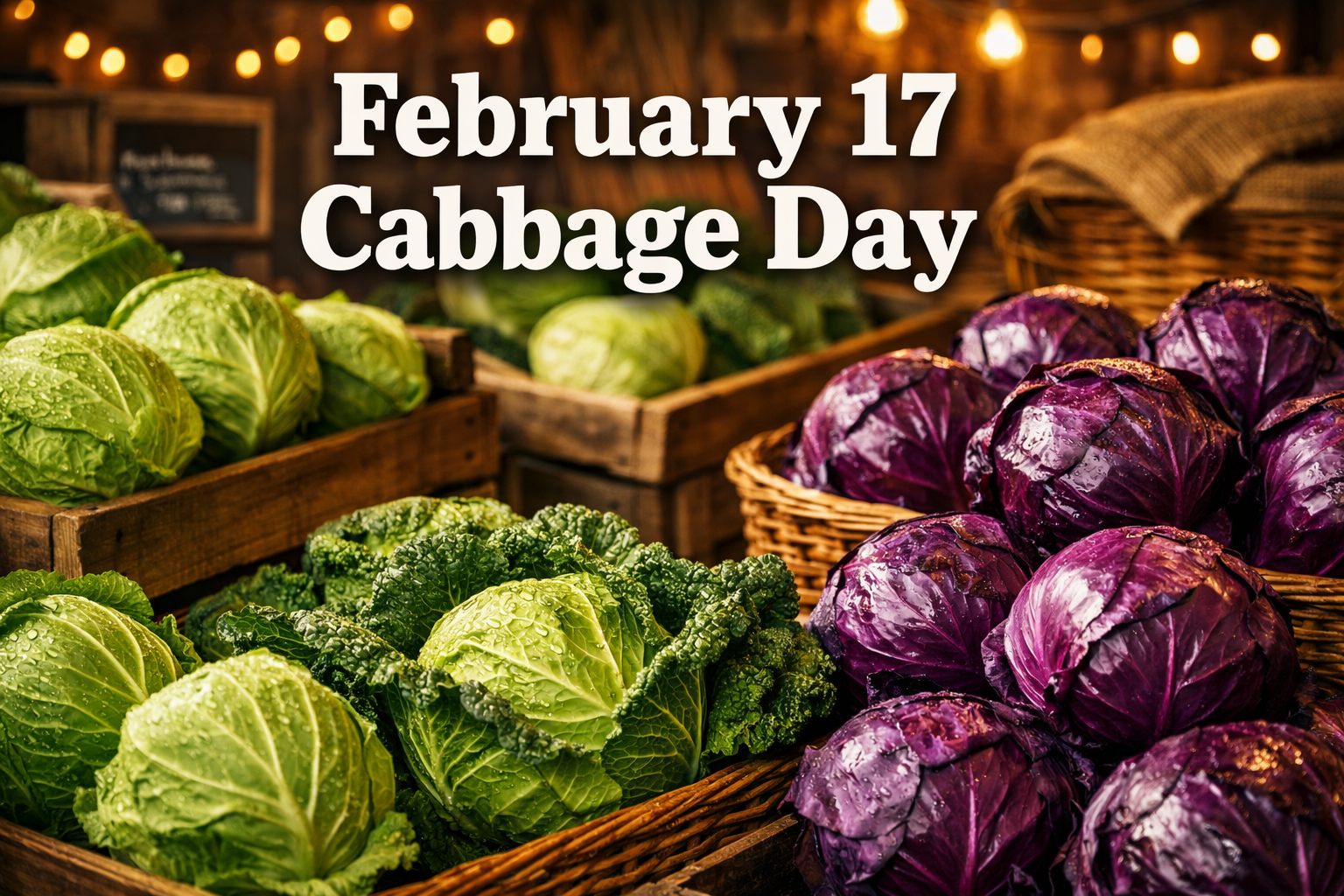
Every year, food lovers, home cooks, and health enthusiasts find a reason to celebrate one of the most underrated vegetables on the planet. February 17 Cabbage Day turns the spotlight on a humble, nutrient-packed leafy green that has fed civilizations for thousands of years. Whether you’re a seasoned chef or someone who has never given cabbage a second thought, this quirky food holiday offers a perfect excuse to explore the surprising depth of one of nature’s most versatile vegetables.
Key Takeaways
- 📅 February 17 Cabbage Day is an annual food holiday celebrated on February 17th each year.
- 🥬 Cabbage is one of the oldest cultivated vegetables, with a history stretching back over 4,000 years.
- 💪 Cabbage is rich in vitamins C and K, fiber, and powerful antioxidants, making it a true nutritional powerhouse.
- 🍽️ The holiday encourages people to cook with, share, and appreciate cabbage in all its many forms.
- 🌍 Cabbage plays a central role in cuisines across Europe, Asia, and the Americas.
What Is February 17 Cabbage Day?
February 17 Cabbage Day is an unofficial food holiday dedicated to celebrating the cabbage plant (Brassica oleracea var. capitata). Like many food holidays on the calendar, its exact origin is informal — it grew organically through food bloggers, social media communities, and culinary enthusiasts who wanted to shine a light on everyday ingredients that often get overlooked.
The day encourages people to:
- Cook a new cabbage recipe
- Share cabbage dishes on social media
- Learn about the vegetable’s rich history and health benefits
- Visit local farmers’ markets to pick up fresh heads
“Cabbage is the vegetable that built empires and fed generations — it deserves its own day.” — Food historians often note cabbage’s outsized role in global culinary history.
While it may not be a federally recognized holiday, February 17 Cabbage Day has gained a loyal following in 2026, especially across food-focused online communities and health-conscious households.
A Brief History of Cabbage
Long before February 17 Cabbage Day existed, cabbage was already a global superstar.
Ancient Roots 🌿
Cabbage has been cultivated for more than 4,000 years. Ancient Greeks and Romans prized it both as food and medicine. Roman soldiers reportedly ate cabbage before battles, believing it gave them strength and endurance.
Cabbage Around the World
| Region | Traditional Cabbage Dish |
|---|---|
| Germany | Sauerkraut |
| South Korea | Kimchi |
| Poland | Bigos (Hunter’s Stew) |
| Ireland | Colcannon |
| China | Stir-fried Napa Cabbage |
| Eastern Europe | Stuffed Cabbage Rolls (Golabki) |
Cabbage traveled with explorers and settlers, becoming a staple crop across continents because it grew in cold climates, stored well, and provided essential nutrients during long winters and sea voyages. Captain James Cook famously carried barrels of sauerkraut to prevent scurvy among his crew.
Why Cabbage Deserves the Spotlight
Nutritional Powerhouse 💪
One of the best reasons to celebrate February 17 Cabbage Day is the remarkable nutritional profile of this leafy vegetable. Cabbage is low in calories but high in essential nutrients.
Key nutrients in one cup (89g) of raw green cabbage:
- Calories: ~22
- Vitamin C: 54% of the Daily Value (DV)
- Vitamin K: 85% of the DV
- Folate: 10% of the DV
- Fiber: 2.2 grams
- Potassium: 151 mg
Cabbage also contains powerful antioxidants like sulforaphane and kaempferol, which research has linked to reduced inflammation and potential cancer-protective properties.
Types of Cabbage Worth Knowing
Not all cabbages are the same! Here are the most common varieties:
- 🟢 Green Cabbage — The most widely available; mild flavor, great raw or cooked
- 🟣 Red/Purple Cabbage — Higher in antioxidants; slightly peppery taste
- 🤍 Savoy Cabbage — Crinkled leaves; tender and mild; excellent for stuffing
- 🥬 Napa Cabbage — Elongated; popular in Asian cuisines; lighter flavor
- 🌿 Bok Choy — A cabbage family member; crisp stalks; common in stir-fries
How to Celebrate February 17 Cabbage Day
Celebrating this food holiday doesn’t require any special equipment or expensive ingredients. Here are some fun and easy ways to mark the occasion in 2026:
🍳 Cook Something New
Try a recipe you’ve never made before. Some crowd-pleasing ideas include:
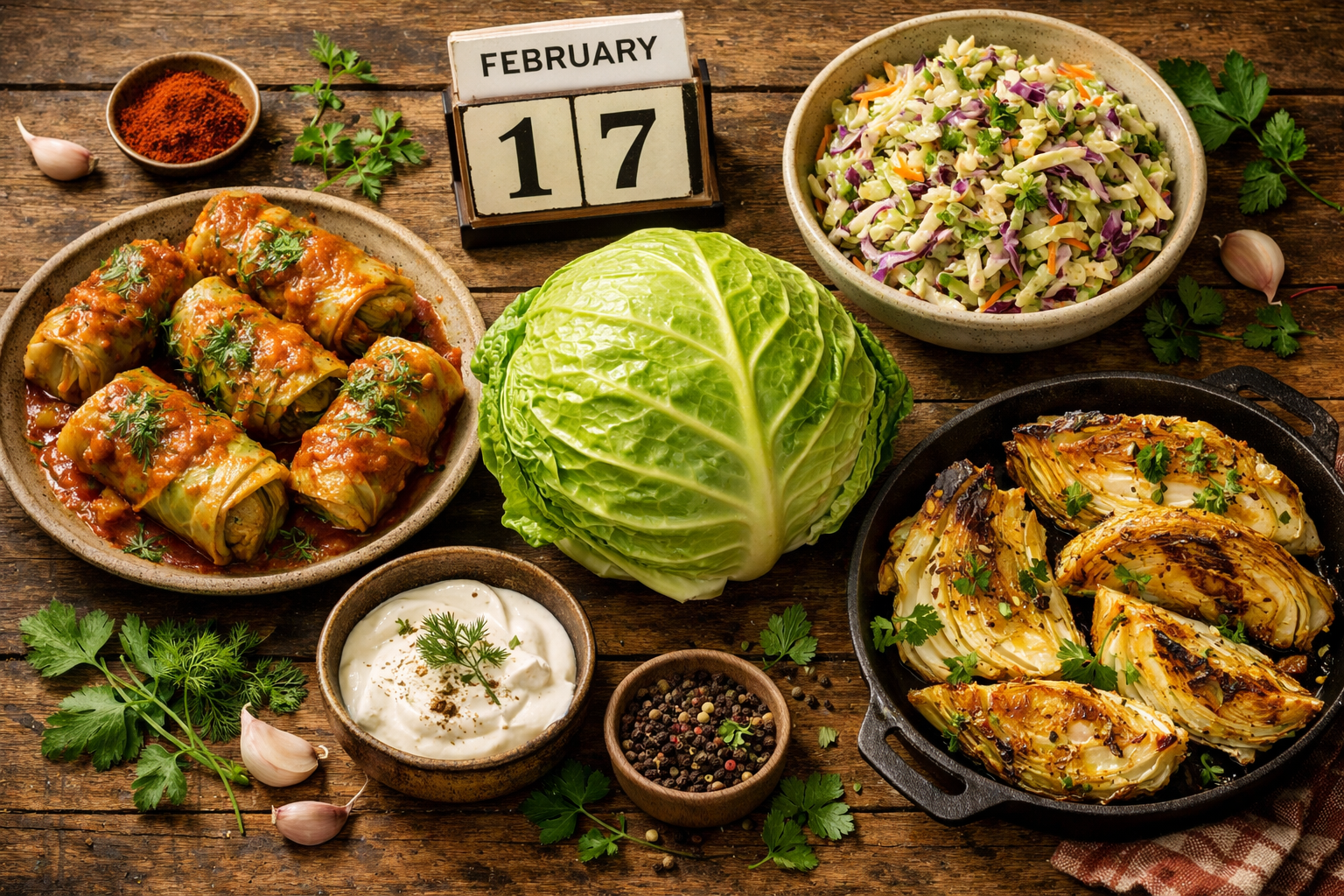
- Homemade Kimchi — A fermented Korean staple packed with probiotics
- Stuffed Cabbage Rolls — A hearty Eastern European classic
- Cabbage Soup — Simple, warming, and deeply nutritious
- Roasted Cabbage Steaks — Slice thick, season well, roast until caramelized
- Classic Coleslaw — Crisp, tangy, and endlessly versatile
📱 Share on Social Media
Use hashtags like #CabbageDay, #February17CabbageDay, and #CabbageLove to connect with other food enthusiasts. Food communities on Instagram, TikTok, and Pinterest light up every February 17 with creative cabbage content.
🛒 Visit a Local Farmers’ Market
Support local growers by picking up fresh, locally grown cabbage. Many farmers’ markets in February still carry cold-hardy cabbage varieties. Buying local also means fresher flavor and a smaller carbon footprint.
📚 Learn Something New
Read about fermentation, the science of sauerkraut, or the history of cabbage in your region’s cuisine. Knowledge deepens appreciation.
Cabbage in Modern Nutrition and Wellness Trends
In 2026, cabbage continues to enjoy a strong moment in the wellness world. The rise of gut health awareness has brought fermented cabbage products — especially kimchi and sauerkraut — into mainstream health conversations.
Key wellness trends featuring cabbage:
- Fermented foods for gut microbiome support
- Anti-inflammatory diets that highlight cruciferous vegetables
- Budget-friendly whole foods eating as food costs remain a concern for many households
- Plant-based cooking where cabbage serves as a satisfying, hearty base
Cabbage is one of the most cost-effective vegetables available — delivering exceptional nutrition at a fraction of the cost of trendy superfoods.
Registered dietitians frequently recommend cabbage as part of balanced eating plans because it is affordable, widely available, and genuinely nutrient-dense.
Fun Facts About Cabbage 🥬
- The world record for the heaviest cabbage is 138.25 lbs (62.71 kg), grown by Scott Robb of Alaska.
- Cabbage is 90% water, making it naturally hydrating.
- The word “cabbage” comes from the Old French word caboche, meaning “head.”
- Sauerkraut contains more vitamin C per serving than many fresh fruits.
- Cabbage leaves have been used in folk medicine for centuries to reduce swelling and inflammation.
Conclusion: Make February 17 Cabbage Day Count
February 17 Cabbage Day is more than a quirky food holiday — it’s an invitation to reconnect with a vegetable that has nourished humanity for millennia. From ancient Roman soldiers to modern gut-health enthusiasts, cabbage has proven its worth time and again.
Actionable Next Steps ✅
- Mark your calendar for February 17 and plan at least one cabbage-focused meal.
- Try one new recipe — whether it’s kimchi, roasted cabbage steaks, or a classic slaw.
- Share your creation on social media with #February17CabbageDay to inspire others.
- Buy local — visit a farmers’ market or choose locally grown cabbage at the grocery store.
- Explore fermentation — making sauerkraut or kimchi at home is easier than most people think and delivers powerful health benefits.
Cabbage is affordable, nutritious, globally beloved, and endlessly versatile. This February 17, give it the appreciation it truly deserves. 🥬
References
- Fahey, J. W., Zhang, Y., & Talalay, P. (1997). Broccoli sprouts: An exceptionally rich source of inducers of enzymes that protect against chemical carcinogens. Proceedings of the National Academy of Sciences, 94(19), 10367–10372.
- Higdon, J., Drake, V. J., & Delage, B. (2005). Cruciferous vegetables. Linus Pauling Institute Micronutrient Information Center, Oregon State University.
- U.S. Department of Agriculture. (2019). FoodData Central: Cabbage, raw. USDA Agricultural Research Service.
- Parvez, S., Malik, K. A., Ah Kang, S., & Kim, H. Y. (2006). Probiotics and their fermented food products are beneficial for health. Journal of Applied Microbiology, 100(6), 1171–1185.
- Robb, S. (2012). World record giant cabbage. Guinness World Records.