
Every year on February 16, snack lovers, health enthusiasts, and food fans across the United States come together to celebrate one of nature’s most beloved superfoods. February 16 Almond Day — also widely known as National Almond Day — is a dedicated occasion to appreciate the humble almond in all its crunchy, nutritious glory. Whether eaten raw, roasted, blended into milk, or ground into flour, the almond has earned its own special day on the food holiday calendar.
Key Takeaways 📌
- February 16 Almond Day is an annual food holiday celebrated in the United States to honor the almond.
- Almonds are among the most nutrient-dense nuts available, packed with healthy fats, protein, fiber, and essential vitamins.
- The United States — particularly California — is the world’s largest almond producer.
- Celebrating this day is easy: eat almonds, share recipes, explore almond-based products, or learn about almond farming.
- Almonds have deep historical roots dating back thousands of years across multiple civilizations.
What Is February 16 Almond Day?
February 16 Almond Day, commonly called National Almond Day, is an unofficial but widely recognized food holiday in the United States. It falls annually on February 16 and encourages people to enjoy almonds in any form they choose — from a simple handful of raw nuts to elaborate almond-based recipes.
Unlike official federal holidays, food holidays like this one are grassroots celebrations that gain traction through social media, food bloggers, brands, and culinary communities. The almond industry — led by organizations like the Almond Board of California — often uses this day to promote awareness about almonds’ health benefits and versatility.
💬 “Almonds are one of the most nutrient-dense foods on the planet — and they deserve a celebration.”
A Brief History of the Almond
To truly appreciate February 16 Almond Day, it helps to understand just how ancient and significant this nut really is.
Origins of the Almond
The almond (Prunus dulcis) is native to the Middle East and South Asia. Archaeological evidence suggests almonds were cultivated as far back as 3000 BCE in parts of the ancient Near East. They appear in the Bible, were found in Tutankhamun’s tomb in Egypt, and were prized by ancient Greeks and Romans.
Almonds traveled the Silk Road trade routes and eventually made their way to Europe. Spanish missionaries introduced almond trees to California in the 1700s, planting the seeds — literally — for what would become the world’s largest almond industry.
Almonds in the United States
Today, California produces approximately 80% of the world’s almond supply, making the United States the undisputed global leader in almond production. The Central Valley of California is home to more than 1 million acres of almond orchards.
| Country | Approximate Annual Production |
|---|---|
| United States (California) | ~1,000,000+ metric tons |
| Australia | ~100,000 metric tons |
| Spain | ~80,000 metric tons |
| Iran | ~70,000 metric tons |
| Morocco | ~50,000 metric tons |
Source: International Nut and Dried Fruit Council
The Nutritional Power Behind the Celebration
One reason February 16 Almond Day resonates so strongly with health-conscious consumers is the almond’s impressive nutritional profile. These small nuts pack a serious punch.
Almonds by the Numbers (Per 1 oz / ~23 almonds)
| Nutrient | Amount |
|---|---|
| Calories | 164 |
| Protein | 6 grams |
| Healthy Fat | 14 grams |
| Fiber | 3.5 grams |
| Vitamin E | 37% of Daily Value |
| Magnesium | 19% of Daily Value |
| Calcium | 8% of Daily Value |
Key Health Benefits of Almonds 🥗
- Heart health: Almonds are rich in monounsaturated fats and antioxidants that support cardiovascular health.
- Blood sugar management: Their low glycemic index makes them a smart snack for people managing blood sugar levels.
- Weight management: High protein and fiber content promotes satiety, helping reduce overall calorie intake.
- Bone health: Almonds provide calcium and magnesium, both essential for strong bones.
- Brain function: Vitamin E and healthy fats support cognitive health and may help reduce age-related decline.
- Gut health: Almonds act as a prebiotic, feeding beneficial gut bacteria.
💬 “Research consistently shows that regular nut consumption, including almonds, is associated with reduced risk of heart disease and improved metabolic health.”
How to Celebrate February 16 Almond Day
Celebrating this nutty holiday doesn’t require much planning. Here are some fun and practical ways to mark the occasion in 2026:
🍽️ Eat Almonds in Creative Ways
- Snack on a handful of raw or roasted almonds as a midday pick-me-up.
- Add sliced almonds to oatmeal, yogurt, or salads.
- Try almond butter on toast or apple slices.
- Bake almond flour cookies or muffins for a gluten-friendly treat.
- Blend almond milk into smoothies or coffee drinks.
- Make a classic French financier or Italian amaretti cookies.
📱 Share on Social Media
Use hashtags like #NationalAlmondDay, #AlmondDay, and #February16AlmondDay to join the online conversation. Share a recipe, a snack photo, or a fun almond fact.
🛒 Support Almond Farmers
Consider purchasing California-grown almonds or products from small almond farms. Look for certifications that indicate sustainable and responsible farming practices.
📚 Learn Something New
Explore the fascinating science of almond farming, including how honeybee pollination is essential to almond production. California’s almond orchards rely on approximately 2 million bee colonies each spring — making almonds and bees deeply interconnected.
Almond Varieties Worth Knowing
Not all almonds are the same. There are dozens of almond varieties, each with unique flavor profiles and best uses.
| Variety | Flavor Profile | Best Use |
|---|---|---|
| Nonpareil | Mild, sweet | Snacking, blanching |
| Carmel | Rich, slightly bitter | Roasting, confections |
| Butte | Bold, nutty | Baking, almond paste |
| Monterey | Sweet, creamy | Almond milk, butter |
| Mission | Intense, robust | Smoked almonds, trail mix |
Almonds in Global Cuisine 🌍
The almond’s versatility shines across global food traditions:
- Middle Eastern cuisine: Almonds appear in pilafs, tagines, and baklava.
- Indian cuisine: Ground almonds enrich korma sauces and desserts like kheer.
- Spanish cuisine: Ajo blanco, a chilled almond soup, is a regional classic.
- Italian cuisine: Marzipan, amaretti, and torrone all feature almonds prominently.
- French cuisine: Frangipane filling and tarte amandine are beloved almond-based pastries.
- American cuisine: Almond milk, almond butter, and almond flour have become mainstream pantry staples.
February 16 Almond Day and the Almond Industry
February 16 Almond Day is more than just a fun food holiday — it carries real economic significance. The U.S. almond industry generates billions of dollars annually and supports tens of thousands of jobs in California alone.
The Almond Board of California, established in 1950, plays a central role in promoting almond consumption, funding nutrition research, and supporting sustainable farming practices. Their work helps ensure that almond farmers remain competitive in a global marketplace while meeting growing consumer demand for plant-based, nutritious foods.
In 2026, consumer interest in plant-based diets and sustainable snacking continues to drive almond sales higher. Almond milk remains one of the top-selling non-dairy milk alternatives, and almond flour has become a go-to ingredient for gluten-free baking.
Fun Almond Facts 🌟
- It takes approximately 1,000 pounds of almonds to produce 1 pint of almond oil.
- Almonds are technically drupes (stone fruits), not true nuts — they are closely related to peaches and cherries.
- The almond tree blooms earlier than almost any other fruit tree, typically in late January to February — making almond blossom season a perfect backdrop for February 16 Almond Day.
- Jordan almonds (sugar-coated almonds) have been used as wedding favors since ancient Roman times.
- A single almond tree can produce nuts for 25 years or more.
Conclusion: Celebrate February 16 Almond Day with Purpose 🥜
February 16 Almond Day is more than a quirky food holiday — it’s a meaningful opportunity to appreciate a food that has nourished civilizations for thousands of years, supports a thriving agricultural industry, and delivers outstanding health benefits in every handful.
Actionable Next Steps for Almond Day 2026:
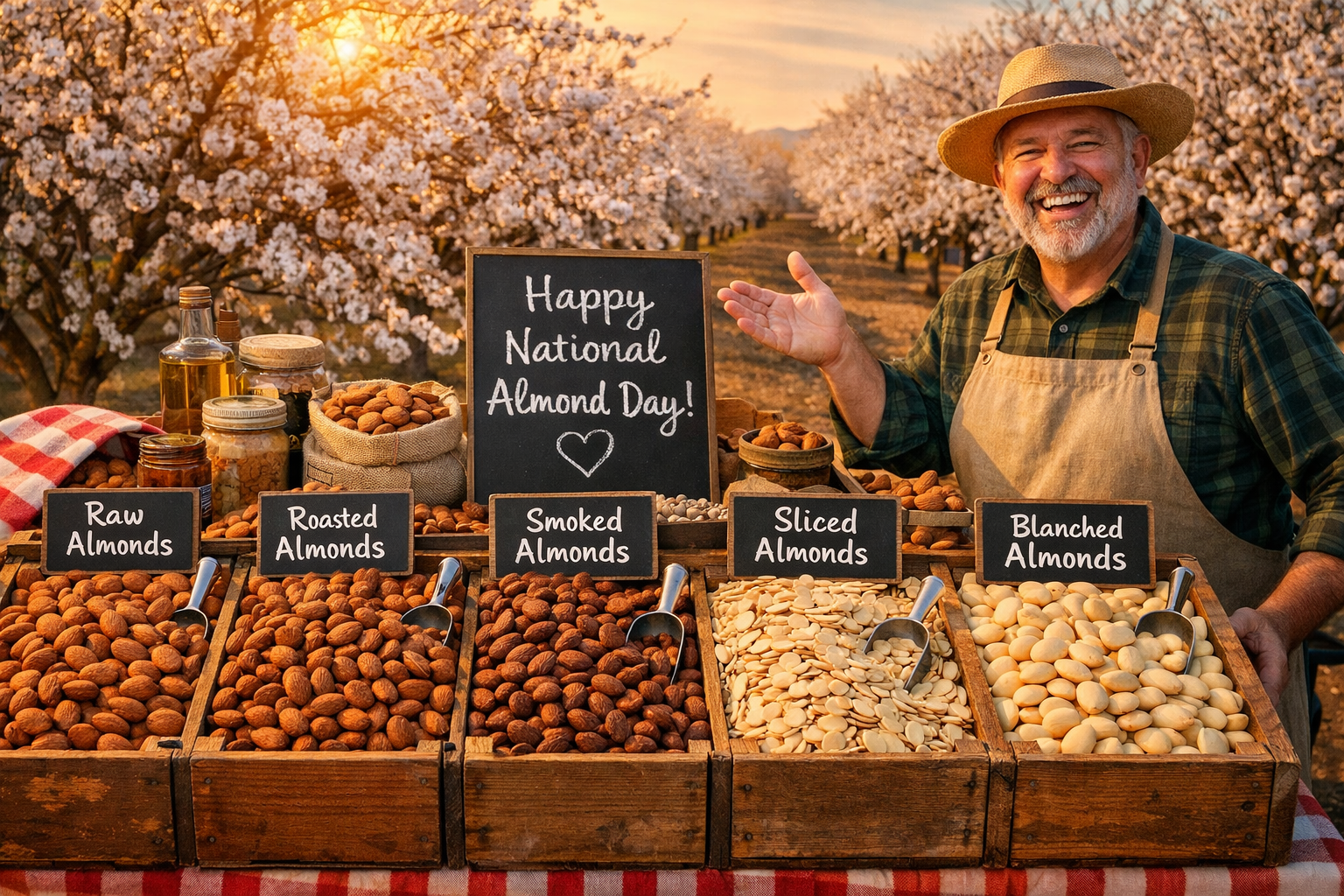
- ✅ Stock up on almonds in multiple forms — raw, roasted, sliced, or as almond butter.
- ✅ Try one new almond-based recipe to expand your culinary horizons.
- ✅ Share the celebration on social media using #NationalAlmondDay.
- ✅ Support local or California-based almond producers by choosing responsibly sourced products.
- ✅ Learn about bee conservation — because without bees, there are no almonds.
Whether snacking solo or baking for a crowd, February 16 is the perfect excuse to go nuts for almonds. 🌰
References
- Almond Board of California. (2022). Almond almanac 2022. https://www.almonds.com
- International Nut and Dried Fruit Council. (2023). Global statistical review 2022/2023. https://www.nutfruit.org
- U.S. Department of Agriculture, Agricultural Research Service. (2020). FoodData Central: Almonds, raw. https://fdc.nal.usda.gov
- Ros, E. (2010). Health benefits of nut consumption. Nutrients, 2(7), 652–682. https://doi.org/10.3390/nu2070652
- Dreher, M. L. (2012). Pistachio nuts: Composition and potential health benefits. Nutrition Reviews, 70(4), 234–240.
- Berryman, C. E., et al. (2017). Effects of daily almond consumption on cardiometabolic risk and abdominal adiposity in healthy adults. Journal of the American Heart Association, 4(1). https://doi.org/10.1161/JAHA.114.000993