
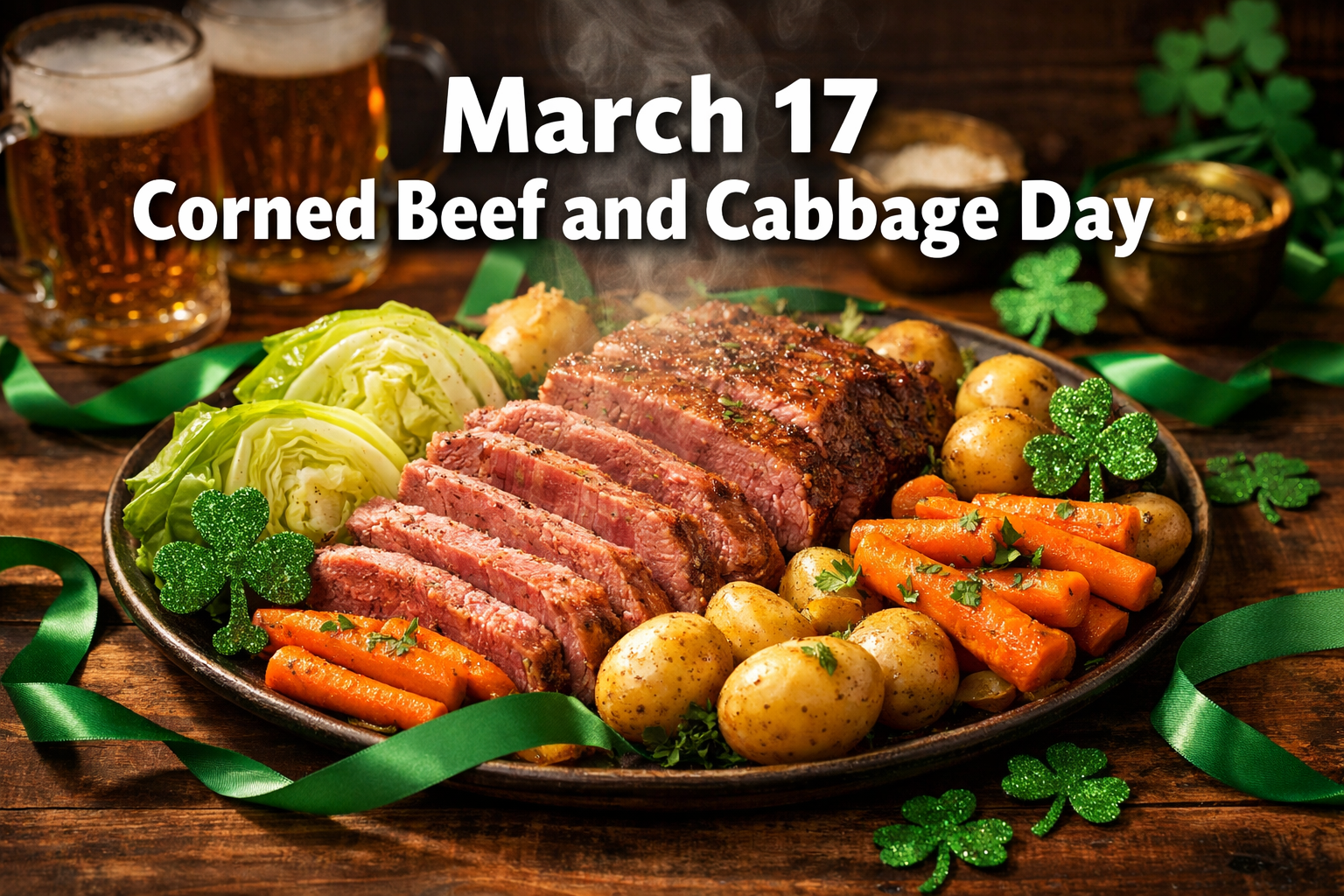
Every year on March 17, millions of Americans sit down to a steaming plate of tender corned beef and buttery cabbage — and for good reason. March 17 Corned Beef and Cabbage Day is one of the most beloved food traditions in the United States, blending Irish-American heritage, immigrant ingenuity, and simple, satisfying cooking into a single iconic meal. Whether you’re a lifelong fan or curious about the history behind the dish, this guide covers everything worth knowing. 🍀
Key Takeaways
- 📅 March 17 marks both St. Patrick’s Day and the unofficial celebration of Corned Beef and Cabbage Day across the U.S.
- 🥩 Corned beef and cabbage is largely an Irish-American invention, not a traditional dish from Ireland itself.
- 🧂 The term “corned” refers to the large rock salt crystals — called “corns” — used to cure the beef.
- 🍺 The dish became popular in the late 19th century as Irish immigrants adapted their food traditions to American ingredients.
- 🍽️ Today, the U.S. produces and sells billions of dollars worth of corned beef products around St. Patrick’s Day each year.
The History Behind March 17 Corned Beef and Cabbage Day
Where Did Corned Beef Come From?
The story of March 17 Corned Beef and Cabbage Day begins not in Dublin, but in the neighborhoods of New York City. When Irish immigrants arrived in America in large numbers during the mid-1800s — especially after the Great Famine (1845–1852) — they brought their culinary traditions with them. Back in Ireland, pork and bacon were the most common meats. Beef was expensive and largely reserved for export.
In America, however, the situation was different. Irish immigrants living in urban tenement neighborhoods found that beef brisket was one of the most affordable cuts available. Jewish butchers in neighborhoods like the Lower East Side of Manhattan sold brisket at low prices, and Irish families quickly adopted it.
“The Irish didn’t bring corned beef to America — America gave corned beef to the Irish.”
— Food historians widely agree on this point.
The curing process — packing the brisket in large rock salt crystals known as “corns” — was already a well-established preservation method. Cabbage, meanwhile, was cheap, widely available, and filling. The combination became a staple of Irish-American cooking, and by the early 20th century, it was firmly tied to St. Patrick’s Day celebrations.
Why March 17?
March 17 is St. Patrick’s Day, the feast day of Ireland’s patron saint. Irish-Americans turned the date into a major cultural celebration, and food became a central part of the festivities. Over time, corned beef and cabbage became the signature dish of the holiday, eventually earning its own unofficial food holiday status.
What Makes the Dish So Special?
The Ingredients Breakdown
The beauty of this dish lies in its simplicity. Here’s a quick look at the core components:
| Ingredient | Role in the Dish |
|---|---|
| Beef Brisket | The star — slow-cooked until fork-tender |
| Rock Salt (Corns) | Cures and flavors the meat |
| Green Cabbage | Adds mild sweetness and texture |
| Carrots | Provide natural sweetness and color |
| Potatoes | Hearty, filling base element |
| Pickling Spices | Bay leaves, peppercorns, mustard seed, cloves |
The Cooking Method
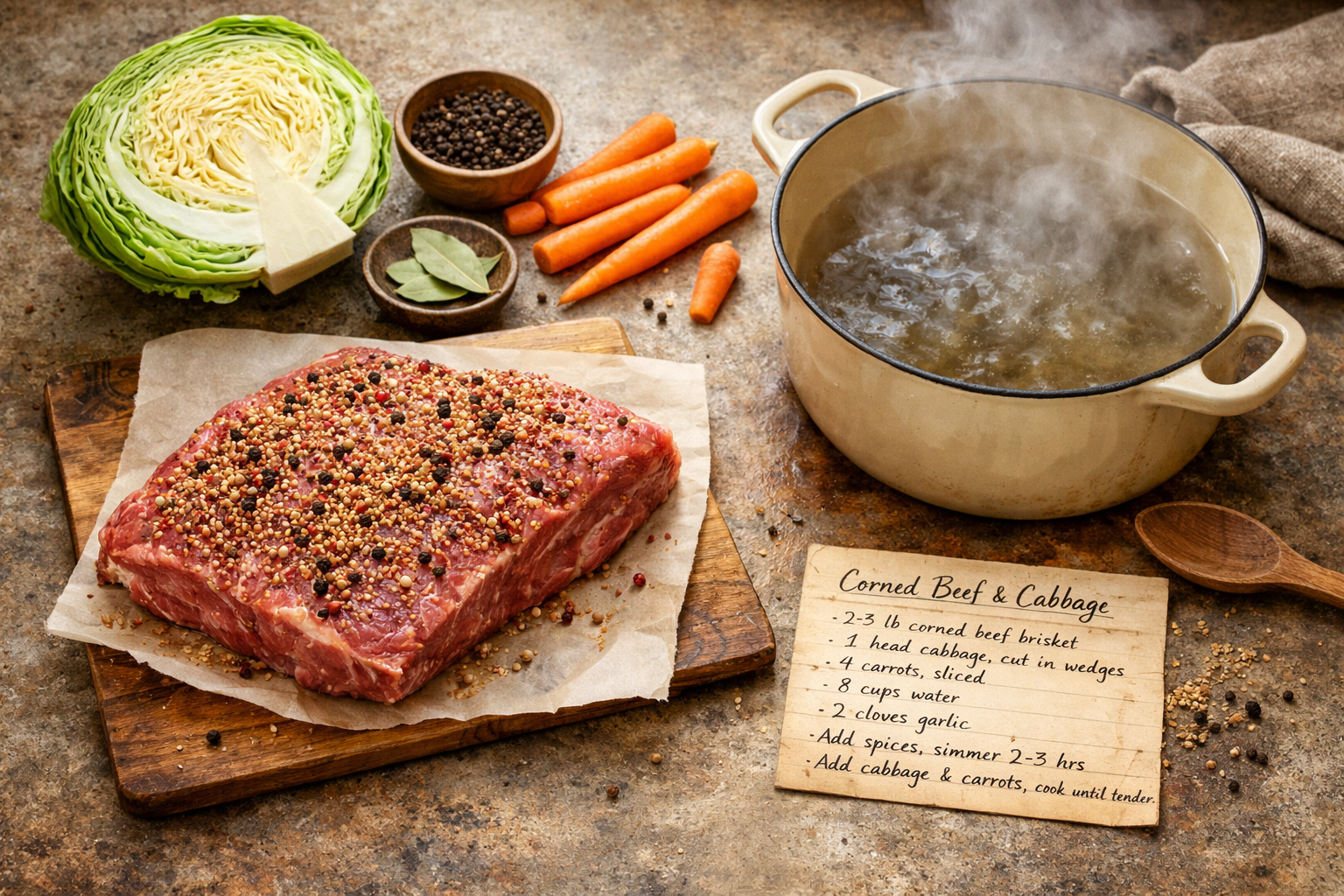
Traditional corned beef is brined for several days before cooking. On March 17 Corned Beef and Cabbage Day, most home cooks use store-bought pre-brined brisket for convenience. The meat is then slow-simmered in water or broth for 3–4 hours until tender, with vegetables added in the final 30–45 minutes.
Popular cooking methods include:
- 🥘 Stovetop simmering — the classic approach
- 🍲 Slow cooker / Crockpot — set it and forget it
- ⚡ Instant Pot / Pressure cooker — ready in under 2 hours
- 🔥 Oven braising — rich, deep flavor development
How March 17 Corned Beef and Cabbage Day Is Celebrated Today
By the Numbers 📊
The scale of this food holiday is remarkable. Consider these figures:
- The American Meat Institute has reported that approximately 26 million pounds of corned beef are consumed in the U.S. around St. Patrick’s Day each year.
- Sales of corned beef spike by as much as 700% in the week leading up to March 17.
- Grocery stores across the country begin stocking brisket and pre-packaged corned beef as early as late February.
- Restaurants, pubs, and diners nationwide feature special corned beef menus throughout the month of March.
Regional Variations
While the core dish remains consistent, regional twists have emerged across the country:
- New England — Often served with a side of horseradish cream sauce
- Midwest — Frequently paired with rye bread for Reuben-style sandwiches
- Texas — Smoked corned beef brisket blends BBQ tradition with the holiday
- New York City — Deli-style thin-sliced corned beef on rye remains iconic
Tips for Making the Perfect Corned Beef and Cabbage
Getting the dish right on March 17 Corned Beef and Cabbage Day comes down to a few key techniques:
✅ Do’s
- Rinse the brisket before cooking to remove excess surface salt
- Low and slow is the golden rule — rushing the cook results in tough meat
- Add cabbage in the last 20–30 minutes to prevent it from becoming mushy
- Let the meat rest for 10–15 minutes before slicing
- Slice against the grain for the most tender results
- Use the cooking liquid as a flavorful broth base
❌ Don’ts
- Don’t boil the meat at a rolling boil — a gentle simmer is key
- Don’t skip the pickling spices — they define the flavor profile
- Don’t overcook the vegetables — they should be tender, not falling apart
- Don’t discard the cooking liquid — it makes an excellent soup base
The Cultural Significance of the Holiday
Beyond the food itself, March 17 Corned Beef and Cabbage Day represents something deeper: the story of immigrant adaptation and cultural pride. Irish-Americans transformed a humble, affordable meal into a symbol of identity and celebration. The dish tells the story of people who arrived with very little, adapted to what was available, and created something entirely their own.
Today, the holiday is celebrated by people of all backgrounds. You don’t need Irish heritage to enjoy a plate of perfectly cooked corned beef and cabbage on March 17. The dish has become part of the broader American food culture — a shared tradition that brings people together around the table.
“Food is memory. Every bite of corned beef on St. Patrick’s Day is a connection to generations of Irish-American history.”
Frequently Asked Questions
Is corned beef actually Irish? Not in the traditional sense. In Ireland, the more common festive meat is bacon or lamb. Corned beef is an Irish-American adaptation.
Why is it called “corned” beef? The name comes from the large rock salt crystals — historically called “corns of salt” — used to cure the meat.
Can corned beef be made ahead of time? Yes! Corned beef reheats beautifully and is often considered better the next day as the flavors deepen.
What’s the best cut for corned beef? The flat cut brisket is leaner and easier to slice. The point cut has more fat marbling and is considered more flavorful by many cooks.
Conclusion
March 17 Corned Beef and Cabbage Day is far more than a food holiday — it’s a celebration of history, community, and the enduring power of a great meal. From its origins in the immigrant neighborhoods of 19th-century America to the millions of plates served every St. Patrick’s Day in 2026, this dish has earned its place at the center of one of the country’s most beloved cultural traditions.
Ready to celebrate? Here are your actionable next steps:
- 🛒 Shop early — corned beef brisket sells out fast in the days before March 17
- 📖 Choose your method — stovetop, slow cooker, or Instant Pot based on your schedule
- 🧂 Don’t skip the spices — use a full pickling spice packet or make your own blend
- 🍽️ Invite people over — this dish is best shared around a table
- 🍺 Pair it right — a cold Irish stout or amber ale complements the flavors perfectly
Whether cooking for a crowd or a quiet dinner for two, March 17 is the perfect occasion to honor a dish that has stood the test of time. 🍀
References
- Quinzio, J. (2009). Of Sugar and Snow: A History of Ice Cream Making. University of Illinois Press.
- Diner, H. R. (2001). Hungering for America: Italian, Irish, and Jewish Foodways in the Age of Migration. Harvard University Press.
- Mariani, J. (1994). The Dictionary of American Food and Drink. Hearst Books.
- American Meat Institute. (2013). St. Patrick’s Day Corned Beef Sales Data. AMI Foundation.
- Fitzgibbon, T. (1983). Irish Traditional Food. Gill & Macmillan.