
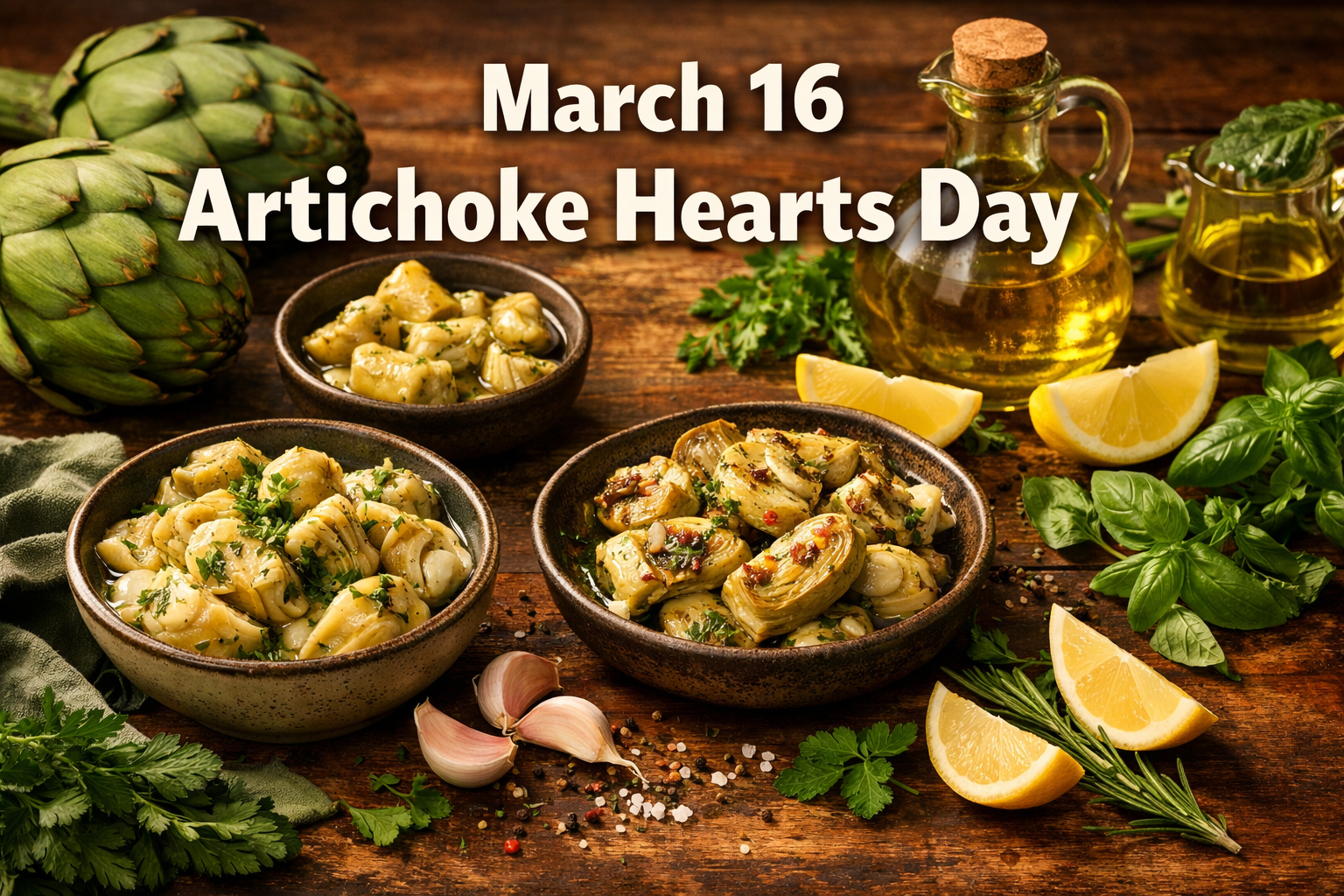
Every year on March 16, food lovers across the United States pause to celebrate one of the most underrated culinary gems in the vegetable world. March 16 Artichoke Hearts Day is an unofficial food holiday dedicated to the tender, savory, and incredibly versatile heart of the artichoke plant. Whether enjoyed straight from a jar, grilled to perfection, or folded into a creamy dip, artichoke hearts deserve their moment in the spotlight — and this annual celebration makes sure they get it.
Key Takeaways 📌
- March 16 Artichoke Hearts Day is an annual food holiday celebrating the edible center of the artichoke plant.
- Artichoke hearts are packed with fiber, antioxidants, and essential nutrients, making them a genuinely healthy food choice.
- The holiday encourages people to try new recipes, visit restaurants, and share artichoke-inspired dishes with family and friends.
- Artichokes have a rich history dating back to ancient Greece and Rome, and they remain a staple of Mediterranean cuisine today.
- Celebrating this day is simple — cooking, sharing, or simply enjoying artichoke hearts in any form counts!
What Is March 16 Artichoke Hearts Day?
March 16 Artichoke Hearts Day is an informal food observance celebrated annually in the United States. Like many food holidays on the calendar, it exists to shine a light on a specific ingredient — in this case, the prized inner portion of the Cynara scolymus plant, commonly known as the globe artichoke.
The exact origin of this food holiday is not tied to a single founding organization or documented event. Many unofficial food holidays emerged organically through food bloggers, culinary communities, and social media culture during the early 2000s and 2010s. Regardless of its murky beginnings, the day has gained traction among home cooks, chefs, and food enthusiasts who appreciate the artichoke heart’s unique flavor and nutritional profile.
“The artichoke heart is nature’s edible treasure — layered, complex, and worth every bit of effort to reach.”
The Artichoke Heart: What Exactly Are We Celebrating?
Before diving deeper into how to celebrate March 16 Artichoke Hearts Day, it helps to understand what an artichoke heart actually is.
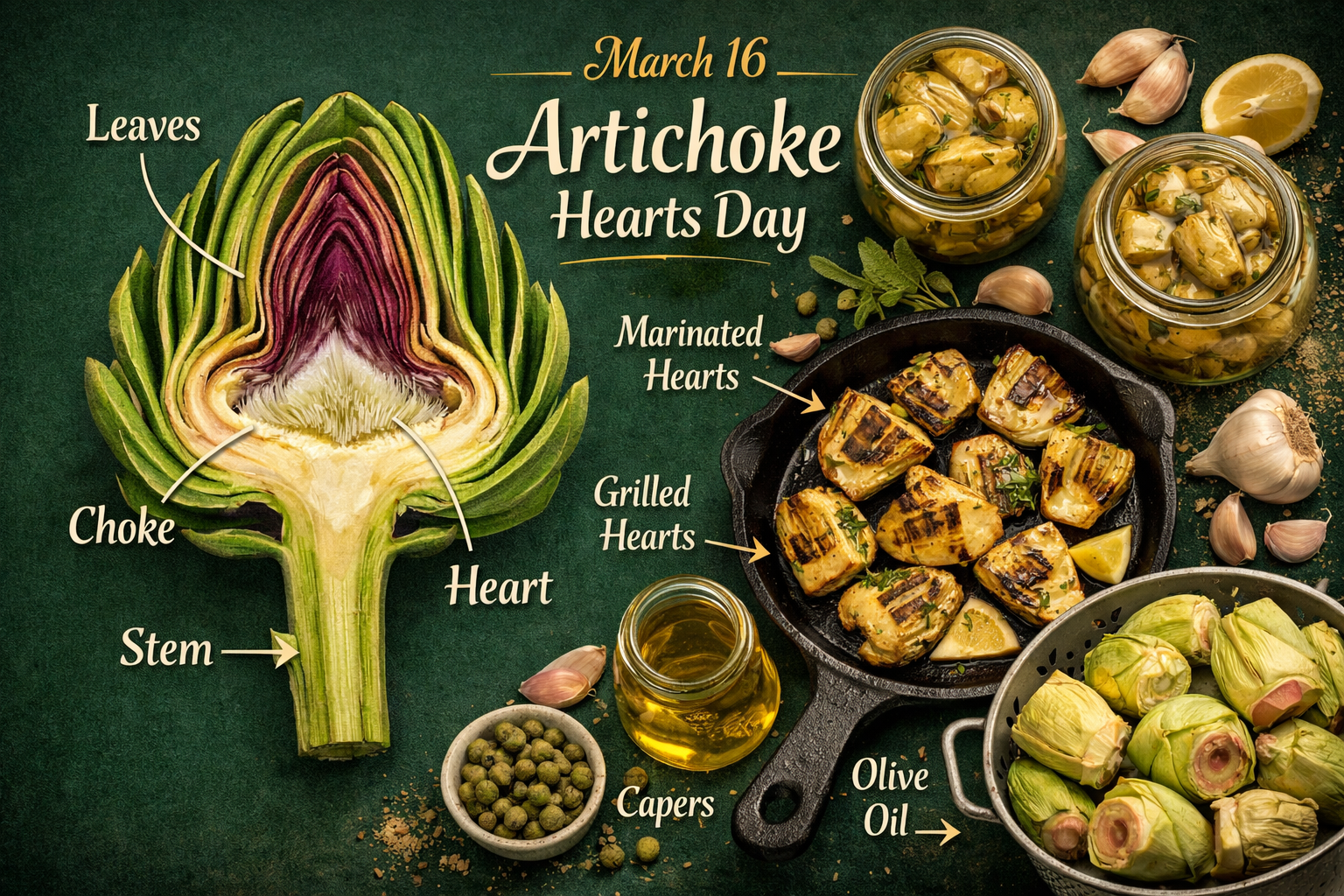
The artichoke is a type of thistle cultivated as food. The part most people eat is the flower bud before it blooms. The “heart” refers specifically to the fleshy base of the bud — the dense, meaty center that sits beneath the fibrous leaves and the fuzzy “choke” layer.
Key Parts of an Artichoke
| Part | Description | Edible? |
|---|---|---|
| Outer leaves | Tough, fibrous, pointed | Partially (scrape with teeth) |
| Inner leaves | Softer, more tender | Mostly yes |
| Choke | Hairy, fibrous layer | ❌ No |
| Heart | Dense, meaty base | ✅ Yes — the prize! |
| Stem | Fibrous outer, tender inner | Partially |
The heart has a mild, slightly nutty flavor with a hint of earthiness. Its texture is firm yet tender when cooked properly, making it ideal for a wide range of dishes.
A Brief History of the Artichoke 🏛️
Long before March 16 Artichoke Hearts Day existed, artichokes were already celebrated across civilizations.
- Ancient Greece & Rome: Artichokes were considered a luxury food and were believed to have aphrodisiac properties. Greek and Roman nobility consumed them regularly.
- 16th Century Europe: Catherine de’ Medici is often credited with popularizing artichokes in France after bringing them from Italy when she married King Henry II.
- 1920s California: Italian immigrants introduced large-scale artichoke cultivation to Monterey County, California. Today, California produces nearly 100% of the commercially grown artichokes in the United States.
- Marilyn Monroe: In 1948, the actress was crowned the first “Artichoke Queen” of Castroville, California — the self-proclaimed “Artichoke Capital of the World.”
This rich history gives artichoke hearts a cultural depth that makes celebrating them even more meaningful.
Nutritional Benefits of Artichoke Hearts 💪
One of the best reasons to embrace March 16 Artichoke Hearts Day is the impressive nutritional profile of artichoke hearts. They are not just delicious — they are genuinely good for the body.
Nutrition Snapshot (Per 1 Cup of Cooked Artichoke Hearts)
| Nutrient | Amount | % Daily Value |
|---|---|---|
| Calories | ~89 kcal | — |
| Fiber | ~9.6 g | ~34% |
| Protein | ~6.2 g | ~12% |
| Vitamin C | ~15 mg | ~17% |
| Folate | ~107 mcg | ~27% |
| Magnesium | ~72 mg | ~17% |
| Potassium | ~595 mg | ~13% |
Key health benefits include:
- 🫀 Heart health: High fiber and antioxidants support healthy cholesterol levels.
- 🧠 Brain function: Folate and vitamin K contribute to cognitive health.
- 🦠 Gut health: Inulin, a prebiotic fiber found in artichokes, feeds beneficial gut bacteria.
- 🛡️ Antioxidant power: Artichokes rank among the highest antioxidant-containing vegetables, according to research published in the Journal of Agricultural and Food Chemistry.
- ⚖️ Weight management: High fiber content promotes satiety with relatively few calories.
How to Celebrate March 16 Artichoke Hearts Day 🎉
Celebrating this food holiday does not require a special event or a fancy restaurant reservation. Here are practical and enjoyable ways to mark the occasion in 2026:
🍽️ Cook Something New
Try a recipe that puts artichoke hearts front and center. Some crowd-pleasing options include:
- Classic Spinach Artichoke Dip — a party staple that never fails
- Artichoke Heart Pasta — toss with garlic, lemon, capers, and olive oil
- Grilled Artichoke Hearts — char them lightly and serve with aioli
- Artichoke Flatbread Pizza — top with mozzarella, sun-dried tomatoes, and fresh basil
- Mediterranean Grain Bowl — combine with quinoa, olives, feta, and roasted peppers
📱 Share on Social Media
Use hashtags like #ArtichokeHeartsDay and #March16 to connect with other food lovers celebrating the day. Sharing a photo of a dish or a fun artichoke fact is a simple way to participate.
🛒 Shop Local or Specialty
Visit a local farmers market or specialty grocery store to find fresh artichokes or high-quality marinated artichoke hearts. Look for jarred artichoke hearts packed in olive oil for the best flavor.
📚 Learn Something New
Read about artichoke cultivation, explore the history of Castroville, California, or watch a cooking tutorial from a professional chef. Knowledge makes the celebration richer.
Choosing and Storing Artichoke Hearts
Not all artichoke hearts are created equal. Here is a quick guide to selecting the best option for any recipe:
Fresh Artichokes:
- Look for tight, compact leaves and a heavy feel for their size
- Avoid browning or spreading leaves
- Best used within 1–2 days of purchase
Canned or Jarred Artichoke Hearts:
- Water-packed: More neutral flavor; great for recipes where other ingredients dominate
- Oil-packed/marinated: Richer flavor; excellent for antipasto, salads, and dips
- Check sodium content if watching salt intake
Frozen Artichoke Hearts:
- Convenient and often closer in texture to fresh than canned
- Ideal for cooked dishes like pastas, stews, and casseroles
Pro Tip: Drain and pat dry canned or jarred artichoke hearts before sautéing or grilling to achieve better browning and texture. 🔥
Fun Facts About Artichoke Hearts 🌟
- The word “artichoke” comes from the Arabic al-kharshuf, brought to Spain by Moorish traders.
- One artichoke plant can produce up to 20 buds per season.
- Artichokes contain cynarin, a compound that temporarily makes other foods taste sweeter after eating them — which is why wine pairing with artichokes can be tricky.
- The globe artichoke is the official vegetable of California.
- In 2026, global artichoke production continues to be dominated by Italy, Egypt, Spain, and the United States.
Conclusion: Make March 16 Count 🌿
March 16 Artichoke Hearts Day is more than a quirky entry on the food holiday calendar. It is an invitation to explore a genuinely remarkable ingredient — one with deep historical roots, impressive health benefits, and extraordinary culinary versatility. Whether someone is a seasoned home cook or a curious beginner, this day offers the perfect excuse to experiment in the kitchen.
Actionable next steps for 2026:
- ✅ Mark March 16 on your calendar and plan at least one artichoke heart recipe to try.
- ✅ Stock your pantry with quality jarred or canned artichoke hearts for quick weeknight meals.
- ✅ Share the celebration — cook for friends, post a photo, or simply tell someone about the day.
- ✅ Explore fresh artichokes if they are available locally; preparing one from scratch is a rewarding culinary experience.
- ✅ Dig into the history — learning about Castroville, California, or Mediterranean artichoke traditions adds meaning to every bite.
The artichoke heart has earned its day. Celebrate it well. 🥂
References
- Lattanzio, V., Kroon, P. A., Linsalata, V., & Cardinali, A. (2009). Globe artichoke: A functional food and source of nutraceutical ingredients. Journal of Functional Foods, 1(2), 131–144.
- Gebhardt, R. (1997). Antioxidative and protective properties of extracts from leaves of the artichoke (Cynara scolymus L.) against hydroperoxide-induced oxidative stress in cultured rat hepatocytes. Toxicology and Applied Pharmacology, 144(2), 279–286.
- United States Department of Agriculture (USDA). (2019). FoodData Central: Artichokes, cooked, boiled, drained, without salt. https://fdc.nal.usda.gov
- California Artichoke Advisory Board. (2021). The history of artichokes in California. https://www.artichokes.org
- Bauer, J. (2020). Artichoke nutrition facts and health benefits. Verywell Fit. https://www.verywellfit.com