
Last updated: March 28, 2026
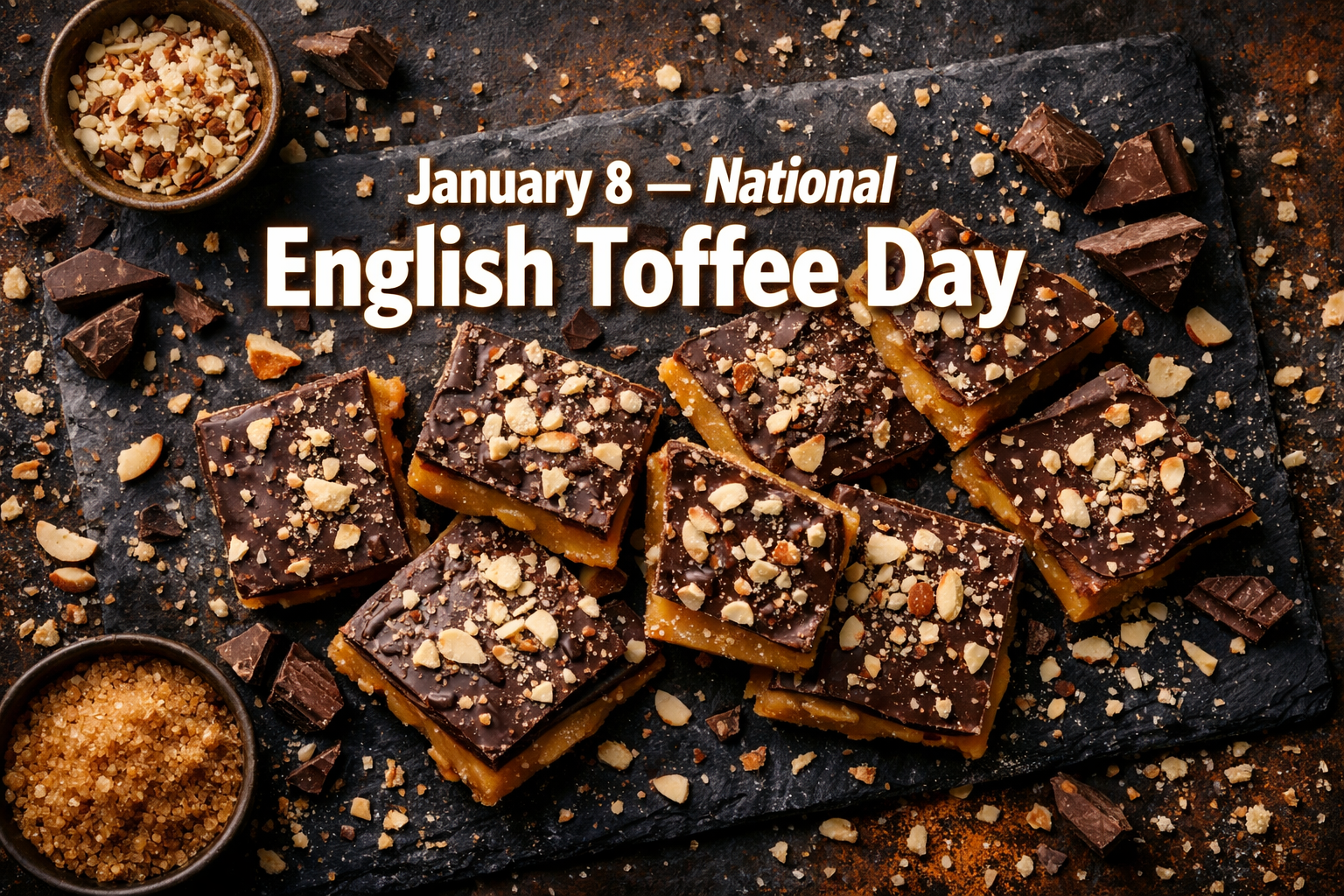
Quick Answer: January 8 National English Toffee Day is an annual food holiday celebrated every January 8 in the United States. It honors English toffee — a buttery, hard candy made from sugar and butter, often coated in chocolate and nuts. The day encourages people to make, buy, or share this classic confection.
🍬 Key Takeaways
- January 8 is officially recognized as National English Toffee Day in the U.S.
- English toffee is distinct from other toffees because of its hard, brittle texture and rich butter-to-sugar ratio.
- The holiday has no single verified founder, but it fits within a broader American tradition of food celebration days.
- Homemade English toffee requires only a few ingredients but demands precise temperature control (around 300°F/149°C).
- The candy makes an excellent gift, especially in January when post-holiday gifting is still common.
- English toffee differs from British toffee in texture and preparation method.
- Celebrating is simple: make a batch, buy from an artisan confectioner, or share with friends and coworkers.
What Is January 8 National English Toffee Day?
January 8 National English Toffee Day is a U.S. food holiday dedicated to one of the most beloved hard candies in confectionery history. Each year on January 8, candy lovers across the country take a moment to appreciate — and usually eat — English toffee.
The day sits within a long American tradition of informal food holidays, which exist for everything from pizza to peanut butter. While these observances are rarely backed by government proclamation, they spread through social media, food blogs, and confectionery brands that use them as a reason to engage customers and celebrate culinary culture.
What Makes English Toffee Different from Other Toffees?
English toffee is a specific style of toffee defined by its hard, glassy texture and high butter content. It’s not the same as soft British toffee or chewy caramel, even though all three share a sugar base.
Here’s how English toffee compares to similar confections:
| Candy Type | Texture | Key Ingredients | Typical Coating |
|---|---|---|---|
| English Toffee | Hard, brittle | Butter, sugar, sometimes almonds | Dark or milk chocolate, crushed nuts |
| British Toffee | Chewy to hard | Butter, sugar, golden syrup | Often plain or wrapped |
| Caramel | Soft, chewy | Sugar, cream, butter | Chocolate or plain |
| Butterscotch | Soft to medium | Brown sugar, butter | Usually plain |
The key difference: English toffee is cooked to the “hard crack” stage (300–310°F / 149–154°C), which gives it that satisfying snap. British toffee is often pulled or cooked to a lower temperature, resulting in a chewier product.
A Brief History of English Toffee
English toffee has roots in 19th-century Britain, where sugar and butter became more affordable during the Industrial Revolution. Confectioners began experimenting with high-heat sugar cooking, eventually producing the hard, buttery candy now recognized as English toffee.
The candy crossed the Atlantic and became popular in the United States, where confectioners adapted it — most notably by coating it in chocolate and crushed almonds. This American-style version became so popular that brands like Almond Roca (introduced by Brown & Haley in 1923) turned it into a household name.
“English toffee represents one of the simplest yet most technically demanding forms of candy-making — two or three ingredients transformed by heat into something extraordinary.”
The exact origin of January 8 as the designated celebration date is unclear. Like many food holidays, it likely emerged from confectionery marketing or food blogging communities in the early 2000s and gained traction through annual social media repetition.
How to Celebrate January 8 National English Toffee Day
Celebrating January 8 National English Toffee Day doesn’t require much — just a willingness to enjoy good candy. Here are practical ways to mark the occasion:
Option 1 — Make it at home Homemade English toffee is achievable for most home cooks with basic equipment. The process takes about 30–45 minutes and yields a large batch perfect for sharing.
Option 2 — Buy from an artisan confectioner Local candy shops and specialty food stores often stock high-quality English toffee. January is a slower retail month, so this is a good time to support small confectionery businesses.
Option 3 — Share it Bring a tin of English toffee to work, school, or a neighbor’s home. The candy stores and travels well, making it an easy gift.
Option 4 — Post on social media Use hashtags like #NationalEnglishToffeeDay and #January8 to join the online conversation and discover new recipes or brands.
How to Make Classic English Toffee at Home
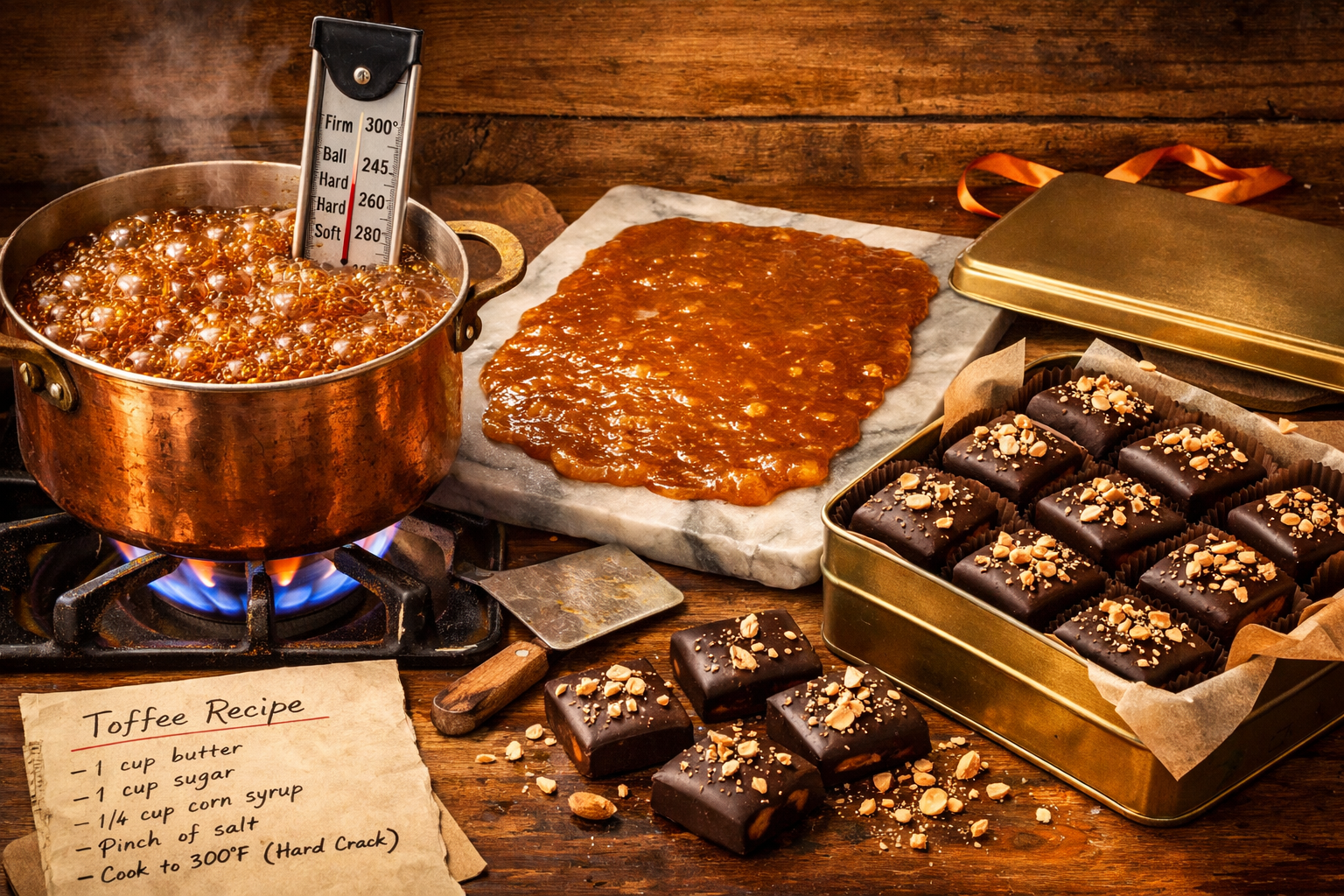
Making English toffee at home is straightforward, but temperature accuracy is non-negotiable. A candy thermometer is essential.
Ingredients (makes approximately 1 lb / 450g):
- 1 cup (225g) unsalted butter
- 1 cup (200g) granulated white sugar
- ¼ tsp salt
- 1 cup (170g) dark or milk chocolate chips
- ½ cup (60g) finely chopped toasted almonds (optional but traditional)
Step-by-step process:
- Prepare your surface. Line a baking sheet with a silicone mat or lightly buttered foil. Set aside.
- Melt butter and sugar. Combine butter, sugar, and salt in a heavy-bottomed saucepan over medium heat. Stir until butter melts.
- Cook without stirring. Once combined, stop stirring. Clip your candy thermometer to the pan. Cook until the mixture reaches 300°F (149°C) — the hard crack stage.
- Pour immediately. Pour the hot toffee onto the prepared baking sheet and spread quickly with a heat-resistant spatula.
- Add chocolate. Scatter chocolate chips over the hot toffee. Wait 2 minutes, then spread the melted chocolate evenly.
- Add nuts. Sprinkle chopped almonds over the chocolate layer.
- Cool completely. Let the toffee sit at room temperature for at least 1 hour, or refrigerate for 20–30 minutes until fully set.
- Break into pieces. Lift the toffee slab and break it into irregular shards. Store in an airtight container.
Common mistake: Stirring the sugar mixture after it starts boiling causes crystallization, which makes the toffee grainy rather than glassy. Once the butter and sugar are fully combined, leave it alone.
Edge case: In humid climates, toffee can absorb moisture and become sticky. Store it with a silica gel packet or in a cool, dry place.
Why English Toffee Makes a Great January Treat
January can feel like a slow month after the holidays, and January 8 National English Toffee Day gives people a small, sweet reason to celebrate. English toffee is particularly well-suited to this time of year for a few reasons:
- Long shelf life. Properly stored English toffee lasts 2–3 weeks at room temperature and up to 2 months in the freezer, making it easy to prepare in advance or use up holiday ingredients.
- Affordable ingredients. Butter and sugar are pantry staples, so making a batch doesn’t require a special shopping trip.
- Gift-friendly. A tin of homemade toffee is a thoughtful, low-cost gift for coworkers, teachers, or neighbors.
- Crowd appeal. The combination of butter, chocolate, and nuts is broadly popular across age groups.
FAQ: January 8 National English Toffee Day
Q: Is January 8 National English Toffee Day an official U.S. holiday? No. It’s an informal food observance, not a federally recognized holiday. It’s celebrated voluntarily through social media, food blogs, and confectionery brands.
Q: Who created National English Toffee Day? The origin is unverified. Like most food holidays, it likely emerged from confectionery marketing or food enthusiast communities and spread through annual online recognition.
Q: What’s the difference between English toffee and butterscotch? English toffee is cooked to the hard crack stage (300°F+) and is brittle. Butterscotch uses brown sugar and is typically softer and chewier, cooked to a lower temperature.
Q: Can English toffee be made without nuts? Yes. The nut coating is traditional but optional. Plain chocolate-coated toffee is equally delicious and accommodates nut allergies.
Q: How long does homemade English toffee last? Stored in an airtight container at room temperature, it lasts 2–3 weeks. Refrigerated, it lasts up to 6 weeks. Frozen, it can last 2 months.
Q: Is English toffee gluten-free? Basic English toffee (butter, sugar, chocolate, nuts) is naturally gluten-free. Always check chocolate chip labels for potential cross-contamination if serving someone with celiac disease.
Q: What’s the best chocolate to use for English toffee? Dark chocolate (60–70% cacao) is the most traditional choice and balances the sweetness of the toffee well. Milk chocolate works for a sweeter result.
Q: Can English toffee be made vegan? Traditional English toffee relies on dairy butter, which is central to its flavor. Vegan substitutes (coconut oil or vegan butter) can work but will alter the taste and texture noticeably.
Q: What if my toffee turns out grainy? Graininess usually means the sugar crystallized, often from stirring too much during cooking or from sugar crystals on the pan sides. Use a wet pastry brush to wash down the sides of the pan during cooking to prevent this.
Q: Are there other candy holidays in January? Yes. January also includes National Candy Cane Day (December 26 carries over in spirit) and National Peanut Brittle Day (January 26), making it a month with multiple confectionery celebrations.
Conclusion
January 8 National English Toffee Day is a small but genuinely enjoyable food holiday. It celebrates a candy with real culinary heritage — a product of 19th-century confectionery craft that has remained popular for over a century. Whether making a batch from scratch, picking up a tin from a local candy shop, or simply sharing a piece with someone, the day offers an easy, affordable reason to enjoy something sweet in the middle of a quiet January.
Actionable next steps for 2026:
- Mark January 8 on your calendar now and gather ingredients (butter, sugar, chocolate, almonds) in advance.
- Try making a batch at home using the recipe above — it’s a manageable project for most home cooks.
- Share your toffee or your experience on social media with #NationalEnglishToffeeDay.
- Consider buying from a local artisan confectioner to support small businesses during a slow retail season.
English toffee doesn’t need a special occasion to be worth making. But having one on January 8 doesn’t hurt.
References
- Brown & Haley. (n.d.). Almond Roca history. Retrieved from https://www.brown-haley.com
- National Confectioners Association. (2023). Candy industry overview and consumer trends. https://www.candyusa.com
- McGee, H. (2004). On Food and Cooking: The Science and Lore of the Kitchen. Scribner.
- Greweling, P. P. (2010). Chocolates and Confections: Formula, Theory, and Technique for the Artisan Confectioner. Wiley.