
Last updated: March 28, 2026
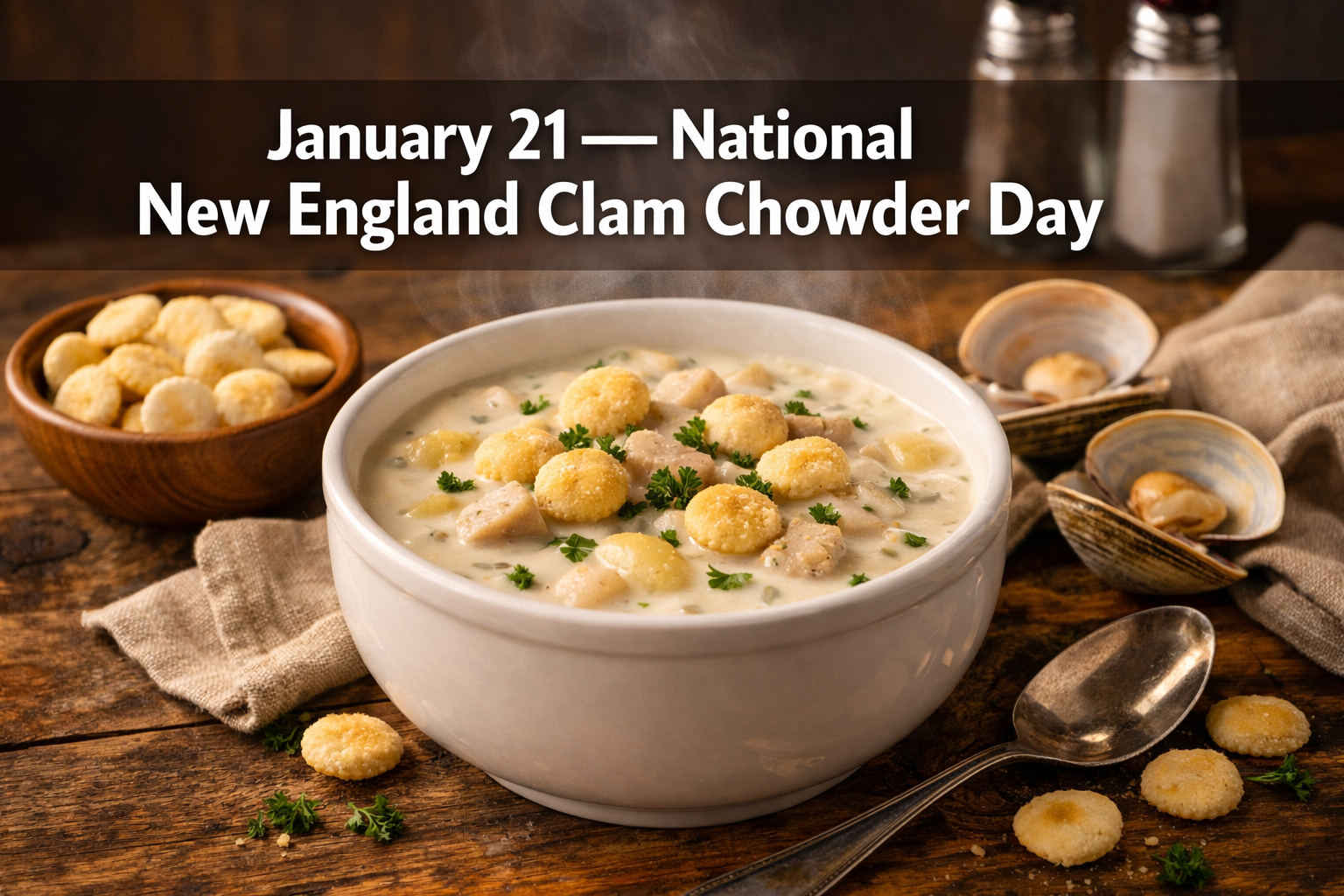
Quick Answer: January 21 National New England Clam Chowder Day is an annual food holiday celebrated every January 21 in the United States. It honors the iconic creamy, clam-based soup that has been a staple of New England coastal cuisine for centuries. The day gives food lovers a reason to cook, order, or simply enjoy a bowl of one of America’s most beloved soups.
Key Takeaways
- January 21 is officially recognized as National New England Clam Chowder Day each year.
- New England clam chowder is defined by its creamy, milk- or cream-based broth — not tomato-based (that’s Manhattan style) and not clear (that’s Rhode Island style).
- The dish has deep roots in 18th-century New England coastal communities, particularly in Massachusetts, Maine, and Connecticut.
- Clams, potatoes, onions, salt pork or bacon, and heavy cream are the five core ingredients.
- The holiday is widely observed at restaurants, seafood shacks, and home kitchens across the country.
- Boston’s annual chowder competitions draw thousands of participants and spectators each year.
- Making chowder at home takes roughly 45–60 minutes and costs an estimated $15–$25 for a pot serving four to six people (based on average U.S. grocery prices in 2026).
- The day is a great opportunity to explore regional variations and support local seafood restaurants.
What Is January 21 National New England Clam Chowder Day?
January 21 National New England Clam Chowder Day is a food observance dedicated to celebrating the creamy clam chowder style native to the northeastern United States. It falls every year on January 21 and is recognized by the National Day Calendar, which catalogs hundreds of unofficial but widely celebrated American food holidays.
The holiday has no single founding organization or legislative origin. Like many food days on the national calendar, it grew organically through restaurant promotions, regional pride, and social media enthusiasm. By 2026, it has become a well-known midwinter tradition, especially in New England states.
🍲 “Few dishes carry the cultural weight of a bowl of New England clam chowder — it’s comfort food, regional identity, and culinary history all in one.”
A Brief History of New England Clam Chowder
New England clam chowder’s origins trace back to the early 1700s. French, British, and Nova Scotian settlers along the northeastern coast are all credited with early versions of the dish. The word “chowder” itself likely derives from the French word chaudière, meaning a large cooking pot.
The first printed recipe for clam chowder appeared in the Boston Post in 1751, according to food historians. By the 19th century, the dish had become firmly associated with New England identity, particularly in Massachusetts fishing communities where clams were abundant and affordable.
Key milestones in chowder history:
| Era | Development |
|---|---|
| Early 1700s | French and British settlers create early fish stews along the New England coast |
| 1751 | First printed clam chowder recipe published in the Boston Post |
| 1800s | Cream-based New England style becomes the regional standard |
| 1939 | Maine passes a bill (largely symbolic) banning tomatoes in chowder |
| 1946 | Manhattan clam chowder gains national recognition as a distinct style |
| Present | New England style remains the most popular chowder variety in the U.S. |
The 1939 Maine bill is often cited as a humorous but telling example of how seriously New Englanders take their chowder. The bill never became law, but it captured regional sentiment perfectly.
What Makes New England Clam Chowder Different From Other Styles?
New England clam chowder is cream-based. That single fact separates it from every other major chowder style in the United States.
Here’s a quick comparison of the three main American chowder styles:
| Style | Base | Key Ingredients | Region |
|---|---|---|---|
| New England | Cream or milk | Clams, potatoes, bacon, onion | Northeast U.S. |
| Manhattan | Tomato broth | Clams, tomatoes, vegetables | New York area |
| Rhode Island | Clear broth | Clams, potatoes, onion | Rhode Island |
Choose New England style if you want a rich, filling, cold-weather soup with a smooth, velvety texture. Choose Manhattan style if you prefer a lighter, vegetable-forward broth. Choose Rhode Island style if you want to taste the clams most directly without dairy masking the flavor.
A common mistake: calling any creamy seafood soup “clam chowder.” True New England clam chowder uses clams (typically littleneck, cherrystone, or quahog clams) as the primary protein, not shrimp or fish.
How to Celebrate January 21 National New England Clam Chowder Day
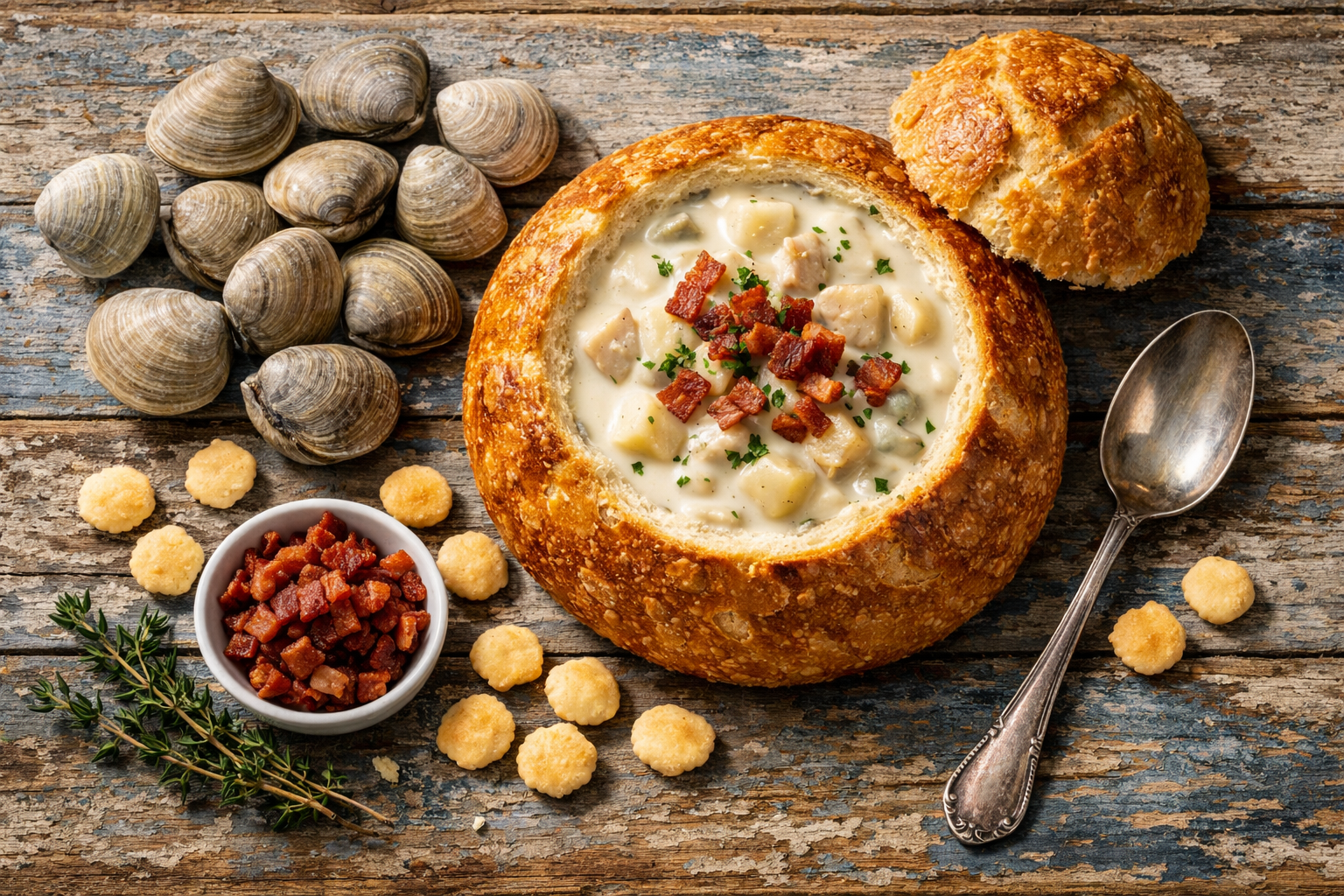
There are several practical ways to mark January 21 National New England Clam Chowder Day, whether you’re a home cook or someone who prefers to let a restaurant do the work.
Option 1: Make it at home
A basic New England clam chowder requires five core ingredients and about an hour:
- Render diced salt pork or bacon in a heavy pot until crispy. Remove and set aside.
- Sauté diced onion and celery in the rendered fat until soft (about 5 minutes).
- Add diced potatoes and enough clam juice to cover. Simmer until potatoes are tender (15–20 minutes).
- Stir in chopped clams (fresh or canned), heavy cream, and salt and pepper to taste.
- Simmer gently for 10 minutes. Do not boil after adding cream — it will separate.
- Top with reserved bacon and oyster crackers before serving.
Option 2: Visit a local seafood restaurant
Many restaurants along the East Coast run January 21 specials. In Boston, Legal Sea Foods and many independent chowder houses offer discounts or featured bowls on the day. Calling ahead is always smart.
Option 3: Attend or follow a chowder competition
Boston’s annual Chowderfest, typically held at Faneuil Hall, is one of the most famous chowder competitions in the country. Check local event listings for 2026 dates and locations.
Option 4: Host a chowder tasting
Buy two or three different brands of canned or restaurant chowder and do a side-by-side comparison with friends or family. It’s an easy, low-effort way to celebrate the holiday and learn what you actually prefer.
What Are the Best Clams to Use for Authentic Chowder?
The best clams for New England clam chowder are quahogs (also called hard-shell clams), cherrystone clams, or littleneck clams. Quahogs are the traditional choice because they’re large, meaty, and affordable — and their liquor (the natural clam juice) adds deep flavor to the broth.
- Quahogs: Best for chowder. Large, tough meat that softens with cooking. Strong clam flavor.
- Cherrystones: Slightly smaller than quahogs. Good balance of tenderness and flavor.
- Littlenecks: Tender and sweet, but more expensive and better suited for raw or steamed preparations.
- Canned clams: A practical substitute. Chopped canned clams in clam juice work well and cut prep time significantly. Look for brands with no added salt for better flavor control.
Common mistake: Overcooking clams. Clam meat becomes rubbery when cooked too long. Add clams in the last 10 minutes of cooking, not at the beginning.
FAQ: January 21 National New England Clam Chowder Day
Q: Is January 21 National New England Clam Chowder Day an official U.S. holiday? A: No. It is an unofficial food holiday recognized by the National Day Calendar and widely observed by restaurants and food enthusiasts, but it has no federal or state government designation.
Q: Who created National New England Clam Chowder Day? A: There is no single known founder. The holiday developed organically through food culture, regional tradition, and promotional activity over several decades.
Q: Can I use canned clams instead of fresh? A: Yes. Canned chopped clams are a widely accepted substitute. Use the clam juice from the can as part of your broth for added flavor.
Q: Is New England clam chowder gluten-free? A: Traditional recipes use flour as a thickener, so they are not gluten-free. Substituting cornstarch or a gluten-free flour blend makes the dish accessible to people with gluten sensitivities.
Q: What’s the difference between chowder and bisque? A: Chowder is chunky, with visible pieces of clam, potato, and vegetables. Bisque is fully puréed and smoother in texture. Both can be cream-based, but they are distinct preparations.
Q: How long does homemade clam chowder keep in the refrigerator? A: Properly stored in an airtight container, homemade clam chowder keeps for 3 to 4 days in the refrigerator. Reheat gently over low heat to prevent the cream from separating.
Q: Are there vegetarian versions of clam chowder? A: Yes. Vegetarian versions replace clams with mushrooms, artichoke hearts, or jackfruit for texture, and use vegetable broth instead of clam juice. The result is different but can still be satisfying.
Q: What do you serve with New England clam chowder? A: Oyster crackers are traditional. Sourdough bread bowls, crusty French bread, or a simple green salad also pair well.
Conclusion
January 21 National New England Clam Chowder Day is more than a quirky food holiday — it’s a celebration of one of America’s most enduring regional dishes. Whether the plan is to make a pot from scratch, visit a favorite seafood spot, or simply learn more about the history behind the bowl, the day offers a genuine reason to slow down and enjoy something warm in the middle of January.
Actionable next steps for 2026:
- Mark January 21 on the calendar now and decide whether to cook at home or dine out.
- Source fresh quahog or cherrystone clams from a local fishmonger for the most authentic result.
- Share the experience on social media using #NationalClamChowderDay to connect with other enthusiasts.
- Explore a chowder competition or festival in your region for a fun group outing.
- Try making both a New England and a Manhattan version side by side to understand what makes each style distinct.
A bowl of well-made New England clam chowder is one of the simplest pleasures in American cooking. January 21 is the perfect excuse to enjoy it.
References
- National Day Calendar. (n.d.). National New England Clam Chowder Day – January 21. https://nationaldaycalendar.com/national-new-england-clam-chowder-day-january-21/
- Stavely, K., & Fitzgerald, K. (2004). America’s Founding Food: The Story of New England Cooking. University of North Carolina Press.
- Olver, L. (2015). The Food Timeline: Chowder history and historic recipes. https://www.foodtimeline.org/foodsoups.html#chowder
- Kurlansky, M. (2008). The Big Oyster: History on the Half Shell. Ballantine Books.