
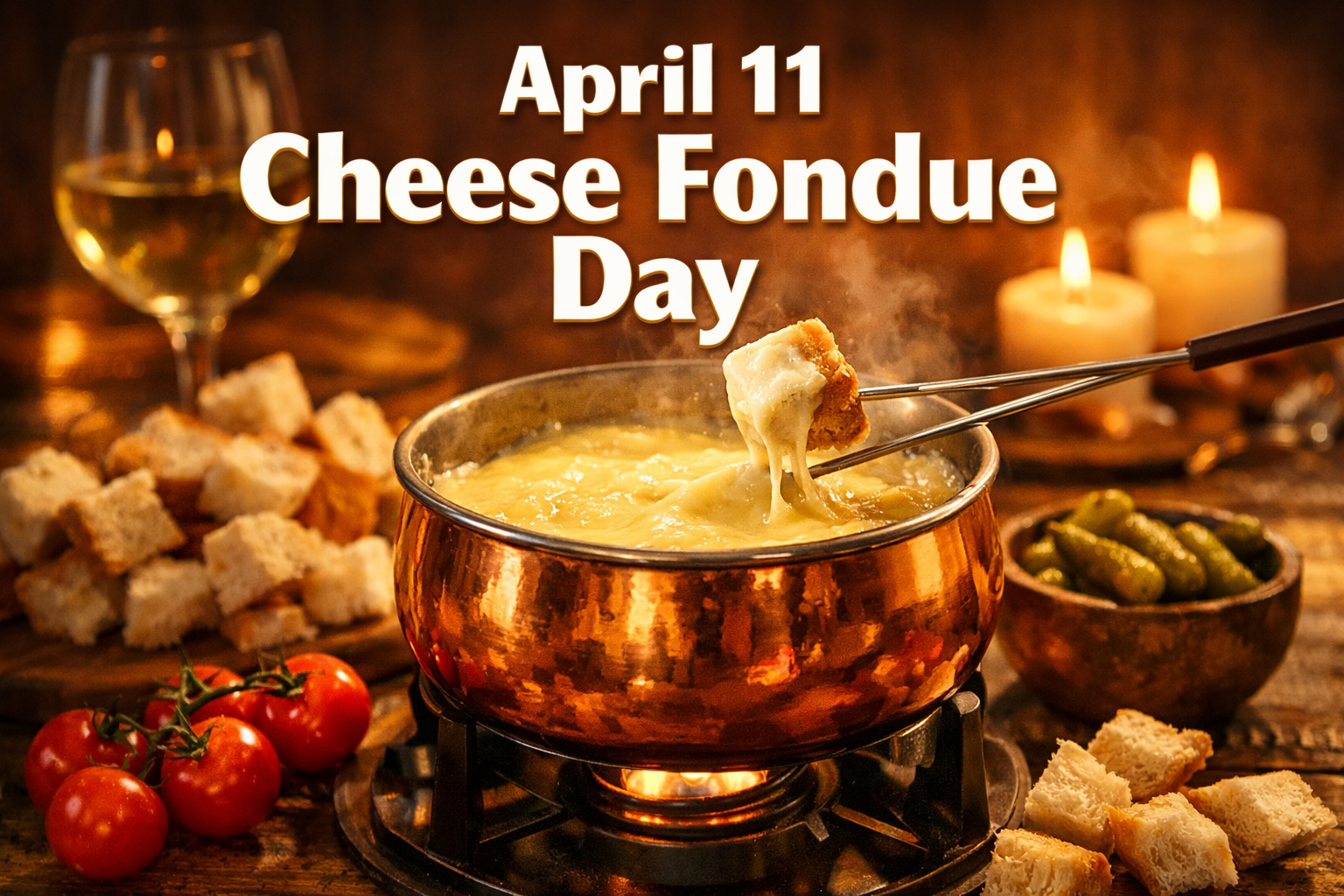
Quick Answer: April 11 Cheese Fondue Day is an annual food holiday celebrated every April 11 in the United States and beyond. It honors the classic Swiss dish of melted cheese served in a communal pot for dipping bread and other foods. The day encourages people to gather around a fondue pot, explore cheese varieties, and enjoy a meal rooted in centuries of Alpine tradition.
Key Takeaways
- 🧀 April 11 Cheese Fondue Day falls every year on April 11 and celebrates one of Switzerland’s most iconic dishes.
- The word “fondue” comes from the French fondre, meaning “to melt.”
- Traditional Swiss cheese fondue uses Gruyère and Emmental, melted with white wine and a splash of kirsch.
- Fondue became a global trend after Switzerland promoted it at the 1964 New York World’s Fair.
- A fondue pot (called a caquelon) and long-handled forks are the only essential equipment.
- The holiday is a great excuse to host a dinner party, try new cheese blends, or visit a Swiss-style restaurant.
- Common dippers include crusty bread, apples, broccoli, potatoes, and charcuterie.
- If the cheese seizes or turns grainy, adding a small splash of warm white wine and stirring steadily usually fixes it.
What Is April 11 Cheese Fondue Day?
April 11 Cheese Fondue Day is an informal food observance dedicated to cheese fondue, the Swiss dish of melted cheese kept warm over a flame and eaten communally. Like many American food holidays, it has no single founding organization on record, but it has grown steadily through food blogs, social media, and restaurant promotions since at least the early 2010s.
The holiday sits in good company on the food calendar. Just days earlier, April 1 is Sourdough Bread Day, and sourdough bread happens to be one of the best dippers for a cheese fondue pot. The timing feels almost deliberate.

The History Behind Cheese Fondue
Cheese fondue originated in the Swiss Alps, where hard winters made fresh food scarce. Melting aged cheese with wine and dipping stale bread into it was a practical way to use pantry staples during cold months. The earliest written fondue recipes appear in Swiss cookbooks from the late 17th and early 18th centuries, with the canton of Fribourg often credited as the dish’s birthplace.
The Swiss Cheese Union played a major role in turning fondue from a regional peasant dish into a global symbol of Swiss culture. In the mid-20th century, the Union distributed fondue sets to Swiss embassies worldwide and promoted the dish heavily at international events, including the 1964 New York World’s Fair. That campaign is widely credited with launching fondue’s popularity in the United States.
“Fondue went from Alpine survival food to dinner-party centerpiece in less than a generation, largely because of deliberate cultural marketing.”
By the 1970s, fondue sets were a standard American wedding gift. The trend faded somewhat in the 1980s, then returned with renewed enthusiasm in the 2000s as restaurants like The Melting Pot expanded across the country. Today, cheese fondue is both a nostalgic comfort food and a trendy dining experience.
If you enjoy exploring cheese-forward dishes, you might also appreciate January 20 National Cheese Lover’s Day and March 24 Cheesesteak Day, two other holidays that put cheese front and center.
What Cheeses Work Best for Fondue?
The best cheeses for fondue melt smoothly without becoming greasy or stringy. High-fat, aged cheeses with good moisture content perform best.
Classic Swiss combination:
- Gruyère (aged 6–12 months): nutty, slightly sweet, melts beautifully
- Emmental: milder, slightly fruity, adds stretch
- Appenzeller: stronger flavor, often blended in smaller amounts
Popular modern variations:
| Style | Cheese Blend | Flavor Profile |
|---|---|---|
| Classic Swiss | Gruyère + Emmental | Nutty, mild, creamy |
| French Alpine | Comté + Beaufort | Buttery, complex |
| Sharp American | Sharp Cheddar + Gruyère | Bold, tangy |
| Beer Fondue | Cheddar + Gouda + lager | Savory, malty |
| Brie & Herb | Brie + cream cheese | Soft, earthy |
Choose Gruyère if you want the most authentic result and reliable melt. Choose a cheddar blend if you prefer a sharper, more familiar flavor. Avoid pre-shredded cheese: the anti-caking agents in packaged shredded cheese prevent smooth melting.
How to Make Classic Cheese Fondue at Home
Making cheese fondue at home is straightforward. The process takes about 20 minutes once the ingredients are ready.
What you need:
- A fondue pot (caquelon) or a heavy saucepan with a portable burner
- Long-handled fondue forks
- 400g (about 14 oz) of cheese, freshly grated
- 1 cup dry white wine (Sauvignon Blanc or Pinot Gris work well)
- 1 clove garlic, halved
- 1 tablespoon cornstarch
- 1–2 teaspoons kirsch (optional but traditional)
- Pinch of nutmeg and white pepper
Step-by-step:
- Rub the inside of the pot with the cut garlic clove, then discard.
- Pour in the wine and warm over medium heat until steaming (not boiling).
- Toss grated cheese with cornstarch until coated.
- Add cheese to the wine in three batches, stirring in a figure-eight motion after each addition.
- Once smooth, stir in kirsch, nutmeg, and pepper.
- Transfer to the fondue burner set to low. Stir occasionally while eating.
Common mistake: Turning the heat too high. Cheese fondue should stay warm, not bubble aggressively. High heat causes the proteins to seize and the fat to separate.
For a sweet companion to your fondue night, consider ending the meal with a chocolate fondue. February 5 is Chocolate Fondue Day, and many of the same techniques apply.
What to Dip in Cheese Fondue
The dippers are just as important as the cheese. A good spread gives guests variety and balances the richness of the melted cheese.
Best dippers by category:
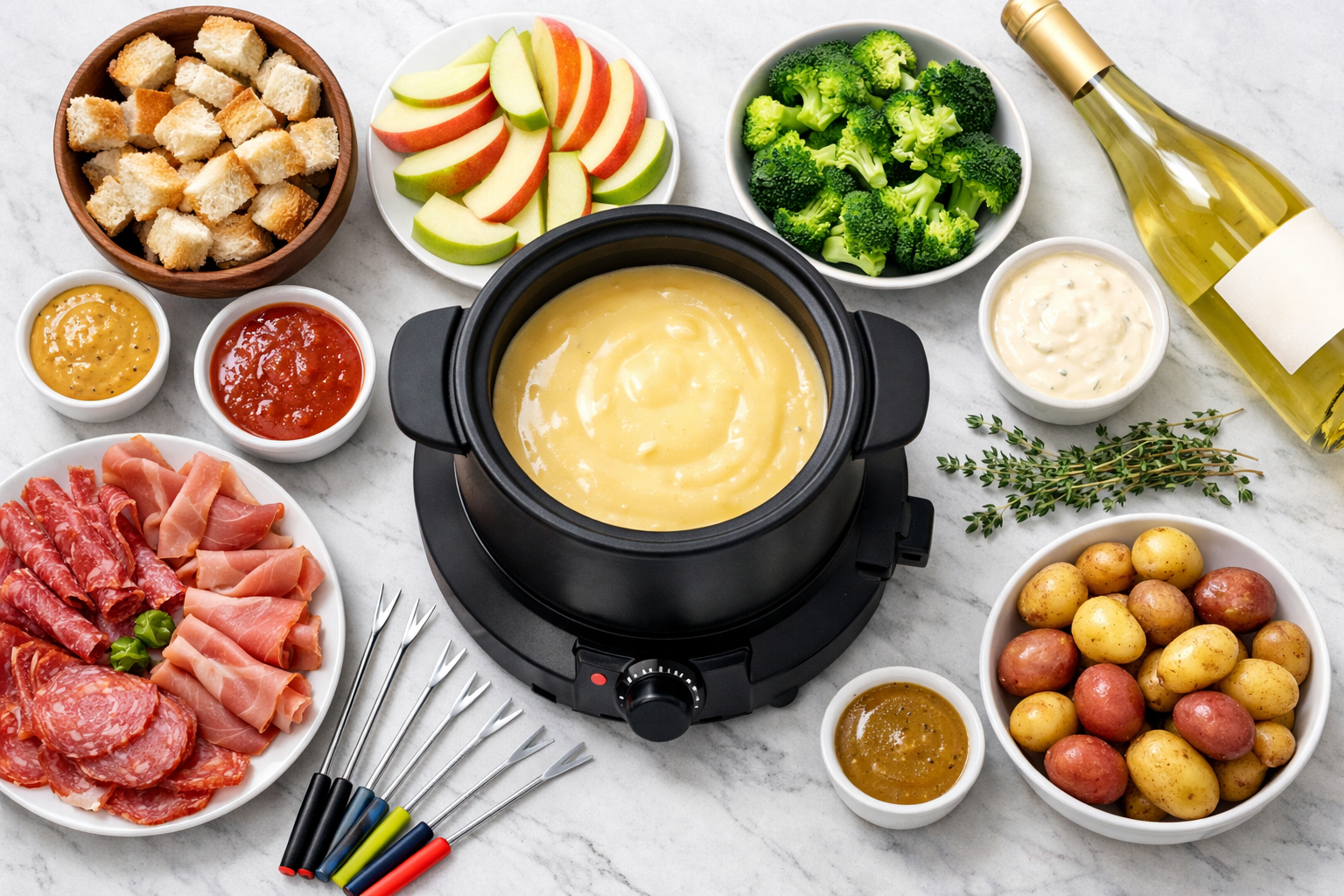
- Bread: Crusty sourdough, baguette, rye bread, pretzel bites (day-old bread holds up better than fresh)
- Vegetables: Blanched broccoli, cauliflower, asparagus tips, cherry tomatoes, bell pepper strips
- Fruit: Apple slices, pear wedges, grapes
- Proteins: Cooked mini potatoes, cured meats, cooked shrimp, cubed chicken
- Other: Cornichons, pickled onions, crackers
Pro tip: Cut bread into 1-inch cubes and leave some crust on each piece. The crust acts as a handle and prevents the bread from falling off the fork into the pot.
How to Celebrate April 11 Cheese Fondue Day
April 11 Cheese Fondue Day is best celebrated with other people. The communal nature of fondue, everyone dipping into the same pot, makes it a natural social occasion.
Ideas for celebrating in 2026:
- Host a fondue night: Invite friends or family, set up a fondue station, and let everyone choose their dippers. Pair with a dry white wine or a light lager.
- Try a new cheese blend: Use the day as an excuse to experiment with a French Alpine combination or a beer-based fondue.
- Visit a Swiss or fondue restaurant: Many restaurants run April 11 specials. Call ahead to ask.
- Cook with kids: Fondue is a hands-on meal that children enjoy. Use apple juice instead of wine for a family-friendly version.
- Share on social media: Post your fondue setup with the hashtag #CheeseFondueDay to join the broader community celebrating the day.
If you enjoy food holidays in April, also check out April 2 Peanut Butter and Jelly Day for another fun way to celebrate the month.
Cheese Fondue Troubleshooting Guide
Even experienced cooks run into fondue problems. Here are the most common issues and how to fix them.
| Problem | Likely Cause | Fix |
|---|---|---|
| Fondue is too thick | Not enough liquid or overcooked | Add a splash of warm white wine, stir steadily |
| Fondue is grainy or lumpy | Heat too high or cheese added too fast | Lower heat, add wine, stir in figure-eight |
| Fondue is too thin/watery | Too much wine or low-fat cheese | Mix 1 tsp cornstarch with 1 tbsp wine, stir in |
| Cheese separates/greasy | Overheating or wrong cheese type | Remove from heat, stir vigorously, add lemon juice drop |
| Bread keeps falling off fork | Bread too soft or cut too small | Use day-old bread, keep crust on each cube |
Edge case: If the fondue sits too long without stirring, a crust can form at the bottom of the pot. In Switzerland, this crust (called la religieuse, or “the nun”) is considered a delicacy and is scraped up and eaten at the end of the meal.
Cheese Fondue Day FAQ
Q: When is April 11 Cheese Fondue Day? A: It falls on April 11 every year. In 2026, that’s a Saturday, making it an ideal day to host a fondue dinner party.
Q: Who created April 11 Cheese Fondue Day? A: No single organization has officially claimed credit for founding the holiday. It appears to have grown organically through food media and social media over the past decade.
Q: Is cheese fondue gluten-free? A: The fondue itself (cheese, wine, cornstarch) can be made gluten-free by confirming the cornstarch is certified GF. The dippers, however, typically include bread, so guests with gluten sensitivity should stick to vegetable and protein dippers.
Q: Can cheese fondue be made without alcohol? A: Yes. Replace white wine with an equal amount of low-sodium chicken or vegetable broth plus a teaspoon of lemon juice. The acid in lemon juice helps keep the cheese smooth, mimicking wine’s role.
Q: What wine pairs best with cheese fondue? A: Dry, high-acid white wines work best: Swiss Chasselas, Sauvignon Blanc, or Pinot Gris. The acidity cuts through the richness of the cheese. Avoid oaked Chardonnay, which can clash with the fondue’s flavors.
Q: How do you reheat leftover cheese fondue? A: Reheat gently in a saucepan over low heat, adding a small splash of white wine and stirring constantly. Microwaving tends to cause the cheese to separate.
Q: Is there a difference between Swiss and French fondue? A: Yes. Swiss fondue typically uses Gruyère and Emmental with kirsch. French Savoyard fondue uses Comté, Beaufort, and Abondance with white wine. Both are delicious; the French version tends to be slightly richer and more complex.
Q: How much cheese fondue per person? A: Plan for roughly 150–200g (5–7 oz) of cheese per person as a main course, or 100g (3.5 oz) per person as a starter.
Q: Can I make cheese fondue in a slow cooker? A: A slow cooker can keep fondue warm on the “low” setting, but it’s not ideal for the initial melting process. Make the fondue on the stovetop first, then transfer to the slow cooker to keep warm.
Q: What is the crusty bottom of a fondue pot called? A: It’s called la religieuse in French, meaning “the nun.” It’s a toasted cheese crust that forms at the bottom and is considered a treat by fondue enthusiasts.
Conclusion
April 11 Cheese Fondue Day is more than a quirky food holiday. It’s a genuine invitation to slow down, gather people around a table, and share a meal that has connected communities for centuries. From its origins in the Swiss Alps to its current status as a beloved dinner-party staple, cheese fondue rewards both the cook and the guest.
Actionable next steps for 2026:
- Mark April 11 on your calendar and decide whether you’re hosting at home or dining out.
- Buy your cheese fresh from a specialty shop or cheese counter, and grate it yourself the day of.
- Prep your dippers in advance so the evening feels relaxed rather than rushed.
- Try one new cheese or flavor variation beyond the classic Gruyère-Emmental blend.
- Share the experience with someone who has never tried fondue before.
For more cheese-forward inspiration, explore January 20 National Cheese Lover’s Day and February 10 Cream Cheese Brownie Day for year-round ways to celebrate great cheese.
References
- Kindstedt, Paul S. Cheese and Culture: A History of Cheese and Its Place in Western Civilization. Chelsea Green Publishing, 2012.
- Pax, Dominique. “How the Swiss Cheese Union Made Fondue a Global Phenomenon.” Atlas Obscura, 2016. https://www.atlasobscura.com
- Swiss Cheese Marketing. The Story of Swiss Cheese. Switzerland Cheese Marketing AG, 2019.
- Civitello, Linda. Cuisine and Culture: A History of Food and People. Wiley, 2011.