
Last updated: April 1, 2026
Quick Answer
April 1 Sourdough Bread Day is an annual food observance celebrated every April 1st that honors one of the world’s oldest and most beloved fermented breads. The day encourages home bakers and food lovers to bake, share, or simply enjoy sourdough bread while appreciating its deep cultural and culinary history. It falls on April Fools’ Day, but the love for sourdough is no joke.
Key Takeaways 🍞
- April 1 Sourdough Bread Day is observed annually on April 1st.
- Sourdough is one of the oldest forms of leavened bread, with origins dating back thousands of years.
- The day celebrates both the art of sourdough baking and the science behind wild yeast fermentation.
- Sourdough’s signature tangy flavor comes from lactic acid bacteria naturally present in the starter culture.
- Anyone can participate — from first-time bakers to seasoned artisan bread makers.
- Sourdough bread has seen a major revival in home kitchens, particularly since 2020.
- Celebrating is simple: bake a loaf, visit a local bakery, or share sourdough content online.
- The day also overlaps with April Fools’ Day, making it a fun, lighthearted occasion for bread-themed humor.
- Sourdough baking requires just three ingredients: flour, water, and salt — plus a live starter culture.
- Related food observances throughout the year offer more chances to celebrate bread and baking. For example, March 21 is French Bread Day, another great occasion for bread lovers.
What Is April 1 Sourdough Bread Day?
April 1 Sourdough Bread Day is a food holiday dedicated to celebrating sourdough bread in all its forms. It falls on April 1st each year and is observed informally by bakers, food bloggers, bakeries, and bread enthusiasts across the United States and beyond.
Unlike federally recognized holidays, food observances like this one are community-driven. They exist to bring attention to a specific food, its history, and the joy of making or eating it. Sourdough bread, with its complex flavor, chewy crumb, and crispy crust, is a worthy subject for its own dedicated day.
What Is the History Behind Sourdough Bread?
Sourdough is widely considered the oldest form of leavened bread. Archaeological evidence and historical records suggest that ancient Egyptians were using wild yeast fermentation to leaven bread as far back as 3,700 BCE, according to research published in the journal Frontiers in Microbiology (Arranz-Otaegui et al., 2018).
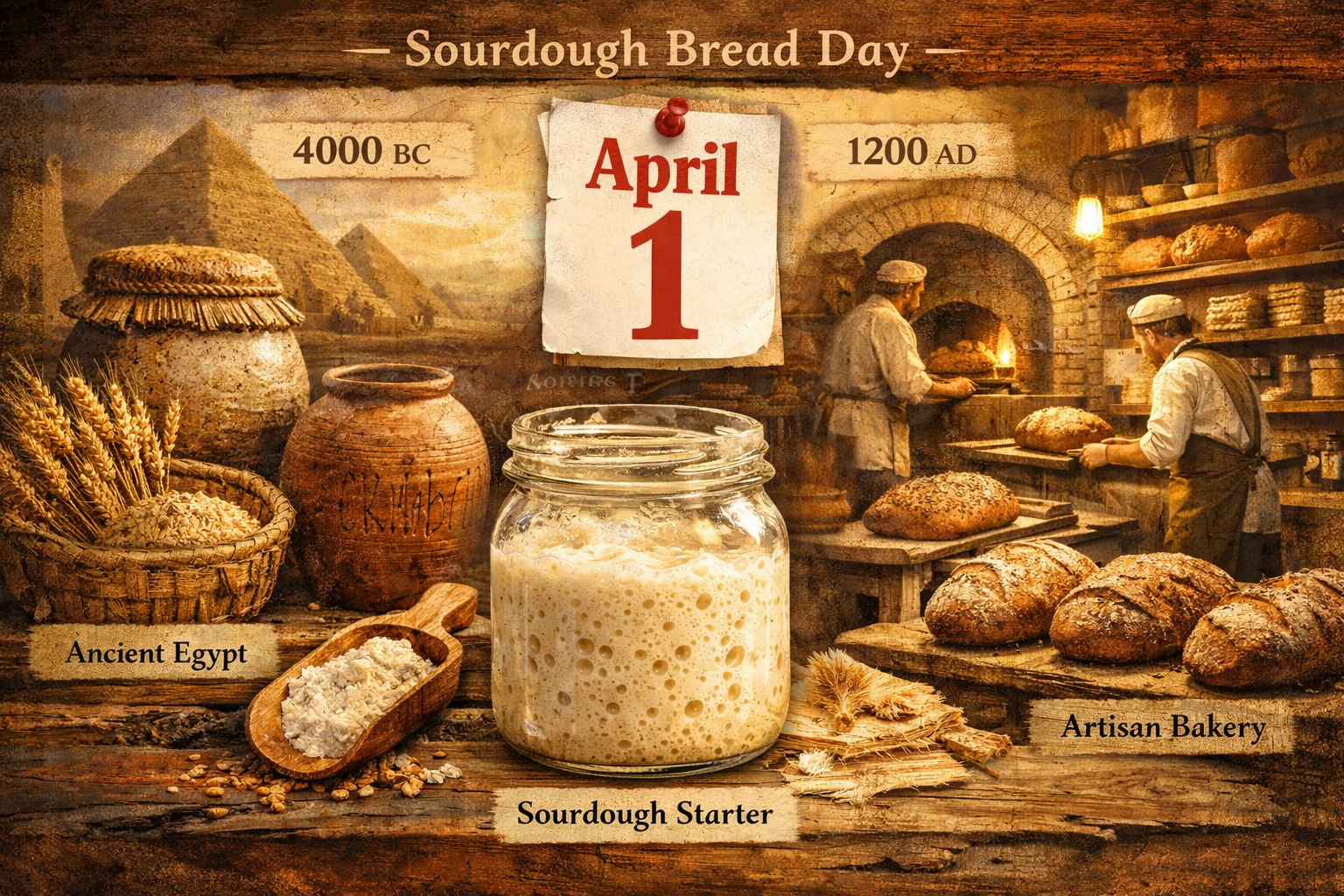
Key milestones in sourdough history include:
- Ancient Egypt (circa 3,700 BCE): Wild yeast fermentation first used to leaven bread.
- Gold Rush Era (1849): San Francisco sourdough became iconic as miners relied on starter cultures that could survive harsh conditions. San Francisco’s “Boudin Bakery” claims to have maintained a continuous sourdough starter since 1849.
- 20th Century decline: Commercial yeast, introduced widely in the early 1900s, made sourdough less common in home kitchens.
- 21st Century revival: Interest in fermented foods, gut health, and artisan baking brought sourdough back strongly, with a massive surge during the COVID-19 pandemic lockdowns of 2020.
“Sourdough is not just bread — it’s a living culture passed down through generations.”
The bread’s long history makes April 1 Sourdough Bread Day a meaningful occasion to reflect on how this ancient food has endured for millennia.
Why Does Sourdough Bread Have a Unique Flavor?
Sourdough’s tangy, complex taste comes from the fermentation process. A sourdough starter is a live culture of wild yeast and lactic acid bacteria (LAB). When these microorganisms ferment the dough, they produce lactic acid and acetic acid, which give sourdough its characteristic sour flavor.
Key factors that affect sourdough flavor:
| Factor | Effect on Flavor |
|---|---|
| Fermentation time | Longer = more sour |
| Hydration level | Higher hydration = milder tang |
| Flour type | Whole wheat adds earthiness |
| Temperature | Cooler temps favor acetic acid (sharper sour) |
| Starter age | Older, well-fed starters develop deeper complexity |
This is why two bakers using the same recipe can produce noticeably different loaves. Sourdough is as much science as it is craft.
How Did April 1 Sourdough Bread Day Get Started?
The exact origin of April 1 Sourdough Bread Day is not clearly documented, which is common for many informal food holidays. Most food observances of this type are believed to have been created by food bloggers, culinary organizations, or marketing groups looking to celebrate specific foods and drive engagement.
What’s clear is that the date — April 1st — adds a playful twist. Falling on April Fools’ Day means the celebration carries a lighthearted tone, even though sourdough baking itself is a serious craft. Bakers often lean into the humor with jokes like “my starter made me do it” or “sourdough: not a joke since 3,700 BCE.”
If you enjoy food holidays throughout the year, February 23 is Banana Bread Day — another great occasion for home bakers.
How to Celebrate April 1 Sourdough Bread Day in 2026
Celebrating April 1 Sourdough Bread Day doesn’t require professional baking skills. There are easy ways for everyone to participate.
For home bakers:
- Bake a classic sourdough loaf using your existing starter or create one from scratch (takes 5–7 days to develop).
- Try a new recipe — sourdough pancakes, sourdough pizza dough, or sourdough crackers are great options.
- Share your bake on social media using hashtags like #SourdoughBreadDay or #April1SourdoughDay.
For non-bakers:
- Visit a local artisan bakery and buy a fresh sourdough loaf.
- Pair sourdough with quality toppings: avocado, smoked salmon, or homemade jam. For jam pairing ideas, check out 120 lip-smacking jam recipes.
- Host a sourdough tasting with different varieties: white, whole wheat, rye, or seeded.
For educators and food enthusiasts:
- Teach children about fermentation using a simple starter demonstration.
- Share the history of sourdough with friends or on social media.
- Explore the science of wild yeast with a beginner-friendly bread cookbook. The Ultimate Bread Machine Cookbook is a solid starting point for new bakers.
What Are the Health Benefits of Sourdough Bread?
Sourdough offers several potential health advantages compared to commercially yeasted bread, though individual results vary based on the specific recipe and a person’s dietary needs.
Potential benefits include:
- Improved digestibility: The long fermentation process breaks down some gluten and phytic acid, which may make sourdough easier to digest for some people (though it is not safe for those with celiac disease).
- Lower glycemic response: Some studies suggest sourdough bread may produce a slower rise in blood sugar compared to standard white bread, according to research in the European Journal of Clinical Nutrition (Liljeberg & Björck, 1994).
- Probiotic-adjacent effects: While baking kills the live bacteria in the starter, the fermentation byproducts (organic acids, prebiotics) may still support gut health.
- Longer shelf life: Natural acids act as a preservative, reducing the need for artificial additives.
Important note: Sourdough is not gluten-free. People with celiac disease or severe gluten sensitivity should avoid it unless specifically made with certified gluten-free flour. For gluten-free baking resources, see the gluten-free cookbook collection.
What Do You Need to Start Baking Sourdough?
Starting sourdough baking requires minimal equipment and just a few ingredients. Here’s a straightforward checklist:
Ingredients:
- Bread flour (or all-purpose flour)
- Water (filtered or left to sit overnight to remove chlorine)
- Salt
- Active sourdough starter (homemade or purchased)
Equipment:
- Kitchen scale (weight measurements are far more accurate than volume)
- Large mixing bowl
- Dutch oven or covered baking vessel
- Bench scraper
- Proofing basket (banneton) — optional but helpful
- Lame or sharp razor blade for scoring
Time commitment:
- Building a starter from scratch: 5–7 days
- Mixing to baking a single loaf: 24–48 hours (mostly hands-off fermentation time)
- Active hands-on time per loaf: roughly 30–45 minutes
The Bread and Biscuit Baker’s guide covers foundational techniques that apply directly to sourdough baking as well.
FAQ: April 1 Sourdough Bread Day
Q: When is Sourdough Bread Day? A: Sourdough Bread Day is celebrated on April 1st each year.
Q: Is April 1 Sourdough Bread Day an official holiday? A: No. It is an informal food observance, not a federally or officially recognized holiday. It is celebrated by the baking community and food enthusiasts.
Q: Why is it on April Fools’ Day? A: The exact reason isn’t documented, but the overlap with April Fools’ Day adds a playful element to the celebration. Sourdough bakers often embrace bread-themed humor on the day.
Q: Can beginners participate in April 1 Sourdough Bread Day? A: Absolutely. Beginners can buy sourdough from a bakery, try a simple sourdough recipe, or start building their first starter culture ahead of April 1st.
Q: Is sourdough bread healthier than regular bread? A: Sourdough may be easier to digest and have a lower glycemic response for some people, but it is not inherently a health food. It still contains gluten and carbohydrates.
Q: How long does a sourdough starter last? A: A properly maintained sourdough starter can last indefinitely. Some bakeries claim to use starters that are over 100 years old.
Q: What’s the difference between sourdough and regular bread? A: Regular bread uses commercial yeast for a fast, predictable rise. Sourdough uses a wild yeast starter and lactic acid bacteria, resulting in a longer fermentation, tangier flavor, and chewier texture.
Q: Can sourdough be made with gluten-free flour? A: Yes, but the process and results differ significantly. Gluten-free sourdough requires specific flour blends and produces a denser loaf.
Q: Are there other bread-related food holidays? A: Yes. March 21 is French Bread Day and February 23 is Banana Bread Day, among others.
Q: What toppings go best with sourdough? A: Classic options include butter, avocado, smoked salmon, soft cheese, or jam. Sourdough’s tang pairs well with both savory and sweet toppings.
Conclusion: Make April 1 Count for Sourdough Lovers
April 1 Sourdough Bread Day is a simple but satisfying reason to slow down, connect with an ancient food tradition, and get your hands in some dough. Whether baking a full loaf, picking one up from a local bakery, or just learning more about fermentation, there’s something in this day for everyone.
Actionable next steps for 2026:
- Mark April 1 on your calendar and plan your celebration in advance.
- Start a sourdough starter at least one week before April 1st if you want to bake from scratch.
- Share the day with friends, family, or followers using #SourdoughBreadDay.
- Explore new recipes — sourdough goes far beyond a basic loaf. Try pancakes, focaccia, or even sourdough crackers.
- Visit a local artisan bakery to support small businesses and taste professionally crafted sourdough.
Sourdough has survived thousands of years for good reason. April 1st is the perfect day to celebrate that legacy — no fooling.
References
- Arranz-Otaegui, A., et al. (2018). Archaeobotanical evidence reveals the origins of bread 14,400 years ago in northeastern Jordan. Proceedings of the National Academy of Sciences. https://www.pnas.org/doi/10.1073/pnas.1801071115
- Liljeberg, H., & Björck, I. (1994). Bioavailability of starch in bread products. European Journal of Clinical Nutrition.
- Boudin Bakery. (n.d.). Our history. https://www.boudinbakery.com/our-story/