
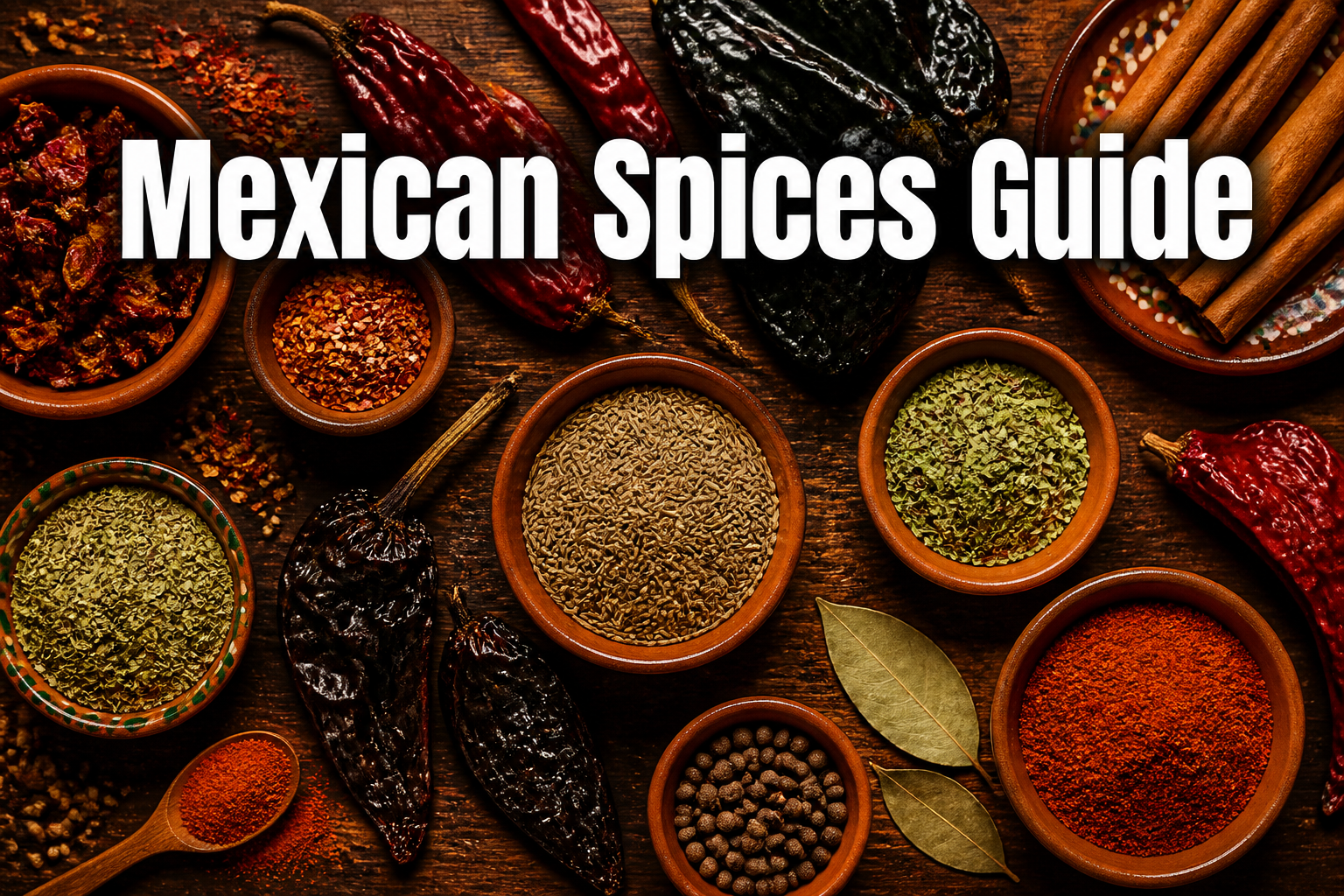
Quick Answer: Mexican cuisine relies on a core set of spices and herbs including dried chiles (ancho, chipotle, guajillo), cumin, Mexican oregano, epazote, achiote, cinnamon, and cloves. These ingredients, used alone or in combination, create the bold, layered flavors found in salsas, moles, stews, and marinades across Mexico’s regional cuisines.
Key Takeaways
- 🌶️ Dried chiles are the backbone of Mexican cooking — ancho, guajillo, chipotle, and pasilla are the most commonly used.
- 🌿 Mexican oregano is botanically different from Mediterranean oregano and has a stronger, more citrusy flavor.
- 🫙 Cumin is one of the most-used ground spices in Mexican dishes, especially in meat rubs and sauces.
- 🟠 Achiote (annatto) gives dishes like cochinita pibil their signature orange-red color and earthy flavor.
- 🍂 Cinnamon and cloves appear frequently in moles and chocolate-based sauces, adding warmth and depth.
- 🌱 Epazote is a pungent herb used mainly in bean dishes and is hard to substitute.
- 🔥 Chipotle is simply a smoked, dried jalapeño — it adds heat AND smokiness in one ingredient.
- 📦 Whole spices toasted in a dry pan release more flavor than pre-ground versions.
- 🍽️ Regional variation matters: Oaxacan, Yucatecan, and Northern Mexican cuisines each use distinct spice profiles.
- 📚 A good Mexican cookbook can help you learn how these spices combine in traditional recipes.
What Are Some Mexican Spices? The Essential List
Mexican cuisine uses a specific set of spices and herbs that differ significantly from other Latin American or Spanish cooking traditions. The flavor profile is built on dried chiles, earthy seeds, warm aromatics, and pungent herbs — not just heat.
Here are the most important Mexican spices every home cook should know:
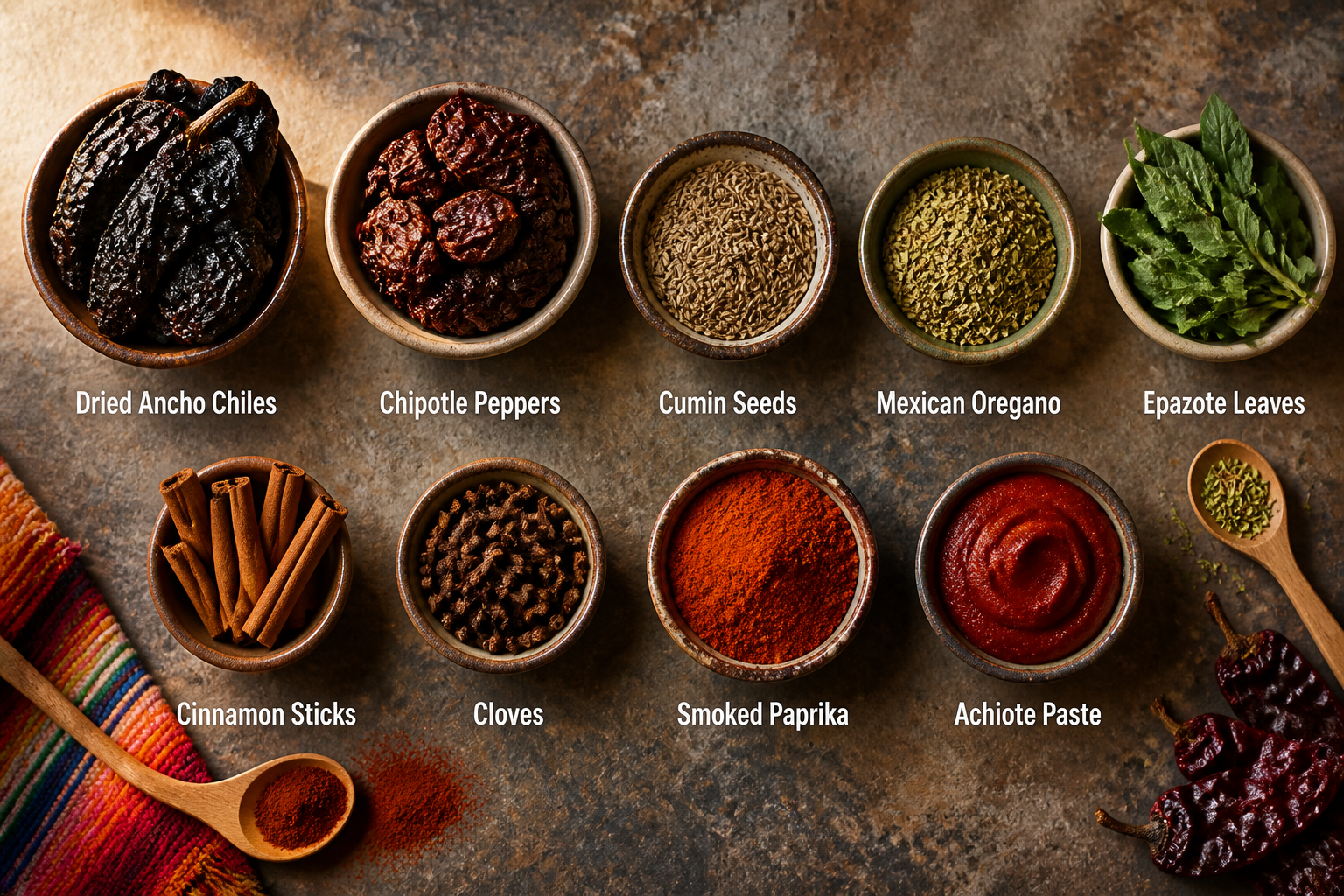
| Spice / Herb | Flavor Profile | Common Uses |
|---|---|---|
| Ancho chile | Mild, sweet, raisin-like | Mole, enchilada sauce, stews |
| Chipotle chile | Smoky, medium heat | Adobo, soups, marinades |
| Guajillo chile | Tangy, slightly fruity | Salsas, pozole, birria |
| Cumin | Earthy, warm, slightly bitter | Meat rubs, beans, rice |
| Mexican oregano | Citrusy, peppery, bold | Soups, marinades, salsas |
| Epazote | Pungent, herbal, medicinal | Black beans, quesadillas |
| Achiote (annatto) | Earthy, slightly peppery | Cochinita pibil, rice, marinades |
| Cinnamon (canela) | Sweet, floral, delicate | Mole, hot chocolate, desserts |
| Cloves | Intense, warm, aromatic | Mole negro, adobo |
| Smoked paprika | Mild, smoky, sweet | Rubs, sauces, garnishes |
What Are Some Mexican Spices Used in Everyday Cooking?
For daily Mexican home cooking, a handful of spices appear in nearly every kitchen. Cumin, dried chile powder, Mexican oregano, garlic powder, and black pepper form the everyday foundation.
Cumin is arguably the most-used ground spice in Mexican cooking outside of chiles. It appears in taco seasoning blends, bean dishes, and meat marinades. Toast whole cumin seeds in a dry skillet for 60–90 seconds before grinding for noticeably better flavor.
Mexican oregano (Lippia graveolens) is not the same plant as Italian or Greek oregano. It has a more intense, citrus-forward flavor with hints of pepper. Using Mediterranean oregano as a substitute will work in a pinch, but the taste is noticeably different — especially in pozole or carne asada marinades.
Garlic functions more as a fresh ingredient in Mexican cooking, but garlic powder appears in dry rubs and spice blends. It pairs naturally with cumin and chile powder in most seasoning mixes.
Choose Mexican oregano if you’re making pozole, birria, or any slow-cooked stew. Choose Mediterranean oregano only when Mexican oregano is completely unavailable.
Dried Chiles: The Heart of Mexican Spice Blends
Dried chiles are not simply “hot peppers” — each variety has a distinct flavor, heat level, and best use. Understanding what are some Mexican spices really means starting with dried chiles, because they define the cuisine more than any other single ingredient.
The Big Four Dried Chiles:
- Ancho: The dried form of the poblano pepper. Mild heat (1,000–1,500 Scoville units), with a deep, slightly sweet flavor. Essential for mole poblano and enchilada sauces.
- Chipotle: A smoked, dried jalapeño. Medium heat with a distinctive smokiness. Available dried or canned in adobo sauce.
- Guajillo: Thin-skinned, tangy, and moderately hot. Used in birria, pozole rojo, and many salsas.
- Pasilla: Long, dark, and mildly hot with an earthy, chocolate-like undertone. A key component in mole negro.
How to prepare dried chiles:
- Remove stems and seeds (seeds add bitterness, not just heat).
- Toast briefly in a dry skillet over medium heat — 20–30 seconds per side until fragrant.
- Soak in hot water for 15–20 minutes until pliable.
- Blend into sauces or chop for use in stews.
If you enjoy heat-forward cooking, the 600 Recipes for Chili Lovers collection is worth exploring for recipes that put dried chiles front and center.
Warm Spices: Cinnamon, Cloves, and Allspice in Mexican Cuisine
Many people are surprised to learn that cinnamon and cloves play a major role in savory Mexican dishes. These warm spices appear in moles, adobos, and even some meat braises.
Mexican cinnamon (canela) is Ceylon cinnamon — softer, more floral, and less intense than the Cassia cinnamon common in North American grocery stores. It dissolves easily when ground and adds a subtle sweetness to mole sauces and hot chocolate.
Cloves are used sparingly but powerfully. Even one or two cloves in a mole negro or adobo sauce can define the dish’s character. Overuse makes food taste medicinal, so restraint is key.
Allspice (pimienta gorda) is used more in Yucatecan cooking than in central Mexican cuisine. It appears in cochinita pibil and some regional moles, contributing a flavor that blends cinnamon, clove, and black pepper.
Common mistake: Using too many cloves. Start with 2–3 whole cloves per batch of mole and adjust from there.
Achiote and Epazote: The Underrated Mexican Spices
Two ingredients that rarely appear in mainstream spice racks deserve more attention: achiote and epazote.
Achiote (annatto) comes from the seeds of the Bixa orellana plant. It has a mild, earthy, slightly peppery flavor and a vivid orange-red color. In the Yucatán Peninsula, it’s the defining ingredient in cochinita pibil, mixed into a paste with citrus juice and other spices. It’s also used to color and flavor rice and soups.
Epazote is a pungent herb with a flavor that’s hard to describe — medicinal, herbal, and slightly citrusy. It’s traditionally added to black bean dishes because it’s believed to reduce digestive discomfort from beans. Fresh epazote is preferred, but dried works in cooked dishes. There’s no perfect substitute, though a small amount of fresh cilantro or Mexican oregano can approximate its role in a pinch.
For those exploring global flavor traditions, the Recipes from Around the World collection offers useful context on how spice traditions vary across cultures.
How to Build a Mexican Spice Pantry From Scratch
Building a functional Mexican spice pantry doesn’t require dozens of ingredients. Start with these priorities:
Tier 1 — Buy first (used constantly):
- Dried ancho chiles
- Dried guajillo chiles
- Ground cumin
- Mexican oregano
- Chipotle in adobo (canned)
Tier 2 — Add next (used regularly):
- Achiote paste or powder
- Dried pasilla chiles
- Ceylon cinnamon (canela)
- Whole cloves
- Smoked paprika
Tier 3 — For advanced recipes:
- Epazote (fresh or dried)
- Dried mulato chiles
- Dried chile de árbol (for heat)
- Allspice (whole)
- Mexican chocolate (Ibarra or Abuelita brand)
Store dried chiles in a sealed container away from light and heat. They stay flavorful for up to 12 months. Ground spices lose potency faster — replace them every 6 months for best results.
If you want to go deeper into spice-forward cooking, a dedicated spicy cookbook can provide structured recipes that teach how these ingredients layer together. For those who love garlic as a flavor foundation in Mexican cooking, the garlic cookbook is also a practical resource.
Regional Mexican Spice Profiles: How Location Changes Everything
Mexican cuisine isn’t monolithic. Spice use varies significantly by region, and understanding these differences helps explain why a Oaxacan mole tastes nothing like a Yucatecan cochinita pibil.
Oaxaca: Known for complex moles (negro, rojo, coloradito). Uses the widest variety of dried chiles, plus chocolate, cinnamon, cloves, and sesame seeds. Epazote appears frequently in bean dishes.
Yucatán: Defined by achiote, sour orange (naranja agria), allspice, and habanero chiles. The spice profile is aromatic and citrus-forward rather than deeply smoky.
Northern Mexico: Simpler spice profiles focused on cumin, garlic, black pepper, and dried red chiles. The emphasis is on grilled meats and flour tortillas rather than complex sauces.
Central Mexico (Mexico City and surroundings): Balanced use of ancho, guajillo, and pasilla chiles in sauces. Cumin, Mexican oregano, and fresh herbs like cilantro dominate everyday cooking.
This regional variation is part of what makes Mexican cuisine so rich. Exploring a well-curated Mexican cookbook organized by region is one of the best ways to understand how these spice profiles work in practice.
FAQ: What Are Some Mexican Spices?
Q: What is the most important spice in Mexican cooking? Dried chiles are the single most important spice category. If forced to choose one, ancho chile is the most versatile — it appears in moles, sauces, stews, and marinades across all regions.
Q: Is cumin a Mexican spice? Cumin originated in the Middle East and was brought to Mexico by Spanish colonizers, but it has been central to Mexican cooking for centuries. Today it’s considered an essential Mexican spice.
Q: What’s the difference between Mexican oregano and regular oregano? Mexican oregano (Lippia graveolens) is a different plant from Mediterranean oregano (Origanum vulgare). Mexican oregano is more intense, citrusy, and peppery. They’re not interchangeable in recipes where oregano is a featured flavor.
Q: Is chipotle just a smoked jalapeño? Yes. Chipotle is a jalapeño that has been smoked and dried. The smoking process transforms the flavor dramatically, adding deep smokiness alongside the chile’s natural heat.
Q: What spice gives Mexican food its red color? Several spices contribute red color: ancho and guajillo chiles, achiote (annatto), and smoked paprika. Achiote is the most vivid colorant and is the defining ingredient in dishes like cochinita pibil.
Q: Can I substitute regular cinnamon for Mexican cinnamon (canela)? You can, but the result will be stronger and slightly harsher. Mexican canela (Ceylon cinnamon) is softer and more delicate. Use about half the amount of regular (Cassia) cinnamon as a substitute.
Q: What is epazote and can I skip it? Epazote is a pungent Mexican herb used mainly in bean dishes. It can be omitted without ruining a recipe, but the flavor will be less authentic. A small amount of Mexican oregano or fresh cilantro can partially substitute.
Q: Are Mexican spices the same as Tex-Mex spices? No. Tex-Mex cooking uses a simplified spice profile heavy on chili powder blends, cumin, and garlic powder. Authentic Mexican cooking uses a much wider range of individual dried chiles and regional herbs.
Q: Where can I buy authentic Mexican spices? Latin grocery stores carry the widest selection, including fresh dried chiles and epazote. Many mainstream grocery stores now stock ancho, guajillo, and chipotle chiles. Online retailers are a reliable source for harder-to-find items like canela and achiote paste.
Q: How do I know if my dried chiles are still good? Good dried chiles are pliable (not brittle), have a rich color, and smell fragrant when torn. Brittle, faded, or odorless chiles have lost most of their flavor and should be replaced.
Conclusion: Start Cooking With Mexican Spices Today
Understanding what are some Mexican spices is the first step toward cooking Mexican food that actually tastes authentic. The key is learning a handful of core ingredients — dried chiles, cumin, Mexican oregano, achiote, and canela — and understanding how they interact.
Actionable next steps:
- Start with three dried chiles: Buy ancho, guajillo, and chipotle. Learn each one individually before combining them.
- Swap in Mexican oregano: Replace Mediterranean oregano in your next stew or marinade and taste the difference.
- Toast your spices: Before grinding cumin or adding dried chiles to a sauce, toast them briefly in a dry pan. This single habit improves flavor more than any other technique.
- Explore regional recipes: Pick one Mexican region (Oaxaca, Yucatán, or central Mexico) and cook through three or four of its classic dishes to understand how its spice profile works as a system.
- Build your pantry gradually: Don’t buy everything at once. Add one or two new spices per month and learn to use them well before expanding further.
For structured recipe guidance, a quality Mexican cookbook organized by technique or region is the most efficient way to build real skill. Those who enjoy heat-forward dishes will also find value in dedicated chili recipes that showcase dried chiles in depth.
Mexican spices reward patience and curiosity. The more you cook with them, the more intuitive the combinations become.
References
- Kennedy, Diana. The Essential Cuisines of Mexico. Clarkson Potter, 2000.
- Bayless, Rick. Authentic Mexican: Regional Cooking from the Heart of Mexico. William Morrow, 1987.
- DeWitt, Dave, and Paul W. Bosland. The Complete Chile Pepper Book. Timber Press, 2009.
- Presilla, Maricel E. Gran Cocina Latina. W. W. Norton & Company, 2012.
- USDA FoodData Central. “Spices, cumin seed.” FoodData Central, 2019. https://fdc.nal.usda.gov/