
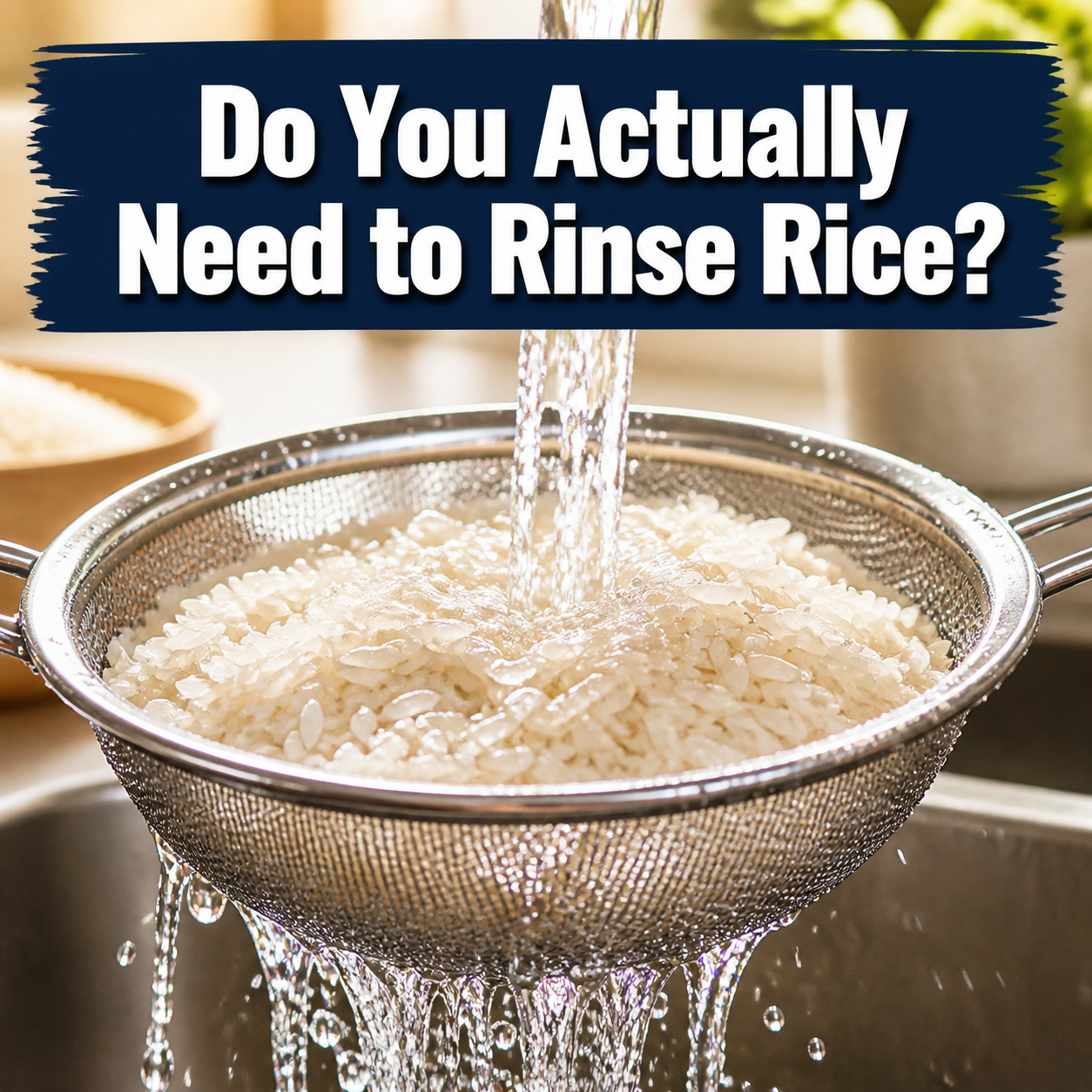
Quick Answer: Whether you need to rinse rice depends on the type of rice, how you plan to cook it, and what you prioritize — texture, nutrition, or food safety. For most long-grain and jasmine rice, rinsing improves texture noticeably. For enriched white rice sold in the U.S., rinsing washes away added nutrients. There is no single universal rule, but knowing the logic behind each scenario makes the decision straightforward.
Key Takeaways 🍚
- Rinsing removes surface starch, which reduces clumping and produces fluffier, more separated grains.
- Enriched white rice (common in the U.S.) is coated with iron and B vitamins — rinsing removes a meaningful portion of those nutrients.
- Arsenic reduction is a real benefit of rinsing and pre-soaking rice, particularly for brown rice and varieties grown in certain regions.
- Sushi rice and risotto rice should NOT be rinsed — surface starch is essential for their characteristic texture.
- Jasmine and basmati rice benefit most from rinsing; the difference in fluffiness is noticeable.
- Brown rice benefits from rinsing for cleanliness but loses fewer nutrients than enriched white rice because its nutrients are inside the bran layer.
- The “rinse until clear” method is a reliable visual guide for most rice types.
- A fine mesh colander makes rinsing faster and less messy.
- If using a rice cooker, check the manufacturer’s guidance — some models are calibrated for unrinsed rice.
Do You Actually Need to Rinse Rice? The Core Question Answered
The short answer: it depends on the rice type and your goal. Rinsing is not a universal requirement, but it is the right move in most everyday cooking situations.
Surface starch is the key variable. When rice is milled, starch granules break and coat the outside of each grain. In the pot, that loose starch thickens the cooking water and causes grains to stick together. Rinsing removes most of that surface starch before cooking begins.
For dishes where separated, fluffy grains are the goal — think steamed basmati, fried rice, or a simple rice side dish — rinsing makes a clear difference. For dishes that rely on creaminess or binding, like risotto or rice pudding, rinsing works against you.
What Happens When You Rinse Rice?
Rinsing rice removes loose surface starch, dust, and any residual milling debris. The practical result is less sticky, more distinct grains after cooking.
Here is what the rinsing process actually does:
- Removes surface starch: Reduces the gelatinization that causes grains to clump.
- Removes dust and debris: Especially relevant for rice bought in bulk or imported varieties with less controlled packaging.
- Slightly reduces cooking time: Less starch in the water means less thickening, which can marginally speed up absorption.
- Reduces some surface contaminants: Including trace pesticide residues that may sit on the outer grain surface.
Common mistake: Rinsing with warm or hot water can start the cooking process prematurely, causing grains to absorb water unevenly. Always rinse with cold water.
Does Rinsing Rice Remove Nutrients?
Yes, rinsing enriched white rice removes a portion of the added vitamins and minerals. This is the strongest argument against rinsing for certain rice types.
In the United States, many white rice products are enriched — meaning iron, thiamine (B1), niacin (B3), and folic acid are added back after milling strips them away. These nutrients are applied as a coating on the grain surface. Rinsing washes away a significant portion of that coating.
According to the U.S. Food and Drug Administration (FDA), enriched rice should not be rinsed before cooking, and this advisory is often printed directly on the packaging.
| Rice Type | Rinse? | Reason |
|---|---|---|
| Enriched white rice (U.S.) | ❌ No | Rinsing removes added nutrients |
| Jasmine rice | ✅ Yes | Reduces stickiness, improves texture |
| Basmati rice | ✅ Yes | Elongates grains, reduces clumping |
| Brown rice | ✅ Yes | Removes debris; nutrients are inside bran |
| Sushi rice | ❌ No | Surface starch needed for stickiness |
| Arborio / risotto rice | ❌ No | Starch creates the creamy texture |
| Wild rice | Optional | Mainly for debris removal |
Decision rule: If the rice package says “enriched” or “do not rinse,” follow that instruction. For all other varieties, rinsing is generally beneficial.
Does Rinsing Rice Reduce Arsenic?
Yes — rinsing, and especially pre-soaking, can meaningfully reduce inorganic arsenic levels in rice. This is particularly relevant for people who eat rice as a daily staple.
Rice absorbs arsenic from soil and water more readily than most other grains. Brown rice tends to have higher arsenic levels than white rice because arsenic concentrates in the outer bran layer.
Research published by the Food Standards Agency (UK, 2017) found that rinsing rice before cooking and cooking it in excess water (then draining) can reduce inorganic arsenic content by up to 40–60%, depending on the variety and cooking method. The “pasta method” — boiling rice in a large volume of water and draining — is the most effective approach for arsenic reduction, though it also removes more water-soluble nutrients.
Who this matters most for:
- Infants and young children (rice-based cereals are a common exposure route)
- Pregnant women
- People eating rice two or more times per day
For the average adult eating rice a few times per week, arsenic levels in rinsed, properly cooked rice are generally within safe limits according to most food safety agencies.
How to Rinse Rice Correctly (Step-by-Step)
The right technique takes under two minutes and makes a noticeable difference in the final dish. Here is the most reliable method:
- Measure your rice into a fine mesh strainer or a bowl.
- Run cold water over the rice while gently stirring with your fingers or a spoon.
- Watch the water: It will run cloudy white at first from the surface starch.
- Continue rinsing until the water runs mostly clear — usually 30 to 60 seconds under a steady stream.
- Drain thoroughly before adding to your pot or rice cooker.
A over-the-sink colander is the most practical tool for this — it keeps the rice contained while water drains freely without losing grains down the drain.
Edge case: If using a rice cooker, check the manual. Some models, particularly certain Aroma models, are calibrated with specific water-to-rice ratios that assume unrinsed rice. Rinsing and then using the standard ratio can result in slightly undercooked rice. For more on this, see this guide to the Aroma rice and grain cooker.
Do You Actually Need to Rinse Rice for Fried Rice or Specific Dishes?
For fried rice, rinsing — and ideally refrigerating the cooked rice overnight — is strongly recommended. The goal in fried rice is dry, separated grains that fry rather than steam in the wok.
Here is how rinsing fits different dish types:
- Fried rice: Rinse before cooking, then chill the cooked rice. Dry grains are essential.
- Pilaf: Rinse to remove surface starch so grains stay distinct after toasting and simmering.
- Congee / rice porridge: No need to rinse. The starch contributes to the thick, creamy consistency.
- Rice salad: Rinse before and after cooking to keep grains from clumping as they cool.
- Stuffed peppers or casseroles: Rinsing is optional; a little stickiness helps the filling hold together.
FAQ
Q: Does rinsing rice make it taste better? A: For most long-grain varieties, yes. Removing surface starch reduces a faint chalky or starchy flavor, producing a cleaner-tasting grain. The difference is subtle but noticeable in plain steamed rice.
Q: Should you rinse rice before using a rice cooker? A: Generally yes, unless the rice is enriched or the cooker’s manual specifies otherwise. Rinsing improves texture in most rice cooker results. Adjust the water ratio slightly (add a tablespoon or two extra) since rinsed rice absorbs water slightly differently.
Q: How many times should you rinse rice? A: Rinse until the water runs mostly clear — typically 2 to 4 rinses if using a bowl method, or 30 to 60 seconds under a running tap with a strainer. Over-rinsing beyond that point offers no additional benefit.
Q: Is it safe to eat unrinsed rice? A: Yes, for most commercially packaged rice in developed countries. Unrinsed rice is not dangerous. The main downsides are slightly stickier texture and, for certain varieties, marginally higher surface starch and trace contaminant levels.
Q: Does soaking rice count as rinsing? A: No — soaking and rinsing serve different purposes. Rinsing removes surface starch and debris. Soaking (30 minutes to several hours) allows the grain to absorb water before cooking, which shortens cook time and can further reduce arsenic. For basmati, soaking for 20–30 minutes after rinsing produces the longest, most separate grains.
Q: Should you rinse brown rice? A: Yes. Brown rice benefits from rinsing to remove debris and any surface residues. Unlike enriched white rice, brown rice’s nutrients are locked inside the bran layer, so rinsing does not strip them away.
Q: What about pre-washed or “no-rinse” rice? A: Some brands sell pre-washed rice that has already had surface starch removed during processing. The packaging will state this clearly. No additional rinsing is needed for these products.
Q: Does rinsing rice waste water? A: A standard rinse uses roughly half a liter of water. For those in water-scarce areas or with environmental concerns, the bowl-and-pour method (fill, swirl, drain, repeat) uses significantly less water than running the tap continuously.
Conclusion: When to Rinse and When to Skip It
The question of whether you actually need to rinse rice does not have a single yes-or-no answer — but the decision is simple once you know the variables.
Rinse rice when:
- Cooking jasmine, basmati, or any long-grain white rice for fluffy, separated results
- Making fried rice or rice salad
- Using brown rice (for cleanliness and slight arsenic reduction)
- The package does not say “enriched” or “do not rinse”
Skip rinsing when:
- The package is labeled “enriched” (common in the U.S.)
- Making risotto, sushi rice, or rice pudding
- The recipe specifically calls for unrinsed rice
Actionable next steps:
- Check your rice packaging right now — if it says “enriched,” stop rinsing it.
- For all other varieties, rinse under cold water until the water runs mostly clear.
- If arsenic is a concern (daily rice eaters, young children), adopt the pasta-method cooking approach for brown rice.
- Invest in a fine mesh strainer — it makes the process faster and eliminates the risk of losing grains.
Good cooking is built on small, informed choices. Knowing when to rinse — and when not to — is one of the easiest ways to consistently improve the rice on your plate.
References
- U.S. Food and Drug Administration (FDA). Rice and Rice Products: Arsenic in Food. FDA.gov. (2020)
- Food Standards Agency (UK). Arsenic in Rice. food.gov.uk. (2017)
- USDA Agricultural Research Service. Rice Composition and Nutrient Data. ars.usda.gov. (2019)
- Carey, M., et al. “Cooking rice in a high water to rice ratio reduces inorganic arsenic content.” PLOS ONE. (2015)