Last updated: November 24, 2026
Quick Answer
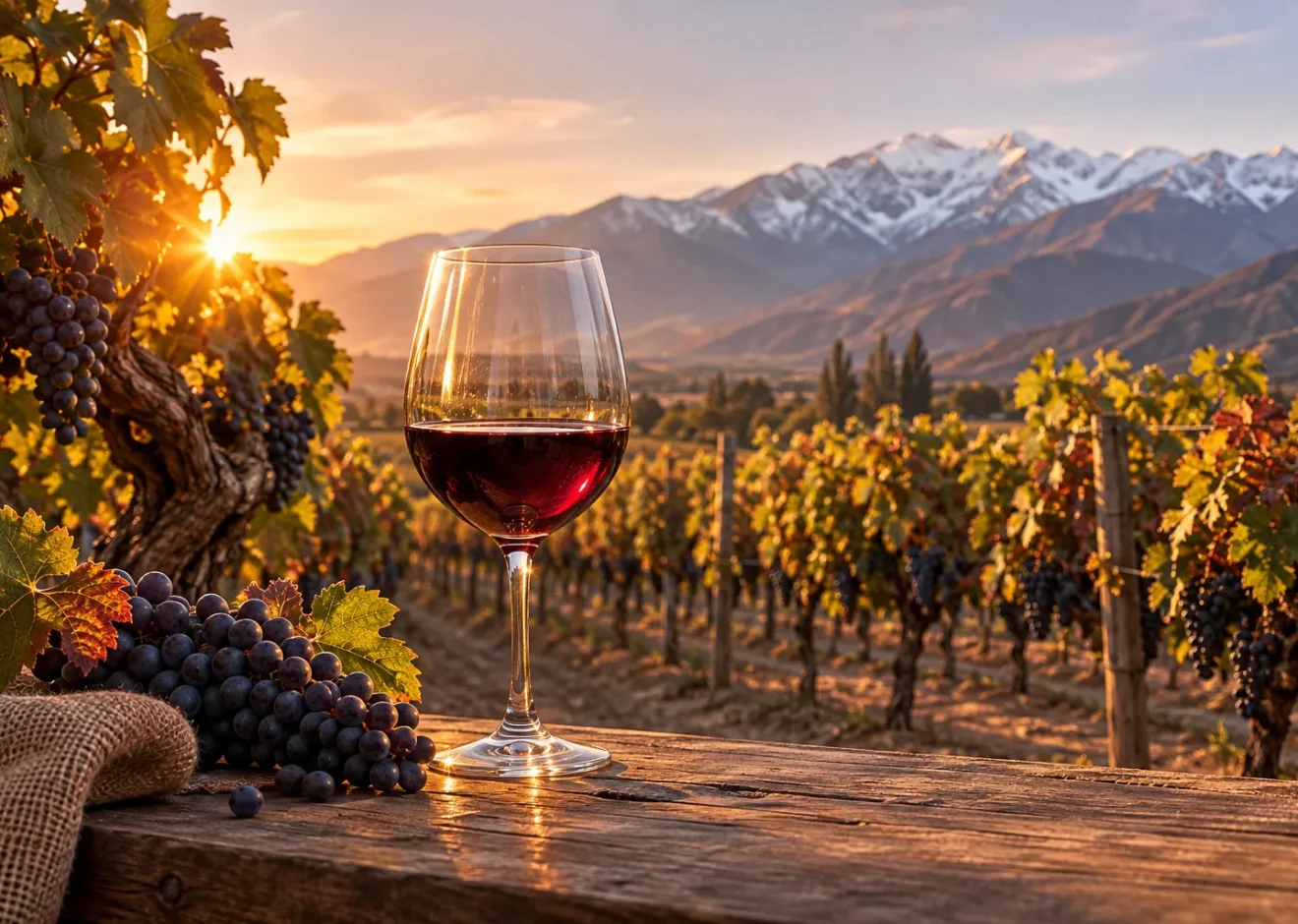
November 24 National Carménère marks the day in 1994 when French ampelographer Jean-Michel Boursiquot confirmed that vines growing in Chile’s Maipo Valley, long sold as Merlot, were actually Carménère, a Bordeaux variety believed extinct after phylloxera [1][2]. The day is celebrated in Chile and internationally (you’ll also see it called International or World Carménère Day) with tastings, winery events, and releases of premium bottlings. Most Carménère is dry, medium to full-bodied, and costs $12 to $30.
Key Takeaways
- The date commemorates Boursiquot’s November 24, 1994 identification of Carménère at Viña Carmen’s Maipo vineyards [1][3].
- Carménère is one of the six original red grapes of Bordeaux, now grown almost entirely in Chile.
- Expect dark fruit, bell pepper or green peppercorn, soy, tobacco, and soft tannins.
- It is a dry wine. Any sweetness you taste is ripe fruit and oak, not residual sugar.
- Carménère ripens three to four weeks after Merlot, which is why it was misidentified for 150 years.
- Good bottles start near $12; the top wines from Concha y Toro, TerraNoble and Viña Carmen sit in the $30 to $80 range [4][5].
- It pairs with grilled red meat, peppery sauces, roasted eggplant, and Mexican or Sichuan food.
- Serve it at 60 to 64°F (16 to 18°C), decanted 30 to 45 minutes.
What Is Carménère Wine?
Carménère is a red wine grape from Bordeaux, France, that now accounts for the signature red of Chile. It makes dry, deeply colored wines with low to moderate acidity, soft tannins, and a herbal edge that growers spend their careers trying to tame.
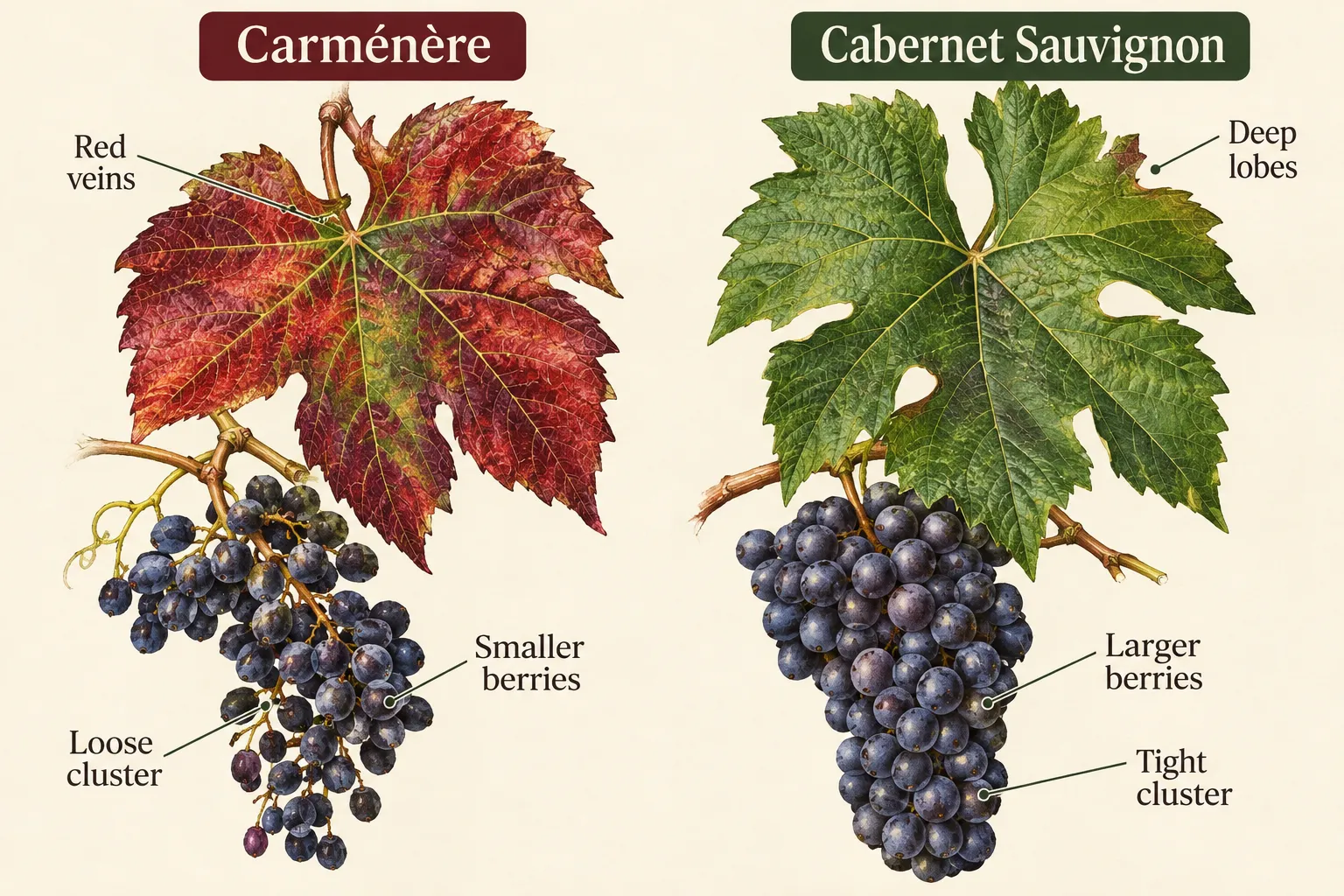
The grape was once planted widely in the Médoc, valued for its colour and depth. Phylloxera wiped out those vineyards in the late 1860s, and because Carménère grafted poorly and ripened late, French growers didn’t replant it. Cuttings shipped to Chile before the outbreak survived in sandy, phylloxera-free soils, mixed into Merlot blocks and harvested as Merlot [2][6].
Chile now holds the overwhelming majority of the world’s plantings. Smaller amounts exist in Italy’s Veneto and Friuli (where it was also confused with Cabernet Franc), China, and a handful of U.S. plantings, including Washington State producers who join the November celebration [7].
Why Is November 24 National Carménère Day?
Because that’s the anniversary of the rediscovery. On November 24, 1994, Jean-Michel Boursiquot of Montpellier’s school of oenology, visiting Viña Carmen’s vineyards in the Maipo Valley, noticed vines flowering and ripening on a different schedule from the surrounding Merlot [1][3]. DNA work later confirmed what his trained eye suspected: the “Merlot” was Bordeaux’s missing Carménère.
Chile’s Ministry of Agriculture formally recognised Carménère as a distinct variety in 1998, which let producers label it honestly. Decanter and others now mark November 24 as International Carménère Day, and U.S. food-holiday listings call it National Carménère Day [2][8][9]. Both names point at the same date and the same event.
The day exists because a grape the wine world had written off spent 150 years hiding in plain sight under another name.
Where Does Carménère Come From, and Where Is It Grown Now?
Origin: Bordeaux, France. Home today: Chile, where it’s planted mainly in the Central Valley.
The valleys that matter:
| Valley | Style of Carménère |
|---|---|
| Colchagua (Apalta, Peumo-adjacent) | Ripest, plushest, dark chocolate and plum |
| Peumo (Cachapoal) | Warm, generous, the source of Concha y Toro’s Terrunyo bottlings [4] |
| Maipo | Firmer, more structured, closer to the 1994 rediscovery site |
| Maule | Cooler, more herbal and savoury, often older vines |
Heat and a long hanging season are the whole game. Picked too early, Carménère tastes aggressively green. Given enough sun, that same compound (pyrazine) reads as pleasant black pepper and bay leaf instead.
What Does Carménère Taste Like, and Is It Dry or Sweet?
Carménère is dry. Typical notes are blackberry, black plum, roasted red pepper, green peppercorn, soy sauce, dried tobacco, and cocoa, with a smooth, rounded finish.
- Fruit: blackberry, plum, black cherry
- Savoury: bell pepper, soy, black olive, dried herbs
- Oak-derived (when aged in barrel): vanilla, coffee, dark chocolate
- Structure: medium-plus body, 13.5 to 14.5% alcohol, soft tannins, moderate acidity
People often call it “sweet” because ripe Chilean fruit plus vanilla oak reads sweet to the nose. Check the back label: most Carménère finishes under 4 g/L residual sugar, which is technically dry.
Common mistake: writing off Carménère after one overly green, cheap bottle. Those come from young vines or cool, early-picked fruit. Step up to $18 to $25 and the herbal note turns into seasoning rather than stems.
How Is Carménère Different From Cabernet Sauvignon?
Carménère is softer, rounder, and more herbal; Cabernet Sauvignon is firmer, more tannic, and more cassis-driven. If you find Cabernet drying on the finish, Carménère is the easier pour.
| Carménère | Cabernet Sauvignon | |
|---|---|---|
| Tannin | Soft, fine | Firm, grippy |
| Acidity | Moderate | Medium to high |
| Signature note | Green peppercorn, soy | Blackcurrant, cedar, mint |
| Body | Medium-full, plush | Full, structured |
| Typical ageing | 5-10 years | 10-25 years |
| Price for good quality | $15,$30 | $25,$60 |
They’re also relatives: Carménère is a parent-side cousin in the Cabernet family, which explains the shared dark fruit and the shared pyrazine character.
Carménère vs Malbec: Which Is Better?
Neither is better. Choose Malbec if you want juicier blue-fruit sweetness and a plummier, rounder mouthfeel. Choose Carménère if you want savoury, peppery complexity with your steak.
Decision rule:
- Grilling a ribeye with chimichurri? Malbec.
- Serving something with soy, cumin, roasted peppers, or smoked paprika? Carménère.
- Feeding a mixed table of red drinkers? Malbec is the safer crowd-pleaser; Carménère wins over the curious ones.
Price-wise they sit in the same bracket, roughly $12 to $25 for solid mid-tier bottles from either country.
Best Carménère Wines Under $50 and Is Carménère Expensive?
Carménère is one of the best values in red wine. Competent bottles start around $12, serious ones live at $20 to $35, and even flagship wines rarely pass $80.
Producers and tiers worth knowing:
- Entry ($10,$15), Santa Rita 120, Concha y Toro Casillero del Diablo, Viña Carmen Gran Reserva. Honest, fruit-forward, good weeknight wine.
- Mid ($18,$30), TerraNoble Andes or Costa (same grape, two different terroirs, sold as a pair) [5]; Montes Alpha; Errázuriz Max Reserva.
- Premium ($30,$80), Concha y Toro Terrunyo Carménère from Peumo, widely cited as a benchmark single-block expression [4]; Viña Carmen’s commemorative bottlings tied to the rediscovery [1][3].
Decanter has published rounds of medal-winning Carménère specifically for the November 24 occasion, which is a reliable shortlist if you want awarded bottles rather than guesswork [9].
Why Is Carménère Hard to Find, and Where Can You Buy It Online?
It’s hard to find because almost all of it comes from one country, it was legally nameless until 1998, and many U.S. shops file it under “other reds” instead of giving it shelf space.
Where to look:
- Large retailers: Total Wine, Binny’s, and Costco usually carry three to six labels.
- Online: Wine.com, Vivino, Last Bottle, and K&L Wine Merchants stock Chilean selections year-round; some run November promotions around Carménère Day.
- Direct: Chilean wineries such as Viña Carmen, Concha y Toro and TerraNoble publish tasting notes and event news on their own sites [1][4][5].
- Restaurants: Peruvian, Chilean and Argentine kitchens often list it by the glass.
Edge case: shipping laws vary by U.S. state. If direct-to-consumer wine shipping is restricted where you live, order through a national retailer with local-store pickup instead.
What Food Pairs With Carménère?
Grilled and roasted red meat, peppery sauces, and vegetables with char. The grape’s savoury side meets food halfway in a way Cabernet doesn’t.
Reliable matches:
- Grilled ribeye, skirt steak, or short ribs; try it with recipes from this steak cookbook collection
- Slow-cooked beef and lamb braises, including the heartier dishes in these stew recipes
- Roasted or grilled eggplant, charred peppers, mushroom dishes; see these eggplant recipes
- Pork shoulder, chorizo, and sausage, which pair well with ideas from these pork recipes
- Chiles, cumin, soy, and five-spice: Mexican mole, Sichuan braises, Korean barbecue
- Aged hard cheeses, and dark chocolate above 70% (bitter cocoa echoes the wine’s finish), worth testing against these chocolate recipes
Skip delicate fish and acidic tomato-heavy pasta. The herbal notes clash. A bold tomato-based sauce with meat and smoked paprika, though, works fine.
How to Serve Carménère Wine
Serve at 60 to 64°F (16 to 18°C) in a standard Bordeaux-shaped glass, decanted 30 to 45 minutes for anything above $20.
- Chill a room-temperature bottle for 20 minutes in the fridge before opening. Most homes are warmer than 64°F.
- Decant young, oak-aged bottles. It softens the green pepper note noticeably.
- Use a large bowl glass. Carménère’s aromatics are subtle compared with Syrah.
- Hold leftovers with a vacuum stopper; a good bottle drinks well on day two.
Can Carménère Age for Years?
Most Carménère is built to drink within three to six years of the vintage. Premium single-vineyard bottlings from Peumo, Apalta or Maipo can hold 10 to 15 years, developing leather, dried fig and tobacco.
What predicts ageworthiness: old vines, low yields, concentrated fruit, meaningful oak, and a price above roughly $30. Entry-level Carménère under $15 won’t improve; drink it young while the fruit is bright.
What to Expect on November 24, 2026
Expect the usual pattern, with the caveat that these are reasonable predictions rather than announced facts: Chilean wineries publishing anniversary posts (2026 marks 32 years since the rediscovery), wine media running Carménère explainers and medal round-ups, retailer promotions in the U.S. and UK, and tastings hosted by Wines of Chile partners [2][9]. Hard participation statistics for the day aren’t published by any central body, so treat attendance or sales figures you see elsewhere with care.
Planning a dinner? It lands the week of American Thanksgiving, which makes Carménère a good alternative red for the table, and a natural pairing with leftovers. If you’re cooking that week, this stuffing cookbook covers the other half of the plate.
FAQ
When is National Carménère Day? November 24 every year, marking the 1994 rediscovery of the grape in Chile [1][8].
Is it called National or International Carménère Day? Both. U.S. observance lists use “National Carménère Day”; Decanter and Chilean producers use “International” or “World Carménère Day” [2][8].
Who rediscovered Carménère? French ampelographer Jean-Michel Boursiquot, at Viña Carmen’s Maipo Valley vineyards, on November 24, 1994 [1][3].
Is Carménère sweet? No. It is a dry red wine. Ripe fruit and vanilla oak can create an impression of sweetness.
How do you pronounce Carménère? “Car-men-YEHR,” with the stress on the final syllable.
What is Carménère’s alcohol content? Usually 13.5 to 14.5% ABV.
Is Carménère a blend or a single variety? Both exist. Chile bottles it as a single variety and also blends it with Cabernet Sauvignon and Syrah.
Does Carménère need to breathe? Bottles over $20 benefit from 30 to 45 minutes in a decanter. Entry-level bottles are fine straight from the bottle.
What’s a good first bottle to try? A $15 to $20 Gran Reserva from a Colchagua or Peumo producer gives you the grape’s character without the green edge of cheaper wines.
Conclusion
Three steps for November 24, 2026: buy one bottle in the $18 to $25 range and one near $12, taste them side by side to see what price actually buys in this grape, and cook something charred and peppery to go with them. If you only want one bottle, make it a Peumo or Colchagua Gran Reserva.
Then keep notes on whether the herbal note reads as green and sharp or as warm black pepper. That single distinction tells you more about which Chilean valleys suit your palate than any score ever will.
References
- The Grape Variety Thought Extinct Celebrates The 28th Anniversary Since Its Rediscovery. carmen.com.
- From Bordeaux To Chile: Celebrating A Happy Accident This International Carmenere Day. decanter.com.
- Carmen Celebrates 23 Years Rediscovery Carmenere. carmen.com.
- Terrunyo: The Purest Expression Of Chilean Carmenere. conchaytoro.com.
- Noble News. terranoble.cl.
- November Is for Celebrating Carmenere Wine. forbes.com.
- Wine. reiningerwinery.com.
- National Carmenere Day. daysofobservance.com.
- International Carmenere Day: Award Winning Wines To Discover. decanter.com.