Last updated: November 24, 2026
Quick Answer
Asparagus is a perennial vegetable prized for its tender spears, earthy flavor, and impressive nutritional profile. It grows in spring, stores for up to five days in the refrigerator, and suits a wide range of cooking methods from roasting to grilling. Whether you are shopping, cooking, or growing your own, this guide covers everything you need to know.
Key Takeaways
- Asparagus originated in the eastern Mediterranean and has been cultivated for more than 2,000 years.
- Green asparagus is the most common variety; white asparagus is grown without sunlight and has a milder, slightly bitter flavor.
- Fresh asparagus lasts three to five days in the refrigerator when stored upright in water like cut flowers.
- The compound asparagusic acid is responsible for the distinctive urine odor after eating asparagus, it is harmless.
- Asparagus is rich in folate, vitamins K and C, and dietary fiber, making it one of the more nutrient-dense spring vegetables.
- Roasting at 400°F for 12 to 15 minutes produces consistent, slightly caramelized results with minimal effort.
- The global asparagus market is growing steadily, and retail prices have been climbing due to tighter supply in North America.
- Asparagus is generally safe for people with gout, but those with kidney conditions should check with a physician first.
- For a full collection of tested recipes, the 356 Asparagus Cookbook is an excellent starting point.
What Is Asparagus and Where Does It Come From
Asparagus (Asparagus officinalis) is a flowering perennial plant in the family Asparagaceae, cultivated for its young shoots. It originated along the eastern Mediterranean coastlines of Greece, Turkey, and the Caucasus region, where wild forms still grow today.
The ancient Egyptians depicted asparagus in tomb carvings, and Greek and Roman cooks prized it for both its flavor and purported medicinal properties. Emperor Augustus of Rome reportedly maintained dedicated asparagus fleets to transport the vegetable. By the 17th century, it had spread through European courts and was considered a luxury ingredient. Today it is grown commercially on every inhabited continent, with China, Peru, Mexico, and Germany among the leading producers.
The plant requires a multi-year establishment period, typically two to three years before a full harvest, which makes it more labor-intensive than annual crops and helps explain its historically premium pricing.
How Much Does Asparagus Cost at the Store
Retail asparagus prices vary by season, region, and variety, but home cooks can generally expect to pay between $2.50 and $5.00 per pound for green asparagus in peak spring season, rising to $6.00 or more during off-season months.
In 2026, North American wholesale markets reported prices running roughly $1 to $2 per unit higher than in prior weeks, driven by tighter supply as the Michigan and Canadian harvests wound down. Meanwhile, European markets saw contrasting conditions: a heatwave in April caused a sudden glut and prices dropped sharply in some weeks, while northern European countries continued to experience supply shortages that kept prices supported. The global asparagus market is valued in the tens of billions of dollars and is projected to grow consistently through 2036, so long-term price softening is unlikely without significant production expansion.
Practical tip: Buy asparagus in peak spring season (April through June in North America) for the best quality and lowest prices.
Green Asparagus vs White Asparagus: What Is the Difference
Green and white asparagus are the same plant species. The difference is entirely in how they are grown. White asparagus is produced by mounding soil over the emerging spears to block sunlight, a process called etiolation, which prevents chlorophyll from developing.
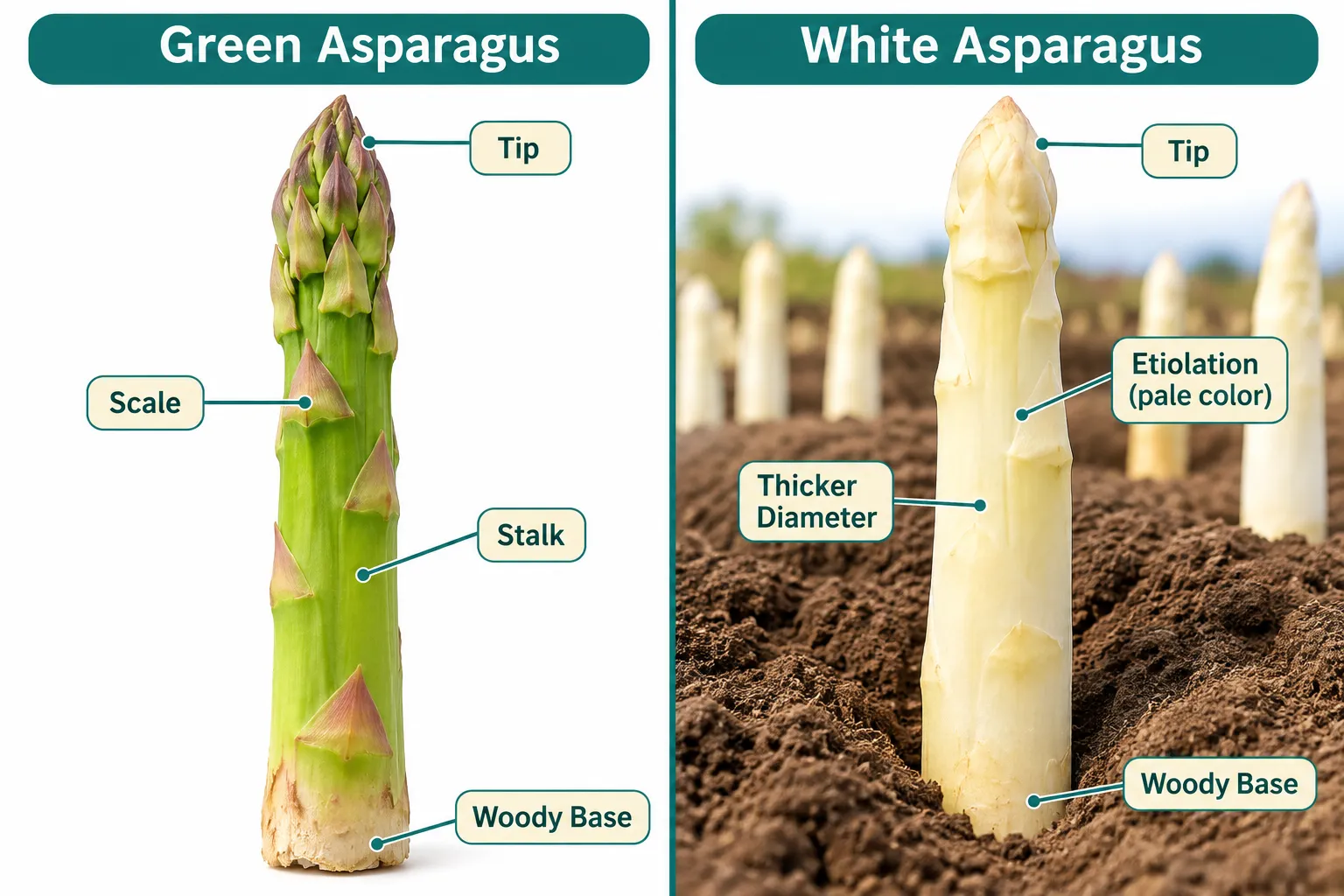
The result is a paler, thicker spear with a milder, faintly sweet, and slightly more bitter flavor compared to green asparagus. White asparagus is especially popular in Germany, the Netherlands, and Belgium, where the spring harvest season is treated as a cultural event. It requires more labor to produce, which is reflected in its higher retail price, often two to three times the cost of green asparagus.
Purple asparagus is a third variety, with higher sugar content and a visually striking color that fades to green when cooked.
Choose green asparagus if you want bold flavor and ease of preparation. Choose white asparagus if you prefer a more delicate taste and are willing to spend more.
How to Tell If Asparagus Has Gone Bad
Fresh asparagus should have tightly closed, firm tips and bright green (or white or purple, depending on variety) stalks. It has gone bad when you notice one or more of the following:
- Slimy or mushy tips, the first and most reliable sign of spoilage
- Strong sulfurous odor beyond the mild natural scent
- Wrinkled, shriveled stalks that have lost moisture
- Discolored or dark spots on the spears
- Soft, limp texture with no snap when bent
Asparagus in this condition should be discarded. It does not recover with rinsing or trimming.
Can You Eat Asparagus Raw or Does It Need to Be Cooked
Asparagus can be eaten raw, and thin spears in particular are tender enough to enjoy without cooking. Raw asparagus has a crisp texture and grassy flavor that works well in salads, sliced thin with a vegetable peeler, or as a crudité with dips.
That said, cooking breaks down the cell walls and makes the nutrients, including folate and vitamin K, more bioavailable. It also significantly improves texture and mellows bitterness. Most recipes call for at least brief cooking, and high-heat methods like roasting or grilling add a layer of caramelized flavor that raw asparagus cannot replicate.
What Vegetables Can Be Substituted for Asparagus
When asparagus is unavailable or out of season, several vegetables work as reasonable substitutes depending on the dish:
| Substitute | Best Use | Flavor Profile |
|---|---|---|
| Broccolini | Roasting, sautéing | Mild, slightly sweet |
| Green beans | Stir-fries, side dishes | Crisp, grassy |
| Sugar snap peas | Raw or lightly cooked | Sweet, crunchy |
| Leeks | Gratins, soups | Onion-forward, tender |
| Zucchini (sliced thin) | Grilling, pasta | Mild, versatile |
For recipes where the asparagus is the visual centerpiece, such as a composed salad or a tartine, broccolini is the closest match in shape and color.
Is Asparagus Actually Healthy for You
Yes, asparagus is genuinely nutritious. A 100-gram serving of cooked asparagus contains roughly 20 calories, making it one of the lowest-calorie vegetables available. It provides meaningful amounts of folate (important for cell growth and particularly for pregnant women), vitamin K (essential for blood clotting and bone health), vitamin C, and dietary fiber.
A systematic review published in the British Journal of Nutrition found that asparagus stem supplementation in adults showed modest but consistent benefits for cognition, mood, stress-related physiology, and notably sleep quality, with sleep being the most consistently improved outcome across the studies examined. While supplement doses are higher than typical dietary portions, the findings support asparagus as a functional food with benefits beyond basic nutrition.
Asparagus also contains prebiotic fiber that supports gut health and inulin, a natural compound that feeds beneficial gut bacteria.
Why Does Asparagus Make Your Pee Smell Funny
The distinctive odor comes from sulfur-containing compounds produced when the body metabolizes asparagusic acid, a compound found uniquely in asparagus. During digestion, asparagusic acid breaks down into several volatile sulfur compounds, including methanethiol and dimethyl sulfide, that are excreted in urine.
The process is harmless and begins within 15 to 30 minutes of eating. Interestingly, not everyone can detect the odor. Research suggests the difference lies in genetic variation in olfactory receptors, not in whether the odor is produced (most people produce it). If you cannot smell it, you likely lack the specific receptor variant needed to detect those particular sulfur compounds.
Is Asparagus Safe to Eat If You Have Gout
For most people with gout, asparagus is safe to eat in moderate amounts. It does contain purines, compounds that break down into uric acid, the substance that accumulates in gout, but its purine content is classified as moderate, not high. It falls well below organ meats, anchovies, or shellfish on the purine scale.
Current dietary guidance for gout management generally allows moderate-purine vegetables, as vegetable-sourced purines have not been shown to trigger gout attacks the way animal-based purines do. However, individuals with kidney disease or severe gout should consult a physician before making dietary changes, as individual responses vary.
How Long Does Fresh Asparagus Last in the Fridge
Fresh asparagus lasts three to five days in the refrigerator when stored properly. The best method is to treat it like cut flowers:
- Trim about half an inch from the base of the stalks.
- Stand the spears upright in a glass or jar with an inch of cold water.
- Loosely cover the tips with a plastic bag.
- Refrigerate and change the water every day if possible.
Stored flat in the crisper drawer without water, asparagus loses moisture quickly and deteriorates within two days. Proper upright storage is worth the minimal effort.
How to Pick the Best Asparagus at the Grocery Store
The best asparagus at the store will show these characteristics:
- Tight, compact tips with no spreading or slimy texture
- Firm, straight stalks that do not bend when held horizontally
- Bright, uniform color, vivid green for standard varieties
- Cut ends that look fresh, not dried out or splintered
- Consistent spear thickness throughout the bunch
Thin versus thick spears is a matter of preference, not quality. Thin spears cook faster and suit quick sautés. Thick spears are better for grilling or roasting because they can hold up to higher heat without drying out.
Avoid bunches with any yellow discoloration, loose scales on the stalks, or tips that have begun to open and flower.
How to Grow Asparagus in a Home Garden
Asparagus is one of the most rewarding perennial vegetables a home gardener can grow, but it requires patience. The plant does not produce a harvestable crop until its second or third year, and it performs best in USDA hardiness zones 3 through 8.
Key steps for home growing:
- Start with crowns, not seeds. One-year-old crowns reduce the wait time by a full season compared to starting from seed.
- Choose a permanent location. Asparagus lives 15 to 25 years in one spot and does not like to be moved.
- Prepare the bed deeply. Dig trenches 12 to 15 inches deep and amend with compost. Asparagus needs well-drained soil with a pH of 6.5 to 7.0.
- Space crowns 18 inches apart in rows 4 feet apart.
- Do not harvest at all in year one, and harvest sparingly in year two to allow the plant to establish.
- Fertilize in early spring before spears emerge, using a balanced fertilizer.
Disease management is increasingly important. Phomopsis stem blight emerged as a significant fungal threat in several U.S. asparagus-growing regions starting in 2025, and growers should monitor for dark lesions on stems and cankers at the base. Proper air circulation and removing old fern debris in fall reduce risk considerably.
For more ideas on vegetables that complement asparagus in the kitchen, the 220 Eggplant Cookbook and the 550 Spinach Cookbook offer practical recipe inspiration for seasonal cooking.
Best Ways to Cook Asparagus at Home
The best cooking method for asparagus depends on the spear thickness and the dish context. Here are the four most reliable approaches:
Roasting (most popular, most forgiving) Preheat oven to 400°F. Toss spears with olive oil, salt, and pepper. Roast on a rimmed baking sheet in a single layer for 12 to 15 minutes (thin) or 18 to 20 minutes (thick). The tips caramelize slightly and the flavor concentrates.
Grilling (best for thick spears) Brush with oil and grill over medium-high heat for 3 to 5 minutes, turning once. Produces appealing char marks and a smoky undertone. Works especially well alongside dishes from the 479 Steak Cookbook.
Blanching (best for salads and cold preparations) Drop spears into boiling salted water for 2 to 3 minutes, then transfer immediately to an ice bath. Preserves bright green color and crisp texture.
Pan-sautéing (fastest method) Heat a wide skillet over medium-high heat with a tablespoon of butter or oil. Cook spears for 4 to 6 minutes, shaking the pan occasionally. Finish with a squeeze of lemon.
Asparagus pairs particularly well with eggs, hollandaise, Parmesan, prosciutto, lemon, and fresh herbs. For anyone who wants to explore classic pairings in depth, the 150 Quiche Recipes collection offers numerous asparagus and egg combinations.
Most Common Mistakes When Cooking Asparagus
Even experienced cooks make these errors:
- Not removing the woody ends. Hold a spear at both ends and bend it, it will snap naturally at the point where the tender part meets the fibrous base. Use that break point as a guide for the rest of the bunch.
- Overcrowding the pan or baking sheet. Asparagus steams instead of roasting or browning when spears are piled on top of each other. Use a large sheet pan and work in batches if needed.
- Overcooking. Asparagus turns mushy and loses color quickly. Test after the minimum time and err on the side of undercooking, it continues to soften slightly off the heat.
- Under-seasoning. Asparagus benefits from generous salt, both in the cooking water if blanching and directly on the spears before roasting.
- Skipping the acid finish. A squeeze of lemon juice or a splash of vinegar brightens the flavor significantly and should almost always be added just before serving.
Recipe: Classic Roasted Asparagus
Title: Classic Oven-Roasted Asparagus with Lemon and Parmesan
Recipe Subtitle: A simple, elegant side dish that lets fresh asparagus shine with minimal effort.
Recipe Description: This roasted asparagus recipe uses high heat to caramelize the spears and concentrate their earthy sweetness. Finished with fresh lemon zest and shaved Parmesan, it works as a weeknight side dish or an elegant addition to a dinner party plate. The technique is straightforward and adaptable to any spear thickness.
Recipe Keywords: roasted asparagus, easy asparagus recipe, lemon Parmesan asparagus, spring vegetable side dish, oven asparagus, healthy side dish, asparagus recipe
Difficulty Level: Easy
Preparation Time: 10 minutes
Cooking Time: 15 minutes
Rest Time: 2 minutes
Cooking Temperature: 400°F
Calories: Approximately 95 calories per serving
Best Season: Spring (April through June in North America)
Cooking Methods: Roasting, oven-baking, finishing with fresh garnish
Cuisines Suggestions: American, Italian-American, French bistro
Recipe Badges: Gluten-Free, Vegetarian, Low-Calorie
Recipe Keys:
- Snap off woody ends before cooking to ensure consistent texture.
- Roast in a single layer for proper caramelization, not steaming.
- Add lemon and Parmesan after cooking to preserve brightness and flavor.
Ingredients
- 1 pound fresh asparagus spears, woody ends removed
- 2 tablespoons extra-virgin olive oil
- 1/2 teaspoon kosher salt
- 1/4 teaspoon freshly ground black pepper
- 1/4 teaspoon garlic powder (optional)
- Zest of 1 lemon
- 1 tablespoon fresh lemon juice
- 1/4 cup shaved or grated Parmesan cheese
- Red pepper flakes, to taste (optional)
Instructions
- Preheat the oven to 400°F and position a rack in the center.
- Wash the asparagus under cold water and pat dry with paper towels.
- Snap or trim the woody ends from each spear.
- Arrange spears in a single layer on a large rimmed baking sheet.
- Drizzle with olive oil and toss to coat evenly.
- Season with salt, pepper, and garlic powder if using.
- Spread spears out so none are overlapping.
- Roast for 12 to 15 minutes (thin spears) or 18 to 20 minutes (thick spears), until tips are lightly golden and stalks are tender.
- Remove from oven and rest for 2 minutes.
- Zest the lemon directly over the spears and add the lemon juice.
- Top with shaved Parmesan and red pepper flakes if desired.
- Transfer to a serving platter and serve immediately.
Equipment
- Large rimmed baking sheet
- Microplane or fine zester
- Vegetable peeler (for shaving Parmesan)
- Tongs
- Paper towels
Nutrition (Per Serving, based on 4 servings)
| Nutrient | Amount |
|---|---|
| Calories | ~95 kcal |
| Protein | 4 g |
| Total Fat | 7 g |
| Carbohydrates | 6 g |
| Dietary Fiber | 2.5 g |
| Sodium | ~290 mg |
Notes
- Thickness matters: Adjust roasting time based on spear diameter. Check thin spears at the 10-minute mark to avoid overcooking.
- Make it a meal: Add a soft poached egg on top and serve over toast for a satisfying light lunch.
- Storage: Leftover roasted asparagus keeps for up to two days in the refrigerator and can be served cold over grain bowls or chopped into frittatas.
FAQs
Q: Can asparagus be frozen for later use? Yes. Blanch spears in boiling water for two to three minutes, transfer to an ice bath to stop cooking, pat dry, and freeze in a single layer before transferring to a zip-top bag. Frozen asparagus lasts up to 10 months but will be softer upon thawing, best used in cooked dishes, not served whole.
Q: Why does my roasted asparagus come out soggy? Two causes account for most soggy asparagus: spears were still wet when they went into the oven, or the baking sheet was overcrowded. Always dry spears thoroughly after washing, and use a large enough pan so no spear overlaps another.
Q: Does asparagus pair well with fish? Yes, asparagus is a natural partner for mild fish such as salmon, halibut, and sea bass. For complete fish and vegetable pairings, the 184 Fish Cookbook includes numerous tested combinations.
Q: What is the difference between thin and thick asparagus spears? Thickness is primarily a function of the plant’s age and variety, not quality. Thin spears are more tender and cook faster. Thick spears are meatier and tolerate grilling better. Neither is superior, the choice depends on the cooking method.
Q: Is white asparagus healthier than green asparagus? No. Green asparagus is nutritionally superior because sunlight exposure allows chlorophyll, vitamin C, and other antioxidants to develop. White asparagus has a comparable fiber and folate content but lower levels of some micronutrients.
Q: Can asparagus be grown in containers? Container growing is possible but challenging because asparagus roots spread widely and deeply. Use the largest container available, at least 18 inches deep and 24 inches wide per plant, and expect reduced yields compared to in-ground growing.
Conclusion
Asparagus rewards both the curious cook and the health-conscious eater. It has a documented culinary history spanning millennia, a nutritional profile that holds up to scrutiny, and a versatility in the kitchen that few spring vegetables can match. Whether the goal is a simple weeknight side dish or a more composed seasonal plate, asparagus delivers when handled correctly.
The practical next steps are straightforward: buy in-season bunches with tight tips and firm stalks, store them upright in cold water, snap off the woody ends before cooking, and choose high heat for the most satisfying results. For those interested in exploring the full range of what this vegetable can do, the 356 Asparagus Cookbook is an authoritative resource with hundreds of tested preparations. And for seasonal pairing ideas, particularly with proteins, the 479 Steak Cookbook and 150 Quiche Recipes both offer well-matched accompaniments.
Asparagus season is short. Cook it well while it lasts.