
Last updated: April 1, 2026
Quick Answer: April 1 National Sourdough Bread Day is an annual U.S. food observance celebrated every April 1. It honors one of the world’s oldest bread-making traditions and gives home bakers, artisan bakeries, and food lovers a reason to bake, buy, or share sourdough. The day is informal, meaning no federal legislation created it, but it appears consistently across major holiday calendars and food observance databases.
Key Takeaways
- April 1 National Sourdough Bread Day falls on Wednesday, April 1, 2026, and Thursday, April 1, 2027.
- The day is a U.S. food holiday, not a federally legislated observance, but it is widely recognized across popular holiday calendars.
- Sourdough is leavened by wild yeast and bacteria rather than commercial yeast, giving it a distinctive tang and longer shelf life.
- A basic sourdough loaf takes 24 to 48 hours from start to finish, including fermentation time.
- Sourdough’s lower glycemic index and prebiotic fiber content make it a nutritionally distinct choice compared to standard white bread.
- Freezing sourdough bread is effective and can preserve freshness for up to three months.
- Artisan sourdough costs more than commercial bread because of labor-intensive processes, longer fermentation, and premium ingredients.
- Common beginner mistakes include using a weak starter, skipping the autolyse step, and under-proofing the dough.
- Many local bakeries and national chains run April 1 promotions or special loaves for the occasion.
- The pandemic baking boom of 2020 significantly raised public interest in sourdough, and that enthusiasm has continued into 2026.
What Is National Sourdough Bread Day?
National Sourdough Bread Day is an annual food observance dedicated to celebrating sourdough bread and the craft behind it. Observed every April 1, the day encourages people to bake a loaf from scratch, visit a local artisan bakery, or simply enjoy sourdough toast with their morning coffee.
Multiple holiday databases, including NationalToday, Checkiday, and AwarenessDays, list it under “food and drink” observances [2][3][4]. It is not a public holiday, so schools and businesses stay open, but it has genuine cultural traction among baking communities, food bloggers, and bakeries nationwide [8].
The day is also a nod to sourdough’s remarkable history. Humans have been fermenting bread dough with wild yeast for at least 5,000 years, making sourdough one of the oldest food-preparation techniques still in common use.
When Did National Sourdough Bread Day Start?
The exact founding year of April 1 National Sourdough Bread Day is not definitively documented in any single official source. Like many U.S. food holidays, it appears to have grown organically through food communities and social media rather than through a formal proclamation.
What is clear is that the observance is now consistently listed across major calendar databases, with April 1, 2026 confirmed as the next upcoming date [1][7]. A March 2026 feature in a Sarasota-area publication noted the day with the headline “no fooling,” pointing out that the April 1 date is a happy coincidence with April Fools’ Day [10].
The pandemic sourdough boom of 2020, when millions of homebound people turned to bread baking as a hobby, likely accelerated mainstream awareness of the holiday. Interest in sourdough starters, fermentation, and artisan baking has remained elevated since then.
How to Celebrate April 1 National Sourdough Bread Day
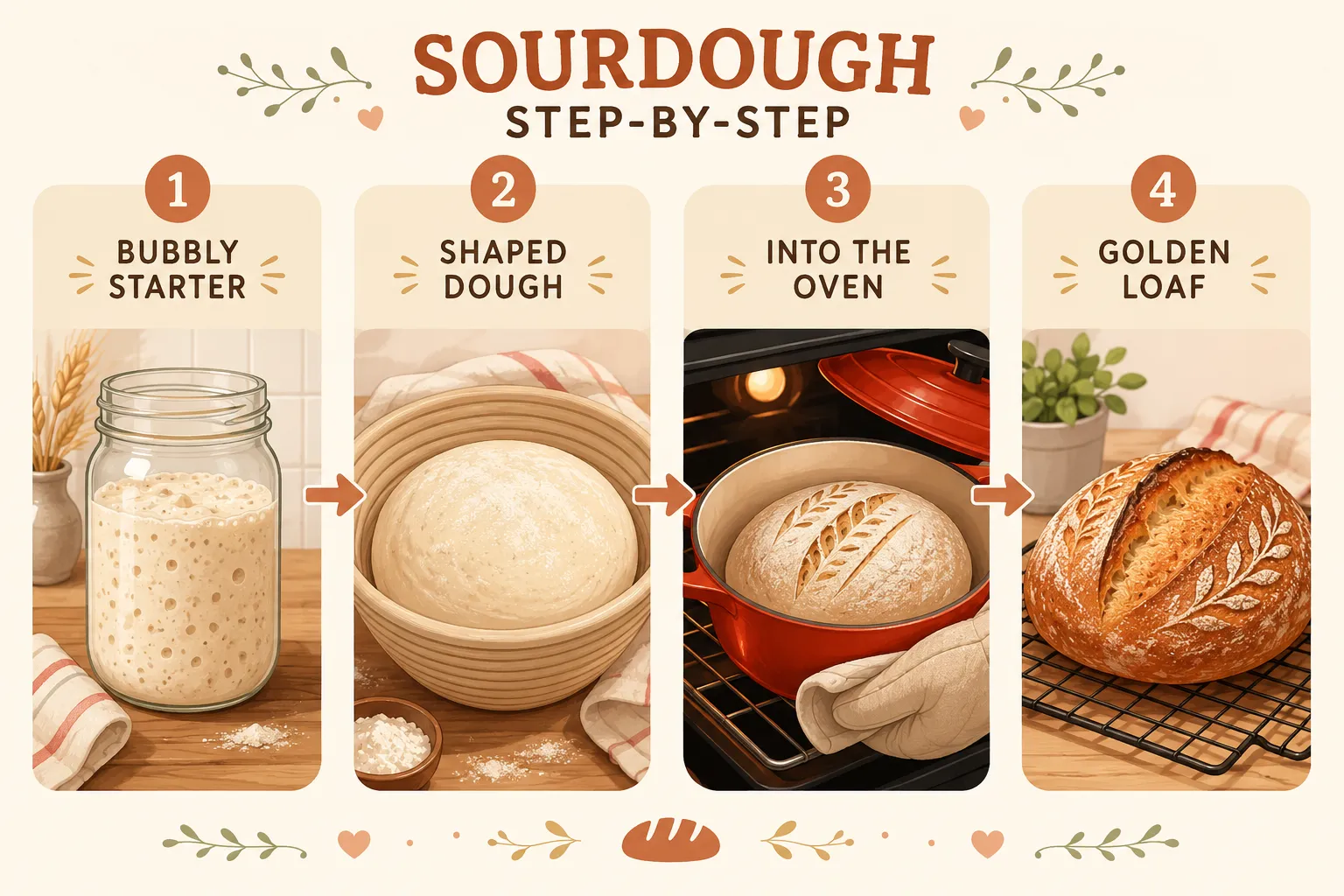
The best way to celebrate is to engage directly with sourdough, whether you bake it yourself, buy from a local bakery, or host a bread-tasting gathering. Here are practical options for every skill level:
For home bakers:
- Feed your sourdough starter a day ahead so it is active and ready to bake.
- Try a new recipe, such as sourdough discard pancakes or sourdough focaccia, if a full loaf feels too ambitious.
- Document the process and share it on social media using #NationalSourdoughBreadDay.
For food lovers who do not bake:
- Visit a local artisan bakery and pick up a fresh loaf or a sourdough pastry.
- Pair sourdough with complementary foods. It pairs especially well with aged cheeses (see our National Cheese Lover’s Day guide for pairing ideas) or with a rich bowl of New England Clam Chowder.
- Host a sourdough tasting with two or three different loaves from different bakeries.
For educators and community groups:
- Organize a bread-baking workshop or demonstration.
- Share the history of fermentation and wild yeast with students or community members.
Sourdough Bread Events on April 1 and Where to Buy
On April 1 National Sourdough Bread Day, many bakeries run limited-edition loaves, discounts, or baking classes. Finding events near you is straightforward.
Where to look:
- Check the social media pages of local artisan bakeries in the days leading up to April 1.
- Search Eventbrite or local community boards for sourdough baking workshops.
- National chains like Panera Bread and Whole Foods Market often stock specialty sourdough loaves around the date.
Best sourdough bakeries near you: Search Google Maps for “artisan sourdough bakery near me” and filter by reviews. Look for bakeries that list “long fermentation” or “wild yeast” in their descriptions, as these signal authentic sourdough rather than flavored commercial bread.
“April 1 is Sourdough Bread Day (no fooling!)”, Yourobserver, March 2026 [10]
If no local events are available, many online bakeries ship sourdough overnight, and several artisan bakers sell starters and flour kits so you can bake at home.
Best Sourdough Bread Recipes for Beginners
A beginner’s first sourdough loaf should be a simple country white or whole wheat boule. The goal is to understand fermentation timing before attempting complex shaping or inclusions.
Basic beginner sourdough (one loaf):
- Day 1, evening: Mix 50g active starter, 375g water, and 500g bread flour. Rest 30 minutes (autolyse).
- Add salt: Mix in 10g sea salt. Perform four sets of stretch-and-fold every 30 minutes over two hours.
- Bulk fermentation: Leave covered at room temperature (70-75°F) for 8 to 12 hours, or until dough has risen 50-75%.
- Shape: Gently shape into a round boule and place in a floured proofing basket (banneton).
- Cold proof: Refrigerate uncovered for 8 to 16 hours.
- Bake: Preheat oven to 500°F with a Dutch oven inside. Score the dough, bake covered for 20 minutes, then uncovered for 20 more minutes until deep golden brown.
Sourdough discard recipes are great for beginners who want to use starter without committing to a full loaf. Pancakes, crackers, and pizza dough all work well with discard. For another fermented baked good inspiration, check out our National Croissant Day guide.
Sourdough vs. Regular Bread: Key Differences
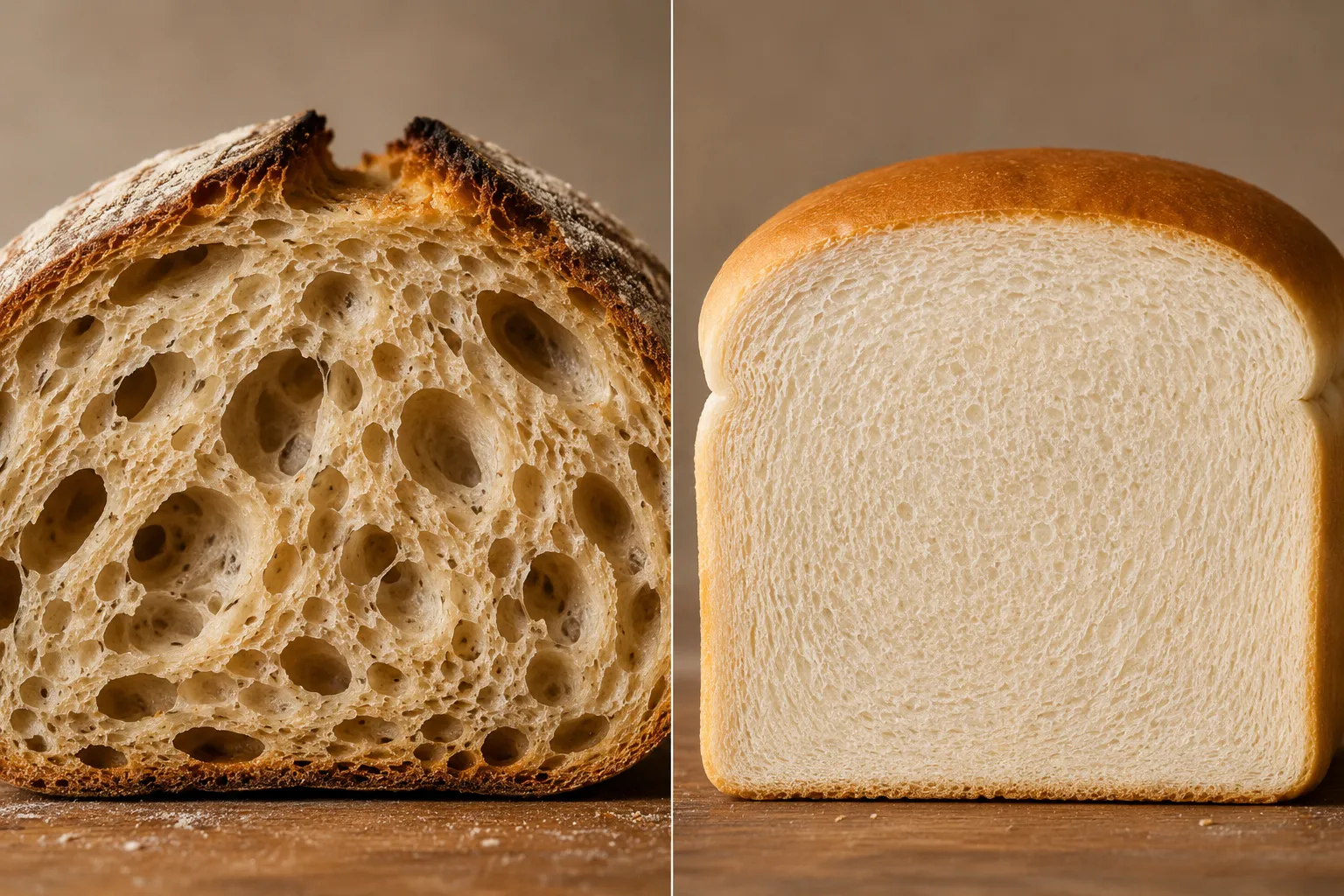
Sourdough and commercial bread differ in four fundamental ways: leavening agent, fermentation time, flavor, and nutritional profile.
| Factor | Sourdough | Commercial Bread |
|---|---|---|
| Leavening | Wild yeast and lactic acid bacteria | Commercial instant yeast |
| Fermentation time | 12 to 48 hours | 1 to 3 hours |
| Flavor | Complex, tangy, nutty | Mild, neutral |
| Glycemic index | Lower (approx. 54 for white sourdough) | Higher (approx. 71 for white bread) |
| Shelf life | 4 to 5 days at room temperature | 5 to 7 days (with preservatives) |
The lactic acid produced during sourdough fermentation also partially breaks down gluten and phytic acid, which can make the bread easier to digest for some people, though it is not safe for those with celiac disease.
How Long Does Sourdough Take to Make?
A complete sourdough loaf, from mixing to baked, takes between 24 and 48 hours. This is not hands-on time; most of that window is passive fermentation.
Time breakdown:
- Starter feeding and activation: 4 to 12 hours before mixing
- Autolyse and mixing: 30 to 60 minutes
- Bulk fermentation: 8 to 12 hours at room temperature
- Shaping: 10 to 15 minutes
- Cold proof in refrigerator: 8 to 16 hours
- Baking: 40 to 45 minutes
Beginners often rush bulk fermentation, which is the most common reason a loaf turns out dense. A properly fermented dough should feel airy, have visible bubbles on the surface, and have grown noticeably in volume before shaping.
Why Is Sourdough Bread So Expensive?
Authentic sourdough costs more than commercial bread because it requires significantly more time, skill, and quality ingredients. A loaf that takes 36 hours to produce cannot be priced the same as one made in two hours.
Key cost drivers:
- Labor: Long fermentation means a baker must manage dough over multiple shifts.
- Ingredients: Many artisan bakers use high-protein bread flour, heritage grain varieties, or organic flour, all of which cost more than commodity flour.
- Equipment: Professional deck ovens and proofing chambers represent significant capital investment.
- No preservatives: Shorter commercial shelf life means higher waste costs for bakeries.
A typical artisan sourdough loaf in the U.S. retails between $8 and $16 in 2026, depending on size and location. Mass-market “sourdough-style” breads at grocery stores are often made with vinegar added to mimic the flavor rather than through true fermentation, which is why they cost less.
Sourdough Bread Health Benefits
Sourdough offers several nutritional advantages over standard commercially yeasted bread, though the degree of benefit depends on the flour used and the length of fermentation.
Documented benefits include:
- Lower glycemic response: The organic acids produced during fermentation slow starch digestion, resulting in a more gradual blood sugar rise compared to conventional bread.
- Improved mineral absorption: Fermentation reduces phytic acid, an antinutrient that blocks absorption of minerals like iron, zinc, and magnesium.
- Prebiotic fiber: Whole grain sourdough contains fermentable fiber that supports gut bacteria.
- Longer satiety: The denser crumb and slower digestion of sourdough tend to keep people fuller longer than commercial white bread.
One important note: sourdough is not gluten-free. People with celiac disease should not consume it. Those with non-celiac gluten sensitivity may tolerate long-fermented sourdough better, but individual responses vary and medical guidance should be followed.
Sourdough Starter Maintenance Tips
A sourdough starter is a live culture of wild yeast and bacteria that must be fed regularly to stay active. Keeping it healthy is the foundation of good sourdough baking.
Core maintenance rules:
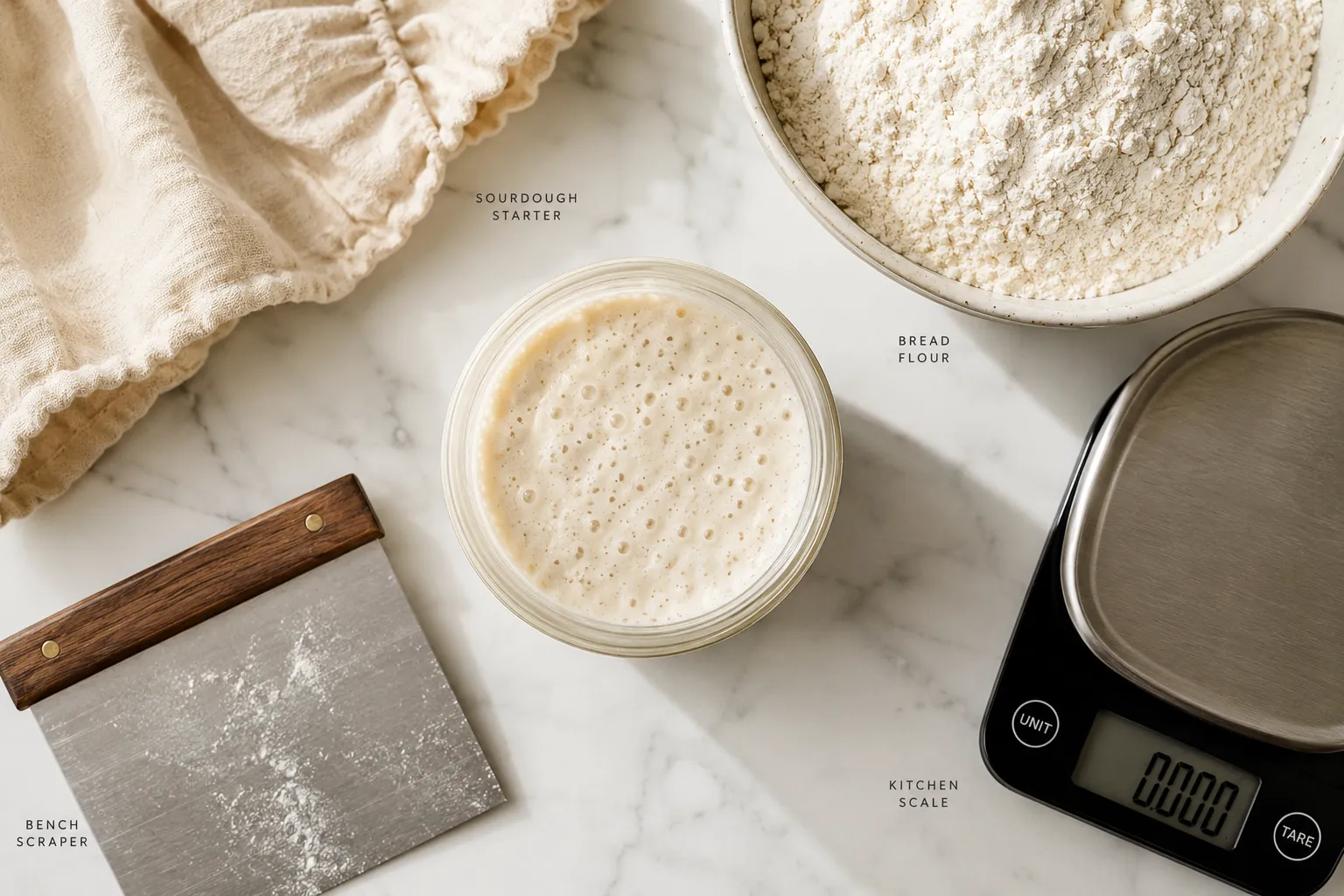
- Feed ratio: A common ratio is 1:1:1 (starter:flour:water by weight). For example, 50g starter, 50g flour, 50g water.
- Feeding frequency: At room temperature, feed once every 24 hours. In the refrigerator, feed once a week.
- Signs of a healthy starter: Doubles in size within 4 to 8 hours of feeding, has a domed top at peak, smells pleasantly tangy or yeasty.
- Signs of trouble: Pink or orange streaks (discard and start over), liquid layer on top (called “hooch,” which means it needs feeding), very flat with no bubbles (starter may be too cold or too weak).
Refrigerator storage tip: If you bake less than once a week, store the starter in the fridge and take it out the night before baking to feed and activate it.
Common Sourdough Baking Mistakes
Most sourdough failures come down to a handful of repeatable errors. Knowing them in advance saves a lot of wasted flour.
Top mistakes and how to fix them:
- Using a weak or immature starter: A starter less than 7 to 14 days old may not have enough yeast activity to leaven a loaf. Always use starter at peak activity (domed, bubbly, doubled).
- Skipping the autolyse: Resting flour and water before adding starter and salt improves gluten development and makes shaping easier.
- Under-proofing during bulk fermentation: Cutting bulk fermentation short produces dense, gummy bread. Wait for the dough to grow 50 to 75% and feel airy.
- Over-proofing: Leaving dough too long causes it to collapse. If the dough feels slack and doesn’t hold its shape, it has gone too far.
- Baking at too low a temperature: Sourdough needs high heat (450 to 500°F) and steam (a Dutch oven provides this) to develop a proper crust and oven spring.
- Cutting into the loaf too soon: Wait at least one hour after baking before slicing. The interior is still finishing its structure as it cools.
Can You Freeze Sourdough Bread?
Yes, sourdough freezes exceptionally well, better than most commercial breads. Freezing is the best way to preserve a large loaf if you cannot finish it within four to five days.
How to freeze sourdough correctly:
- Allow the loaf to cool completely before freezing (at least two hours).
- Slice the bread before freezing so you can take out individual pieces as needed.
- Wrap tightly in plastic wrap, then place in a freezer-safe zip bag, removing as much air as possible.
- Freeze for up to three months for best quality.
To thaw: Leave slices at room temperature for 30 minutes, or toast directly from frozen. To refresh a whole loaf, wrap in foil and warm in a 350°F oven for 15 to 20 minutes.
Step-by-Step Sourdough Baking Process Overview
For anyone planning to bake on April 1 National Sourdough Bread Day, this checklist covers the full process at a glance.
48 hours before baking:
- Assess starter health. If it has been refrigerated, take it out and feed it.
24 hours before baking:
- Feed starter again. It should double within 4 to 8 hours.
- Gather ingredients: bread flour, water, salt.
Baking day (morning):
- Mix flour and water, autolyse 30 minutes.
- Add starter and salt, mix thoroughly.
- Perform 4 sets of stretch-and-fold over 2 hours.
- Begin bulk fermentation (8 to 12 hours).
Baking day (evening):
- Shape dough and place in floured banneton.
- Refrigerate overnight (cold proof).
Next morning:
- Preheat oven with Dutch oven to 500°F for 45 minutes.
- Score dough, bake covered 20 minutes, uncovered 20 minutes.
- Cool on a wire rack for at least 1 hour before slicing.
If you enjoy celebrating food holidays with hands-on cooking, you might also enjoy our guides to National Pie Day and National Blueberry Pancake Day for more kitchen inspiration throughout the year.
FAQ: April 1 National Sourdough Bread Day
What date is National Sourdough Bread Day in 2026? National Sourdough Bread Day falls on Wednesday, April 1, 2026. It is observed annually on April 1 every year [1][3].
Is National Sourdough Bread Day a federal holiday? No. It is an informal U.S. food observance, not a federally or state-legislated holiday. Businesses and schools remain open [4][8].
Who created National Sourdough Bread Day? The exact originator has not been officially documented. Like most U.S. food holidays, it developed organically through food communities and social media rather than through a formal proclamation [3].
Is sourdough bread healthier than regular bread? Sourdough generally has a lower glycemic index and better mineral bioavailability than standard white bread due to fermentation. However, it is not gluten-free and is not appropriate for people with celiac disease.
How do I know if my sourdough starter is ready to bake with? A ready starter doubles in size within 4 to 8 hours of feeding, has a domed top, and passes the “float test” (a small spoonful dropped in water floats). Use it at peak activity for best results.
Can I make sourdough without a Dutch oven? Yes, though results may vary. Alternatives include baking on a preheated pizza stone with a pan of boiling water on the lower rack to create steam, or using a covered roasting pan.
Why does my sourdough taste too sour? Excess sourness usually comes from over-fermentation, using a high proportion of whole wheat flour, or fermenting at cooler temperatures for very long periods. Shorter bulk fermentation at warmer temperatures produces a milder flavor.
What is sourdough discard? Sourdough discard is the portion of starter removed before feeding. Rather than throwing it away, it can be used in pancakes, waffles, crackers, pizza dough, and quick breads.
How long does a sourdough starter last? With regular feeding, a sourdough starter can last indefinitely. Some bakeries maintain starters that are decades or even over a century old.
Does sourdough bread contain gluten? Yes. Sourdough is made from wheat flour and contains gluten. While fermentation partially breaks down some gluten proteins, it does not make sourdough safe for people with celiac disease.
Where can I find sourdough bread events near me on April 1? Check local bakery social media pages, Eventbrite, and community bulletin boards in the week before April 1. Many artisan bakeries run specials or workshops on National Sourdough Bread Day [10].
Can I celebrate National Sourdough Bread Day if I don’t bake? Absolutely. Buying a loaf from a local artisan bakery, trying a sourdough-based dish at a restaurant, or hosting a bread-and-cheese tasting are all valid ways to mark the day.
Conclusion
April 1 National Sourdough Bread Day is more than a quirky calendar entry. It is a genuine opportunity to connect with one of humanity’s oldest culinary traditions, support local artisan bakers, and, for those willing to try, develop a skill that pays off in every loaf.
Actionable next steps for 2026:
- Mark your calendar for Wednesday, April 1, 2026.
- Start your starter now if you plan to bake. A healthy starter needs at least one to two weeks of regular feeding before it is strong enough for a loaf.
- Find a local bakery that makes authentic long-fermented sourdough and plan to visit on April 1.
- Try one sourdough discard recipe before the big day to build confidence with the dough.
- Share the experience on social media with #NationalSourdoughBreadDay to connect with the broader baking community.
Whether the goal is a perfectly scored boule or simply a great slice of toast, April 1 is the right day to make sourdough a priority. For more food holiday inspiration year-round, explore our national food observances tag and our National Chocolate Cake Day guide for another celebration worth planning ahead.
References
[1] National Sourdough Bread Day 1002 – https://www.wikidates.org/holiday/national-sourdough-bread-day_1002.html [2] National Sourdough Day – https://www.awarenessdays.com/awareness-days-calendar/national-sourdough-day/ [3] National Sourdough Bread Day – https://nationaltoday.com/national-sourdough-bread-day/ [4] National Sourdough Bread Day – https://www.checkiday.com/0d50bc7d2df074ba3d87e9b02ea9a40b/national-sourdough-bread-day [7] April 1st National Sourdough Bread Day – https://www.listofnationaldays.com/april-1st-national-sourdough-bread-day/ [8] National Sourdough Bread Day – https://www.holidaycalendar.io/holiday/national-sourdough-bread-day [10] Bread Winners National Sourdough Bread Day – https://www.yourobserver.com/news/2026/mar/21/bread-winners-national-sourdough-bread-day/