
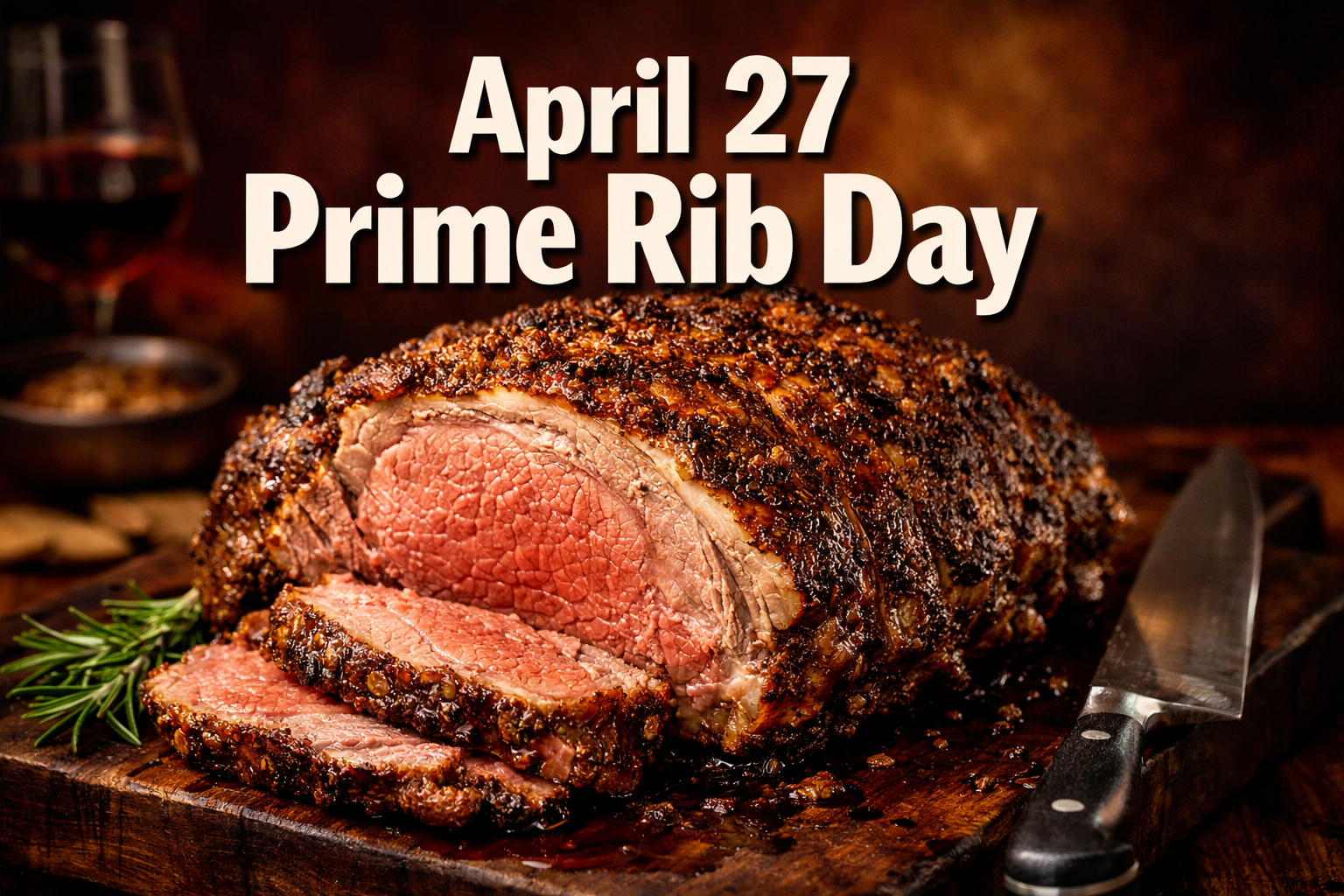
Quick Answer: April 27 Prime Rib Day is an annual food holiday celebrated every April 27 in the United States, dedicated to honoring one of the most prized beef cuts in American culinary tradition. It’s a day to cook, order, or simply enjoy prime rib in any form, whether at a steakhouse or at home. The holiday has no single verified founder but has grown steadily in popularity through food culture communities and social media.
Key Takeaways 🥩
- April 27 Prime Rib Day falls annually on April 27 and celebrates the standing rib roast, one of the most flavorful beef cuts available.
- Prime rib comes from the primal rib section of beef (ribs 6 through 12) and is prized for its marbling and tenderness.
- The cut is called “prime rib” by tradition, not necessarily because it carries the USDA Prime grade.
- Celebrations range from home roasting to dining at steakhouses and sharing recipes on social media.
- Cooking prime rib low and slow (around 225°F/107°C) before a high-heat finish produces the best results.
- The holiday pairs well with classic sides: Yorkshire pudding, horseradish cream, roasted vegetables, and au jus.
- April is already a strong month for food holidays, making late April a natural peak for celebratory cooking.
- Sharing the occasion on social media with #PrimeRibDay helps connect home cooks and food lovers.
What Is April 27 Prime Rib Day?
April 27 Prime Rib Day is an unofficial American food holiday that puts a spotlight on prime rib, a bone-in beef roast cut from the rib section of the cow. Every April 27, food enthusiasts across the country use the occasion as a reason to roast, carve, and savor one of the most celebrated cuts in beef cookery.
The holiday sits in good company. April is packed with food observances, from April 3 Chocolate Mousse Day to April 4 Cordon Bleu Day, reflecting how deeply food culture has embedded itself into the American calendar. Prime rib, however, carries a certain prestige that sets its day apart from lighter, sweeter observances.
What Is Prime Rib, Exactly?
Prime rib is a beef roast taken from the primal rib section, specifically ribs 6 through 12. It’s typically sold bone-in (as a standing rib roast) or boneless, and it’s known for exceptional marbling, a rich beefy flavor, and a tender texture that’s hard to match with other cuts.
A common misconception: The word “prime” in prime rib does not automatically mean the beef carries the USDA Prime grade. The name is traditional. The actual USDA grades for beef are:
| USDA Grade | Description |
|---|---|
| Prime | Highest marbling, most tender, found at top steakhouses |
| Choice | Good marbling, widely available at grocery stores |
| Select | Leaner, less marbling, more affordable |
For the best April 27 Prime Rib Day experience, sourcing USDA Prime or high-end Choice grade beef makes a noticeable difference in flavor and texture.
A Brief History of Prime Rib and Its Food Holiday
Prime rib’s roots run deep in British and American culinary history. The standing rib roast was a centerpiece of English Sunday roasts long before it became a staple of American steakhouses. In the United States, prime rib became synonymous with celebration dining through the mid-20th century, appearing on the menus of upscale restaurants and hotel dining rooms from Las Vegas to New York.
The specific origin of April 27 as National Prime Rib Day is not officially documented. Like many food holidays on the American calendar, it likely emerged from food bloggers, culinary enthusiasts, or promotional efforts by the beef or restaurant industry. No single organization has claimed founding credit in any verifiable public record.
What’s clear is that the holiday has gained real traction. Social media platforms, food publications, and restaurant promotions consistently mark April 27 as a reason to celebrate this iconic cut. That organic growth is itself a form of cultural legitimacy.
April is also a transitional month, sitting between the cold-weather comfort food season and summer grilling season, making a hearty prime rib roast a fitting bridge between the two.
How to Celebrate April 27 Prime Rib Day at Home
The most rewarding way to mark April 27 Prime Rib Day is to roast one yourself. It sounds intimidating, but the process is straightforward if broken into clear steps.

Step-by-Step: Classic Home Prime Rib Roast
- Choose your roast. A 3-bone standing rib roast (roughly 6–7 lbs) feeds 6–8 people comfortably. Ask your butcher to “french” the bones for a cleaner presentation.
- Season generously. Coat the roast with coarse kosher salt, cracked black pepper, garlic, and fresh rosemary or thyme. For best results, season 24 hours ahead and refrigerate uncovered (dry brining).
- Bring to room temperature. Remove from the refrigerator 1–2 hours before cooking.
- Roast low and slow. Cook at 225°F (107°C) until the internal temperature reaches 10–15°F below your target doneness (see table below).
- Rest, then sear. Remove the roast, tent loosely with foil, and rest for 20–30 minutes. Then blast it in a 500°F (260°C) oven for 8–10 minutes to form a crust.
- Carve and serve. Slice between the bones for bone-in portions or across the roast for boneless slices.
Internal Temperature Guide
| Doneness | Pull at (°F) | Final Temp (°F) |
|---|---|---|
| Rare | 115°F | 120–125°F |
| Medium-Rare | 120°F | 130–135°F |
| Medium | 130°F | 140–145°F |
| Medium-Well | 140°F | 150–155°F |
Medium-rare is the gold standard for prime rib. The pink, juicy interior showcases the cut’s marbling and flavor at its best.
Classic accompaniments to serve alongside:
- Horseradish cream sauce
- Au jus (made from pan drippings)
- Yorkshire pudding
- Roasted garlic mashed potatoes
- Creamed spinach or roasted asparagus
For cooks who want to explore more hearty meat preparations, the pork cookbook collection at stillcooking.com offers solid inspiration for similar slow-roasting techniques.
How to Celebrate April 27 Prime Rib Day at a Restaurant
Not everyone has the time or equipment to roast a full rib at home, and that’s perfectly fine. Many steakhouses and American-style restaurants run April 27 Prime Rib Day specials, including discounted cuts, prix-fixe menus, or featured preparations.
Tips for dining out on April 27:
- Call ahead. Prime rib is often a limited-quantity menu item, especially on food holiday dates. Reservations and early arrival help.
- Ask about the grade. A quality steakhouse will know whether they’re serving USDA Prime or Choice beef.
- Request your preferred doneness clearly. Prime rib is often pre-roasted and held; ask if they can accommodate your preference.
- Look for the end cut if you prefer more crust, or request a center cut for maximum pink interior.
What Makes Prime Rib Different from Other Beef Cuts?
Prime rib stands apart from other popular beef cuts in a few specific ways. Understanding those differences helps explain why it has its own food holiday.
Prime rib vs. ribeye steak: Both come from the same primal rib section. The ribeye is a steak cut from the same muscle, but prime rib is roasted as a whole section, which preserves moisture and develops deeper flavor through the longer cooking process.
Prime rib vs. chuck roast: Chuck comes from the shoulder and requires braising to become tender. Prime rib is naturally tender due to the low-stress nature of the rib muscles and its high marbling content.
Prime rib vs. tenderloin: Tenderloin (filet mignon) is leaner and more tender by texture, but prime rib wins on flavor because fat carries taste. For many beef lovers, prime rib is the better balance of tenderness and flavor.
This is also why prime rib has historically commanded premium prices at restaurants and butcher shops. The combination of limited yield per animal, high marbling, and the skill required to roast it properly makes it a genuinely special cut.
Pairing Drinks with Prime Rib
A great prime rib deserves a great drink pairing. The cut’s richness and bold beef flavor call for beverages with enough body and character to stand up to it.
Wine pairings:
- Cabernet Sauvignon (Napa Valley or Bordeaux): The classic choice. High tannins cut through the fat beautifully.
- Malbec (Argentinian): Bold, fruit-forward, and slightly more affordable than top Cabs.
- Syrah/Shiraz: Peppery notes complement the herb crust on a seasoned roast.
Beer pairings:
- Stout or Porter: Roasted malt flavors mirror the browned crust of the beef.
- Amber Ale: Balanced malt sweetness pairs well without overpowering.
Non-alcoholic options:
- Sparkling water with lemon cuts through the richness.
- A strong, unsweetened black tea works surprisingly well.
For those who enjoy cooking with spirits, the whiskey cookbook at stillcooking.com includes recipes where whiskey-based sauces and glazes complement rich beef preparations.
FAQ: April 27 Prime Rib Day
Q: Is April 27 Prime Rib Day an official national holiday? A: No. It’s an unofficial food holiday with no government recognition. It’s observed by food enthusiasts, restaurants, and culinary communities.
Q: Who created National Prime Rib Day? A: The origin is not officially documented. Like most food holidays, it likely grew from food blogging and social media culture rather than a single founder.
Q: Can I use a boneless roast for April 27 Prime Rib Day? A: Yes. A boneless rib roast cooks slightly faster and is easier to carve. Bone-in roasts are traditional and many cooks argue the bones add flavor during roasting.
Q: What’s the best way to reheat leftover prime rib? A: Slice the beef and warm it gently in a low oven (250°F/121°C) with a splash of au jus or beef broth to prevent drying out. Avoid microwaving, which toughens the meat.
Q: How much prime rib should I buy per person? A: Plan for roughly 1 pound of bone-in roast per person, or about 0.75 pounds boneless. Guests who are big eaters may want more.
Q: Is prime rib expensive? A: Yes, relatively. USDA Prime grade rib roasts can range from $20 to $40+ per pound depending on region and retailer. Choice grade is more affordable and still excellent for home cooking.
Q: What hashtags should I use to celebrate on social media? A: Use #PrimeRibDay, #NationalPrimeRibDay, and #April27 to connect with other celebrants.
Q: What other food holidays happen in late April? A: Late April features several food observances. April is a particularly active month for food holidays, including days dedicated to other hearty and comfort-focused dishes.
Q: Can I make prime rib in a slow cooker? A: Technically yes, but the result won’t have the same crust. The oven method (low roast plus high-heat sear) produces the best texture and flavor for this particular cut.
Q: What’s a good side dish if I want something lighter? A: A simple green salad with a sharp vinaigrette balances the richness of prime rib well. Roasted asparagus or a cucumber salad also work nicely.
Conclusion: Make April 27 Count
April 27 Prime Rib Day is more than a novelty on the food calendar. It’s a genuine invitation to engage with one of the great traditions in American beef cookery, whether that means sourcing a quality roast from a local butcher, booking a table at a favorite steakhouse, or simply learning more about what makes this cut so special.
Actionable next steps for April 27:
- Order your roast early. Contact a butcher at least 3–5 days before April 27 to reserve a quality bone-in rib roast.
- Dry brine the night before. Season with salt and refrigerate uncovered for 12–24 hours for maximum flavor.
- Use a meat thermometer. Don’t guess. Pull the roast at the right internal temperature for your preferred doneness.
- Share the experience. Post your roast on social media with #PrimeRibDay and connect with the broader food community.
- Explore related recipes. Check out the complete library of cooking resources at stillcooking.com for side dish ideas, sauce recipes, and more inspiration to round out your prime rib celebration.
April 27 comes once a year. A great prime rib roast, done right, is worth every minute of preparation.
References
- National Cattlemen’s Beef Association. Beef Cuts: Primal, Sub-Primal, and Secondary. BeefItsWhatsForDinner.com. (2023). https://www.beefitswhatsfordinner.com
- USDA Agricultural Marketing Service. United States Standards for Grades of Carcass Beef. (2017). https://www.ams.usda.gov
- Food Network Kitchens. How to Make Prime Rib. FoodNetwork.com. (2022). https://www.foodnetwork.com