

Every February 14, millions of people reach for a box of chocolates — but there is one type that stands above the rest. February 14 Creme Filled Chocolates Day is a delicious food holiday that celebrates the creamy, melt-in-your-mouth centers tucked inside chocolate shells. Whether it is a silky vanilla fondant, a tangy raspberry creme, or a buttery caramel, these confections have earned their own dedicated day of recognition. This article explores the history, traditions, science, and best ways to celebrate this indulgent occasion in 2026.
Key Takeaways 📌
- February 14 Creme Filled Chocolates Day falls on Valentine’s Day, making it one of the most commercially significant food holidays of the year.
- Creme-filled chocolates have a history stretching back to 19th-century Europe, rooted in the art of chocolate confectionery.
- The holiday celebrates a specific style of chocolate — those with soft, sweet creme centers — distinct from truffles, caramels, or nut-filled varieties.
- Americans spend over $2 billion on Valentine’s Day chocolate and candy each year, with creme-filled varieties among the top sellers.
- Celebrating is easy: gifting, tasting, making homemade versions, or supporting local chocolatiers are all great ways to mark the day.
What Is February 14 Creme Filled Chocolates Day?
February 14 Creme Filled Chocolates Day is an unofficial food holiday observed annually on Valentine’s Day. It shines a spotlight on one of the most beloved chocolate formats in the world — the creme-filled chocolate. These are individual chocolate pieces, typically made from dark, milk, or white chocolate, that encase a smooth, sweet filling made from fondant, flavored sugar syrup, or whipped creme.
Unlike truffles (which have a ganache center) or pralines (which contain nuts), creme-filled chocolates are defined by their soft, sugar-based interior. Think of the classic pink and white fondant squares inside a heart-shaped Valentine’s box — that is the star of this holiday.
“A box of creme-filled chocolates is not just a gift — it is a small act of love wrapped in foil.”
The holiday is part of a broader tradition of food-themed observances that have grown in popularity through social media and food culture. While it lacks official recognition from governments or major institutions, its timing on Valentine’s Day gives it enormous cultural relevance.
A Brief History of Creme-Filled Chocolates
Origins in 19th-Century Europe
The story of creme-filled chocolates begins in Europe, particularly in Belgium, Switzerland, and England. In the 1800s, chocolatiers began experimenting with enrobing — the process of coating soft fillings in a chocolate shell. This technique allowed confectioners to create shelf-stable sweets that were both beautiful and flavorful.
Richard Cadbury is often credited with popularizing the heart-shaped chocolate box in 1861, creating a vessel perfectly suited for gifting assorted chocolates, including creme-filled varieties. By the early 20th century, brands like Whitman’s in the United States were producing boxed chocolate assortments that featured creme centers as a central offering.
The Rise of the Valentine’s Day Connection
The pairing of creme-filled chocolates with Valentine’s Day was not accidental. Chocolate marketers in the early 20th century aggressively promoted boxed chocolates as the ideal romantic gift. The soft, sweet nature of creme-filled chocolates made them especially appealing — they were seen as tender and indulgent, qualities associated with affection.
By the mid-20th century, the heart-shaped box filled with creme-centered chocolates had become an American cultural icon. Brands like Russell Stover, See’s Candies, and Godiva built entire Valentine’s Day product lines around this concept.
The Science Behind the Perfect Creme Center
What makes a creme filling so satisfying? It comes down to chemistry and texture.
Key Ingredients in Creme Fillings
| Ingredient | Role |
|---|---|
| Fondant (sugar + water) | Creates the smooth, creamy base |
| Invert sugar or corn syrup | Prevents crystallization, keeps filling soft |
| Flavoring (vanilla, fruit, etc.) | Adds taste variety |
| Invertase enzyme | Liquefies fondant over time for a flowing center |
The enzyme invertase is a fascinating ingredient. When added to a fondant center before enrobing, it slowly breaks down sucrose into glucose and fructose. This is why some chocolate-covered cherries or creme eggs develop a liquid center after a few days — the enzyme is still working inside the chocolate shell. 🧪
Popular Creme Filling Flavors
- 🍦 Vanilla fondant — the classic white creme
- 🍓 Raspberry or strawberry creme — fruity and bright pink
- 🍋 Lemon creme — tangy and refreshing
- 🍊 Orange creme — citrusy and aromatic
- 🍒 Cherry creme — sweet with a hint of tartness
- 🥜 Maple creme — rich and warm
Why February 14 Creme Filled Chocolates Day Matters
Cultural and Economic Significance
Valentine’s Day is one of the biggest consumer holidays in the United States. According to the National Confectioners Association, chocolate and candy are the most gifted items on Valentine’s Day, with approximately 58 million pounds of chocolate sold during Valentine’s week each year. Creme-filled varieties consistently rank among the top-selling chocolate types during this period.
The holiday also supports a wide ecosystem of businesses:
- Artisan chocolatiers who craft small-batch, handmade creme-filled pieces
- Large confectionery brands that produce millions of boxed assortments
- Retail stores that dedicate significant shelf space to Valentine’s displays
- Online chocolate shops that see major sales spikes in early February
Emotional and Social Value
Beyond economics, February 14 Creme Filled Chocolates Day carries genuine emotional weight. Gifting a box of chocolates communicates care, thoughtfulness, and affection. Research in consumer psychology has shown that food gifts — especially sweet ones — trigger positive emotional responses in recipients, reinforcing social bonds.
“Chocolate is the universal language of affection, and the creme-filled variety speaks it most sweetly.”
How to Celebrate February 14 Creme Filled Chocolates Day in 2026 🎉
There are many fun and meaningful ways to observe this holiday, whether on a budget or going all out.
🎁 Gift a Box of Creme-Filled Chocolates
The most traditional approach. Look for:
- Heart-shaped assortment boxes from local chocolatiers
- Premium brands like Vosges, Compartés, or Recchiuti
- Customizable boxes where recipients can choose their creme flavors
🍫 Host a Chocolate Tasting
Gather friends or family and set up a tasting station featuring different creme-filled chocolates from various brands and regions. Compare Belgian, Swiss, and American styles side by side.
👩🍳 Make Homemade Creme-Filled Chocolates
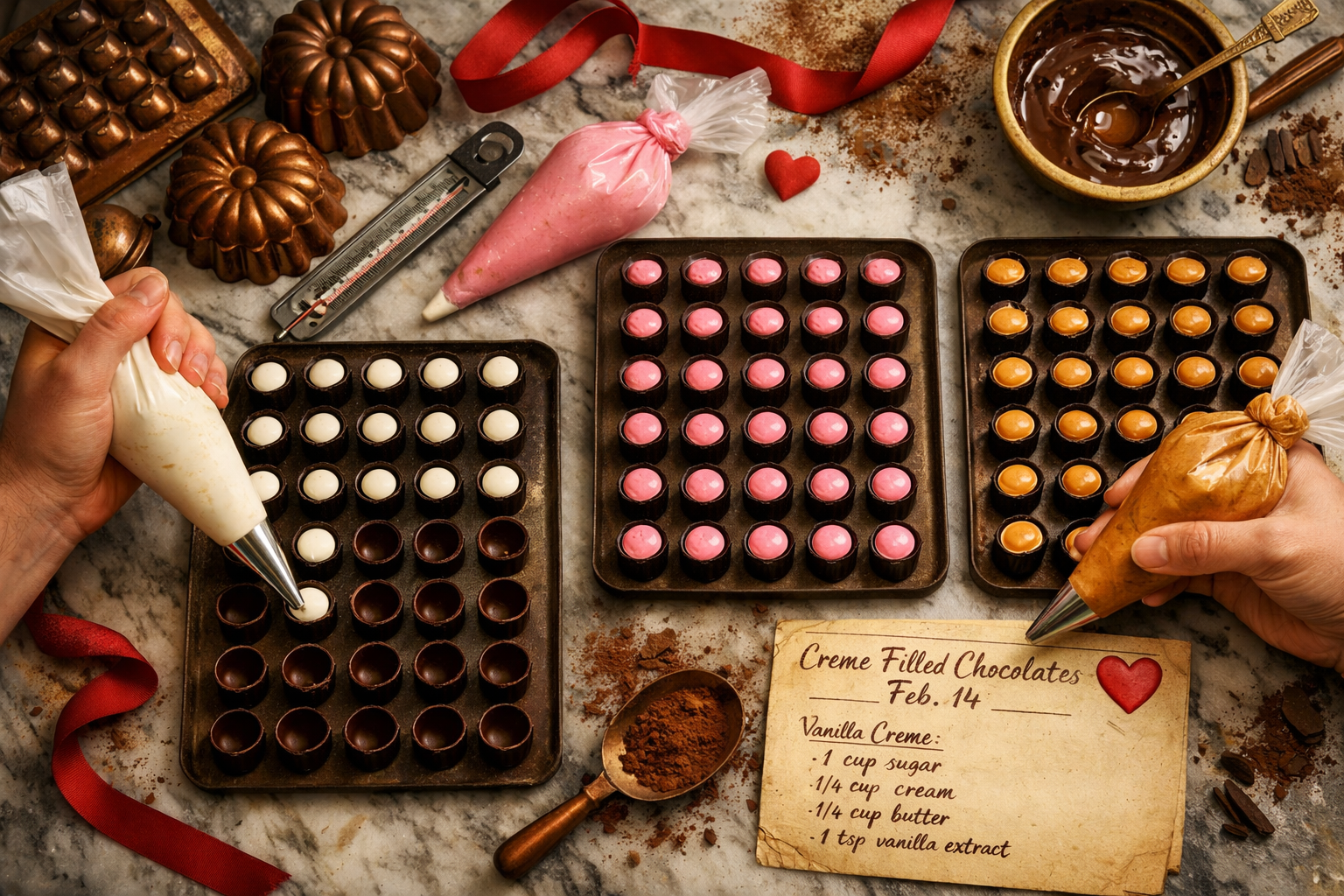
Making creme-filled chocolates at home is a rewarding project. Basic steps include:
- Melt and temper dark or milk chocolate
- Pour into molds and let shells set
- Pipe in fondant creme filling
- Seal with a chocolate base and allow to cool
- Decorate with drizzles, sprinkles, or edible gold
📱 Share on Social Media
Use hashtags like #CremeFilled ChocolatesDay, #ValentinesChocolate, and #Feb14Chocolates to join the online celebration and discover new chocolatiers.
🏪 Support Local Chocolatiers
Skip the big-box store and visit a local chocolate shop. Many artisan chocolatiers create special Valentine’s Day collections featuring unique creme flavors that cannot be found anywhere else.
Choosing the Best Creme-Filled Chocolates: A Quick Guide
| What to Look For | Why It Matters |
|---|---|
| Glossy, smooth chocolate shell | Indicates proper tempering and quality chocolate |
| Firm but yielding texture | Sign of a well-made fondant center |
| Clear flavor labeling | Helps recipients avoid surprises |
| Fresh production date | Creme fillings are best within 2–4 weeks of making |
| No artificial aftertaste | Quality ingredients make a noticeable difference |
Conclusion: Make February 14 Creme Filled Chocolates Day Count 🍫❤️
February 14 Creme Filled Chocolates Day is more than a quirky food holiday — it is a celebration of craftsmanship, flavor, and human connection. From its roots in 19th-century European confectionery to its place in modern Valentine’s Day tradition, the creme-filled chocolate has earned its moment in the spotlight.
Actionable Next Steps:
- Plan ahead — order from a local or artisan chocolatier at least one week before February 14, 2026 to ensure availability.
- Try something new — step outside the classic vanilla fondant and explore lemon, maple, or exotic fruit cremes.
- Make it personal — a handmade box of creme-filled chocolates is one of the most thoughtful gifts possible.
- Share the joy — celebrate with coworkers, friends, and family, not just romantic partners.
- Learn the craft — consider a chocolate-making class to deepen appreciation for this art form.
The sweetest way to honor this holiday is simply to slow down, savor each bite, and share the experience with someone who matters. 🍬
References
- Brenner, J. G. (1999). The Emperors of Chocolate: Inside the Secret World of Hershey and Mars. Random House.
- Coe, S. D., & Coe, M. D. (1996). The True History of Chocolate. Thames and Hudson.
- National Confectioners Association. (2023). Valentine’s Day Consumer Insights Report. NCA.
- Richardson, T. (2002). Sweets: A History of Candy. Bloomsbury Publishing.
- Whitman, S. (1912). Whitman’s Sampler: A History of American Chocolate Gifting. Whitman’s Chocolates Archive.