
Last updated: March 28, 2026
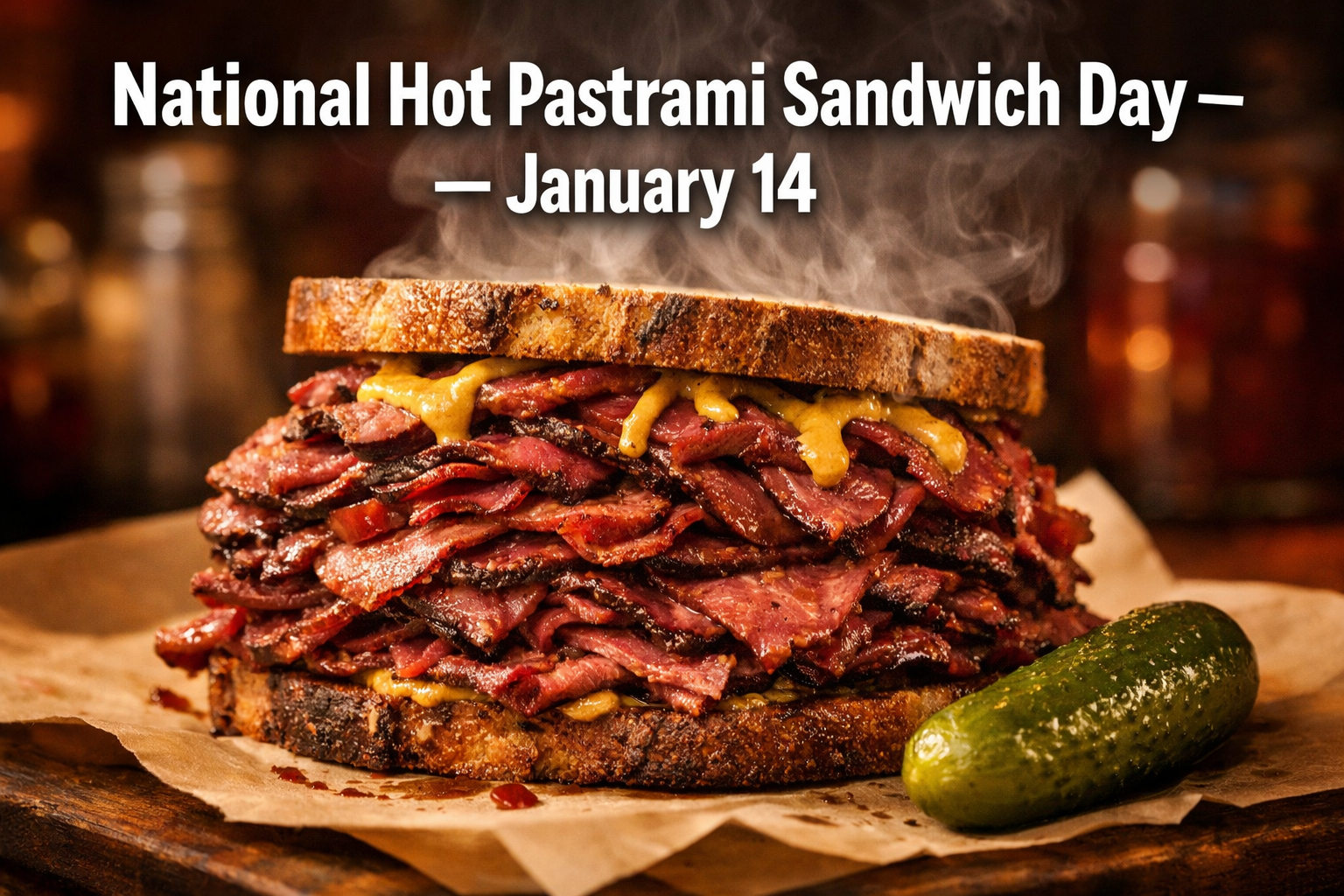
Quick Answer: January 14: National Hot Pastrami Sandwich Day is an annual food holiday celebrated every January 14 in the United States. It honors the iconic hot pastrami sandwich — thinly sliced, steam-heated cured beef piled high on rye bread, typically served with mustard. The day is a great excuse to visit a local deli, try a homemade recipe, or learn about the rich cultural history behind one of America’s most beloved sandwiches.
Key Takeaways 🥪
- January 14 is officially recognized as National Hot Pastrami Sandwich Day in the United States.
- Pastrami is made from beef (usually the navel or brisket cut) that is cured, spiced, smoked, and then steamed before serving.
- The sandwich traces its roots to Eastern European Jewish immigrants who brought curing and smoking traditions to the United States in the late 1800s.
- New York City’s Jewish delis — especially Katz’s Delicatessen, open since 1888 — are considered the gold standard for the hot pastrami sandwich.
- The classic build is simple: hot pastrami on rye bread with yellow or deli mustard, often served with a half-sour pickle.
- Home cooks can celebrate by making pastrami from scratch (a multi-day process) or by sourcing quality pre-made pastrami from a butcher or deli.
- The holiday has no single verified founder or official governing body, but it is widely recognized across food media and celebrated nationally.
- Pastrami is high in protein but also high in sodium, so portion awareness matters for those watching their diet.
What Is January 14: National Hot Pastrami Sandwich Day?
National Hot Pastrami Sandwich Day falls on January 14 every year and celebrates one of the most iconic sandwiches in American deli culture. It’s an informal food holiday — meaning no federal body declared it — but it’s widely recognized by food publications, restaurant chains, and deli owners across the country.
The emphasis on hot matters. A hot pastrami sandwich is specifically served with pastrami that has been steamed until tender and juicy, not cold-sliced from a refrigerator. That steaming step is what separates a great pastrami sandwich from an average one.
Where Did Pastrami Come From?
Pastrami’s origins trace back to Romania and other parts of Eastern Europe, where curing and smoking meat was a practical preservation method. Jewish immigrants brought these techniques to the United States in the late 19th century, and the sandwich quickly became a staple of New York City’s Jewish deli scene.
Key milestones in pastrami history:
| Year | Event |
|---|---|
| Late 1800s | Eastern European Jewish immigrants bring curing traditions to New York |
| 1888 | Katz’s Delicatessen opens on the Lower East Side of Manhattan |
| Early 1900s | Hot pastrami on rye becomes a New York deli staple |
| Mid-20th century | Pastrami spreads to delis across the U.S., including Los Angeles and Chicago |
| Present | Artisan butchers and chefs revive house-made pastrami across the country |
The word “pastrami” is believed to derive from the Romanian word pastramă, which referred to preserved meat. Once it landed in New York, it evolved into the heavily spiced, smoked, and steamed beef product recognized today.
How Is Pastrami Made?
Pastrami starts as a beef cut — most commonly the navel (also called the plate) or the brisket — and goes through several stages before it’s ready to eat.
The pastrami-making process:
- Curing: The beef is submerged in a brine of salt, sugar, garlic, and spices (typically pink curing salt, coriander, and black pepper) for several days to a week.
- Rinsing and drying: After curing, the meat is rinsed and allowed to dry.
- Spice coating: A dry rub of black pepper and coriander (the signature pastrami crust) is applied generously.
- Smoking: The meat is cold- or hot-smoked for several hours, developing deep flavor and color.
- Steaming: Before serving, the pastrami is steamed until it reaches a tender, pull-apart texture. This is the step that makes it hot pastrami.
“The steaming step is non-negotiable for authentic hot pastrami. Without it, you just have smoked beef.” — Common consensus among deli professionals.
Choose this cut if:
- You want the most traditional, fatty, and flavorful pastrami: use the navel/plate cut.
- You want a leaner result with slightly less richness: use the brisket flat.
What Makes the Classic Hot Pastrami Sandwich?
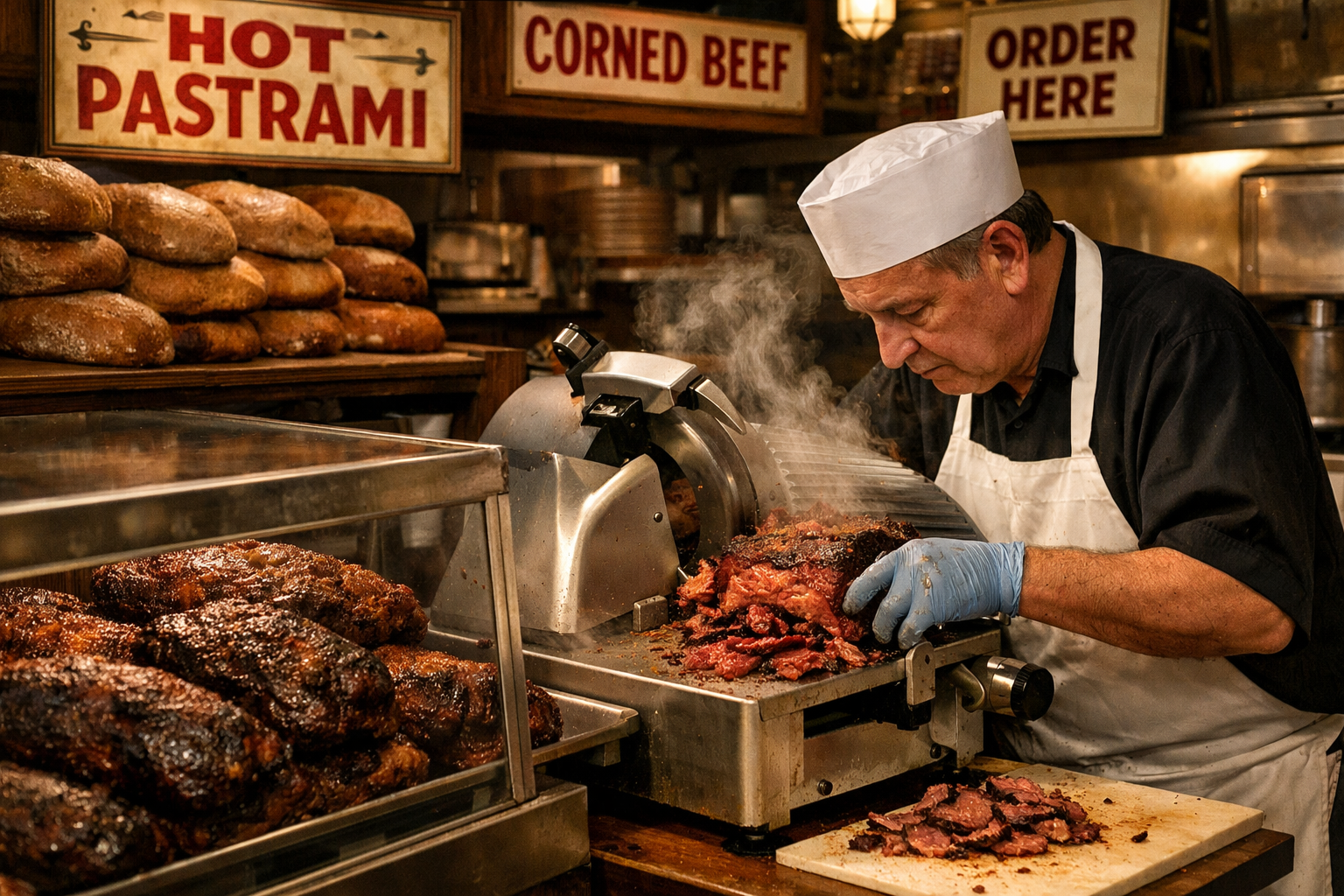
The classic hot pastrami sandwich is built on a short list of ingredients, and each one matters.
The classic build:
- Bread: Seeded rye bread or marble rye. The slight sourness and structure hold up to the moist meat.
- Meat: A generous stack of hot, steamed pastrami — most delis use 4 to 6 ounces per sandwich, though New York delis are known for stacking much more.
- Condiment: Yellow mustard or spicy brown deli mustard. No mayonnaise in the traditional version.
- Accompaniment: A half-sour or full-sour dill pickle on the side.
Common variations:
- Reuben-style: Pastrami with Swiss cheese, sauerkraut, and Russian dressing on grilled rye.
- LA-style: Pastrami served on a French roll, popularized by Langer’s Delicatessen in Los Angeles.
- Pastrami melt: Pastrami with melted cheese on toasted bread, served open-faced or pressed.
Common mistake: Adding too many toppings. The pastrami is the star. Overloading the sandwich with lettuce, tomato, or heavy sauces dilutes the flavor of well-made pastrami.
How to Celebrate January 14: National Hot Pastrami Sandwich Day in 2026
Celebrating January 14: National Hot Pastrami Sandwich Day doesn’t require a trip to New York, though that’s certainly one option. Here are practical ways to mark the day.
Option 1: Visit a local deli or restaurant
- Search for Jewish-style delis or sandwich shops in your area.
- Look for restaurants offering January 14 specials — many delis discount or feature pastrami sandwiches on this day.
- If you’re near a major city, check iconic spots like Katz’s (New York), Langer’s (Los Angeles), or Manny’s (Chicago).
Option 2: Make it at home
- Quick version: Buy quality pre-sliced pastrami from a butcher or deli counter. Steam it at home using a steamer basket or a pan with a small amount of water and a lid. Serve on fresh rye with mustard.
- From scratch: Cure and smoke your own pastrami over 5 to 7 days. This requires planning ahead but produces outstanding results.
Option 3: Share on social media
- Post your sandwich with the hashtag #NationalHotPastramiSandwichDay to join the annual conversation.
- Tag your local deli to help support small businesses.
Nutritional Profile of a Hot Pastrami Sandwich
A standard hot pastrami sandwich is a filling, protein-rich meal, but it’s worth knowing what’s in it before eating three in one day.
| Nutrient | Approximate Amount (per sandwich) |
|---|---|
| Calories | 450–600 kcal |
| Protein | 30–40 g |
| Fat | 18–28 g |
| Sodium | 1,200–1,800 mg |
| Carbohydrates | 30–40 g |
Note: Values are estimates based on a standard 5 oz pastrami serving on two slices of rye bread with mustard. Actual values vary by deli and portion size.
Heads up on sodium: Pastrami is a cured meat, meaning it’s naturally high in sodium. People managing blood pressure or following a low-sodium diet should treat this as an occasional indulgence rather than a daily staple.
FAQ: January 14: National Hot Pastrami Sandwich Day
Q: Is January 14 an official federal holiday? No. National Hot Pastrami Sandwich Day is an informal food holiday. It has no federal recognition but is widely celebrated by food media, delis, and restaurants across the United States.
Q: Who invented National Hot Pastrami Sandwich Day? The origin of the holiday is not clearly documented, and no single founder has been verified. It follows the pattern of many food holidays that emerged through food industry promotion and social media adoption.
Q: What’s the difference between pastrami and corned beef? Both are cured beef, but pastrami is also smoked and coated in a spice rub (primarily black pepper and coriander), then steamed. Corned beef is cured and boiled but not smoked, giving it a milder, less complex flavor.
Q: Can pastrami be made from turkey or other meats? Yes. Turkey pastrami is a widely available lower-fat alternative. It follows a similar curing and smoking process but uses turkey breast instead of beef. The flavor profile is lighter.
Q: What bread is best for a hot pastrami sandwich? Seeded rye bread is the traditional and most widely recommended choice. Its slight tang and firm texture complement the rich, spiced meat without falling apart.
Q: Where is the best hot pastrami sandwich in the U.S.? This is subjective, but Katz’s Delicatessen in New York City and Langer’s Delicatessen in Los Angeles are consistently cited by food critics and publications as benchmark examples of the hot pastrami sandwich.
Q: How do you steam pastrami at home? Place sliced or whole pastrami in a steamer basket over simmering water. Cover and steam for 15 to 20 minutes until heated through and tender. Alternatively, wrap it loosely in foil with a splash of water and heat in a 300°F oven for 20 to 25 minutes.
Q: Is pastrami gluten-free? The meat itself is typically gluten-free, but always check the curing spice blend for additives. The rye bread is not gluten-free. Those with celiac disease or gluten sensitivity should use a certified gluten-free bread alternative.
Conclusion
January 14: National Hot Pastrami Sandwich Day is more than a quirky food calendar entry. It’s an annual reminder of a genuine culinary tradition — one rooted in immigrant ingenuity, careful craftsmanship, and the simple pleasure of a well-built sandwich.
Actionable next steps for 2026:
- Mark your calendar for January 14 and plan whether you’re visiting a deli or cooking at home.
- Source quality pastrami from a local butcher or deli counter rather than a pre-packaged grocery store product for the best experience.
- Keep it classic on your first try: rye bread, hot pastrami, spicy brown mustard, pickle on the side.
- If you’re adventurous, start a home cure 7 days before January 14 so your pastrami is ready in time.
- Support local delis by visiting on January 14 — many small deli businesses depend on community engagement to stay open.
The hot pastrami sandwich earned its place in American food culture through decades of consistency and craft. January 14 is simply the best excuse to enjoy one.
References
- Katz’s Delicatessen. (n.d.). Our history. https://katzsdelicatessen.com/pages/history
- Langer’s Delicatessen. (n.d.). About Langer’s. https://www.langersdeli.com
- Ruhlman, M., & Polcyn, B. (2005). Charcuterie: The craft of salting, smoking, and curing. W. W. Norton & Company.
- National Day Calendar. (n.d.). National Hot Pastrami Sandwich Day – January 14. https://nationaldaycalendar.com/national-hot-pastrami-sandwich-day-january-14/
- USDA FoodData Central. (2023). Pastrami, beef, cured. U.S. Department of Agriculture. https://fdc.nal.usda.gov