
Last updated: March 28, 2026
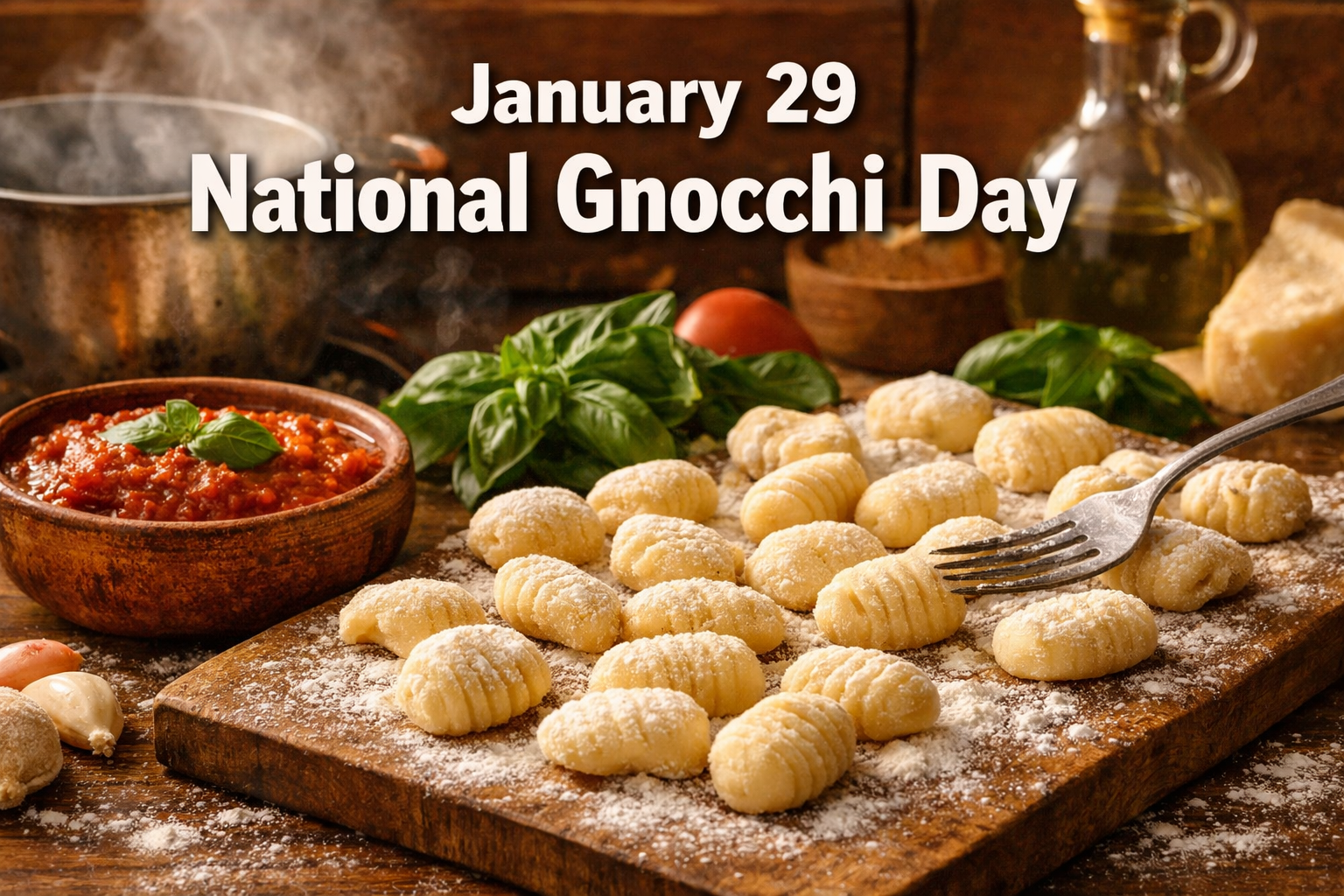
Quick Answer: January 29 National Gnocchi Day is an annual food holiday celebrated on January 29 that honors gnocchi, the beloved Italian potato dumpling. The day encourages home cooks and food lovers to make, eat, and share gnocchi dishes. It has roots in Argentine folklore and Italian culinary tradition, and in 2026 it falls on a Thursday — a perfect midweek excuse to cook something special.
Key Takeaways
- 🗓️ January 29 National Gnocchi Day is observed every year on January 29.
- Gnocchi are soft dumplings made primarily from potatoes, flour, and egg — a staple of Italian and South American cuisine.
- The holiday has strong ties to Argentine tradition, where eating gnocchi on the 29th of each month is considered good luck.
- Classic gnocchi pairings include brown butter and sage, tomato basil sauce, and gorgonzola cream.
- Making gnocchi from scratch takes roughly 45–60 minutes and requires only a few pantry staples.
- Restaurants and food brands often run promotions and special menus on January 29.
- The day is widely celebrated on social media under hashtags like #NationalGnocchiDay and #Gnocchi.
- Store-bought gnocchi is a perfectly acceptable shortcut for celebrating the holiday.
- Gnocchi can be adapted for gluten-free, vegan, and low-carb diets with simple ingredient swaps.
What Is January 29 National Gnocchi Day?
January 29 National Gnocchi Day is a food observance dedicated to one of Italy’s most comforting dishes. Celebrated every January 29, the day gives people a reason to cook, order, or simply enjoy gnocchi in any form they prefer.
The holiday sits within a broader calendar of food-themed days that have grown popular across North America and beyond. Unlike some food holidays with murky origins, this one connects to a genuine cultural tradition — particularly in Argentina, where eating gnocchi on the 29th of any month is a long-standing ritual believed to bring prosperity and good fortune.
Where Did the January 29 Gnocchi Tradition Come From?
The roots of this celebration stretch back to Italian immigration in South America, particularly Argentina and Uruguay. The tradition of eating gnocchi on the 29th of the month (known locally as “ñoquis del 29”) is well documented in Argentine culture.
The folklore behind it:
- Families place money or a note with a wish under their plate of gnocchi before eating.
- After the meal, they keep the money in their wallet as a symbol of future abundance.
- The practice is said to honor San Pantaleón, a physician-saint associated with generosity, whose feast day falls near the end of the month.
January 29 specifically became a focal point for the annual food holiday because it falls at the start of the year — a time when people are already thinking about fresh starts and good fortune. The Italian-American food community in the United States helped formalize it as “National Gnocchi Day,” aligning it with the growing trend of food-themed observances.
What Exactly Is Gnocchi?
Gnocchi (pronounced NYOH-kee) are small, soft dumplings most commonly made from mashed potatoes, all-purpose flour, and egg. They are boiled in salted water until they float, then finished with a sauce or tossed in butter.
Core ingredients in classic potato gnocchi:
| Ingredient | Role |
|---|---|
| Russet or Yukon Gold potatoes | Provides the starchy base |
| All-purpose flour | Binds the dough |
| Egg yolk | Adds richness and structure |
| Salt | Enhances flavor |
| Nutmeg (optional) | Traditional Italian seasoning |
Beyond potato gnocchi, there are several popular varieties:
- Ricotta gnocchi — lighter and quicker to make, no potatoes needed
- Semolina gnocchi (gnocchi alla romana) — baked, not boiled, with a firmer texture
- Spinach gnocchi — incorporates cooked spinach for color and flavor
- Cauliflower gnocchi — a lower-carb alternative that has grown popular since the mid-2010s
How to Make Gnocchi at Home for January 29 National Gnocchi Day
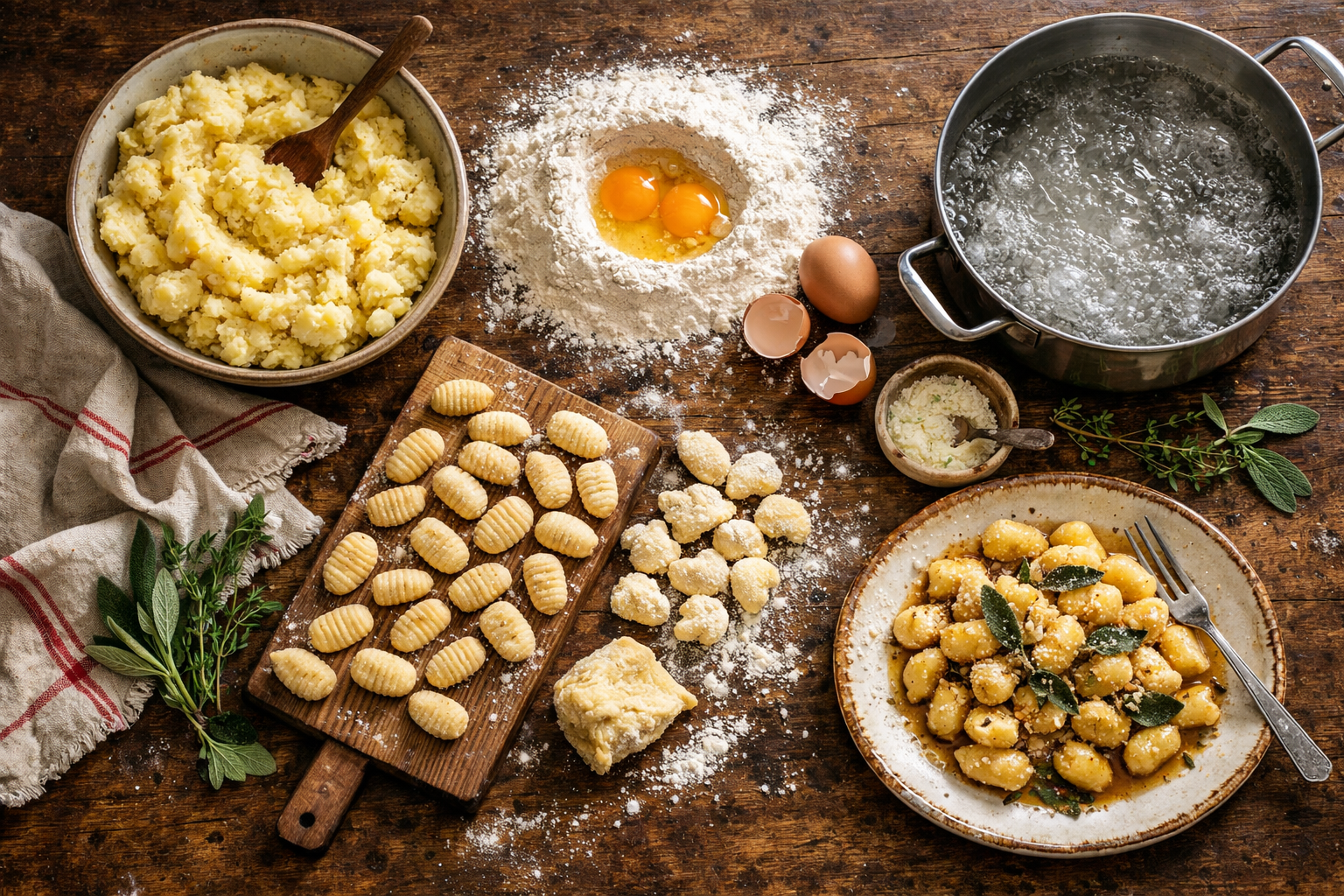
Making gnocchi from scratch is straightforward, but a few technique details make the difference between light, pillowy dumplings and dense, gluey ones.
Step-by-step guide:
- Bake, don’t boil, the potatoes. Baking removes more moisture than boiling, which means less flour is needed and the gnocchi stay lighter.
- Rice the potatoes while hot. Use a potato ricer or food mill. Mashing creates a gluey texture.
- Let the riced potato cool slightly before adding flour — about 5 minutes.
- Add flour gradually. Start with ¾ cup per pound of potato. Add more only if the dough is too sticky to handle.
- Mix gently and briefly. Overworking the dough develops gluten and makes gnocchi tough.
- Roll into ropes and cut. Aim for pieces about ¾ inch long.
- Boil in well-salted water until they float, then cook 30 seconds more.
- Finish in the pan. Toss in brown butter, sauce, or olive oil over medium heat for 1–2 minutes.
Common mistake: Adding too much flour to fix sticky dough. A slightly tacky dough is normal. Dust your hands and work surface instead of loading the dough with extra flour.
Time estimate: About 45–60 minutes total for a batch serving 4 people.
What Are the Best Sauces and Pairings for Gnocchi?
Gnocchi pairs well with sauces that cling to its soft surface without overpowering its mild potato flavor. The best choice depends on the occasion and personal taste.
Top sauce pairings:
- Brown butter and sage — the classic. Nutty, simple, and ready in under 5 minutes.
- Tomato basil sauce — bright and acidic, cuts through the richness of the dumpling.
- Gorgonzola cream — indulgent and bold, best for a special occasion.
- Pesto — fresh and herby, works especially well with ricotta gnocchi.
- Bolognese — hearty meat sauce that turns gnocchi into a full meal.
Choose brown butter and sage if you want to highlight the gnocchi itself. Choose a tomato-based sauce if you’re feeding a crowd or want something lighter.
How Do Restaurants and Brands Celebrate January 29 National Gnocchi Day?
Many Italian restaurants and food brands use January 29 National Gnocchi Day as a marketing moment, offering special menus, discounts, or social media campaigns.
Typical promotions include:
- Limited-edition gnocchi dishes not on the regular menu
- Discounts on gnocchi entrées (commonly 20–30% off, though this varies by location)
- Cooking class events or live demonstrations
- Social media contests asking followers to share their gnocchi photos
Packaged food brands — particularly those selling refrigerated or shelf-stable gnocchi — often run online promotions and recipe content in the days leading up to January 29. Checking brand websites and social channels in mid-January is a reliable way to find deals.
Can Gnocchi Fit Into Special Diets?
Yes. Gnocchi is adaptable, and several well-tested variations exist for common dietary needs.
| Diet | Adaptation |
|---|---|
| Gluten-free | Replace all-purpose flour with a 1:1 gluten-free flour blend or rice flour |
| Vegan | Omit the egg; use a flax egg or simply rely on the starch to bind |
| Dairy-free | Standard potato gnocchi is naturally dairy-free |
| Lower-carb | Use cauliflower instead of potato (texture will differ significantly) |
Edge case: Gluten-free gnocchi dough is stickier and more fragile than standard dough. Chilling it for 15–20 minutes before rolling makes it much easier to handle.
FAQ: January 29 National Gnocchi Day
Q: Is January 29 National Gnocchi Day an official holiday? A: It is not a federally recognized holiday. It is a food observance, similar to National Pizza Day or National Pancake Day, celebrated informally by food enthusiasts, restaurants, and brands.
Q: Why is the 29th specifically associated with gnocchi? A: In Argentine and Uruguayan tradition, eating gnocchi on the 29th of any month is a good-luck ritual. January 29 became the designated annual food holiday to honor this tradition.
Q: How do you pronounce gnocchi? A: The correct Italian pronunciation is NYOH-kee. The “gn” makes a soft “ny” sound, and the “ch” is a hard “k” sound.
Q: Can store-bought gnocchi be used to celebrate the day? A: Absolutely. Refrigerated and shelf-stable gnocchi from the grocery store cook in 2–3 minutes and taste great with the right sauce. There’s no requirement to make it from scratch.
Q: What type of potato works best for homemade gnocchi? A: Russet potatoes are the top choice because of their high starch and low moisture content. Yukon Golds work too but produce a slightly denser result.
Q: Is gnocchi pasta or a dumpling? A: Gnocchi is technically a dumpling, not pasta. It is made from potato dough rather than semolina or wheat dough, and it is boiled like a dumpling rather than extruded or rolled like pasta.
Q: How should leftover gnocchi be stored? A: Cooked gnocchi keeps in an airtight container in the refrigerator for up to 2 days. Reheat by pan-frying in butter for the best texture — microwaving makes them gummy.
Q: Can gnocchi be frozen? A: Yes. Freeze uncooked gnocchi on a baking sheet first, then transfer to a freezer bag. Cook directly from frozen in boiling water — they’ll take about 1–2 minutes longer than fresh.
Conclusion
January 29 National Gnocchi Day is more than a quirky food holiday. It connects to a genuine cultural tradition rooted in Italian immigration, Argentine folklore, and the universal appeal of a well-made dumpling. Whether the goal is to try making gnocchi from scratch for the first time, explore a new sauce pairing, or simply order a bowl from a favorite Italian restaurant, January 29 is the perfect occasion.
Actionable next steps for 2026:
- Mark January 29 on the calendar and plan a meal around gnocchi.
- Try the brown butter and sage method if making gnocchi for the first time — it’s forgiving and fast.
- Check local Italian restaurants in early January for special menus or discounts.
- Follow the Argentine tradition: place a coin or a written wish under your plate before eating for a fun, meaningful touch.
- Share the meal on social media with #NationalGnocchiDay to join the wider celebration.
Good food is worth celebrating. Gnocchi, with its simple ingredients and centuries of history, has more than earned its day.
References
- Kiple, K. F., & Ornelas, K. C. (Eds.). (2000). The Cambridge World History of Food. Cambridge University Press.
- Hazan, M. (1992). Essentials of Classic Italian Cooking. Knopf.
- Mintz, S. W. (1996). Tasting Food, Tasting Freedom. Beacon Press.