
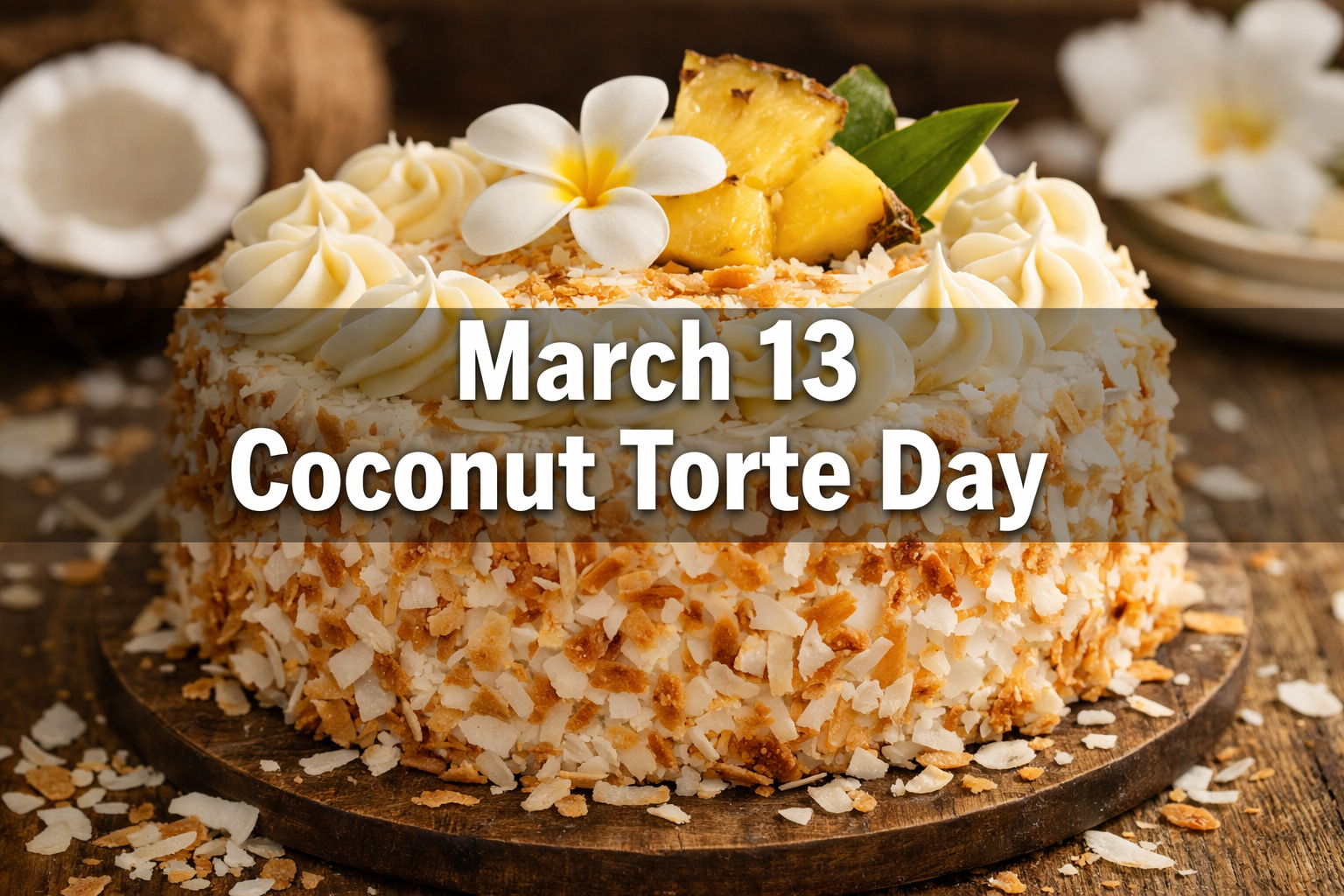
Every year, a surprisingly delightful celebration lands on the calendar in mid-March — and it involves layers of coconut, rich frosting, and a whole lot of baking joy. March 13 Coconut Torte Day is one of those quirky, food-focused observances that turns an ordinary Tuesday (or whatever day it falls on) into a sweet excuse to bake, share, and indulge. Whether someone is a seasoned pastry chef or a curious home baker, this annual food holiday offers a delicious reason to explore the world of coconut tortes.
Key Takeaways 📌
- March 13 Coconut Torte Day is an annual food holiday dedicated to celebrating the coconut torte, a layered dessert with European roots.
- A torte is distinct from a regular cake — it typically uses ground nuts or breadcrumbs instead of flour and features multiple thin layers.
- Coconut adds a tropical, chewy texture and natural sweetness that makes this dessert stand out from other baked goods.
- The day is best celebrated by baking a homemade torte, visiting a local bakery, or sharing coconut-themed treats with friends and family.
- Food holidays like this one help preserve traditional baking techniques and inspire new generations of bakers.
What Is March 13 Coconut Torte Day?
March 13 Coconut Torte Day is an unofficial but widely recognized food holiday observed annually on March 13. Like many food-themed observances on the American calendar, its exact origin is not formally documented. However, food historians and culinary enthusiasts believe these types of holidays were popularized in the mid-to-late 20th century as a way to celebrate specific dishes, ingredients, and culinary traditions.
The day shines a spotlight on the coconut torte — a dessert that blends European baking traditions with the tropical flavor of coconut. It encourages people to:
- Try baking a torte for the first time
- Visit local bakeries and patisseries
- Share recipes on social media
- Gift coconut-based sweets to loved ones
💬 “Food holidays are cultural touchpoints — they remind us to slow down, appreciate craftsmanship, and enjoy the simple pleasure of a well-made dessert.”
Torte vs. Cake: Understanding the Difference
Before diving deeper into the celebration, it helps to understand what makes a torte unique. Many people use the words “cake” and “torte” interchangeably, but they are actually quite different.
| Feature | Cake | Torte |
|---|---|---|
| Primary structure | Flour-based batter | Ground nuts or breadcrumbs |
| Layers | Usually 1–2 layers | Multiple thin layers |
| Texture | Light and fluffy | Dense and rich |
| Moisture | From milk or buttermilk | From eggs and fat |
| Origin | Broad global tradition | Central European (especially Austrian) |
| Common frosting | Buttercream, cream cheese | Ganache, whipped cream, jam |
The word “torte” comes from the German and Austrian baking tradition. The famous Sachertorte from Vienna is one of the most well-known examples. A coconut torte takes this classic concept and infuses it with the bold, tropical flavor of shredded or desiccated coconut.
The Star Ingredient: Why Coconut?
Coconut is one of the most versatile ingredients in both sweet and savory cooking. On March 13 Coconut Torte Day, it takes center stage — and for good reason.
Nutritional Highlights of Coconut 🥥
- Healthy fats: Coconut contains medium-chain triglycerides (MCTs), which are metabolized differently than other fats.
- Fiber: Shredded coconut adds dietary fiber to baked goods.
- Manganese: One serving of shredded coconut provides a significant portion of the daily recommended intake of manganese, which supports bone health.
- Natural sweetness: Coconut adds flavor without requiring excessive added sugar.
Types of Coconut Used in Baking
- Shredded coconut – Long, moist strands; great for texture
- Desiccated coconut – Finely ground and dried; blends smoothly into batter
- Toasted coconut – Adds a nutty, caramelized crunch to toppings
- Coconut cream/milk – Used in frostings and fillings for richness
- Coconut flour – A gluten-free alternative for the base
Each form brings something different to the table, making coconut an incredibly flexible ingredient for torte recipes.
How to Celebrate March 13 Coconut Torte Day
Celebrating March 13 Coconut Torte Day does not require professional baking skills. Here are some accessible and fun ways to mark the occasion in 2026:
🧁 1. Bake a Classic Coconut Torte at Home
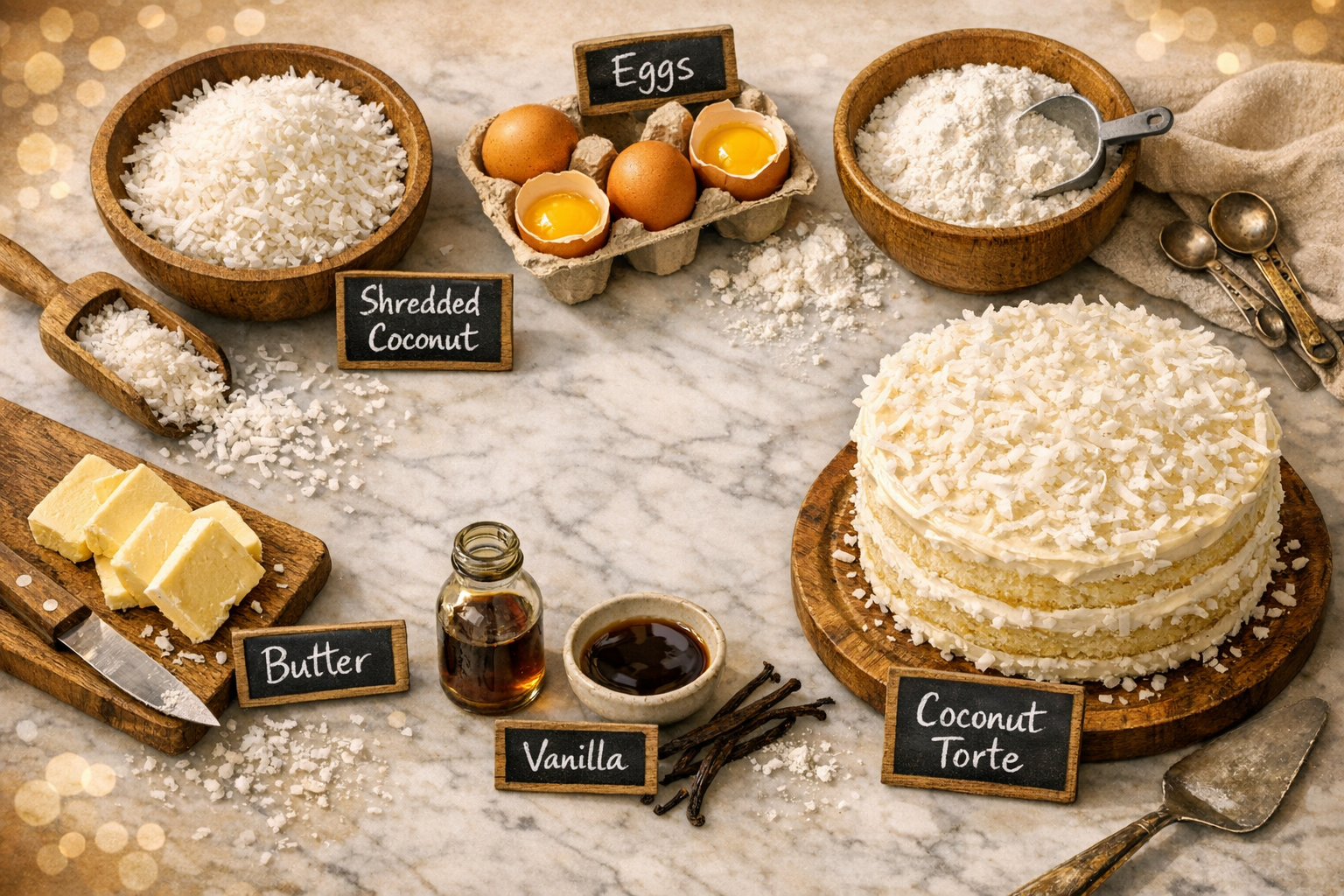
A basic coconut torte recipe typically includes:
- Eggs (separated, with whites whipped to stiff peaks)
- Sugar
- Shredded or desiccated coconut
- Butter
- Vanilla extract
- A pinch of salt
The layers are baked thin, cooled, and then assembled with whipped cream, coconut buttercream, or fruit preserves between each layer. Toasted coconut flakes are sprinkled generously on top.
🛍️ 2. Visit a Local Bakery
Support small businesses by purchasing a coconut torte from a local patisserie or specialty bakery. Many bakeries offer seasonal or custom orders, and calling ahead to request a coconut torte is a great way to engage with the food holiday.
📱 3. Share on Social Media
Use hashtags like #CoconutTorteDay and #March13CoconutTorteDay to connect with other enthusiasts online. Sharing photos of homemade or store-bought tortes helps spread awareness and keeps the tradition alive.
🎁 4. Gift a Coconut Dessert
Coconut tortes make thoughtful gifts. Box up a homemade torte for a neighbor, coworker, or family member. It is a warm, personal gesture that costs very little but means a great deal.
👨🍳 5. Take a Baking Class
Many culinary schools and community centers offer weekend baking workshops. Signing up for a torte-making class around March 13 is a wonderful way to build new skills while honoring the holiday.
A Brief History of the Coconut Torte
The torte has deep roots in Central European baking culture, particularly in Austria, Germany, and Hungary. These countries developed the art of multi-layered, nut-based cakes centuries ago, and the tradition spread across Europe and eventually to the Americas.
Coconut, on the other hand, has tropical origins — primarily Southeast Asia, the Pacific Islands, and parts of South America. As global trade expanded in the 18th and 19th centuries, coconut became widely available in European and American markets.
The fusion of European torte technique with tropical coconut likely emerged in the late 1800s and early 1900s, as coconut became a fashionable ingredient in Western baking. By the mid-20th century, coconut layer cakes and tortes were staples at American celebrations, potlucks, and holiday tables.
💬 “The coconut torte is a beautiful example of culinary fusion — where Old World technique meets New World ingredient.”
Popular Coconut Torte Variations Around the World 🌍
The beauty of the coconut torte is its adaptability. Different cultures have put their own spin on this dessert:
- German Coconut Torte (Kokosnusstorte): Dense layers with coconut cream filling and chocolate glaze
- Caribbean Coconut Torte: Uses fresh coconut milk and tropical fruit fillings like mango or passion fruit
- Filipino Buko Torte: Made with young coconut (buko) strips and a custard-like filling
- Brazilian Cocada Torte: Inspired by cocada (coconut candy), featuring a caramel-coconut filling
- American Southern Coconut Layer Cake: A close cousin to the torte, with fluffy white cake layers and coconut cream frosting
Each variation reflects local ingredients and traditions, proving that coconut torte is truly a global dessert.
Tips for the Perfect Coconut Torte 🏆
Whether baking for the first time or the hundredth, these tips help ensure success:
- Toast the coconut before adding it to the batter or topping — this deepens the flavor significantly.
- Separate eggs carefully — even a drop of yolk in the whites can prevent them from whipping properly.
- Chill between layers — refrigerating the torte after assembling helps the layers set and makes slicing cleaner.
- Use full-fat coconut cream in frostings for the richest, most stable result.
- Do not overmix the batter — gentle folding preserves the airy texture created by whipped egg whites.
Conclusion: Celebrate March 13 Coconut Torte Day in 2026 🎉
March 13 Coconut Torte Day is more than just a quirky food holiday — it is an invitation to explore a rich baking tradition, appreciate the versatility of coconut, and share something handmade with the people around you. In 2026, make the most of this delicious observance by baking a classic coconut torte, visiting a local bakery, or simply learning more about the history behind this beloved dessert.
Actionable Next Steps:
- ✅ Mark March 13 on the 2026 calendar right now
- ✅ Find a coconut torte recipe that matches your skill level
- ✅ Gather ingredients ahead of time — shredded coconut, eggs, butter, and cream
- ✅ Invite friends or family to bake or taste together
- ✅ Share the experience online with #CoconutTorteDay
Every great tradition starts with someone deciding to show up and celebrate. This March 13, let that someone be you. 🥥🎂
References
- Albala, K. (2011). Food Cultures of the World Encyclopedia. Greenwood Press.
- Davidson, A. (2014). The Oxford Companion to Food (3rd ed.). Oxford University Press.
- Mintz, S. W. (1986). Sweetness and Power: The Place of Sugar in Modern History. Penguin Books.
- Trang, C. (2003). Essentials of Asian Cuisine: Fundamentals and Favorite Recipes. Simon & Schuster.
- USDA FoodData Central. (2022). Coconut, raw (shredded). U.S. Department of Agriculture. https://fdc.nal.usda.gov