

Every year on March 21, bread lovers across the United States pause to honor one of the world’s most iconic baked goods. March 21 French Bread Day is a food holiday dedicated to the beloved baguette and its crusty, chewy cousins — a celebration that blends culinary history, cultural appreciation, and pure, simple joy. Whether you’re a home baker, a foodie, or just someone who loves a warm slice of bread, this day has something to offer everyone. 🥖
Key Takeaways
- 📅 March 21 French Bread Day is observed annually on March 21 in the United States.
- The holiday celebrates French bread in all its forms, with the baguette as its most iconic symbol.
- French bread has a rich history dating back centuries, shaped by law, culture, and craftsmanship.
- The day encourages people to bake, buy, or simply enjoy authentic French bread.
- French bread is more than food — it is a UNESCO-recognized cultural heritage tradition.
What Is March 21 French Bread Day?
March 21 French Bread Day is an unofficial food holiday celebrated in the United States. It shines a spotlight on French bread — a broad category that includes baguettes, boules, ficelles, and pain de campagne, among others.
The holiday is part of a long American tradition of dedicating calendar days to beloved foods. While its exact origin is not officially documented, it has grown in popularity through social media, food blogs, and bakery promotions. The date, March 21, also marks the first full day of spring in many years — a fitting time to celebrate fresh, warm bread as the world comes back to life.
🌟 “Good bread is the most fundamentally satisfying of all foods; and good bread with fresh butter, the greatest of feasts.” — James Beard
A Brief History of French Bread
To truly appreciate March 21 French Bread Day, it helps to understand where French bread comes from.
The Origins of the Baguette
French bread has been baked for centuries, but the modern baguette as the world knows it today is a relatively recent invention. Most food historians trace its rise to the early 20th century. A popular theory credits Austrian baker August Zang, who introduced steam-baked bread to Paris in the 1840s, inspiring the long, thin loaf style.
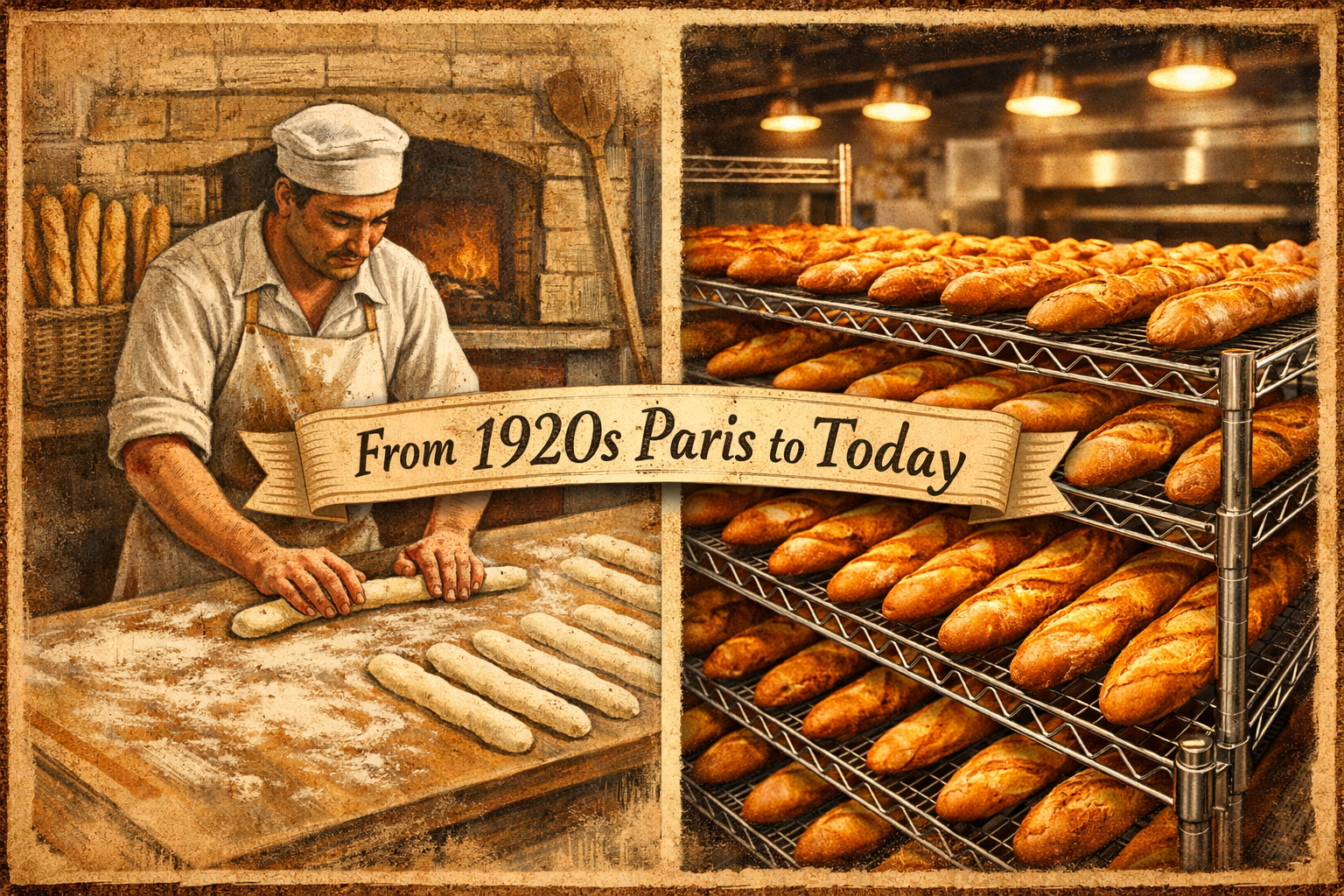
However, it was a 1920 French law that truly shaped the baguette. The law prohibited bakers from working before 4:00 a.m., making it impossible to bake traditional round loaves in time for morning customers. The long, thin baguette — which bakes much faster — became the practical solution.
French Bread and the Law
France has long regulated its bread. The Décret Pain of 1993 defined what could legally be called a “baguette de tradition française.” This law requires the bread to be made on-site using only four ingredients: wheat flour, water, salt, and yeast. No additives allowed.
This commitment to simplicity is part of what makes authentic French bread so special.
UNESCO Recognition
In November 2022, the artisanal know-how and culture of baguette bread was added to UNESCO’s Intangible Cultural Heritage of Humanity list. This recognition confirmed what bread lovers already knew: the French baguette is not just food — it is a living cultural tradition.
Types of French Bread Worth Celebrating
French bread is not one-size-fits-all. Here is a quick guide to the most popular varieties:
| Type | Description | Best For |
|---|---|---|
| Baguette | Long, thin, crispy crust | Sandwiches, cheese boards |
| Boule | Round, rustic loaf | Soups, dipping |
| Ficelle | Thinner than a baguette | Appetizers, snacking |
| Pain de Campagne | Country-style sourdough | Everyday eating |
| Brioche | Rich, buttery, slightly sweet | Breakfast, desserts |
| Fougasse | Flat, leaf-shaped, often herbed | Sharing, entertaining |
Each variety has its own texture, flavor profile, and ideal pairing. On March 21 French Bread Day, trying a new type is a great way to expand your appreciation for French baking traditions.
Why French Bread Is Unique
What sets French bread apart from other breads around the world? Several factors combine to create its signature character:
- Minimal ingredients: Authentic French bread uses only flour, water, salt, and yeast — no oils, sugars, or preservatives.
- The crust: High-temperature baking and steam injection create the signature crackly, golden crust.
- The crumb: The open, airy interior (called the “crumb”) is achieved through careful fermentation and shaping.
- Freshness: Traditional French baguettes are best eaten within hours of baking. This culture of freshness is central to French bread identity.
- Technique: Skilled bakers use precise folding, proofing, and scoring techniques passed down through generations.
How to Celebrate March 21 French Bread Day
There are many fun and meaningful ways to mark this tasty occasion. Here are some ideas for everyone, from beginners to seasoned bakers:
🛒 Visit a Local Bakery
Support a neighborhood boulangerie or artisan bakery. Ask the baker about their process. Many bakeries offer special deals or tastings on food holidays.
🍞 Bake Your Own Baguette
Baking French bread at home is a rewarding project. A basic baguette recipe requires:
- Combine 3 cups bread flour, 1 tsp salt, 1 tsp active dry yeast, and 1 cup warm water.
- Knead the dough for 8–10 minutes until smooth.
- Proof for 1–2 hours until doubled in size.
- Shape into long, thin loaves and score the tops with a sharp knife.
- Bake at 450°F (232°C) with a pan of water in the oven for steam.
- Cool on a wire rack before slicing.
🧀 Host a French Bread Tasting
Gather friends and family for a bread-and-cheese pairing event. Include several types of French bread alongside classic accompaniments like Brie, Camembert, cornichons, and Dijon mustard.
📱 Share on Social Media
Use hashtags like #FrenchBreadDay and #March21FrenchBreadDay to join the online celebration. Share photos of your baking, your favorite bakery find, or a beautifully styled bread board.
📚 Learn About French Baking Culture
Read about the history of French bread, watch documentaries about Parisian boulangeries, or explore the work of legendary bakers like Lionel Poilâne, who helped revive traditional French bread-making in the 20th century.
French Bread and Nutrition: What to Know
French bread, especially the traditional baguette, is relatively simple from a nutritional standpoint. Here is a general overview per one medium slice (about 30g) of a classic baguette:
| Nutrient | Approximate Amount |
|---|---|
| Calories | 80–90 kcal |
| Carbohydrates | 16–18g |
| Protein | 3g |
| Fat | 0.5g |
| Fiber | 0.5–1g |
| Sodium | 150–200mg |
Because traditional French bread contains no added fats or sugars, it is considered a relatively clean carbohydrate source. Pairing it with protein-rich toppings like eggs, smoked salmon, or nut butters creates a more balanced meal.
March 21 French Bread Day Around the World
While March 21 French Bread Day is primarily a U.S.-based food holiday, appreciation for French bread is genuinely global. France itself celebrates bread culture year-round, with the Fête du Pain (Festival of Bread) held annually in Paris each May. Bakeries across Europe, North America, Australia, and beyond participate in baguette competitions and baking events throughout the year.
In 2026, interest in artisan bread-making continues to grow, fueled by a renewed appreciation for traditional food craftsmanship and the slow food movement. Home baking communities online have made French bread more accessible than ever to beginners worldwide.
Conclusion: Make the Most of March 21 French Bread Day
March 21 French Bread Day is more than a quirky food holiday — it is an invitation to slow down, connect with a rich culinary tradition, and enjoy one of the simplest pleasures life has to offer. 🥖✨
Actionable Next Steps
- ✅ Mark your calendar for March 21 and plan your celebration in advance.
- ✅ Find a local artisan bakery and make it a point to visit on the day.
- ✅ Try baking a baguette at home — even imperfect results taste delicious.
- ✅ Explore different French bread varieties beyond the classic baguette.
- ✅ Share the celebration with friends, family, or your online community.
French bread has survived wars, laws, and centuries of change. It earned a place on the UNESCO heritage list because it represents something deeply human: the art of turning simple ingredients into something extraordinary. This March 21, honor that tradition — one crusty, golden loaf at a time.
References
- UNESCO. (2022). Artisanal know-how and culture of baguette bread. Intangible Cultural Heritage. https://ich.unesco.org
- Kaplan, S. L. (2006). Good Bread Is Back: A Contemporary History of French Bread, the Way It Is Made, and the People Who Make It. Duke University Press.
- Jacob, H. E. (1944). Six Thousand Years of Bread: Its Holy and Unholy History. Doubleday, Doran & Company.
- Beard, J. (1973). Beard on Bread. Alfred A. Knopf.
- Ministère de l’Agriculture et de l’Alimentation. (1993). Décret n° 93-1074 du 13 septembre 1993 pris pour l’application de la loi du 1er août 1905 en ce qui concerne certaines catégories de farines et certaines dénominations de pains. Journal Officiel de la République Française.