Last updated: March 21, 2026
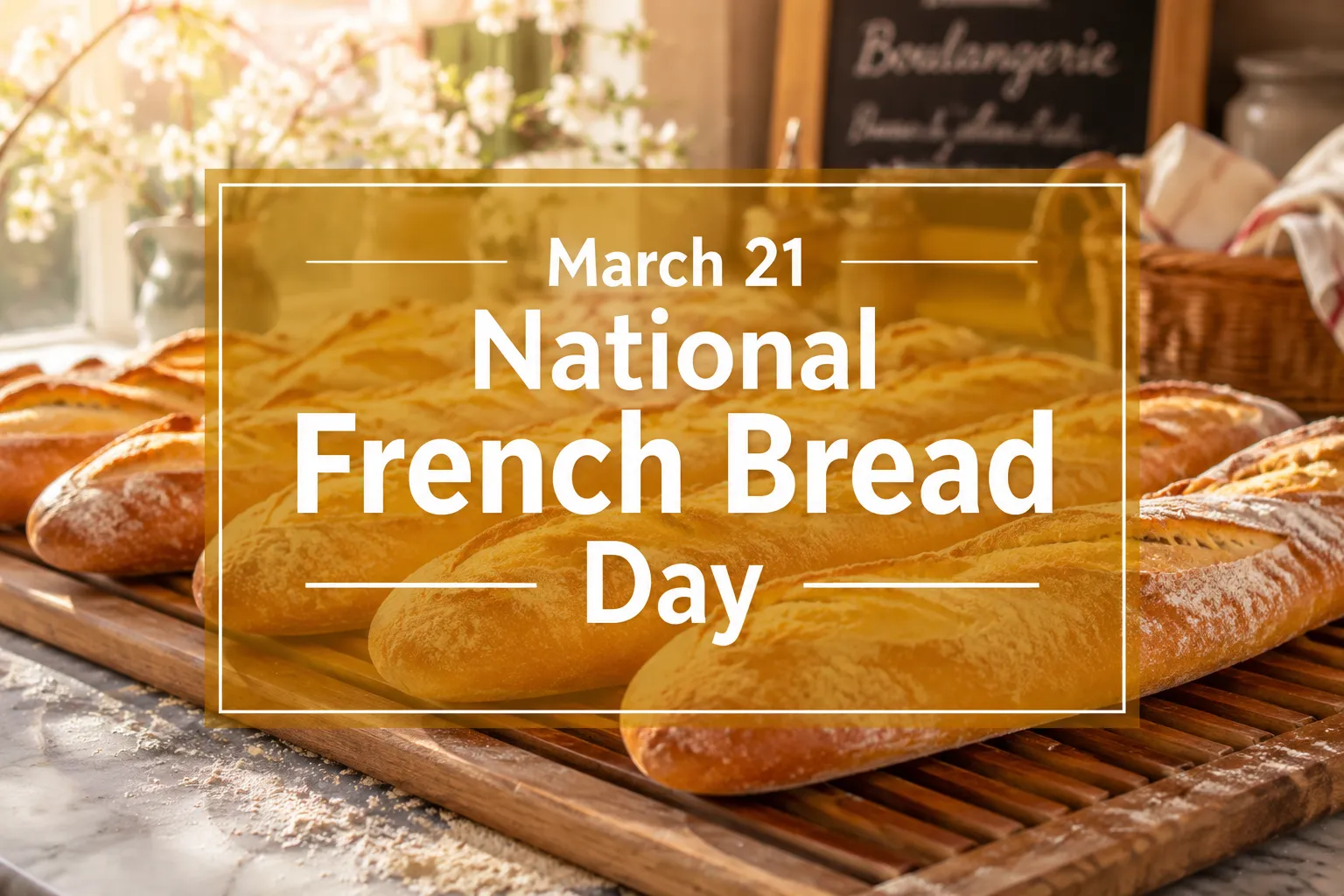
Quick Answer: March 21 National French Bread Day is an annual American food holiday celebrated every March 21 that honors the long, crispy loaves of French bread that have become a staple in kitchens and restaurants worldwide. The day encourages home bakers and bread lovers to bake, buy, or simply enjoy French bread in any form. No official governing body created the holiday, but it is widely recognized across food communities and bakeries throughout the United States.
Key Takeaways
- March 21 National French Bread Day falls every year on March 21.
- French bread is defined by its simple ingredient list: flour, water, yeast, and salt.
- A baguette is a specific type of French bread; not all French bread is a baguette.
- French bread stays fresh for about one day at room temperature, but freezes well for up to three months.
- A standard 1-ounce (28g) slice of French bread contains roughly 80 calories, 15g of carbohydrates, and 3g of protein.
- The best ways to celebrate include baking a loaf at home, visiting a local artisan bakery, or pairing French bread with cheese, soup, or garlic butter.
- French bread differs from sourdough primarily in leavening: French bread uses commercial yeast, while sourdough relies on a wild-yeast starter.
- The holiday is informal and community-driven, with no single founding organization.
What Is National French Bread Day?
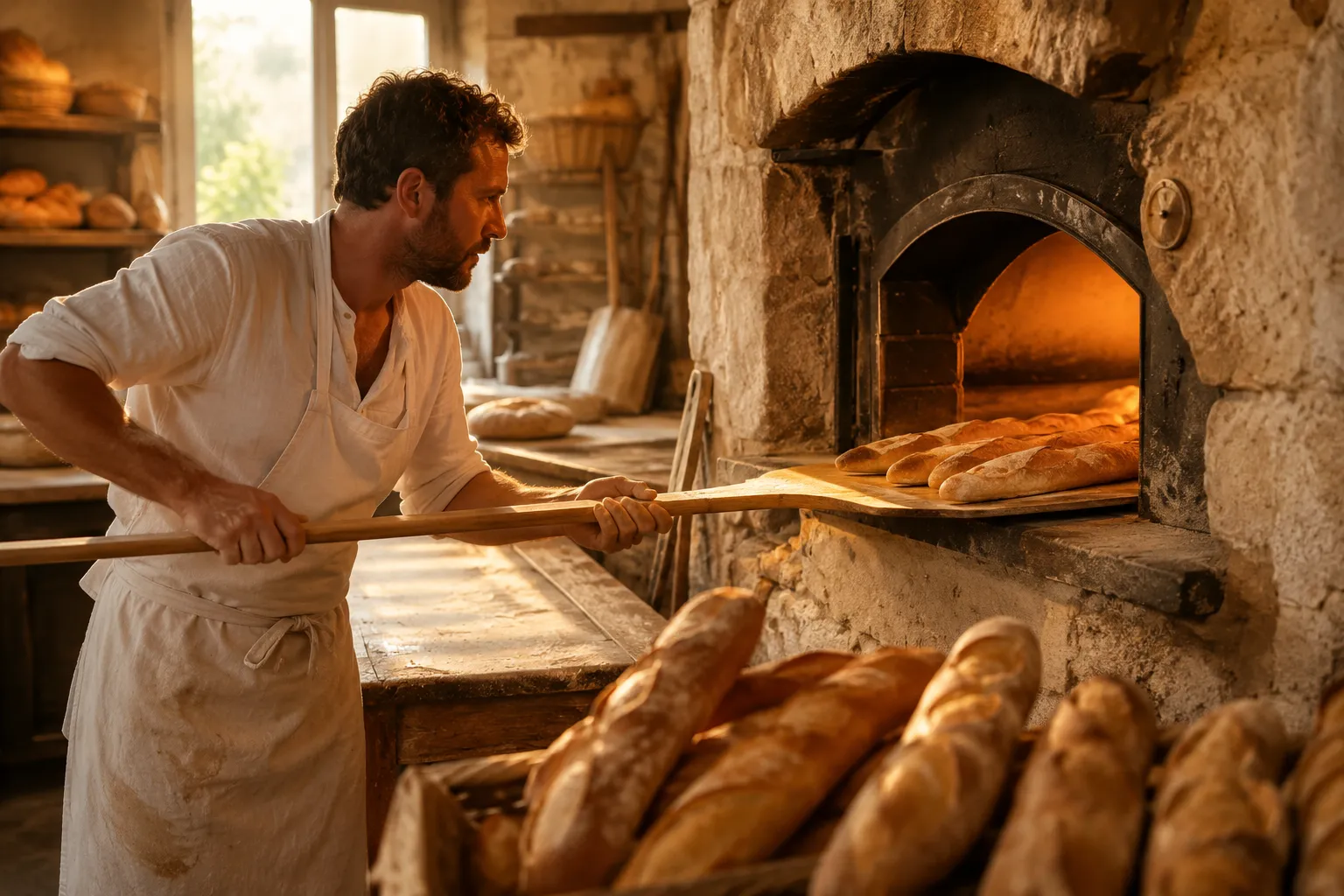
National French Bread Day is an informal American food holiday dedicated to celebrating French bread in all its forms. It falls on March 21 each year and gives bread enthusiasts a reason to bake, share, and eat one of the world’s most iconic breads.
French bread refers broadly to any bread made in the French tradition, characterized by a thin, crispy crust and a light, airy interior. The most recognized form is the baguette, but the category also includes pain de campagne (country bread), ficelle, and boule. The holiday is not federally recognized, but it is observed by home bakers, food bloggers, bakeries, and restaurants across the country.
When Is National French Bread Day Celebrated?
National French Bread Day is celebrated every year on March 21. The date is fixed and does not shift based on the calendar. In 2026, March 21 falls on a Saturday, making it an especially convenient day to spend time baking or visiting a local bakery.
Mark the date alongside other spring food holidays. If you enjoy celebrating food-themed days throughout the year, you might also appreciate National Croissant Day on January 30, another French-inspired food holiday worth noting.
Why Is March 21 National French Bread Day? History and Origin
The exact origin of March 21 National French Bread Day is not documented with a single verified founding story. Like many American food holidays, it appears to have grown organically through food blogs, social media, and culinary communities rather than from a formal proclamation.
What is well-established is the cultural history behind the bread itself:
- 18th-century France: Bakers in Paris began producing long, thin loaves that could be baked and sold quickly. The shape allowed for faster, more even baking.
- 1920 French labor law: A law passed in France prohibited bakers from working before 4 a.m., which pushed bakers toward longer, thinner loaves that could be ready in time for morning customers. This is widely credited as a key reason the baguette shape became dominant.
- Post-WWII America: French bread gained broad popularity in the United States as American soldiers returned from Europe and as French cuisine became fashionable.
The choice of March 21 may be connected to the spring equinox, a time historically associated with renewal and harvest, though no official source confirms this link.
For more context on how food holidays develop and spread, explore National Cheese Lover’s Day on January 20, which follows a similar community-driven origin.
Difference Between French Bread and a Baguette
A baguette is a type of French bread, but French bread is not always a baguette. The distinction matters for anyone shopping, baking, or ordering at a bakery.
| Feature | Baguette | French Bread (General) |
|---|---|---|
| Shape | Long, thin (about 2 inches wide) | Varies: round, oval, long |
| Crust | Very thin and crackly | Thin to medium |
| Crumb | Open, irregular holes | Light and airy |
| Weight | Typically 250g (about 9 oz) | Varies widely |
| Common uses | Sandwiches, cheese boards | Soups, garlic bread, dipping |
In American grocery stores, “French bread” often refers to a wider, softer loaf than a true Parisian baguette. Authentic baguettes follow stricter French baking traditions and are best found at artisan bakeries.
French Bread vs. Sourdough: What’s the Difference?
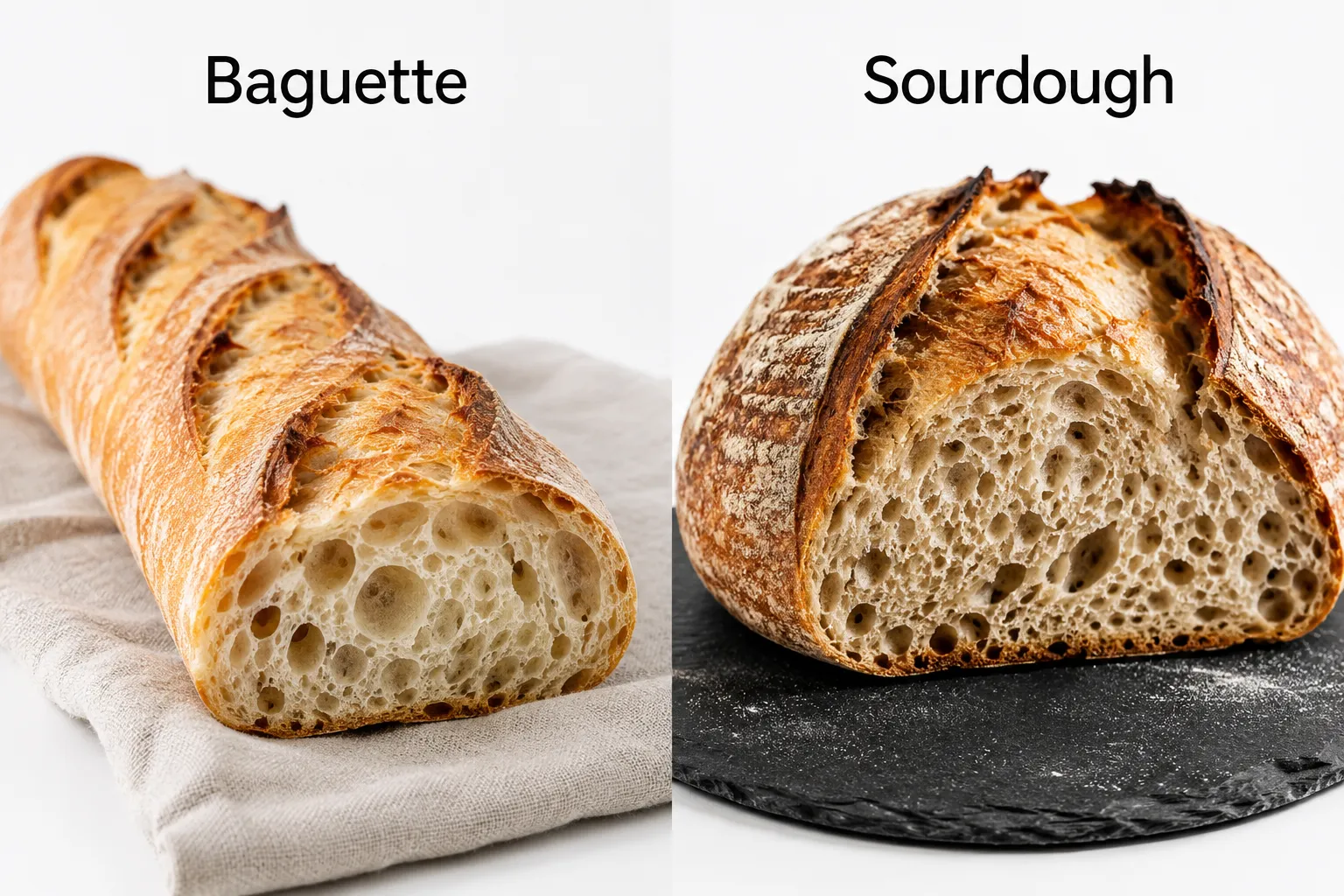
French bread and sourdough are both lean breads (made without fat or sugar), but they differ in how they rise and how they taste. French bread uses commercial yeast for a predictable, fast rise. Sourdough uses a wild-yeast starter that ferments over many hours, producing a distinctly tangy flavor and a denser, chewier crumb.
Key differences at a glance:
- Leavening: French bread uses commercial yeast; sourdough uses a wild-yeast and bacteria starter.
- Flavor: French bread is mild and slightly sweet; sourdough has a pronounced sour, complex taste.
- Fermentation time: French bread can be ready in 2 to 4 hours; sourdough typically takes 12 to 24 hours or longer.
- Shelf life: Sourdough’s acidity gives it a slightly longer shelf life (2 to 3 days vs. 1 day for French bread).
- Digestibility: Some people find sourdough easier to digest because the long fermentation breaks down more gluten and phytic acid.
Choose French bread if you want a quick bake with a mild flavor. Choose sourdough if you prefer a tangy, complex loaf and have time for a longer process.
How to Celebrate March 21 National French Bread Day
Celebrating March 21 National French Bread Day does not require elaborate planning. The best approach depends on your time, skill level, and how you most enjoy bread.
For home bakers:
- Bake a classic baguette or a simple French loaf from scratch (see the recipe section below).
- Try a flavored variation: rosemary and sea salt, garlic herb, or olive bread.
- Host a bread-and-cheese tasting with friends, pairing different French bread styles with a selection of cheeses. The January 20 National Cheese Lover’s Day guide has pairing ideas that translate perfectly to this occasion.
For casual celebrants:
- Visit a local artisan bakery and pick up a fresh baguette.
- Use French bread as the base for a special meal: French onion soup with a bread crust topping, bruschetta, or a classic pan bagnat.
- Make garlic bread as a side dish for pasta. The National Fettuccine Alfredo Day guide pairs beautifully with homemade French bread.
For food-focused celebrations:
- Share a photo of your bread on social media with the hashtag #NationalFrenchBreadDay.
- Explore a French cookbook to discover traditional recipes that use French bread as a core ingredient.
Best French Bread Recipes for National French Bread Day
The best French bread recipes for the holiday range from a basic baguette to crowd-pleasing garlic bread and French bread pizza. Here are three reliable options suited to different skill levels.
Classic French Baguette (intermediate)
- 3 cups (360g) bread flour
- 1 teaspoon instant yeast
- 1.5 teaspoons salt
- 1 cup (240ml) warm water
Mix flour, yeast, and salt. Add water and knead for 8 to 10 minutes until smooth. Let rise 1 to 1.5 hours. Shape into two long baguettes, score the tops with a sharp knife, and bake at 450°F (230°C) for 20 to 25 minutes with steam in the oven (place a pan of hot water on the lower rack).
Garlic French Bread (beginner) Split a store-bought French loaf lengthwise. Mix softened butter with minced garlic, parsley, and a pinch of salt. Spread generously, wrap in foil, and bake at 375°F (190°C) for 15 minutes. Unwrap for the last 5 minutes to crisp the top. Pair with a garlic-forward dish for a full flavor experience.
French Bread Pizza (beginner) Slice a French loaf in half lengthwise, top with marinara, mozzarella, and your choice of toppings. Bake at 400°F (200°C) for 10 to 12 minutes until the cheese bubbles.
How to Make French Bread at Home: Step-by-Step
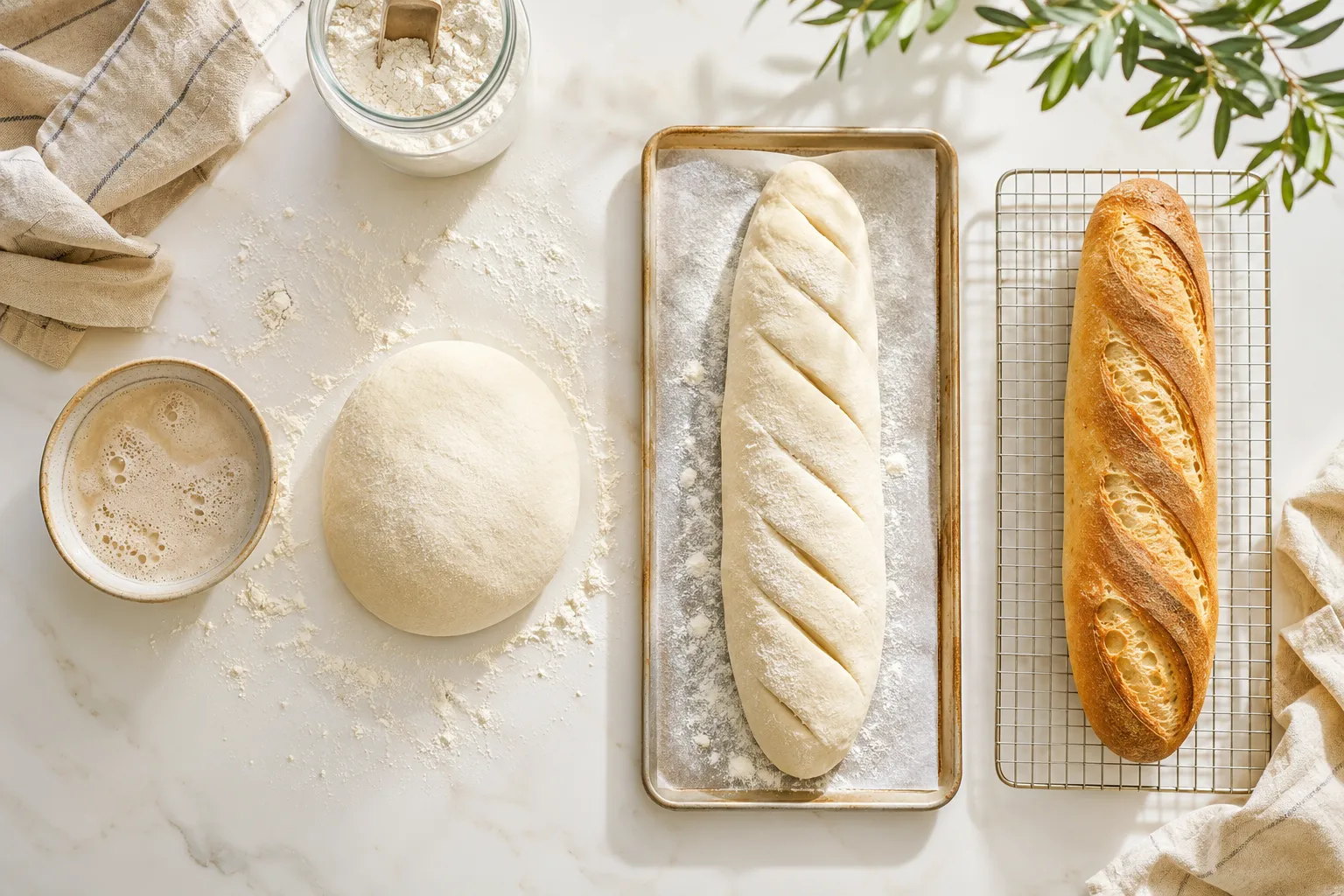
Making French bread at home is achievable for most cooks with a standard oven. The process takes about 2.5 to 3 hours from start to finish, including rise time.
- Activate the yeast. Combine 1 teaspoon of instant yeast with 1 cup of warm water (about 110°F / 43°C). Let it sit for 5 minutes until slightly foamy.
- Mix the dough. Combine 3 cups of bread flour and 1.5 teaspoons of salt in a large bowl. Add the yeast mixture and stir until a shaggy dough forms.
- Knead. Turn the dough onto a floured surface and knead for 8 to 10 minutes until smooth and elastic.
- First rise. Place the dough in a lightly oiled bowl, cover with a damp cloth, and let it rise in a warm spot for 1 to 1.5 hours until doubled in size.
- Shape. Punch down the dough, divide it into two pieces, and roll each into a long cylinder about 14 to 16 inches long.
- Second rise. Place the shaped loaves on a parchment-lined baking sheet, cover loosely, and let them rest for 30 to 45 minutes.
- Score and bake. Use a sharp knife or lame to score the tops with diagonal cuts. Place a pan of hot water on the oven’s lower rack to create steam. Bake at 450°F (230°C) for 20 to 25 minutes until deep golden brown.
- Cool. Let the loaves cool on a wire rack for at least 15 minutes before cutting. Cutting too early releases steam and makes the crumb gummy.
Common mistake: Skipping the steam step. Steam in the first 10 minutes of baking keeps the crust pliable long enough to expand fully, which is what creates the characteristic thin, crackly crust.
Where to Buy Authentic French Bread Near Me
Authentic French bread is best found at artisan bakeries, specialty grocery stores, and French patisseries. Here is how to find the best options in your area.
- Artisan and specialty bakeries: Search for “artisan bakery” or “French bakery” in your city using Google Maps or Yelp. Look for bakeries that bake fresh daily and list baguettes or pain de campagne on their menu.
- Grocery store bakery sections: Chains like Whole Foods, Trader Joe’s, and many regional grocers bake French bread in-store daily. Quality varies, but freshly baked in-store loaves are generally far better than pre-packaged options.
- Farmers markets: Many artisan bakers sell at weekend farmers markets. These loaves are often made with higher-quality flour and traditional techniques.
- French or European delis: Cities with a French or European community often have delis or specialty shops that import or produce authentic bread.
What to look for: A good French baguette should feel light for its size, have a crust that crackles when squeezed gently, and show an open, irregular crumb when sliced. Avoid loaves that feel dense or have a uniform, tight crumb, which usually indicates commercial production shortcuts.
French Bread Nutrition Facts
A standard 1-ounce (28g) slice of French bread contains approximately the following (based on USDA food composition data):
- Calories: 80
- Carbohydrates: 15g
- Protein: 3g
- Fat: 0.5g
- Fiber: 0.7g
- Sodium: 175mg
French bread is a lean bread with no added fat or sugar in its traditional form. It is not a significant source of fiber compared to whole-grain breads. People managing blood sugar should note that French bread has a relatively high glycemic index due to its refined flour content and low fiber.
Whole-wheat French bread is available at many bakeries and offers more fiber (roughly 2 to 3g per slice) and a lower glycemic response.
How Long Does French Bread Stay Fresh, and Can You Freeze It?
French bread stays fresh for about one day at room temperature. Because it contains no fat or preservatives, it stales quickly, a process called retrogradation where starch molecules recrystallize and the crumb becomes firm.
Storage tips:
- Store at room temperature in a paper bag or bread box. Plastic bags trap moisture and soften the crust, which defeats the purpose of a crispy French loaf.
- Do not refrigerate. Refrigeration accelerates staling significantly.
- Revive day-old bread by running it briefly under water and baking at 375°F (190°C) for 5 to 8 minutes. This re-gelatinizes the starch and restores much of the original texture.
Freezing French bread: Yes, French bread freezes well. Wrap the loaf tightly in plastic wrap, then in a layer of aluminum foil or a freezer bag. Frozen French bread keeps well for up to three months.
To thaw: remove from the freezer and let it sit at room temperature for 30 to 60 minutes, then warm in a 350°F (175°C) oven for 10 minutes to restore the crust. Do not microwave a whole loaf, as it will become rubbery.
Tip: Slice the bread before freezing if you plan to use it in portions. This lets you pull out exactly what you need without thawing the entire loaf.
FAQ: March 21 National French Bread Day
What day is National French Bread Day? National French Bread Day is celebrated every year on March 21.
Is National French Bread Day an official holiday? No. It is an informal food holiday observed by food communities, bakeries, and home bakers. It is not a federal or state holiday.
What is the difference between French bread and Italian bread? French bread uses only flour, water, yeast, and salt. Italian bread often includes olive oil and sometimes sugar, which produces a softer crust and a slightly richer flavor.
Can I make French bread without a stand mixer? Yes. French bread dough is relatively low in hydration and kneads well by hand in 8 to 10 minutes. A stand mixer speeds up the process but is not required.
Why does my homemade French bread have a soft crust instead of a crispy one? A soft crust usually means insufficient oven temperature, no steam during baking, or storing the bread in a plastic bag. Use a very hot oven (450°F / 230°C), add steam for the first 10 minutes, and store in a paper bag or uncovered.
Is French bread vegan? Traditional French bread (flour, water, yeast, salt) is vegan. Garlic bread and flavored variations may contain butter, so check the recipe.
What wine pairs well with French bread? A crisp white Burgundy (Chardonnay) or a light Beaujolais pairs well with plain French bread and cheese. For garlic bread, a medium-bodied red like Côtes du Rhône works nicely.
How many calories are in a full baguette? A standard baguette weighs about 250g and contains roughly 700 to 750 calories total, based on approximately 80 calories per ounce.
What is the best flour for homemade French bread? Bread flour (high protein, around 12 to 13% protein content) gives the best structure and chew. All-purpose flour works but produces a slightly less chewy crumb.
Can I use a bread machine to make French bread? Yes. Most bread machines have a French bread cycle. The result is acceptable, though the crust will not be as crackly as an oven-baked loaf because home bread machines do not generate steam.
What foods pair well with French bread on National French Bread Day? French bread pairs well with butter, cheese, soups, charcuterie, olive oil with herbs, and spreads. For a festive pairing, try it alongside a warm bowl of French onion soup or with a selection of cheeses as part of a celebration spread.
Where can I learn more about French cooking traditions? A dedicated French cookbook is the most direct way to explore the broader culinary context in which French bread plays a central role.
Conclusion
March 21 National French Bread Day is a straightforward but genuinely enjoyable food holiday that connects everyday bread lovers to one of the world’s most enduring culinary traditions. Whether the plan is to bake a baguette from scratch, pick up a fresh loaf from a local artisan bakery, or simply enjoy garlic bread with dinner, the day offers a low-barrier entry point into French baking culture.
Actionable next steps for 2026:
- Mark March 21 on your calendar now and decide whether you will bake or buy.
- If baking, gather bread flour, instant yeast, and salt at least a day ahead.
- If buying, identify a local artisan bakery in advance, as fresh baguettes often sell out by mid-morning.
- Pair your French bread with a complementary dish: soup, cheese, or a pasta course.
- Share the experience on social media to connect with the broader community celebrating the day.
French bread’s enduring appeal comes down to simplicity: four ingredients, centuries of technique, and a crust that crackles when you break it. That is worth celebrating on March 21.
Leave a Reply