
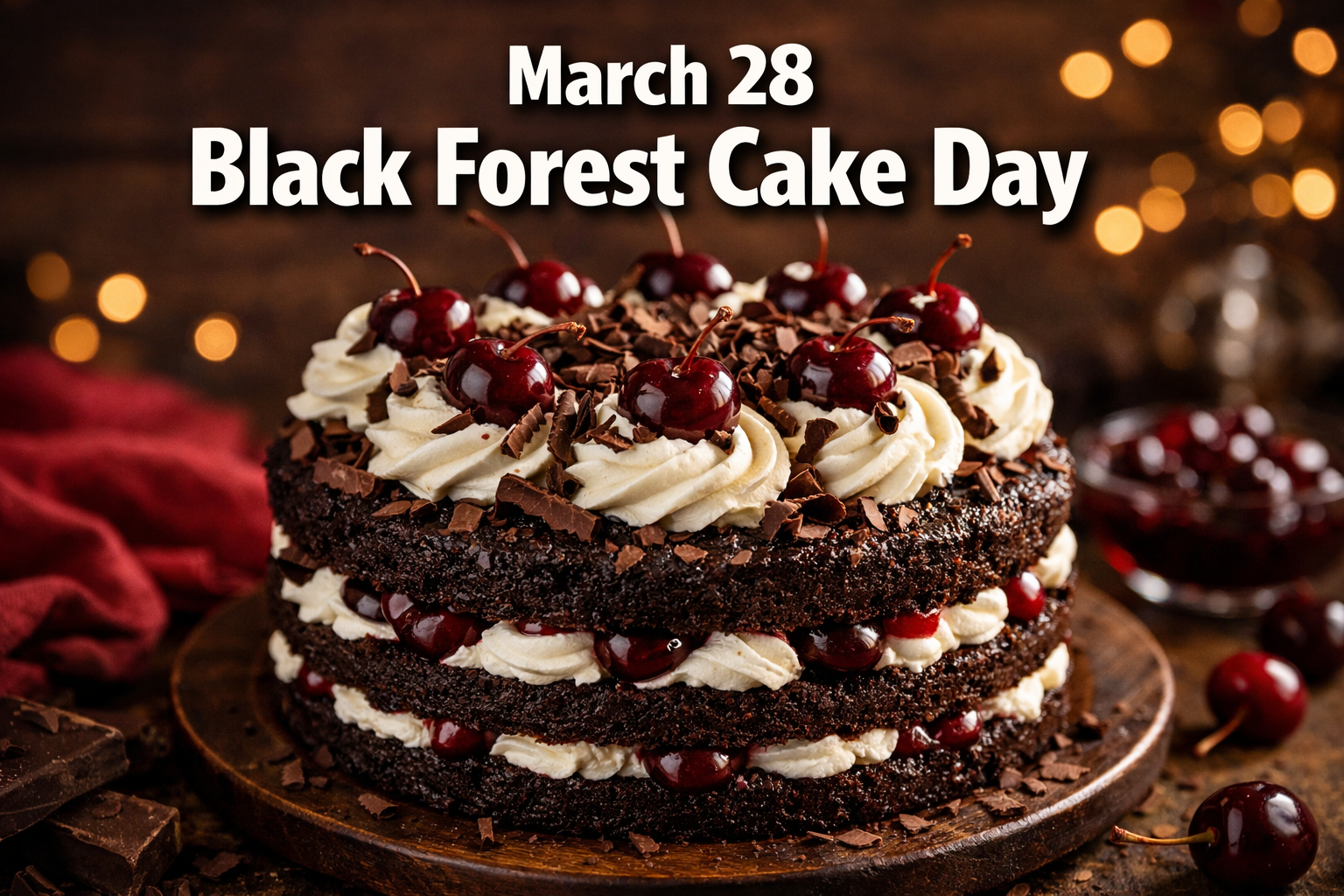
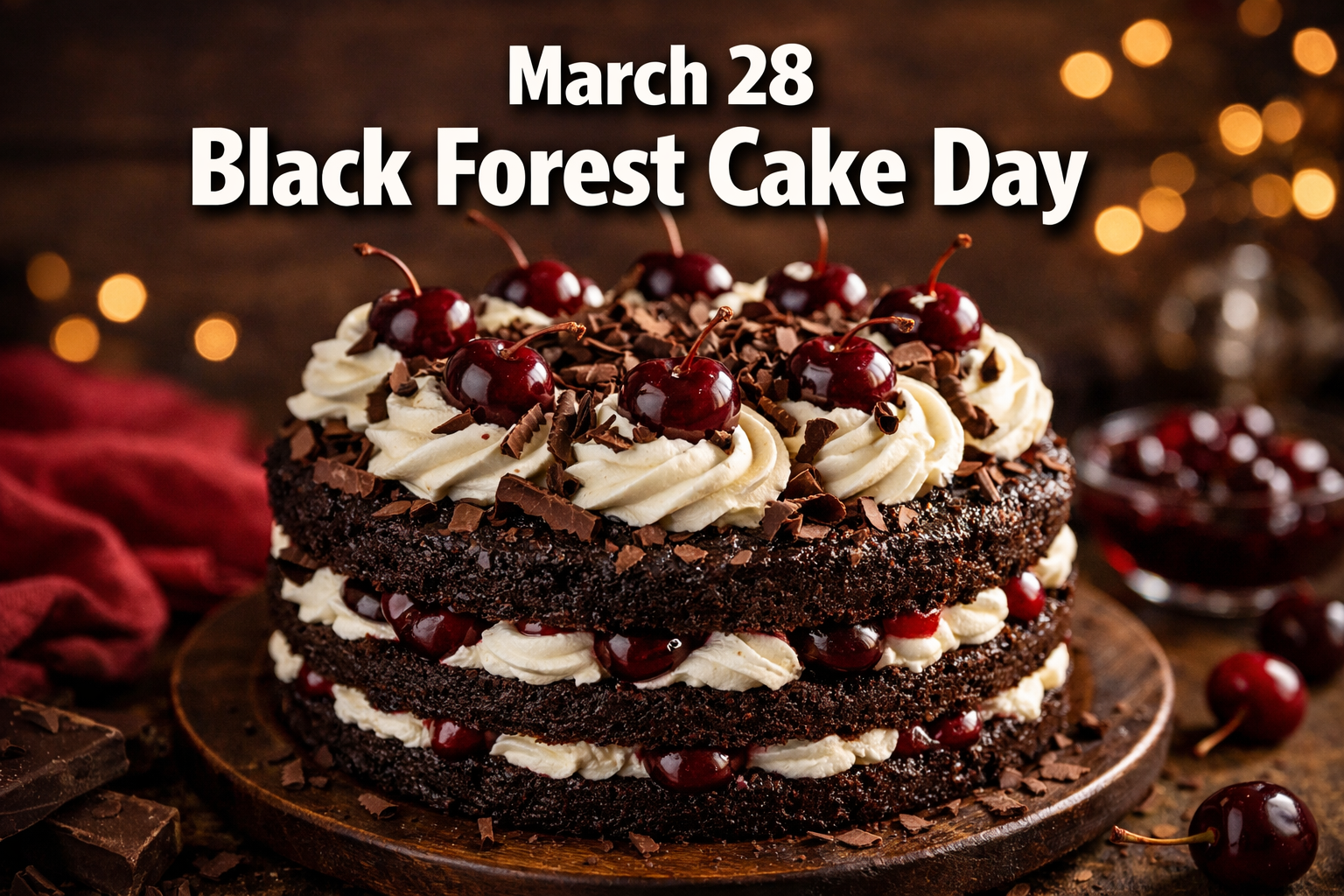
Every year on March 28, dessert lovers across the world have a delicious reason to celebrate — it’s March 28 Black Forest Cake Day, a food holiday dedicated entirely to one of the most iconic cakes ever created. Whether enjoyed at a local bakery or baked from scratch at home, this day brings people together over layers of chocolate, cream, and cherries.
Key Takeaways
- 📅 March 28 Black Forest Cake Day is an annual food holiday celebrating the beloved Black Forest cake.
- 🇩🇪 The cake originates from Germany’s Black Forest region and has centuries of culinary history behind it.
- 🍒 Traditional recipes feature chocolate sponge, Kirsch (cherry schnapps), whipped cream, and Morello cherries.
- 🎂 The holiday is widely celebrated through home baking, bakery promotions, and social media sharing.
- 🌍 Black Forest cake remains one of the most recognized and exported German desserts in the world.
What Is March 28 Black Forest Cake Day?
March 28 Black Forest Cake Day is an unofficial but widely recognized food holiday observed annually on March 28. It is part of a broader tradition of food-themed celebration days that spotlight beloved dishes and desserts throughout the calendar year.
The day encourages people to:
- Bake or buy a Black Forest cake
- Share photos and recipes on social media
- Visit local German bakeries or restaurants
- Learn about the cake’s rich cultural history
“Food holidays like March 28 Black Forest Cake Day give people a fun, low-pressure reason to connect over shared culinary traditions.”
While the exact origin of this specific food holiday is not officially documented, it has gained significant traction online and in food communities, especially across platforms like Instagram, Pinterest, and TikTok.
The History Behind Black Forest Cake
Origins in the Black Forest Region of Germany
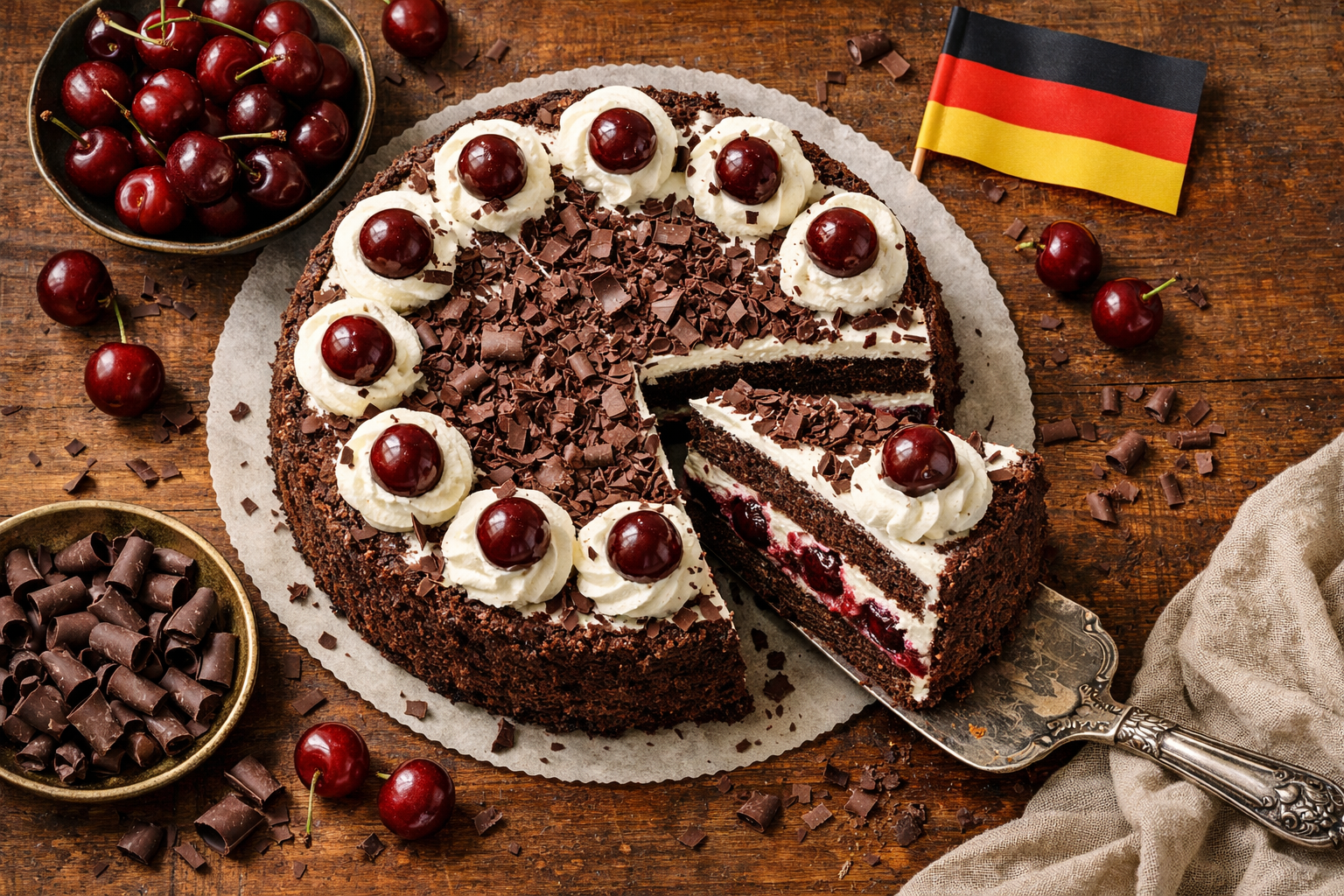
The Black Forest cake — known in German as Schwarzwälder Kirschtorte — has roots in the Black Forest (Schwarzwald) region of southwestern Germany. This mountainous, forested area of Baden-Württemberg is famous for its cherries, cherry distilleries, and rich baking traditions.
The cake’s defining ingredient, Kirschwasser (or Kirsch), is a clear cherry brandy distilled from Morello cherries grown in the region. German law actually requires that a cake be made with Kirschwasser to legally carry the name “Schwarzwälder Kirschtorte.”
Who Invented It?
The most widely credited inventor is Josef Keller, a German pastry chef who reportedly created the recipe around 1915 at the Café Agner in Bad Godesberg. However, the first written recipe appeared in print in 1934, compiled by food writer J.M. Erich Weber.
A Global Phenomenon
By the mid-20th century, Black Forest cake had spread far beyond Germany’s borders. Today, it is served in bakeries, restaurants, and homes across:
| Region | Local Adaptation |
|---|---|
| 🇩🇪 Germany | Classic Schwarzwälder Kirschtorte with Kirsch |
| 🇬🇧 United Kingdom | Often made without alcohol |
| 🇺🇸 United States | Frequently uses maraschino cherries |
| 🇧🇷 Brazil | A popular version called “Floresta Negra” |
| 🇮🇳 India | Adapted with eggless and alcohol-free versions |
What Makes a Classic Black Forest Cake?
A traditional Black Forest cake is built on a precise combination of flavors and textures. Here is what goes into an authentic recipe:
Core Ingredients
- 🍫 Chocolate genoise sponge — A light, airy cake base made with cocoa powder or melted dark chocolate
- 🍒 Morello cherries — Tart, dark cherries that balance the sweetness of the cream
- 🥃 Kirschwasser — Cherry brandy used to soak the sponge layers
- 🍦 Whipped cream — Thick, unsweetened or lightly sweetened cream between and over the layers
- 🍫 Chocolate shavings — Dark chocolate curls decorating the top and sides
Layers of the Cake
A properly assembled Black Forest cake typically has three layers of chocolate sponge, alternating with whipped cream and cherries, then finished with:
- A generous coating of whipped cream on the outside
- Rosettes of piped cream on top
- A cherry placed on each cream rosette
- Generous chocolate shavings all over the surface
“The magic of Black Forest cake lies in the contrast — bitter chocolate, tart cherries, and sweet cream working in perfect harmony.”
How to Celebrate March 28 Black Forest Cake Day
Celebrating March 28 Black Forest Cake Day does not require a special occasion or a professional kitchen. Here are some easy and enjoyable ways to mark the day in 2026:
🎂 Bake One at Home
Homemade Black Forest cake is a rewarding baking project. Many beginner-friendly recipes are available online that simplify the process without sacrificing flavor. Key tips:
- Use good-quality cocoa powder for a rich sponge
- Chill the cake for at least 2 hours before serving
- For an alcohol-free version, substitute Kirsch with cherry juice
🛍️ Visit a Local Bakery
Support local bakers by purchasing a slice or a whole cake from a nearby German-style bakery or patisserie. Many bakeries offer special promotions around food holidays.
📱 Share on Social Media
Join the online celebration by posting photos, recipes, or memories using hashtags such as:
#BlackForestCakeDay#Schwarzwälder Kirschtorte#March28#BlackForestCake
🍽️ Host a Dessert Gathering
Invite friends or family over for a dessert night centered around Black Forest cake. Pair it with:
- German coffee (Filterkaffee)
- Hot chocolate
- Sparkling cherry juice for a non-alcoholic option
Nutritional Overview of Black Forest Cake
While Black Forest cake is certainly an indulgence, understanding its nutritional profile helps with mindful enjoyment.
| Nutrient | Per Average Slice (approx. 120g) |
|---|---|
| Calories | 380–450 kcal |
| Total Fat | 20–25g |
| Carbohydrates | 45–55g |
| Sugar | 30–38g |
| Protein | 4–6g |
Note: Values vary significantly based on recipe, portion size, and whether alcohol is included. Lighter versions using reduced-fat cream or sugar substitutes are widely available.
Fun Facts About Black Forest Cake 🎉
- The name “Black Forest” refers to the Schwarzwald region, not the color of the cake itself — though the dark chocolate layers certainly play a role in the name’s imagery.
- Germany exports Schwarzwälder Kirschtorte culture globally through its famous Kaffee und Kuchen (coffee and cake) tradition.
- The world’s largest Black Forest cake was baked in Todtnauberg, Germany, in 2006, weighing approximately 3,000 kilograms.
- In 2021, the Black Forest cake was ranked among the top 10 most popular cakes worldwide in multiple global food surveys.
- Some historians trace the cake’s visual inspiration — dark, white, and red — to the traditional costume of the Black Forest region.
Why March 28 Black Forest Cake Day Matters
Food holidays like March 28 Black Forest Cake Day serve a purpose beyond just eating cake. They:
- Preserve culinary heritage by keeping traditional recipes in public conversation
- Support local businesses such as bakeries and specialty food shops
- Build community through shared experiences, both online and in person
- Educate younger generations about food history and cultural traditions
- Encourage creativity in the kitchen with modern twists on classic recipes
In 2026, with food culture more globally connected than ever, days like this one offer a meaningful touchpoint between history, culture, and everyday joy.
Conclusion
March 28 Black Forest Cake Day is more than a sweet excuse to eat cake — it is a celebration of a dessert with deep cultural roots, remarkable global reach, and timeless appeal. From its origins in Germany’s Schwarzwald region to bakeries and home kitchens around the world, the Black Forest cake has earned its special day on the calendar.
Actionable Next Steps for 2026:
- ✅ Mark March 28 on your calendar right now
- 🛒 Gather ingredients ahead of time if planning to bake at home
- 📍 Find a local bakery that specializes in European or German pastries
- 📸 Document and share your celebration on social media
- 📚 Explore the history of Schwarzwälder Kirschtorte to deepen your appreciation
Whether the goal is to bake, buy, or simply learn, March 28 is the perfect day to slow down, share something delicious, and celebrate a true classic of the culinary world. 🍒🎂
References
- Minifie, B. W. (1989). Chocolate, Cocoa and Confectionery: Science and Technology. Springer.
- Davidson, A. (1999). The Oxford Companion to Food. Oxford University Press.
- Treuille, E., & Ferrigno, U. (1998). Bread. DK Publishing.
- Weir, R. (2011). Ripe: A Cook in the Orchard. Bloomsbury Publishing.
- German Agricultural Marketing Board (AMG). (2018). Regional Specialties of Germany: Protected Designations. AMG Publications.
- Goldstein, D. (Ed.). (2015). The Oxford Companion to Sugar and Sweets. Oxford University Press.