
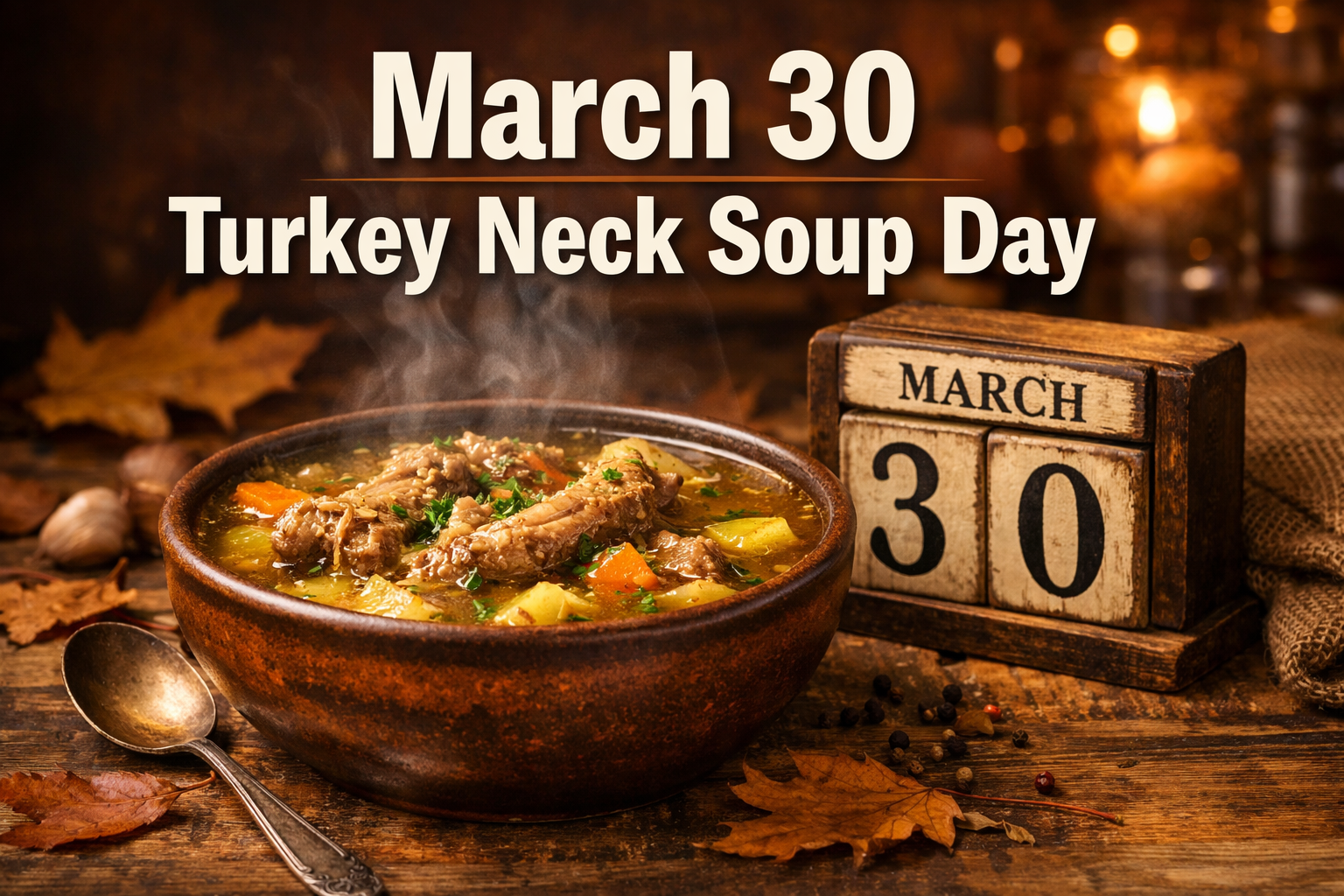
Every year on March 30, food lovers across the country celebrate one of the most uniquely named food holidays on the calendar — March 30 Turkey Neck Soup Day. It’s a day dedicated to honoring a humble, often overlooked cut of poultry that has quietly nourished families for generations. Whether you’re a seasoned home cook or just discovering the magic of slow-simmered broths, this quirky food holiday is a perfect excuse to get a pot bubbling on the stove. 🍲
Key Takeaways
- 📅 March 30 Turkey Neck Soup Day is an annual food holiday celebrated every March 30.
- 🦃 Turkey necks are a budget-friendly, collagen-rich ingredient that creates deeply flavorful soups and broths.
- 🏡 The holiday celebrates nose-to-tail cooking and the tradition of using every part of the bird.
- 🥣 Turkey neck soup has deep roots in Southern, Eastern European, and Indigenous cuisines across North America.
- 👨🍳 Celebrating is simple — all it takes is a pot, some vegetables, and a few turkey necks.
What Is March 30 Turkey Neck Soup Day?
March 30 Turkey Neck Soup Day is an unofficial food holiday that shines a spotlight on turkey neck soup — a dish made by slow-cooking turkey necks with vegetables, herbs, and water or stock to create a rich, nourishing broth. The holiday falls at the tail end of March, a time when the lingering chill of winter still makes a warm bowl of soup deeply satisfying.
Like many food holidays in the United States, the exact origin of this celebration is not tied to a single organization or historical event. Instead, it grew organically through food culture websites, social media communities, and culinary enthusiasts who wanted to celebrate underappreciated ingredients and traditional cooking methods.
“The best soups are born from the parts most people throw away.” — A common saying among nose-to-tail cooking advocates.
The holiday also fits into a broader cultural movement toward reducing food waste and honoring traditional, whole-animal cooking practices that have sustained communities for centuries.
The History and Cultural Roots of Turkey Neck Soup
Turkey neck soup is far from a modern invention. Its history stretches back hundreds of years across multiple cultures and continents.
Indigenous and Early American Traditions
Long before turkey necks appeared in grocery store bins, Indigenous peoples of North America were cooking wild turkey in its entirety. Necks, bones, and organs were all used to create hearty stews and broths that provided essential nutrition, especially during colder months.
Early European settlers quickly adopted similar practices. Wasting any part of a harvested animal was simply not an option for most families, and turkey necks — rich in gelatin and flavor — were a prized addition to the soup pot.
Southern American Cuisine
In the American South, turkey neck soup became a staple of soul food cooking. Simmered low and slow with collard greens, black-eyed peas, or root vegetables, turkey necks added a smoky, savory depth that no other ingredient could replicate. This tradition remains strong today, with turkey necks appearing on menus from Louisiana to the Carolinas.
Eastern European Influence
Eastern European immigrants brought their own versions of poultry neck soup to the United States. In countries like Poland, Ukraine, and Hungary, cooking with poultry necks and giblets was standard practice. These traditions blended with American cooking styles to further cement turkey neck soup as a cross-cultural comfort food.
Why Turkey Necks? The Nutritional and Culinary Case
Turkey necks may not look glamorous, but they punch well above their weight in the kitchen. Here’s why chefs and home cooks alike love them:
| Quality | Benefit |
|---|---|
| High collagen content | Creates a thick, gelatinous broth that supports joint health |
| Rich flavor | Bones and connective tissue add deep umami taste |
| Affordable price | One of the least expensive cuts of poultry available |
| Versatile | Works in soups, stews, braised dishes, and more |
| Nutrient-dense | Provides protein, minerals like phosphorus and zinc |
🦴 Collagen is the real star here. When turkey necks simmer for several hours, the collagen breaks down into gelatin, which gives homemade turkey neck soup its signature silky texture. This is something store-bought broth simply cannot replicate.
How to Celebrate March 30 Turkey Neck Soup Day
Celebrating March 30 Turkey Neck Soup Day doesn’t require any special equipment or culinary training. Here are some of the best ways to join in:
🥣 Make a Classic Turkey Neck Soup
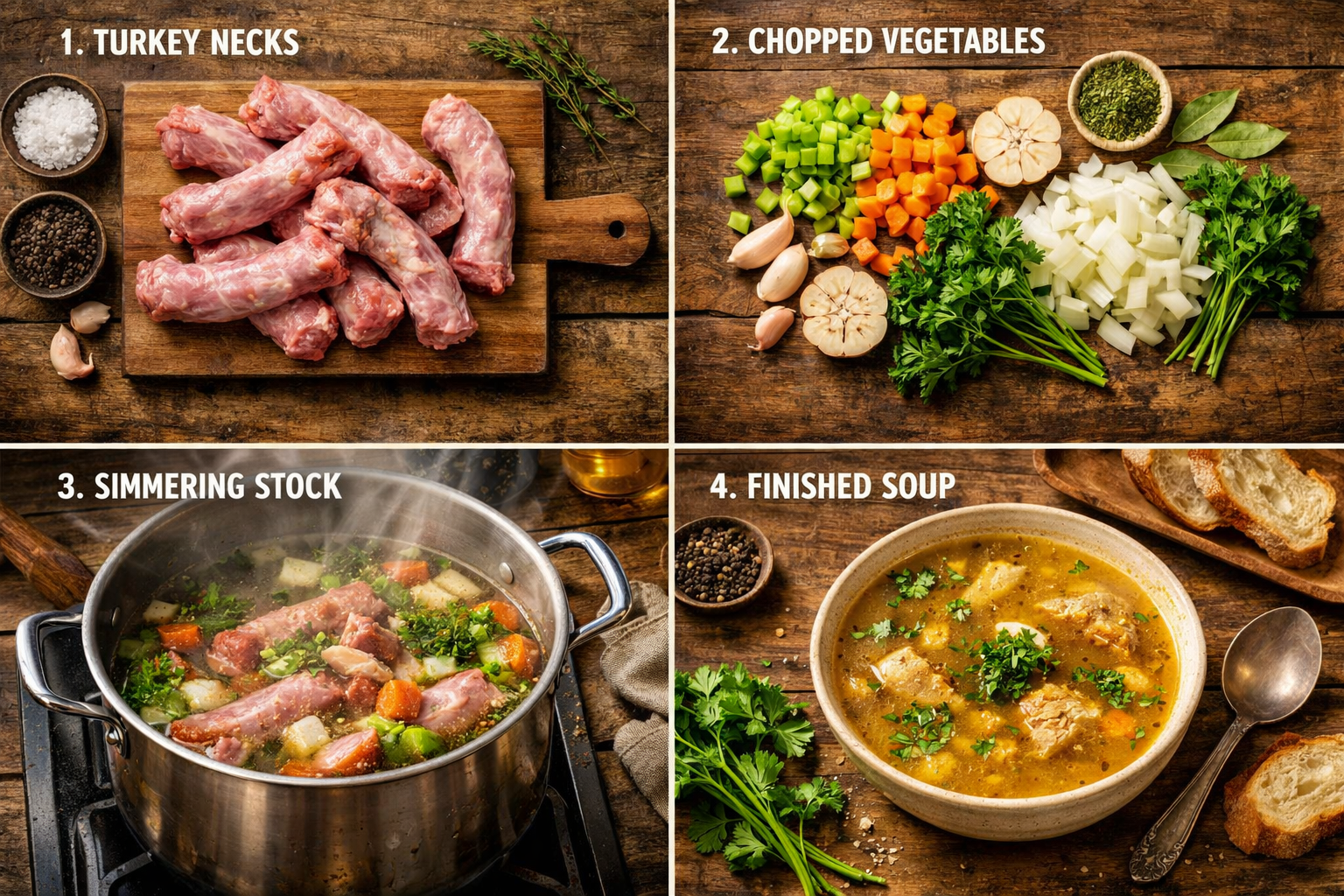
The most obvious way to celebrate is to make the soup itself. A basic recipe includes:
- 2–3 turkey necks (rinsed and patted dry)
- 3 carrots, chopped
- 3 celery stalks, chopped
- 1 large onion, quartered
- 4 garlic cloves, smashed
- Fresh thyme, bay leaves, parsley
- Salt and black pepper to taste
- 8–10 cups of water or low-sodium chicken stock
Basic steps:
- Brown the turkey necks in a large pot with a little oil.
- Add vegetables, herbs, and liquid.
- Bring to a boil, then reduce to a low simmer.
- Cook for 2.5 to 3 hours until the meat is tender and the broth is rich.
- Remove necks, shred the meat, discard bones, and return meat to the pot.
- Season and serve hot.
🌐 Share It on Social Media
Post your soup photo with the hashtag #TurkeyNeckSoupDay to connect with other food lovers celebrating the holiday. Food communities on Instagram, TikTok, and Pinterest are especially active around food holidays.
📚 Explore Regional Variations
Use the day as an opportunity to try a regional twist:
- Southern style — Add collard greens and smoked paprika
- Caribbean style — Include scotch bonnet pepper, allspice, and thyme
- Eastern European style — Add root vegetables like parsnips and celeriac
- Asian-inspired — Use ginger, star anise, and soy sauce for a pho-like broth
🛒 Support Local Butchers
Many local butcher shops carry turkey necks at low prices. Buying from a local butcher supports small businesses and often means fresher, higher-quality meat.
March 30 Turkey Neck Soup Day and the Food Waste Movement
One of the most meaningful aspects of March 30 Turkey Neck Soup Day is its alignment with the growing food waste reduction movement. According to the USDA, the United States wastes roughly 30 to 40 percent of its food supply each year. Celebrating cuts like turkey necks encourages a more sustainable approach to eating.
Nose-to-tail cooking — the practice of using every edible part of an animal — is not just a trend. It’s a return to the wisdom of previous generations who understood that resourcefulness in the kitchen is both economical and ethical.
🌱 Choosing to cook with turkey necks is a small but meaningful step toward a more sustainable kitchen.
By celebrating this holiday in 2026, home cooks are participating in a larger cultural conversation about food equity, sustainability, and culinary heritage.
Fun Facts About Turkey Neck Soup Day 🎉
- Turkey necks are sometimes called “the secret weapon” of professional stock makers.
- A well-made turkey neck broth can be refrigerated for up to 5 days or frozen for 3 months.
- Turkey necks are also popular in pet food — many dog owners use them as a natural chew treat.
- The gelatin produced by simmering turkey necks can help homemade broth gel when cooled, a sign of a high-quality stock.
- In some Southern households, turkey neck soup is considered a cold and flu remedy, similar to chicken soup.
Conclusion: Celebrate the Bowl That Brings People Together
March 30 Turkey Neck Soup Day is more than just a quirky entry on the food holiday calendar. It’s a celebration of resourcefulness, cultural heritage, and the simple joy of a well-made bowl of soup. From Indigenous traditions to Southern soul food to Eastern European kitchens, turkey neck soup has fed and comforted people across generations and geographies.
Actionable Next Steps for 2026:
- ✅ Mark March 30 on your calendar as Turkey Neck Soup Day.
- 🛒 Visit a local butcher or grocery store to pick up turkey necks ahead of time.
- 🍲 Try a new regional recipe to expand your culinary horizons.
- 📸 Share your creation on social media with #TurkeyNeckSoupDay.
- 🌱 Reflect on food waste and explore other nose-to-tail cooking techniques year-round.
Whether cooking for one or feeding a whole family, this humble holiday is a reminder that the best meals often come from the most unexpected ingredients. Grab a pot, find some turkey necks, and let the simmering begin. 🦃🥣
References
- United States Department of Agriculture (USDA). (2020). Food Waste FAQs. Retrieved from https://www.usda.gov/foodwaste/faqs
- National Turkey Federation. (2022). Turkey Industry Facts. Retrieved from https://www.eatturkey.org
- Ruhlman, M. (2009). Ratio: The Simple Codes Behind the Craft of Everyday Cooking. Scribner.
- Pollan, M. (2006). The Omnivore’s Dilemma: A Natural History of Four Meals. Penguin Press.
- Southern Foodways Alliance. (2021). Soul Food and the American Table. University of Mississippi.