
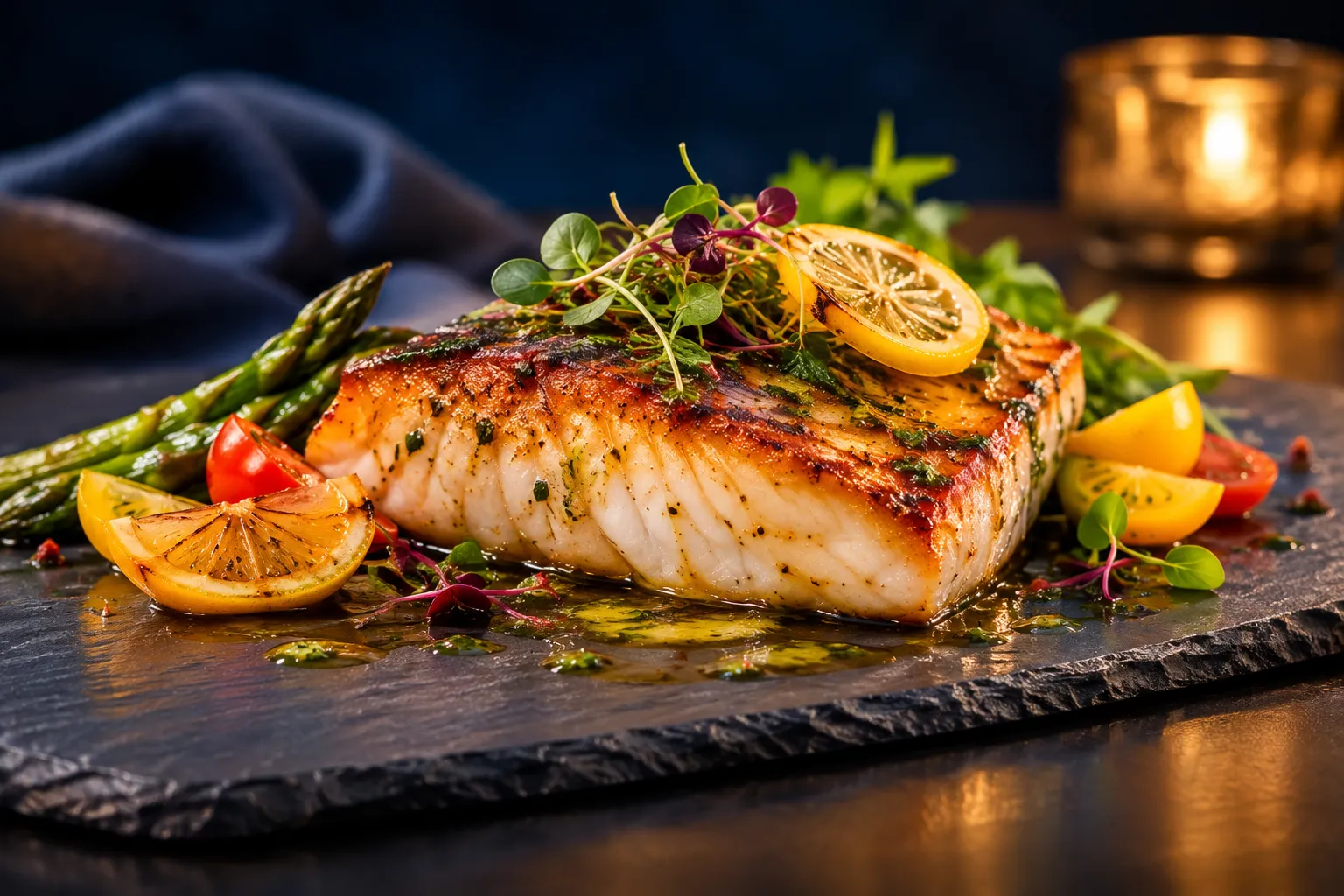
A Prized Ocean Fish Prepared with Refined Simplicity
Few saltwater game fish command the respect among professional chefs that wahoo does. Known scientifically as Acanthocybium solandri, wahoo is widely regarded as one of the fastest fish in the ocean, reaching speeds of up to 60 miles per hour. Its lean, white, mildly flavored flesh places it among the most versatile and sought-after seafood options available to the discerning home cook.
This article provides a complete guide to preparing pan-seared wahoo fillets finished with a bright citrus herb butter sauce, a preparation that honors the fish’s natural qualities while delivering an elevated dining experience accessible from any well-equipped home kitchen.
Key Takeaways
- Wahoo is a lean, mild-flavored saltwater fish that responds exceptionally well to high-heat searing methods.
- Proper patting dry and resting time are critical to achieving a golden, restaurant-quality crust.
- Citrus and fresh herbs are the ideal flavor partners for wahoo’s delicate flesh.
- Overcooking is the most common mistake, an internal temperature of 130-135°F preserves optimal moisture.
- Wahoo is a high-protein, low-fat seafood option well suited to health-conscious menus.
Recipe Subtitle
A restaurant-caliber seared wahoo fillet, finished with a velvety citrus herb butter sauce for a sophisticated yet approachable seafood entrée.
Recipe Description
Pan-seared wahoo delivers a golden, caramelized exterior paired with tender, flaky interior flesh that absorbs the brightness of fresh lemon, orange zest, and aromatic herbs with remarkable elegance. The preparation requires minimal ingredients but demands precise technique, particularly in managing pan temperature and resting time. This recipe is ideally suited for a refined weeknight dinner or an impressive centerpiece for a dinner party menu.
Recipe Keywords
Wahoo fish recipe, pan-seared wahoo, citrus butter wahoo, wahoo fillet preparation, seafood entrée, wahoo cooking techniques, healthy fish dinner
Difficulty Level
Intermediate
Preparation Time
15 minutes
Cooking Time
12 minutes
Rest Time
3 minutes
Cooking Temperature (Fahrenheit)
425°F (cast iron or oven-finishing temperature)
Calories
Approximately 310 calories per serving
Best Season
Spring through Summer, peak availability aligns with warmer months when wahoo is most abundant in tropical and subtropical Atlantic and Pacific waters.
Cooking Methods
- High-heat pan searing
- Oven finishing
- Basting (butter self-basting technique)
- Sauce reduction
Cuisines Suggestions
- Caribbean, wahoo is a staple in island seafood traditions
- Mediterranean, herb-forward preparations echo coastal Mediterranean profiles
- Pacific Rim, soy, ginger, and citrus variations adapt naturally
Recipe Badges
- Gluten-Free
- High-Protein
- Dairy-Optional
Recipe Keys
- Dry the fillet thoroughly before searing, surface moisture is the enemy of a proper crust.
- Do not move the fish during the first two minutes of contact with the pan, patience creates the sear.
- Rest before plating, three minutes allows internal juices to redistribute for maximum moisture retention.
Ingredients
| Quantity | Ingredient |
|---|---|
| 4 pieces (6 oz each) | Fresh wahoo fillets, skin-on |
| 2 tablespoons | Neutral high-smoke-point oil (avocado or grapeseed) |
| 3 tablespoons | Unsalted butter |
| 3 cloves | Garlic, thinly sliced |
| 1 | Lemon, juiced and zested |
| 1/2 | Orange, juiced |
| 2 tablespoons | Fresh flat-leaf parsley, finely chopped |
| 1 tablespoon | Fresh thyme leaves |
| 1 teaspoon | Kosher salt |
| 1/2 teaspoon | Freshly cracked black pepper |
| 1/4 teaspoon | Smoked paprika |
| 1 tablespoon | Capers, drained (optional) |
| 1/2 teaspoon | Red pepper flakes (optional) |
Instructions
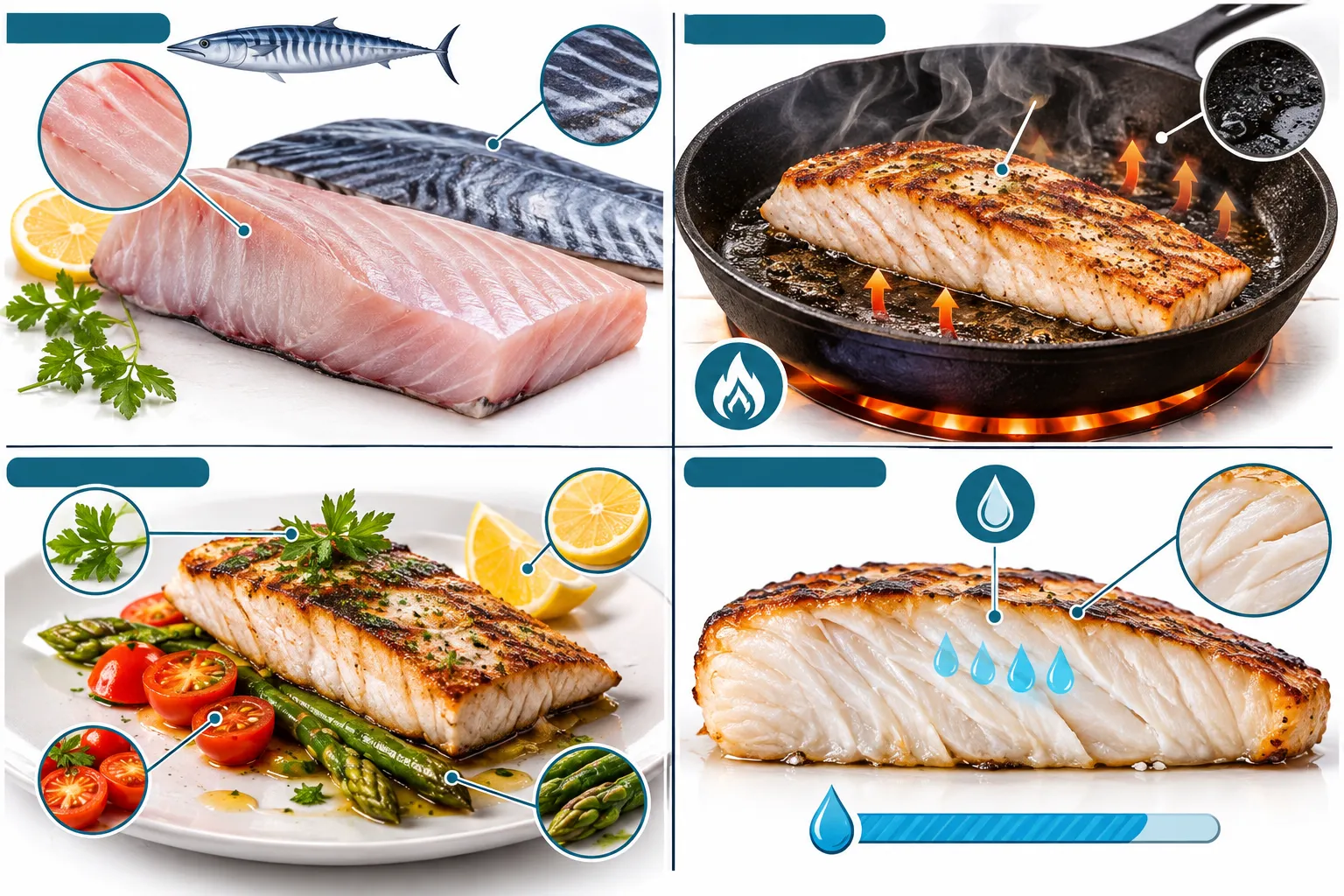
Step 1, Prepare the fillets: Remove wahoo fillets from refrigeration 20 minutes before cooking to allow them to reach near room temperature. This promotes even cooking throughout the flesh.
Step 2, Dry and season: Using paper towels, pat each fillet completely dry on all surfaces. Season generously with kosher salt, black pepper, and smoked paprika on both sides.
Step 3, Preheat the pan: Place a heavy-bottomed cast iron skillet over high heat for 2-3 minutes until the surface begins to smoke lightly. Add the neutral oil and swirl to coat the entire pan surface.
Step 4, Sear skin-side down: Lay each fillet skin-side down into the hot pan, pressing gently for the first 15 seconds to ensure full skin contact. Reduce heat to medium-high. Do not disturb the fish for 4 minutes.
Step 5, Check the crust: Lift one corner gently. The skin should release cleanly with a deep golden crust. If resistance remains, allow 60 additional seconds before checking again.
Step 6, Flip the fillets: Turn each fillet carefully using a thin fish spatula. Add butter and garlic slices to the pan immediately after flipping.
Step 7, Baste continuously: Tilt the pan and use a large spoon to baste the flesh side of each fillet repeatedly with the foaming butter and garlic mixture. Cook flesh side for 2-3 minutes depending on thickness.
Step 8, Check internal temperature: The target internal temperature is 130-135°F for optimal moisture. Remove from heat at this point, as carryover cooking will bring the fillet to a final 140°F.
Step 9, Build the citrus sauce: In the same pan over medium heat, add lemon juice, orange juice, lemon zest, and capers if using. Swirl to deglaze and incorporate the fond. Reduce for 90 seconds.
Step 10, Finish the sauce: Remove from heat. Whisk in one tablespoon of cold butter for gloss. Add fresh parsley, thyme, and red pepper flakes. Adjust salt as needed.
Step 11, Rest the fish: Transfer fillets to a warm plate. Tent loosely with foil and rest for 3 minutes before plating.
Step 12, Plate and serve: Spoon citrus herb butter sauce over each fillet. Garnish with additional fresh herbs and a wedge of lemon. Serve immediately.
Equipment
- 12-inch cast iron skillet
- Fish spatula (thin, offset blade)
- Instant-read meat thermometer
- Heavy-duty tongs
- Small saucepan (optional, for separate sauce)
Nutrition
| Nutrient | Per Serving |
|---|---|
| Calories | 310 kcal |
| Protein | 38 g |
| Total Fat | 14 g |
| Saturated Fat | 5 g |
| Carbohydrates | 4 g |
| Sodium | 520 mg |
Notes
Sourcing matters: Fresh wahoo is significantly superior to frozen for this preparation. When selecting fillets, look for translucent, firm flesh with no discoloration. A mild ocean scent, not a strong fishy odor, indicates freshness.
Thickness calibration: Wahoo fillets vary considerably in thickness. For fillets exceeding one inch, transfer the skillet to a 425°F oven after searing both sides and finish for 3-4 minutes rather than relying solely on stovetop heat.
Dairy-free adaptation: The butter in both the basting step and the sauce can be substituted with a high-quality plant-based butter or a generous pour of extra-virgin olive oil without significantly compromising the dish’s flavor architecture.
FAQs
Q: Can wahoo be substituted with another fish if unavailable? Mahi-mahi and swordfish are the closest substitutes in terms of flesh density and mild flavor profile. Both respond similarly to high-heat searing and will perform well with this citrus herb sauce preparation. Adjust cooking time for swordfish, as its steaks tend to be thicker.
Q: How should leftover wahoo be stored and reheated? Store cooked wahoo in an airtight container in the refrigerator for no longer than two days. For reheating, a brief warm-through in a covered skillet over low heat with a splash of water or broth prevents the flesh from drying out. Microwaving is not recommended, as it accelerates moisture loss and alters the texture significantly.
Conclusion
Wahoo is one of the ocean’s most underappreciated culinary treasures, a fish that rewards proper technique with results that rival any premium seafood offering. The pan-searing method outlined here creates a foundation that home cooks can master with practice, producing consistent, professional-quality results at every preparation.
Actionable next steps:
- Source fresh wahoo from a reputable fishmonger or specialty seafood market, requesting center-cut fillets for the most even cooking surface.
- Invest in a reliable instant-read thermometer, it is the single most important tool for achieving a perfectly cooked fish fillet every time.
- Build confidence with this base recipe before experimenting with Pacific Rim variations featuring ginger, sesame oil, and miso-citrus glazes.
- Pair the finished dish with roasted asparagus, herb-flecked jasmine rice, or a crisp fennel and citrus salad to complete a cohesive, well-balanced plate.
Mastery of wahoo begins with respecting its qualities, lean flesh, delicate flavor, and a firm texture that demands attentive heat management. Apply these principles consistently, and this recipe will become a signature in any home cook’s repertoire.