
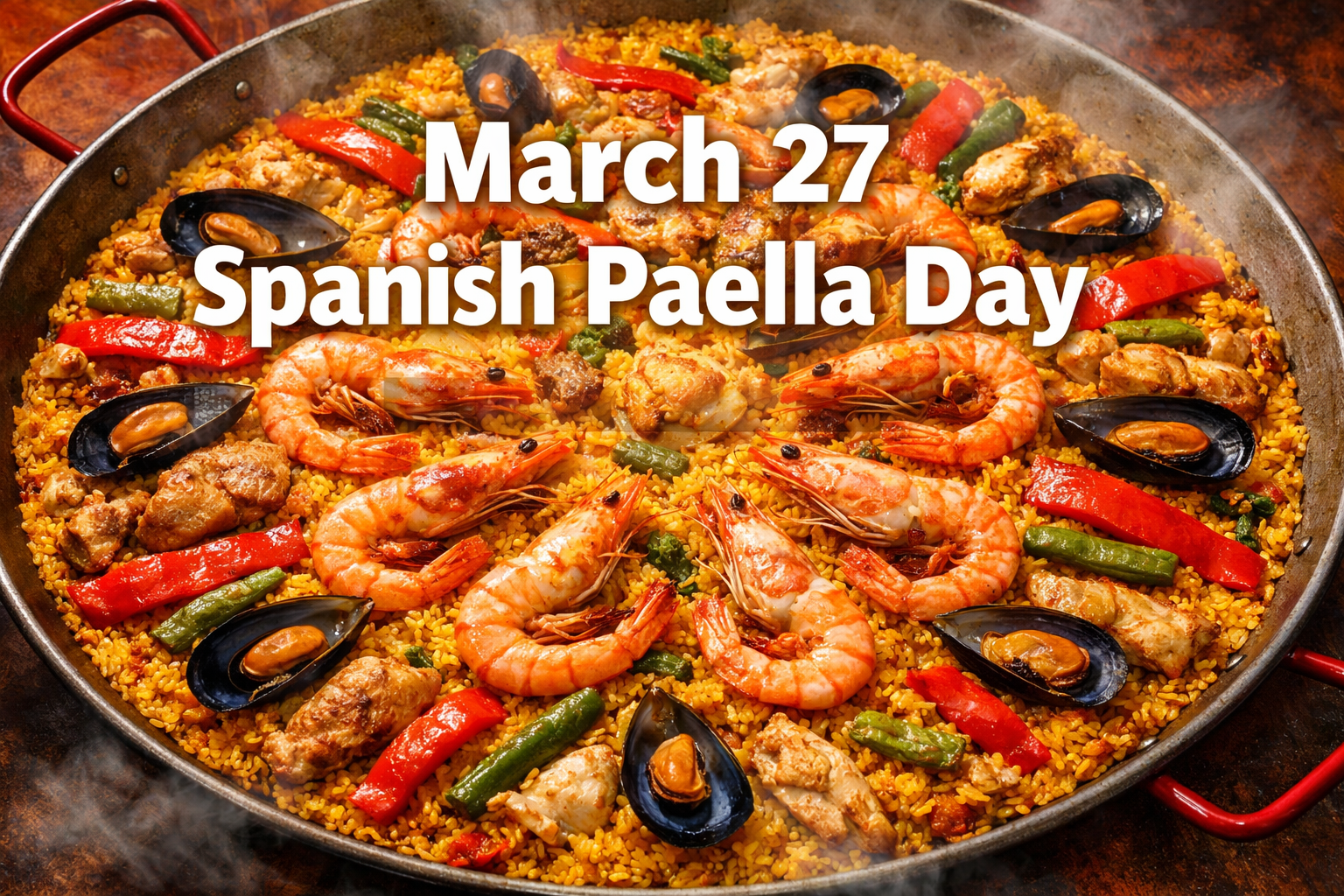
Every year on March 27, food lovers around the world have the perfect excuse to fire up a wide, shallow pan and cook one of the most iconic dishes in culinary history. March 27 Spanish Paella Day is a global celebration of Spain’s most beloved rice dish — a vibrant, saffron-scented masterpiece that has been bringing people together for centuries. Whether you’re a seasoned home cook or simply someone who loves a great food holiday, this day offers a rich blend of culture, history, and flavor worth savoring.
Key Takeaways
- 🗓️ March 27 Spanish Paella Day is celebrated annually on March 27 worldwide.
- 🍚 Paella originated in the Valencia region of Spain and dates back to the mid-19th century.
- 🌍 The holiday promotes Spanish culinary heritage and encourages people globally to cook or enjoy paella.
- 🔥 Traditional paella is cooked over an open wood fire in a wide, flat pan called a paellera.
- 👨🍳 There are dozens of paella varieties, but Valencian, seafood, and mixed paella are the most popular.
The Origins of March 27 Spanish Paella Day
Where Did Paella Come From?
Long before March 27 Spanish Paella Day became a calendar fixture, paella was already a legend. The dish traces its roots to the Valencia region on Spain’s eastern coast. Farmers and laborers in the 19th century would cook rice over open fires using whatever ingredients were available — rabbit, chicken, snails, and fresh vegetables from the fields.
The word paella itself comes from the Old French word paelle, meaning “pan.” The dish is named after the wide, flat cooking vessel used to prepare it — not after any single ingredient.
“Paella is not just a dish — it is a ritual, a reason to gather, and a reflection of Spanish identity.”
By the early 20th century, paella had spread beyond Valencia and captured the hearts (and stomachs) of the entire Iberian Peninsula. Today, it is recognized globally as Spain’s national dish.
How Did the Food Holiday Begin?
March 27 Spanish Paella Day was established to honor this cultural icon and encourage people everywhere to experience authentic Spanish cooking. The date was chosen to give the holiday a dedicated moment in the culinary calendar, separate from other food celebrations. Food bloggers, Spanish cultural organizations, and culinary influencers helped amplify the holiday across social media, turning it into a truly global event by the 2010s.
In 2026, the celebration continues to grow, with restaurants, cooking schools, and home cooks participating across more than 50 countries.
Why March 27 Spanish Paella Day Matters
A Celebration of Culture and Community
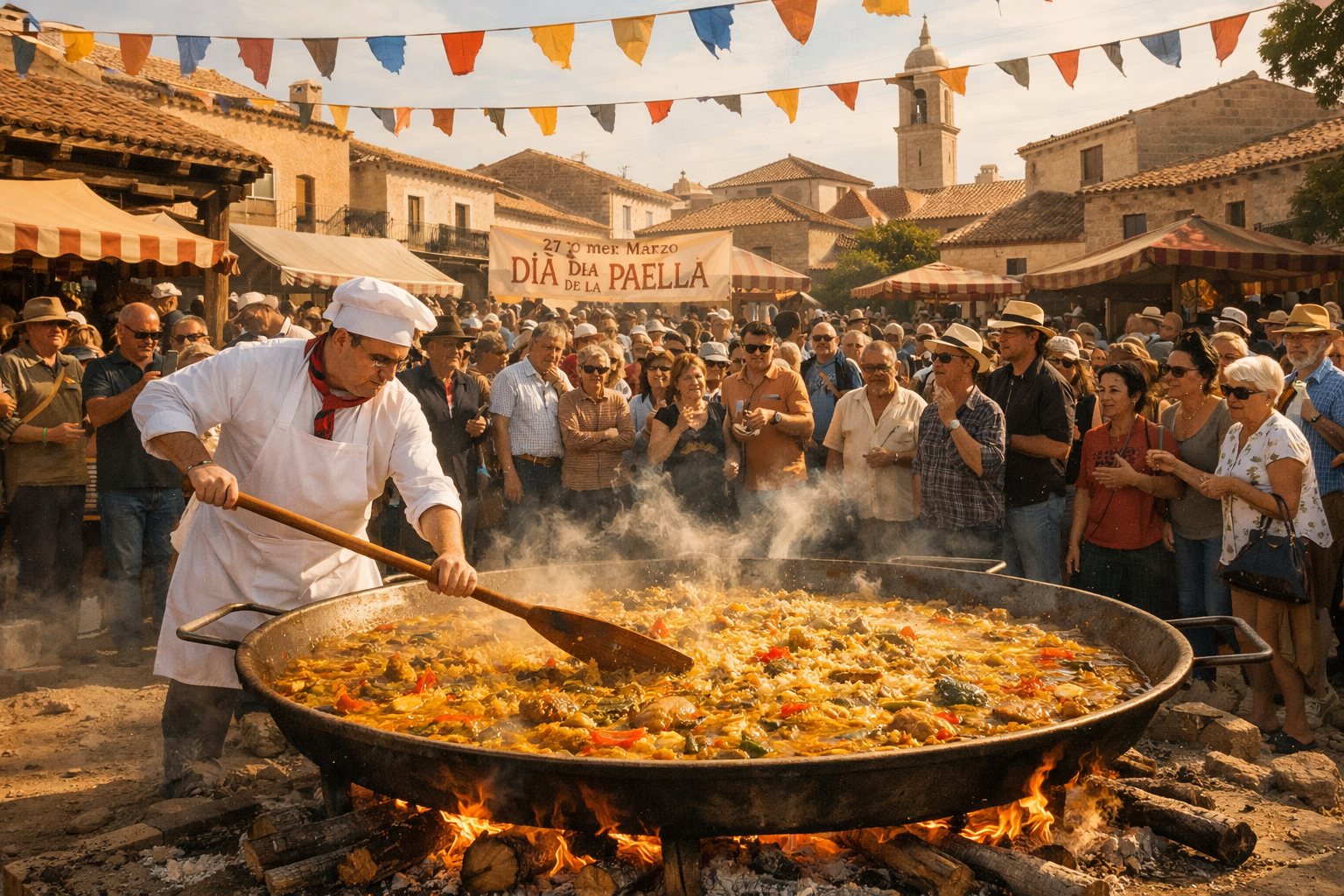
Paella has always been more than food. In Valencia, making paella is a Sunday family tradition — a communal act where multiple generations gather outdoors, take turns stirring the pan, and share a meal that takes hours to prepare. March 27 Spanish Paella Day honors this spirit of togetherness.
The holiday also shines a spotlight on:
- Spanish culinary heritage and its global influence
- The importance of locally sourced, fresh ingredients
- Traditional cooking techniques passed down through generations
- The joy of slow cooking in a fast-paced world
Economic and Tourism Impact
Spain’s food culture is a major tourism driver. According to the Spanish Tourism Institute (Turespaña), gastronomy is one of the top three reasons international visitors choose Spain as a destination. Celebrating March 27 Spanish Paella Day boosts awareness of Valencian cuisine and encourages culinary tourism to regions like Valencia, Alicante, and Murcia.
Restaurants worldwide also report a measurable spike in paella orders around March 27, making it a commercially significant date for the food industry.
The Many Faces of Paella: A Guide to Popular Varieties
Not all paellas are created equal. Here is a quick breakdown of the most celebrated types:
| Paella Type | Key Ingredients | Region of Origin |
|---|---|---|
| Valencian (Paella Valenciana) | Chicken, rabbit, green beans, snails, saffron | Valencia |
| Seafood (Paella de Mariscos) | Shrimp, mussels, clams, squid, saffron | Coastal Spain |
| Mixed (Paella Mixta) | Chicken, seafood, vegetables | Nationwide |
| Vegetarian (Paella Verduras) | Artichokes, peppers, tomatoes, beans | Various |
| Black (Arroz Negro) | Squid ink, squid, garlic, aioli | Valencia/Catalonia |
The Secret to Authentic Paella
Chefs and home cooks alike agree on a few non-negotiable rules for authentic paella:
- Use short-grain Spanish rice — specifically Bomba or Senia varieties, which absorb liquid without becoming mushy.
- Never stir the rice once the stock is added — this allows the prized socarrat (crispy bottom layer) to form.
- Saffron is essential — it provides the signature golden color and earthy aroma.
- Cook over even heat — traditionally an open wood fire, though gas burners work well at home.
- Use a proper paellera — the wide, shallow pan ensures even cooking and proper evaporation.
“The socarrat — that golden, caramelized crust at the bottom of the pan — is the mark of a truly great paella.”
How to Celebrate March 27 Spanish Paella Day
At Home 🏠
Celebrating doesn’t require a trip to Spain. Here are simple ways to participate:
- Cook paella from scratch using a traditional Valencian recipe
- Host a paella party and invite friends and family to help cook
- Try a new paella variety — if you always make seafood, experiment with Valencian or black rice
- Watch a cooking tutorial from a Valencian chef on YouTube or a culinary streaming platform
- Share your creation on social media using hashtags like #PaellaDay and #March27PaellaDay
At a Restaurant 🍽️
Many Spanish restaurants and tapas bars worldwide offer special March 27 menus featuring paella as the centerpiece. In 2026, check local listings or restaurant apps for paella day specials near you.
In the Classroom or Community 🎓
- Schools can use March 27 Spanish Paella Day as a springboard for lessons on Spanish culture, geography, and history.
- Community centers can host paella cook-offs to bring neighborhoods together.
- Cultural organizations can screen documentaries about Valencian food traditions.
Paella and Its Place in World Food Culture
Paella’s influence extends far beyond Spain’s borders. Variations of the dish appear across Latin America, the Philippines (where Spanish colonial history left a culinary mark), and North Africa. In the United States, paella has become a staple at Spanish-themed restaurants and is increasingly popular at outdoor events and catering.
UNESCO recognized the Mediterranean diet — of which paella is a cornerstone — as an Intangible Cultural Heritage of Humanity in 2013. This recognition underscores the deep cultural significance of dishes like paella and the traditions surrounding them.
Fun Facts About Paella 🎉
- The world’s largest paella was cooked in Valencia in 1992, feeding over 100,000 people.
- Spain produces approximately 900,000 tons of rice per year, much of it in the Valencia region.
- A traditional Valencian paella contains no seafood — adding shrimp or mussels is considered a modern adaptation.
- The ideal paella-to-person ratio is roughly 100 grams of rice per person.
Conclusion: Make March 27 Spanish Paella Day Count
March 27 Spanish Paella Day is more than a food holiday — it is an invitation to slow down, gather loved ones, and connect with a culinary tradition that has endured for over 150 years. Whether cooking at home, dining out, or simply learning more about Spanish culture, this annual celebration offers something meaningful for everyone.
Actionable Next Steps ✅
- Mark your calendar for March 27 and plan your paella celebration in advance.
- Source quality ingredients — look for Bomba rice, genuine saffron, and fresh proteins at specialty stores.
- Learn one new paella technique this year, such as achieving the perfect socarrat.
- Share the tradition — invite someone who has never tried paella to cook or eat with you.
- Follow Spanish culinary accounts on social media to stay inspired year-round.
Paella is a dish best enjoyed with others. Let March 27 Spanish Paella Day be the reason to bring your people together around a pan full of something extraordinary. 🥘
References
- Turespaña – Spanish Tourism Institute. (2022). Gastronomy and Tourism in Spain. Retrieved from turismo.gob.es
- UNESCO. (2013). Mediterranean Diet inscribed on the Representative List of Intangible Cultural Heritage. Retrieved from ich.unesco.org
- Davidson, A. (1999). The Oxford Companion to Food. Oxford University Press.
- Casas, P. (1999). The Foods and Wines of Spain. Alfred A. Knopf.
- Llacer, R. (2018). Paella: The Original Recipe. Valencian Gastronomy Institute.