
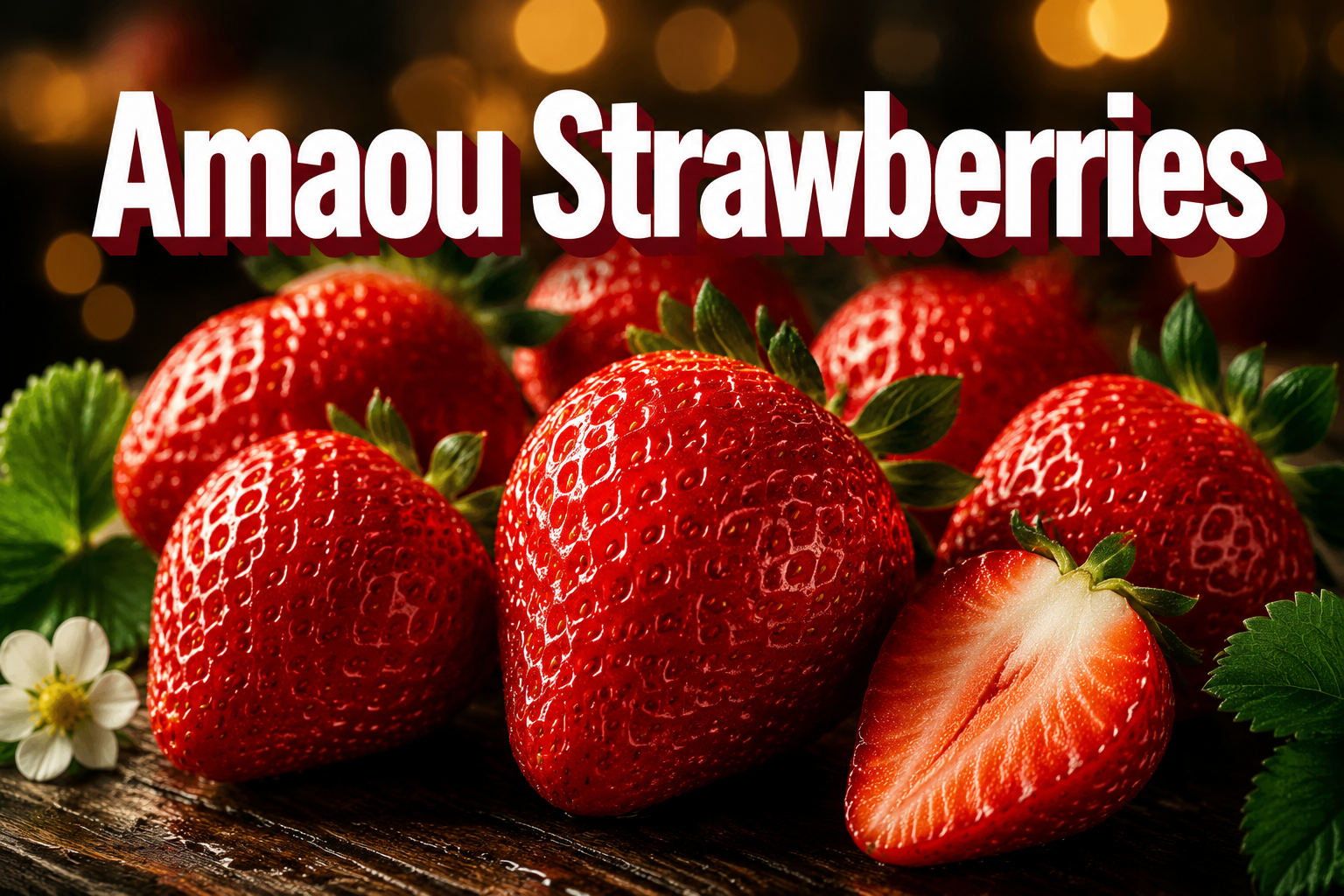
Quick Answer: Amaou strawberries are a premium Japanese variety grown exclusively in Fukuoka Prefecture, known for their exceptional size (typically over 20 grams), deep red color, and a balanced sweet-tart flavor. The name itself is an acronym of four Japanese words meaning sweet, round, large, and delicious. Available from December through May, they are among the most expensive strawberries in the world, with gift boxes selling for over 10,000 yen (roughly $70 USD) at Tokyo department stores. [6]
Key Takeaways 🍓
- Amaou stands for ama (sweet), maru (round), ōkii (large), and umai (delicious) in Japanese [5]
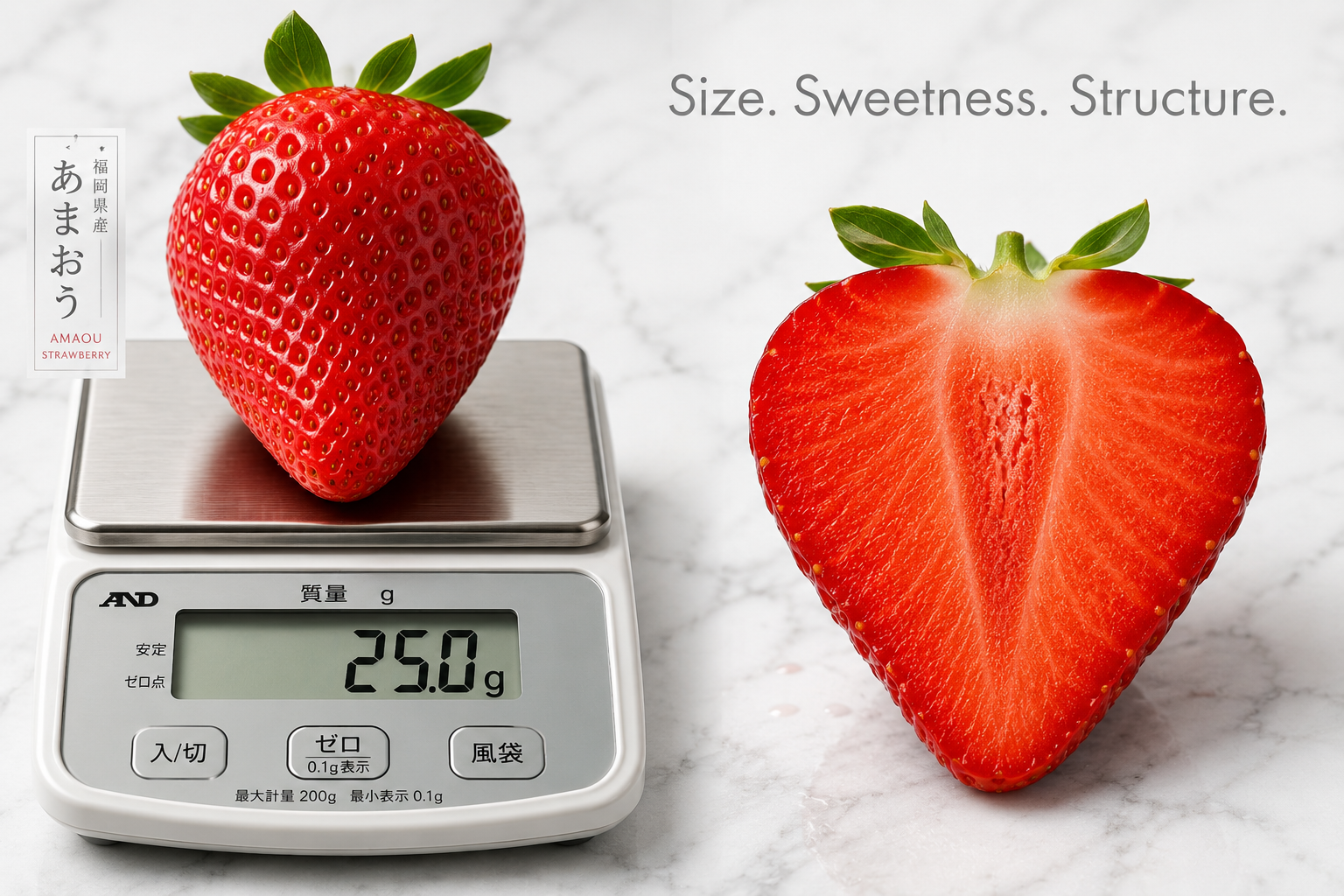
- Each berry typically weighs over 20 grams with a plump, rounded shape and vibrant red flesh [6]
- The variety is grown only in Fukuoka Prefecture, Japan, and the season runs December through May [5]
- Plant breeder’s rights expired in January 2025; trademark protection is now the primary legal shield [2]
- Producers must sign a written pledge to cultivate exclusively in Fukuoka to use the Amaou trademark [2]
- Seedling distribution outside the prefecture is a growing concern following the rights expiration [1]
- Premium gift boxes sell for more than 10,000 yen at Tokyo department stores, reflecting strong luxury positioning [3]
- Fukuoka is actively filing international trademarks and monitoring online platforms for unauthorized listings [2]
What Are Amaou Strawberries?
Amaou strawberries are a cultivated variety (cultivar) of strawberry developed and registered in Fukuoka Prefecture, Japan. They are widely regarded as the premium benchmark for Japanese strawberries, earning the informal title “king of strawberries” among domestic consumers and food enthusiasts. [6]
The variety was developed by Fukuoka’s prefectural agricultural research center and officially registered in 2005. What sets Amaou apart from standard commercial strawberries is a combination of physical scale, flavor depth, and visual appeal that makes them especially desirable for gifting and high-end culinary use.
Key physical traits:
- Weight: typically over 20 grams per berry
- Shape: plump and rounded, not elongated
- Color: deep, uniform red from skin to core
- Flesh: firm, dense, and juicy with minimal hollow center
- Flavor: a distinctive balance of sweetness and acidity [6]
For context on how strawberries fit into broader food celebrations, see the February 27 Strawberry Day guide for ideas on honoring premium fruit varieties.
What Does “Amaou” Mean? Understanding the Name
The name “Amaou” is not just a brand label — it’s a description of the berry itself. Each syllable comes from a Japanese word that captures one of the variety’s defining qualities. [5]
| Syllable | Japanese Word | Meaning |
|---|---|---|
| Ama | 甘い (amai) | Sweet |
| Ma | 丸い (marui) | Round |
| O | 大きい (ōkii) | Large |
| U | 旨い (umai) | Delicious |
This naming approach is common in Japanese agricultural branding, where variety names often double as quality promises. Knowing the etymology helps buyers immediately understand what they’re paying for, and it makes the brand highly memorable in both domestic and international markets.
Where and When Are Amaou Strawberries Grown?
Amaou strawberries are grown exclusively in Fukuoka Prefecture, located on the northern coast of Kyushu island in southwestern Japan. Fukuoka is one of Japan’s leading strawberry-producing regions, and Amaou serves as the prefecture’s signature agricultural export. [6]
Production season: December through May — a six-month window that covers the peak winter gift-giving season in Japan, including the New Year and Valentine’s Day periods when premium fruit demand spikes. [5]
Why only Fukuoka?
- The variety was developed using Fukuoka’s specific climate and soil conditions
- Legal protections (now trademark-based) restrict official cultivation to the prefecture
- Local JA (Japan Agricultural Cooperatives) control seedling supply to registered farmers only [2]
Strawberry picking (ichigo-gari) is a popular tourist activity in Fukuoka during the winter-spring season, with farms attracting visitors from across Japan and internationally. [6]
How Are Amaou Strawberries Protected After 2025?
This is the most significant recent development in the Amaou story. The variety’s 20-year plant breeder’s rights protection expired in January 2025, removing the legal barrier that had previously prevented anyone outside Fukuoka from cultivating the variety. [2]
Since that expiration, Zen-Noh (the National Federation of Agricultural Cooperative Associations) has shifted to trademark law as the primary protection mechanism. Here’s how the new system works:
- Trademark registration: The “Amaou” name is a registered trademark, meaning unauthorized commercial use of the name is still illegal
- Producer pledges: Farmers must sign written agreements committing to cultivate only within Fukuoka Prefecture as a condition of accessing official seedlings and using the trademark [2]
- Restricted seedling supply: The Fukuoka prefectural government and JA supply seedlings only to registered local farmers, with explicit warnings against exporting plants [1]
- International filings: Amaou trademarks are being filed in overseas markets, and online platforms are actively monitored for unauthorized listings [2]
💡 Key distinction: There is currently no legal restriction on transporting Amaou seedlings outside Fukuoka post-2025. The protection relies on voluntary compliance with trademark terms and producer pledges, not criminal enforcement. [1]
The seedling concern: Fukuoka Prefecture is investigating reports that Amaou seedlings appeared for sale on a Kansai-based company’s website, suggesting the honor system has already been tested. [1]
Why Are Amaou Strawberries So Expensive?
At a promotional event in Tokyo’s Ginza district in January 2025, approximately 200 boxes of Amaou strawberries sold at department stores for more than 10,000 yen (roughly $70 USD) each. [3] Several factors drive this premium pricing.
Supply constraints:
- Production is geographically locked to one prefecture
- Seedling access is tightly controlled
- The six-month season creates scarcity outside that window
Quality standards:
- Only berries meeting strict size, color, and blemish-free criteria carry the Amaou trademark
- Substandard fruit is sold under different labels or used for processing
Cultural demand:
- Premium fruit is a deeply embedded gift-giving tradition in Japan
- Amaou’s brand recognition makes it a status gift for business and personal occasions
Market competition context: Japanese domestic strawberry consumption has declined in recent years, pushing regional producers to intensify branding and premium positioning. Fukuoka’s response has been to double down on Amaou’s luxury identity rather than compete on volume. [3]
If you enjoy exploring premium and artisan food products, the stillcooking.com recipe library offers inspiration for using high-quality ingredients in creative ways.
How Do Amaou Strawberries Compare to Other Premium Varieties?
| Feature | Amaou | Tochiotome | Benihoppe | Standard Commercial |
|---|---|---|---|---|
| Origin | Fukuoka, Japan | Tochigi, Japan | Shizuoka, Japan | Various |
| Avg. weight | 20g+ | 15–18g | 15–20g | 10–15g |
| Flavor profile | Sweet-tart balance | Mild, sweet | Rich, sweet | Variable |
| Season | Dec–May | Jan–May | Dec–Apr | Year-round |
| Price tier | Ultra-premium | Mid-premium | Premium | Standard |
Amaou’s closest competitor in the Japanese market is Tochiotome from Tochigi Prefecture. Both compete for shelf space at high-end supermarkets and department stores, but Amaou’s larger berry size and stronger brand recognition give it an edge in gift packaging. [3]
How to Use Amaou Strawberries in Cooking and Gifting
Amaou strawberries are versatile enough for both raw presentation and culinary applications, though their premium price means most buyers prioritize showcasing them whole.
Best uses:
- Fresh eating: The flavor is best appreciated raw, at room temperature
- Desserts: Shortcakes (ichigo no shortcake), tarts, and parfaits are classic Japanese applications
- Chocolate pairing: Their acidity cuts through rich chocolate beautifully — see this guide on celebrating Chocolate Soufflé Day for dessert pairing ideas
- Gifting: Sold in premium flat boxes, often with individual berry cushioning, as luxury gifts
- Smoothies and preserves: Lower-grade Amaou fruit works well in blended applications
For dedicated strawberry recipes and preparation techniques, the strawberry cookbook collection offers a wide range of ideas from simple preparations to elaborate desserts.
Storage tip: Amaou strawberries are best consumed within 2–3 days of purchase. Store them unwashed in the refrigerator and bring to room temperature for 15 minutes before eating to maximize flavor.
Amaou also pairs naturally with frozen dessert formats — for creative serving ideas, the Frozen Yogurt Day guide covers complementary flavor pairings worth exploring.
Where Can You Buy Amaou Strawberries Outside Japan?
Amaou strawberries are occasionally available outside Japan, but access is limited and prices are significantly higher than domestic Japanese retail.
Where to look:
- Japanese specialty grocery stores in major cities (Los Angeles, New York, London, Singapore)
- High-end Asian supermarkets during peak season (January–March)
- Online specialty importers — verify authenticity by checking for official Amaou branding and Fukuoka origin labeling
- Japanese department store food halls if traveling to Japan
Watch for fakes: Since the plant breeder’s rights expired in 2025, there is a growing risk of strawberries being marketed as “Amaou-style” or using similar names without authorization. Always check that the product carries the official Amaou trademark seal. [2]
Buying through verified channels matters especially now that unauthorized seedlings may be circulating outside Fukuoka. [1]
FAQ: Amaou Strawberries
Q: What makes Amaou strawberries different from regular strawberries? Amaou strawberries are significantly larger (typically 20g+), have a deeper red color, and offer a more complex sweet-tart flavor than most commercial varieties. They are grown under strict quality controls in Fukuoka Prefecture only. [6]
Q: Are Amaou strawberries available year-round? No. The official season runs December through May. Outside this window, Amaou strawberries are not commercially available. [5]
Q: Can Amaou strawberries be grown outside Japan? Legally, the trademark restricts commercial use of the “Amaou” name to Fukuoka-based producers who sign official pledges. However, since plant breeder’s rights expired in January 2025, there are no legal barriers to growing the plant variety itself outside Fukuoka — only to calling it “Amaou.” [2]
Q: Why do Amaou strawberries cost so much? Limited geographic supply, strict quality grading, strong gift-giving demand in Japan, and premium brand positioning all contribute. Gift boxes at Tokyo department stores have sold for over 10,000 yen ($70 USD). [3]
Q: What does “Amaou” mean? It’s an acronym from four Japanese words: amai (sweet), marui (round), ōkii (large), and umai (delicious). [5]
Q: Are Amaou strawberries healthy? Like all strawberries, Amaou berries are rich in vitamin C, antioxidants, and dietary fiber. Their larger size means more flesh per berry, but the nutritional profile per gram is similar to other strawberry varieties.
Q: How do I know if Amaou strawberries are authentic? Look for the official Amaou trademark seal on packaging, a Fukuoka Prefecture origin label, and purchase from reputable Japanese specialty retailers. Be cautious of online listings that lack clear provenance. [2]
Q: Can I grow Amaou strawberries at home? Home cultivation of the plant variety is not legally restricted post-2025, but you cannot market or sell the fruit as “Amaou” without authorization. Sourcing genuine seedlings outside official Fukuoka channels is also difficult and ethically questionable given the producer pledge system. [1]
Q: What is the best way to eat Amaou strawberries? Fresh and at room temperature, unadorned. The flavor is complex enough that simple presentation — perhaps with light cream or on a shortcake — is the most common recommendation from Japanese food professionals. [6]
Q: How do Amaou strawberries compare to other Japanese premium strawberries? They are generally considered the most prestigious variety due to size, brand recognition, and Fukuoka’s strong agricultural reputation, though varieties like Tochiotome and Benihoppe also command premium prices. [3]
Conclusion: Should You Seek Out Amaou Strawberries?
Amaou strawberries represent one of the clearest examples of agricultural branding done right. A single prefecture built a globally recognized luxury product by combining genuine quality, strict production standards, and smart intellectual property strategy. The 2025 expiration of plant breeder’s rights was a genuine threat to that model, and Fukuoka’s pivot to trademark protection shows how food regions can adapt when legal frameworks change.
Actionable next steps:
- If you’re in Japan between December and May: Visit a Fukuoka strawberry farm for a picking experience, or buy a gift box from a reputable department store food hall
- If you’re outside Japan: Check Japanese specialty grocers during peak season (January–March) and verify authenticity through official branding
- If you cook with strawberries: Explore the strawberry cookbook collection for recipes that do justice to premium fruit
- If you’re interested in food gifting: Amaou boxes are a culturally significant and impressive gift for Japanese business contacts or food enthusiasts
- If you’re a food professional or importer: Monitor Fukuoka’s evolving trademark enforcement strategy, as the post-2025 legal landscape is still developing [2]
The berry’s story in 2026 is as much about intellectual property and regional identity as it is about flavor. That combination of taste and legal drama makes Amaou one of the most interesting premium food products to follow right now.
References
[1] Amaou Strawberry Seedlings Possibly Sold Outside Fukuoka – https://www.fukuoka-now.com/en/news/amaou-strawberry-seedlings-possibly-sold-outside-fukuoka/
[2] Japan Protects Amaou Strawberry Brand After Rights Expire – https://www.freshplaza.com/asia/article/9772692/japan-protects-amaou-strawberry-brand-after-rights-expire/
[3] Japanese Strawberry Regions Compete As Consumption Drops – https://www.hortidaily.com/article/9816012/japanese-strawberry-regions-compete-as-consumption-drops-to-40/
[5] Travel Contents App – Amaou Strawberry Guide – https://travelcontentsapp.com/en/news/n20250116/
[6] Fruitelier – Amaou Strawberry Profile – https://fruitelier.jp/en/773/