

Every year on February 28, chocolate lovers and home bakers unite to celebrate one of the most dramatic and delicious desserts ever created. February 28 Chocolate Souffle Day is a food holiday dedicated to the iconic French dessert — a dish that rises to the occasion (literally) and has captivated kitchens and restaurants for centuries. Whether someone is a seasoned pastry chef or a curious beginner, this day offers the perfect excuse to preheat the oven and embrace a little culinary magic.
Key Takeaways 📌
- February 28 Chocolate Souffle Day is an annual food holiday celebrating the classic French chocolate dessert.
- The chocolate souffle dates back to 18th-century France and remains a symbol of culinary skill and elegance.
- The holiday falls on February 28 each year, making it a fitting sweet finale to the month of love.
- Celebrating is simple — bake a souffle at home, visit a fine dining restaurant, or share the joy on social media.
- Understanding the science behind a souffle helps bakers avoid the most common pitfalls and achieve a perfect rise.
The History Behind February 28 Chocolate Souffle Day
Where Did the Souffle Come From?
The word soufflé comes from the French verb souffler, meaning “to breathe” or “to puff.” The dish is believed to have originated in 18th-century France, with early recipes appearing in French culinary texts around the 1740s. French chef Vincent La Chapelle is often credited with some of the earliest documented souffle recipes.
By the 19th century, the souffle had become a staple of fine French cuisine. Auguste Escoffier, the legendary chef who modernized French cooking, helped cement the souffle’s reputation as the ultimate test of a chef’s skill. The chocolate variation quickly became one of the most beloved versions, combining the richness of dark cocoa with the airy lightness of whipped egg whites.
Why February 28?
The exact origin of February 28 Chocolate Souffle Day as an official food holiday is not tied to a single founding organization. Like many food holidays in the United States, it emerged from a broader cultural tradition of assigning celebratory days to beloved foods. February 28 was likely chosen because it falls at the tail end of February — the month most associated with romance, chocolate, and indulgence — making it a natural bookend to Valentine’s Day festivities.
“A souffle is not just a dessert — it is a performance, a moment of suspense, and a reward all at once.”
What Makes a Chocolate Souffle So Special?
The Science of the Rise
A chocolate souffle’s signature puff is pure food science. The dessert relies on two key components working in harmony:
- The base (crème pâtissière or chocolate béchamel): This provides flavor, structure, and moisture.
- Whipped egg whites: When beaten to stiff peaks and folded into the base, they trap air bubbles. Heat causes those bubbles to expand rapidly in the oven, creating the dramatic rise.
The result is a dessert that must be served immediately after baking — within minutes of leaving the oven, the air escapes and the souffle begins to deflate. This fleeting nature is part of its charm and mystique.
Key Ingredients
| Ingredient | Role in the Souffle |
|---|---|
| Dark chocolate (70%+) | Deep, rich flavor base |
| Egg yolks | Richness and structure |
| Egg whites | Lift and airy texture |
| Butter | Moisture and ramekin coating |
| Sugar | Sweetness and stability |
| Flour or cornstarch | Thickening the base |
How to Celebrate February 28 Chocolate Souffle Day
🏠 Bake One at Home
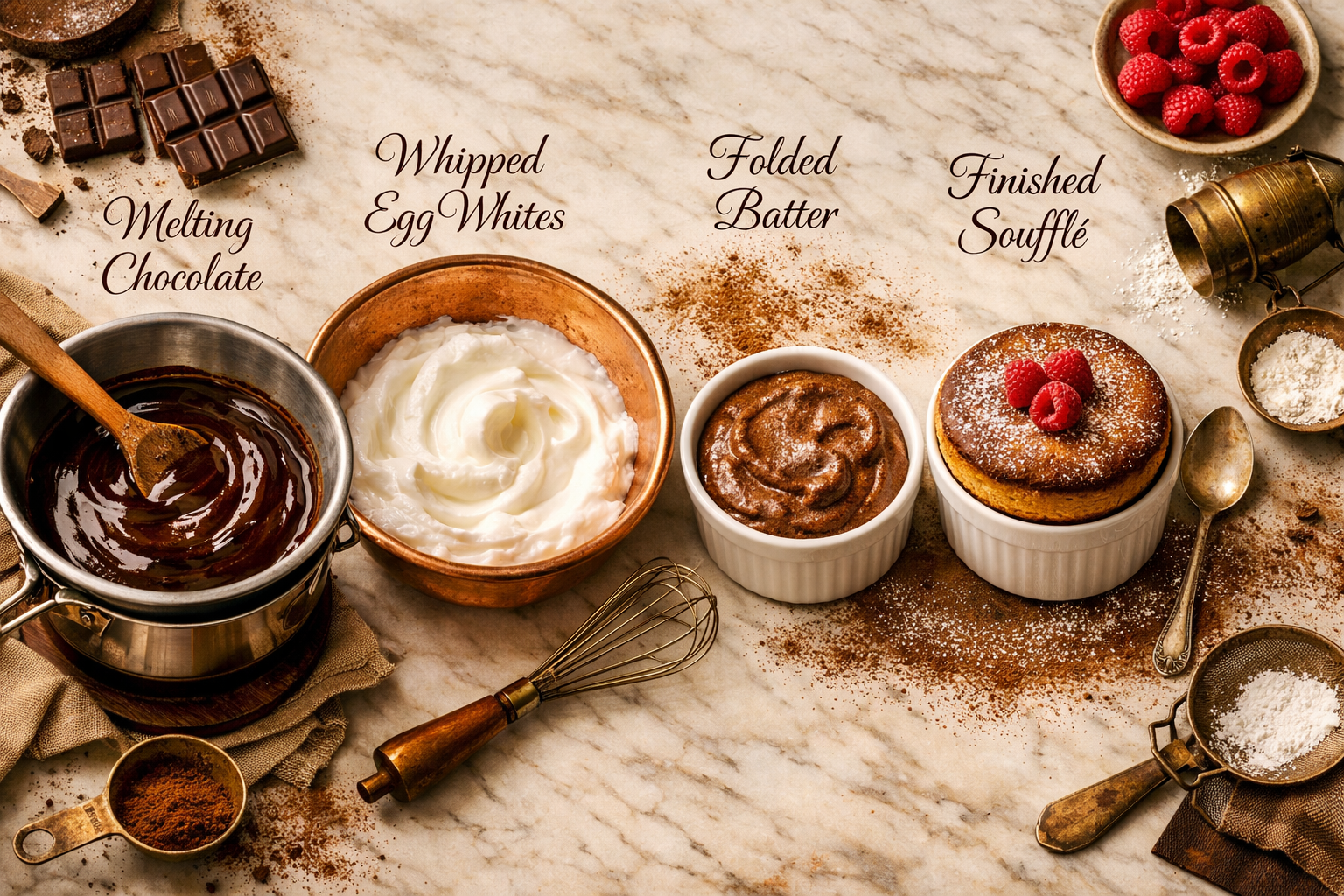
The most rewarding way to honor February 28 Chocolate Souffle Day is to bake a chocolate souffle from scratch. Here are the essential steps:
- Prepare the ramekins: Butter them generously and coat with sugar. This helps the souffle climb the sides as it rises.
- Make the chocolate base: Melt high-quality dark chocolate with butter, then whisk in egg yolks and a small amount of flour.
- Whip the egg whites: Beat until stiff peaks form. Add a pinch of cream of tartar for extra stability.
- Fold gently: Use a light hand to fold the egg whites into the chocolate base. Overmixing deflates the air.
- Bake immediately: Place in a preheated oven at 375°F (190°C) for 12–15 minutes. Do not open the oven door during baking.
- Serve at once: The souffle waits for no one!
🍽️ Dine Out at a Fine Restaurant
Many upscale French restaurants and bistros feature chocolate souffles on their dessert menus. Calling ahead to reserve a souffle is often recommended, as they require advance preparation. February 28 is a great occasion to treat someone special to this classic experience.
📱 Share on Social Media
Join the conversation online using hashtags like #ChocolateSouffleDay and #February28. Sharing photos of homemade or restaurant souffles helps spread the celebration and connects food enthusiasts worldwide.
🎓 Learn the Craft
Use the holiday as motivation to take a baking class, watch a professional tutorial, or explore a French patisserie cookbook. Understanding the technique transforms souffle-making from intimidating to empowering.
Common Souffle Mistakes (and How to Avoid Them)
Even experienced bakers can struggle with souffles. Here are the most frequent pitfalls:
- ❌ Under-whipping egg whites: Soft peaks won’t provide enough lift. Always aim for stiff, glossy peaks.
- ❌ Overmixing the batter: Folding too aggressively deflates the air bubbles. Use a gentle, sweeping motion.
- ❌ Opening the oven door: Temperature fluctuations can cause the souffle to collapse. Resist the urge to peek.
- ❌ Skipping the ramekin prep: An unbuttered ramekin prevents the souffle from rising evenly.
- ❌ Using low-quality chocolate: The chocolate is the star. Choose a bar with at least 60–70% cocoa content for the best flavor.
Pro Tip: Souffles can be partially prepared in advance. The chocolate base can be made hours ahead and refrigerated. Whip and fold in the egg whites just before baking.
February 28 Chocolate Souffle Day Around the World 🌍
While February 28 Chocolate Souffle Day is most widely observed in the United States, the love of chocolate souffles is genuinely global. France, as the birthplace of the dessert, celebrates it as a point of national culinary pride. In the United Kingdom, chocolate souffles frequently appear on Michelin-starred menus. Japanese pastry culture has embraced the souffle in its own way, producing the viral “Japanese souffle pancake” as a cultural cousin to the original French classic.
Food holidays like this one also have a meaningful economic impact. Bakeries, restaurants, and specialty chocolate shops often see increased traffic and sales around themed food days, according to food industry trend reports.
Nutritional Overview: Indulge Mindfully
A classic chocolate souffle is an indulgent treat. Here is a general nutritional snapshot for a single-serving souffle (approximately 150g):
| Nutrient | Approximate Amount |
|---|---|
| Calories | 280–340 kcal |
| Total Fat | 14–18g |
| Carbohydrates | 30–38g |
| Protein | 7–9g |
| Sugar | 20–26g |
Opting for dark chocolate with higher cocoa content reduces sugar and increases antioxidant flavonoids. Using a small ramekin keeps portions reasonable without sacrificing the full experience.
Conclusion: Rise to the Occasion This February 28 🎉
February 28 Chocolate Souffle Day is more than a quirky food holiday — it is an invitation to slow down, embrace a culinary challenge, and share something extraordinary with the people around you. The chocolate souffle represents the beauty of patience, precision, and passion in the kitchen.
Actionable next steps for 2026:
- ✅ Mark February 28 on the calendar right now.
- ✅ Gather ingredients — quality dark chocolate, fresh eggs, and ramekins — at least a day ahead.
- ✅ Watch one professional tutorial to build confidence before baking.
- ✅ Invite friends or family to share the experience (and the souffle).
- ✅ Post the results on social media with #ChocolateSouffleDay to join the global celebration.
The souffle may be fleeting, but the memory of a perfectly risen chocolate dessert lasts far longer. This February 28, rise to the occasion.
References
- Davidson, A. (1999). The Oxford Companion to Food. Oxford University Press.
- Escoffier, A. (1903). Le Guide Culinaire. Flammarion.
- McGee, H. (2004). On Food and Cooking: The Science and Lore of the Kitchen. Scribner.
- La Chapelle, V. (1733). The Modern Cook. London.
- National Confectioners Association. (2023). State of Treating Report. NCA.