
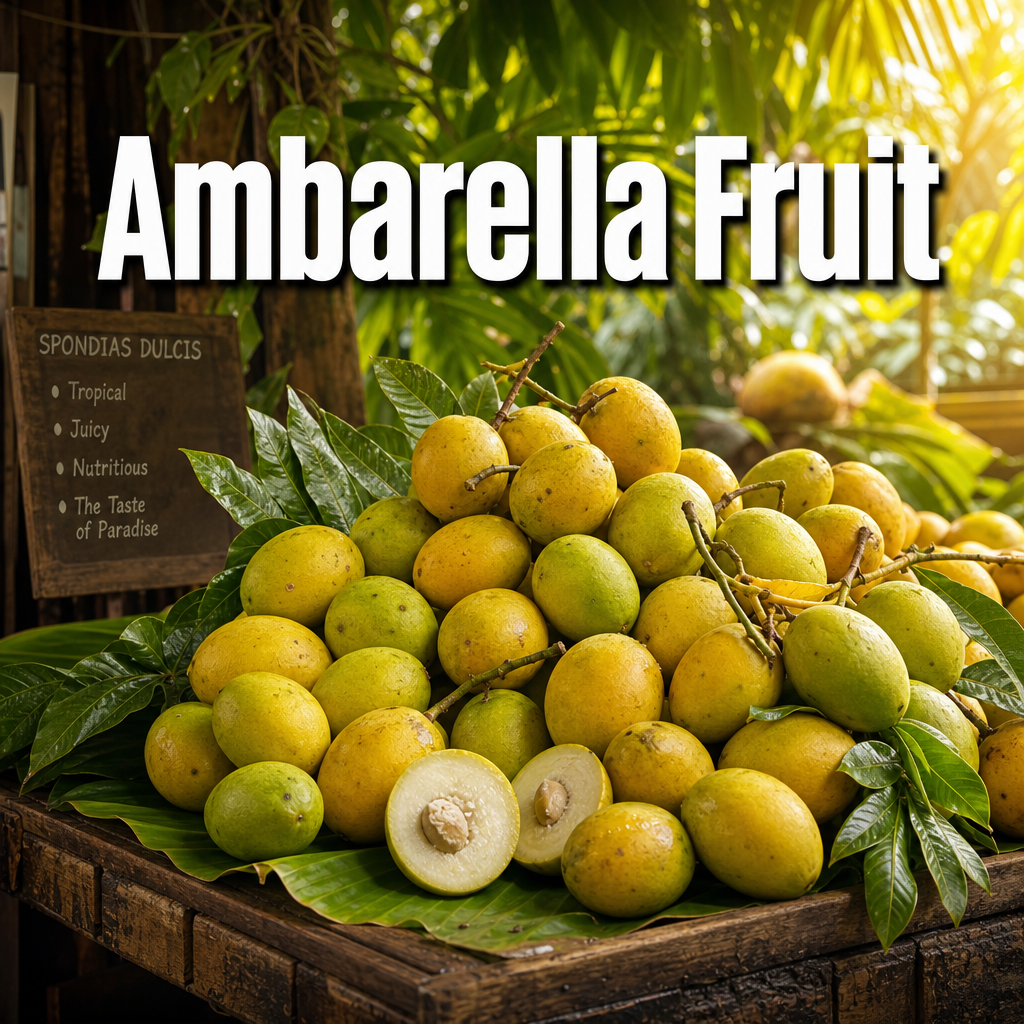
Quick Answer: Ambarella fruit (Spondias dulcis) is a tropical drupe native to Melanesia and Southeast Asia, prized for its crisp, tangy flesh that can be eaten raw, pickled, or cooked into chutneys and sauces. It grows on fast-maturing trees across South and Southeast Asia, the Caribbean, and parts of Africa, and delivers a notable nutritional profile including vitamin C, dietary fiber, and antioxidants.
Key Takeaways 🌿
- Ambarella fruit goes by many names: golden apple, June plum, Jew plum, and kedondong in Indonesia and Malaysia.
- The fruit transitions from tart and crunchy when green to mildly sweet and softer when fully ripe.
- It is a significant source of vitamin C — one serving can contribute meaningfully to daily requirements (FAO data on tropical fruits).
- The skin, flesh, and even the leaves are used in traditional cuisines across Asia, the Caribbean, and West Africa.
- Ambarella trees grow quickly and fruit within 3–5 years of planting from seed, making them accessible for home growers in tropical climates.
- The fruit’s high fiber content makes it a useful addition to balanced diets, including those managing blood sugar.
- It pairs well with chili, salt, lime, and fermented shrimp paste in street food applications.
- The spiny seed inside is inedible but distinctive — a key identifier of the species.
- Ambarella is not widely exported fresh due to its short shelf life, so it remains largely a local market fruit.
What Exactly Is Ambarella Fruit?
Ambarella fruit is a tropical drupe from the Anacardiaceae family (the same family as mangoes and cashews), scientifically named Spondias dulcis. The fruit is oval to round, roughly the size of a small egg, and grows in hanging clusters on tall, fast-growing trees.
Key characteristics:
| Feature | Detail |
|---|---|
| Scientific name | Spondias dulcis |
| Common names | Golden apple, June plum, Jew plum, kedondong, amra |
| Family | Anacardiaceae |
| Origin | Melanesia (Polynesia/Southeast Asia) |
| Fruit size | 5–9 cm long |
| Skin color | Green (unripe) to golden yellow (ripe) |
| Flesh texture | Crisp and fibrous when unripe; softer when ripe |
| Seed | Woody, spiny, inedible |
The tree itself can reach 12–18 meters in height and is deciduous in drier climates. It thrives in USDA hardiness zones 10–12, meaning it suits tropical and subtropical regions only. Gardeners in Florida, Hawaii, and similar climates in the U.S. have successfully grown ambarella trees.
Where Does Ambarella Fruit Grow and Where Can You Find It?
Ambarella fruit grows primarily in tropical regions with warm, humid climates and well-drained soil. It is widely cultivated across South and Southeast Asia, the Caribbean, West Africa, and parts of Central America.
Main growing regions:
- Southeast Asia: Thailand, Vietnam, Indonesia, Malaysia, Sri Lanka, and the Philippines — where it appears in street food markets year-round.
- South Asia: India and Bangladesh, where the fruit is called amra and used in pickles and chutneys.
- Caribbean: Jamaica, Trinidad, and Barbados, where it is called “June plum” or “golden apple” and made into drinks and preserves.
- West Africa: Ghana and Nigeria, where it is eaten green with salt and pepper as a snack.
- Pacific Islands: Fiji and Samoa, closer to its origin zone.
Outside these regions, fresh ambarella fruit is rarely found in supermarkets because it bruises easily and has a shelf life of roughly 1–2 weeks post-harvest. Specialty Asian and Caribbean grocery stores in cities like London, New York, and Toronto occasionally stock it. Frozen pulp and ambarella-based condiments are more reliably available internationally.
What Does Ambarella Fruit Taste Like?
The flavor of ambarella fruit changes significantly depending on ripeness — this is one of the most common points of confusion for first-time buyers.
- Green/unripe: Sharply tart, almost sour, with a crisp apple-like crunch. This stage is preferred for savory applications: salads, pickles, and spiced snacks.
- Semi-ripe: A balance of tart and mild sweetness, still firm enough to slice.
- Fully ripe: Mellow, slightly sweet with tropical undertones, softer flesh. Some compare it to a mild pineapple-mango hybrid.
The flesh is fibrous near the central spiny seed, so most people eat the outer portion and discard the core. The skin is edible but slightly tough.
Choose green ambarella if you want a crunchy, sour snack or a base for pickles and chutneys. Choose ripe ambarella if you prefer sweeter fruit for juices, jams, or fresh eating.
What Are the Nutritional Benefits of Ambarella Fruit?
Ambarella fruit provides a solid nutritional profile for a low-calorie tropical fruit. The data below is based on general composition data for Spondias dulcis from food composition databases (USDA and FAO regional data).
Per 100g of raw ambarella flesh (approximate values):
| Nutrient | Approximate Amount |
|---|---|
| Calories | 45–60 kcal |
| Carbohydrates | 10–14 g |
| Dietary Fiber | 2–3 g |
| Vitamin C | 30–42 mg (approx. 35–50% of RDI) |
| Calcium | 25–30 mg |
| Iron | 0.5–1 mg |
| Potassium | 150–200 mg |
Key nutritional highlights:
- Vitamin C is the standout nutrient, supporting immune function and collagen synthesis.
- Dietary fiber supports digestive health and contributes to satiety — a useful quality for those managing weight or blood sugar. For more recipe ideas that work well for blood sugar management, see delicious diabetic-friendly recipes.
- Antioxidants in the peel and flesh (including polyphenols) have been noted in several regional food science studies, though clinical research on ambarella specifically remains limited as of 2026.
- The fruit’s low glycemic load makes it a reasonable choice for most balanced diets.
Note: Exact values vary by ripeness, growing conditions, and variety. Treat these figures as reasonable estimates, not clinical benchmarks.
How Is Ambarella Fruit Used in Cooking?
Ambarella fruit is one of the most culinarily flexible tropical fruits available, used across savory and sweet applications in multiple food cultures.
Savory Uses
- Pickles and relishes: Green ambarella is sliced and brined with salt, vinegar, and spices. A staple in Sri Lankan and Indian kitchens.
- Chutneys and sauces: Cooked down with garlic, ginger, chili, and sugar to make a tangy condiment. Works well alongside grilled meats — similar in spirit to a mango chutney. Browse curry cookbook ideas for pairing inspiration.
- Salads: Shredded green ambarella mixed with lime juice, fish sauce, chili, and dried shrimp is a popular Thai and Vietnamese street food preparation.
- Soups and stews: In West Africa and parts of Southeast Asia, ambarella is added to sour soups for its tartness, functioning similarly to tamarind.
Sweet Uses
- Jams and preserves: Ripe ambarella makes a well-balanced jam with a tropical flavor. If you enjoy making fruit preserves, the jam cookbook collection has useful techniques.
- Juices and drinks: Blended ripe ambarella with water, sugar, and lime makes a refreshing tropical drink popular in the Caribbean.
- Compotes: Ambarella pairs well in mixed fruit compotes. For inspiration, see fruit compote recipes and ideas.
- Smoothies: Ripe pulp blends well with mango, banana, and coconut water for a tropical smoothie base.
Common Preparation Tips
- Wash the fruit thoroughly — the skin can harbor surface residue from markets.
- Peel with a vegetable peeler for smoother texture in cooked dishes.
- Slice around the spiny central seed; do not attempt to pit it like a mango.
- For pickling, use green fruit. For jams and drinks, wait for full ripeness.
How Does Ambarella Fruit Compare to Similar Tropical Fruits?
Ambarella fruit is often compared to green mango, tamarind, and star fruit because of its tartness, but each has distinct culinary uses.
| Fruit | Flavor Profile | Best Use | Availability |
|---|---|---|---|
| Ambarella (green) | Tart, crunchy, apple-like | Pickles, salads, chutneys | Limited (specialty stores) |
| Green mango | Sour, fibrous | Salads, pickles | Moderate |
| Tamarind | Intensely sour, sticky | Sauces, drinks | Widely available |
| Star fruit | Mildly tart-sweet | Fresh eating, garnish | Moderate |
| Golden apple (ripe) | Mildly sweet, tropical | Juices, jams | Limited |
Ambarella is closest to green mango in culinary function but has a more fibrous texture and a sharper initial tartness. Unlike tamarind, it is used in whole or sliced form rather than as a paste. For readers interested in other lesser-known tropical fruits, the guide to akebi fruit and African breadfruit cover similarly underexplored options.
Can You Grow an Ambarella Tree at Home?
Yes, ambarella trees can be grown at home in tropical and subtropical climates. They are relatively low-maintenance once established and fruit faster than many tropical trees.
Growing requirements:
- Climate: Tropical or subtropical only. Cannot tolerate frost. Best in USDA zones 10–12.
- Soil: Well-drained, moderately fertile soil. Tolerates a range of soil types.
- Sunlight: Full sun (6+ hours daily).
- Watering: Regular watering during establishment; drought-tolerant once mature.
- Propagation: Easiest from cuttings or air-layering. Seed-grown trees take longer and may not breed true.
- Time to fruit: 3–5 years from seed; 1–2 years from cutting.
Common mistakes:
- Planting in poorly drained soil, which causes root rot.
- Underestimating tree size — ambarella trees grow tall and need space.
- Harvesting too early when growing for sweet applications; wait for the skin to turn golden.
FAQ: Ambarella Fruit
Q: Is ambarella fruit the same as golden apple? Yes. “Golden apple” is the common name used in the Caribbean for ambarella (Spondias dulcis). Other names include June plum, Jew plum, and kedondong.
Q: Can you eat ambarella fruit raw? Yes. Both green and ripe ambarella can be eaten raw. Green fruit is eaten with salt, chili, or lime as a snack. Ripe fruit is eaten fresh or blended into drinks.
Q: Is ambarella fruit good for you? It is a nutritious low-calorie fruit with meaningful vitamin C content, dietary fiber, and antioxidants. It fits well into a balanced diet.
Q: What does ambarella taste like? Green ambarella is sharply tart and crunchy, similar to a sour green apple. Ripe ambarella is mildly sweet with tropical notes, loosely resembling a blend of pineapple and mango.
Q: Where can I buy ambarella fruit? Fresh ambarella is available in specialty Asian, Caribbean, and African grocery stores in major cities. Frozen pulp and ambarella-based condiments are more widely available online.
Q: Is ambarella fruit safe during pregnancy? In moderate food amounts, ambarella is generally considered safe. However, concentrated extracts or very large quantities are not recommended during pregnancy. Consult a healthcare provider for specific guidance.
Q: Can ambarella fruit be frozen? Yes. Peel, slice, and freeze on a tray before transferring to bags. Frozen ambarella works well in smoothies and cooked preparations but loses its crisp texture.
Q: How do I know when ambarella is ripe? The skin shifts from bright green to golden yellow, and the fruit gives slightly under gentle pressure. A ripe ambarella also develops a mild tropical fragrance.
Q: Is ambarella related to mango? Both belong to the Anacardiaceae family, so they are distant botanical relatives, but they are different species with distinct flavors and textures.
Q: How long does ambarella last after picking? At room temperature, roughly 5–7 days. Refrigerated, up to 2 weeks. It bruises easily, so handle with care.
Conclusion: Should You Try Ambarella Fruit?
Ambarella fruit earns its reputation as one of tropical cuisine’s most underrated ingredients. Its versatility across savory pickles, tangy chutneys, refreshing drinks, and sweet jams makes it genuinely useful in the kitchen — not just a novelty. The nutritional profile is solid for a low-calorie fruit, and its fast-growing tree makes it a practical choice for home growers in tropical climates.
Actionable next steps:
- Find it fresh: Check specialty Asian or Caribbean grocery stores. Ask specifically for “June plum,” “golden apple,” or “kedondong” — the name varies by region.
- Start with green ambarella: Slice it thin, add chili salt and lime, and eat it as a snack. This is the most accessible entry point.
- Try a simple chutney: Cook ripe ambarella with ginger, sugar, and vinegar for a condiment that works alongside grilled chicken or fish. Pair with ideas from quick and easy cooking guides.
- Explore the jam: Ripe ambarella jam is straightforward to make and a good way to preserve a larger harvest.
- Consider growing one: If you live in a tropical climate, an ambarella tree is a low-effort, high-reward addition to a home garden.
For anyone curious about expanding their tropical fruit repertoire in 2026, ambarella is a practical, flavorful, and nutritious place to start.
References
- Food and Agriculture Organization of the United Nations (FAO). Tropical Fruits: Production and Trade Data. FAO, 2022. https://www.fao.org
- Morton, J. Fruits of Warm Climates: Ambarella. Creative Resource Systems, 1987.
- USDA Agricultural Research Service. FoodData Central: Tropical Fruits Composition. USDA, 2023. https://fdc.nal.usda.gov
- Orwa, C. et al. Agroforestree Database: Spondias dulcis. World Agroforestry Centre, 2009. https://www.worldagroforestry.org