
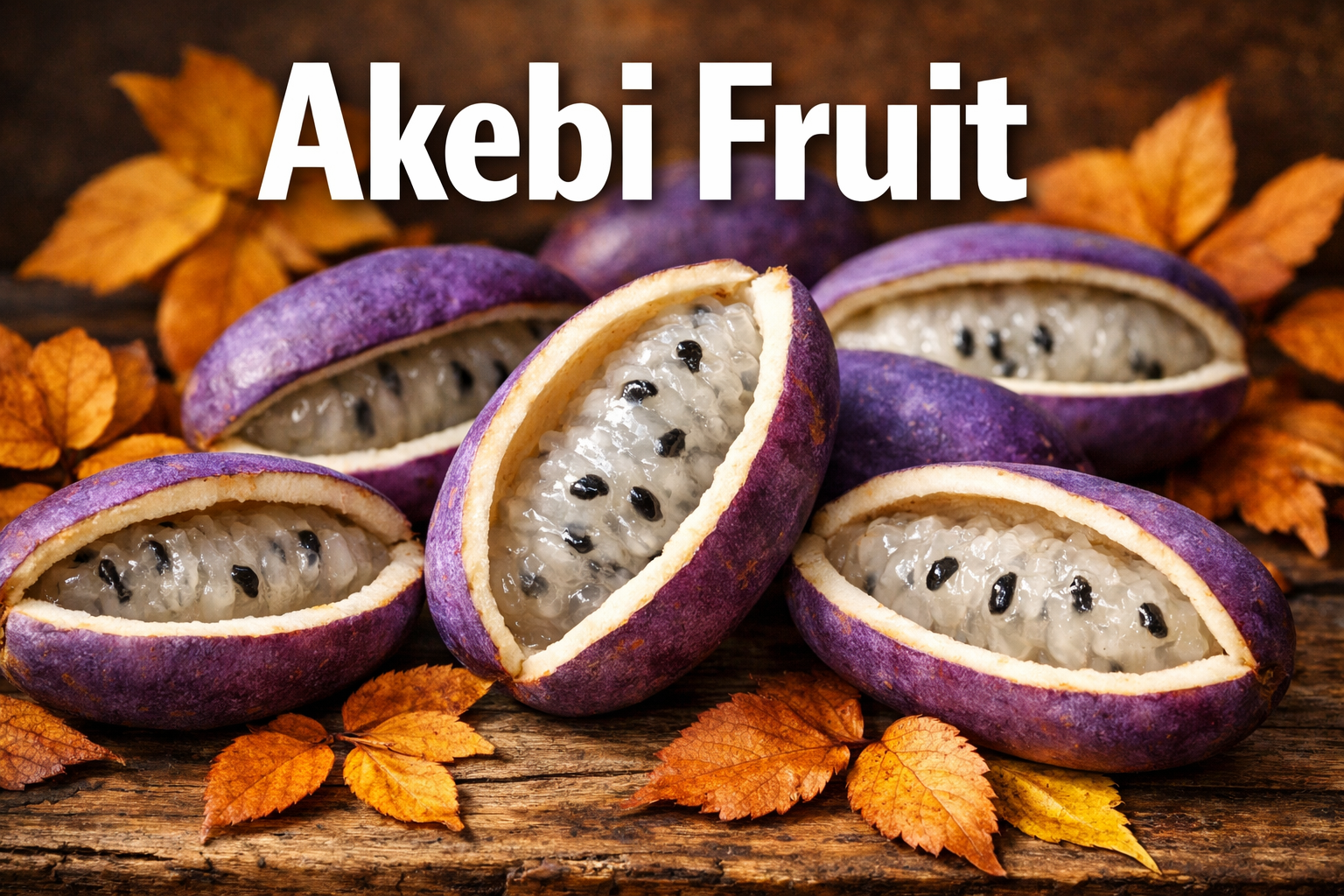
Quick Answer: Akebi fruit is a rare, seasonal Japanese fruit from the Akebia quinata vine (also called the chocolate vine) that ripens in early fall for just a few weeks. It has a sweet, mildly bitter flavor, a gelatinous white interior, and an edible purple or white skin. Both the flesh and the skin are eaten, often in traditional Japanese dishes using miso or frying techniques.
Key Takeaways
- 🍇 Extremely short season: Akebi fruit is available for only about two weeks, from early September to early October [1]
- 🌍 Globally rare: Found mainly in Japan, China, and Korea, with small-scale cultivation in Europe, New Zealand, and the United States [1]
- 🎨 Multiple varieties: Colors range from reddish-purple and violet to brown, grey, and white/ivory [1]
- 🍬 Flavor profile: Sweet and mildly bitter; white varieties are less sweet than purple-violet ones [1]
- 🌿 Whole fruit is edible: Flesh, seeds, and skin can all be consumed [1]
- 💊 Nutritional highlights: Good source of vitamin C, zinc, vitamin B6, calcium, and potassium [1]
- 🍳 Versatile in cooking: Eaten raw, fried, stuffed with miso, or prepared as a traditional boiled dish [1][3]
- 🍶 Best pairings: Sake, miso paste, sesame oil, shiso leaf, ham, bacon, and vegetables like spinach [1]
What Is Akebi Fruit?
Akebi fruit (Akebia quinata) is a wild and cultivated fruit native to East Asia, particularly Japan, China, and Korea. It grows on a woody climbing vine sometimes called the chocolate vine, and it produces elongated pods that split open naturally when ripe, revealing a soft, translucent interior.
The fruit is not widely known outside Asia, but it has deep roots in Japanese foraging traditions and regional cuisine. In areas like Tono in Iwate Prefecture, akebi has been a seasonal staple for generations [3].
What Does Akebi Fruit Look Like?
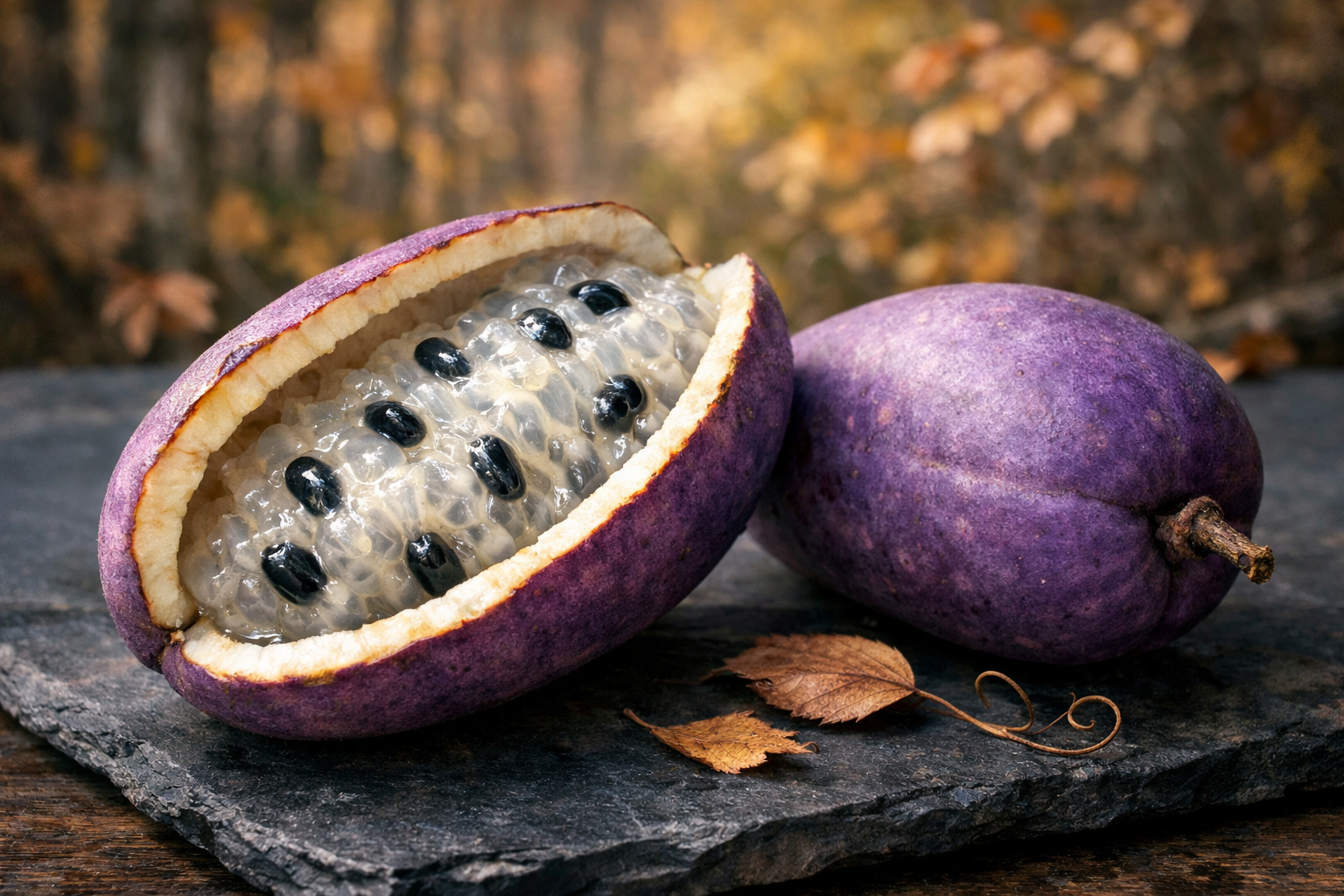
White akebi typically measures 5 to 10 centimeters in length and has a cylindrical to oblong shape. Its skin ripens from green to white or ivory. Purple varieties shift from green to deep violet or reddish-brown as they mature [1].
When fully ripe, the pod splits along one side, exposing a white, jelly-like center packed with small edible black-brown seeds [1].
How Does Akebi Fruit Taste?
Akebi fruit has a gently sweet, slightly bitter flavor that is unlike most familiar Western fruits. The interior pulp is soft and gelatinous, almost like a mild lychee or dragonfruit, but with a subtle bitterness that lingers.
- White/ivory varieties: Neutral, subtly sweet, and mildly bitter with a soft yet slightly crunchy texture [1]
- Purple-violet varieties: Noticeably sweeter, more aromatic, and considered the most desirable by many Japanese consumers [1]
- The skin: Bitter on its own, which is why it’s typically cooked before eating [3]
“The edible interior is described as white, jelly-like, and can be consumed directly from the fruit or extracted and eaten separately.” [3]
Choose white akebi if you prefer a more neutral, less sweet flavor. Choose purple akebi if you want a sweeter, more pronounced taste experience.
When and Where Can You Find Akebi Fruit?
Akebi fruit is available for an extremely limited window — roughly two weeks between early September and early October [1]. This makes it one of the most fleeting seasonal fruits in the world.
Where to find it:
- Specialty produce markets and high-end grocery stores in Japan
- Farmers’ markets in rural Japanese regions, especially Tohoku
- Specialty Asian grocers in China and Korea
- Small-scale farms in Europe, New Zealand, and parts of the United States [1]
Outside Japan, sourcing fresh akebi is genuinely difficult. Online specialty importers occasionally carry it during the harvest window, but supply is limited and prices are high.
Common mistake: Waiting too long in the season. By mid-October, the fruit is past its peak and most supplies are gone.
What Are the Nutritional Benefits of Akebi Fruit?
Akebi fruit offers a solid nutritional profile for a fruit that’s eaten in small quantities. It is a good source of vitamin C, which supports immune function and acts as an antioxidant. It also contains zinc, vitamin B6, calcium, and potassium [1].
| Nutrient | Role |
|---|---|
| Vitamin C | Antioxidant, immune support, anti-inflammatory |
| Zinc | Immune function, cell repair |
| Vitamin B6 | Metabolism, brain health |
| Calcium | Bone health, muscle function |
| Potassium | Heart health, fluid balance |
Note: Specific milligram values for akebi are not widely published in peer-reviewed nutrition databases. The nutrient presence above is sourced from specialty produce research [1].
Akebi is not a high-calorie fruit, and its seeds can be swallowed or spat out according to preference — both are safe [1]. For those exploring unique fruits with nutritional value, akebi fits well alongside other antioxidant-rich options. If you enjoy experimenting with fruit-based dishes, you might also enjoy exploring fruit compote recipes that highlight seasonal produce.
How Do You Eat Akebi Fruit?
The entire akebi fruit is edible — flesh, seeds, and skin — though each part is typically prepared differently [1].
Eating the flesh (raw):
- Allow the fruit to ripen until the pod splits open naturally
- Scoop or squeeze the white jelly-like interior into a bowl or eat directly
- Chew and swallow seeds, or spit them out
Cooking the skin: The skin is bitter raw, so it benefits from cooking. Common methods include [1][3]:
- Miso-stuffed and pan-fried: Hollow out the skin, fill with miso paste, minced meat, or vegetables, then pan-fry
- Boiled with sugar: A traditional dish from Tono, Iwate Prefecture, where the skin is boiled and sweetened [3]
- Tempura-style frying: The skin holds its shape well when battered and fried
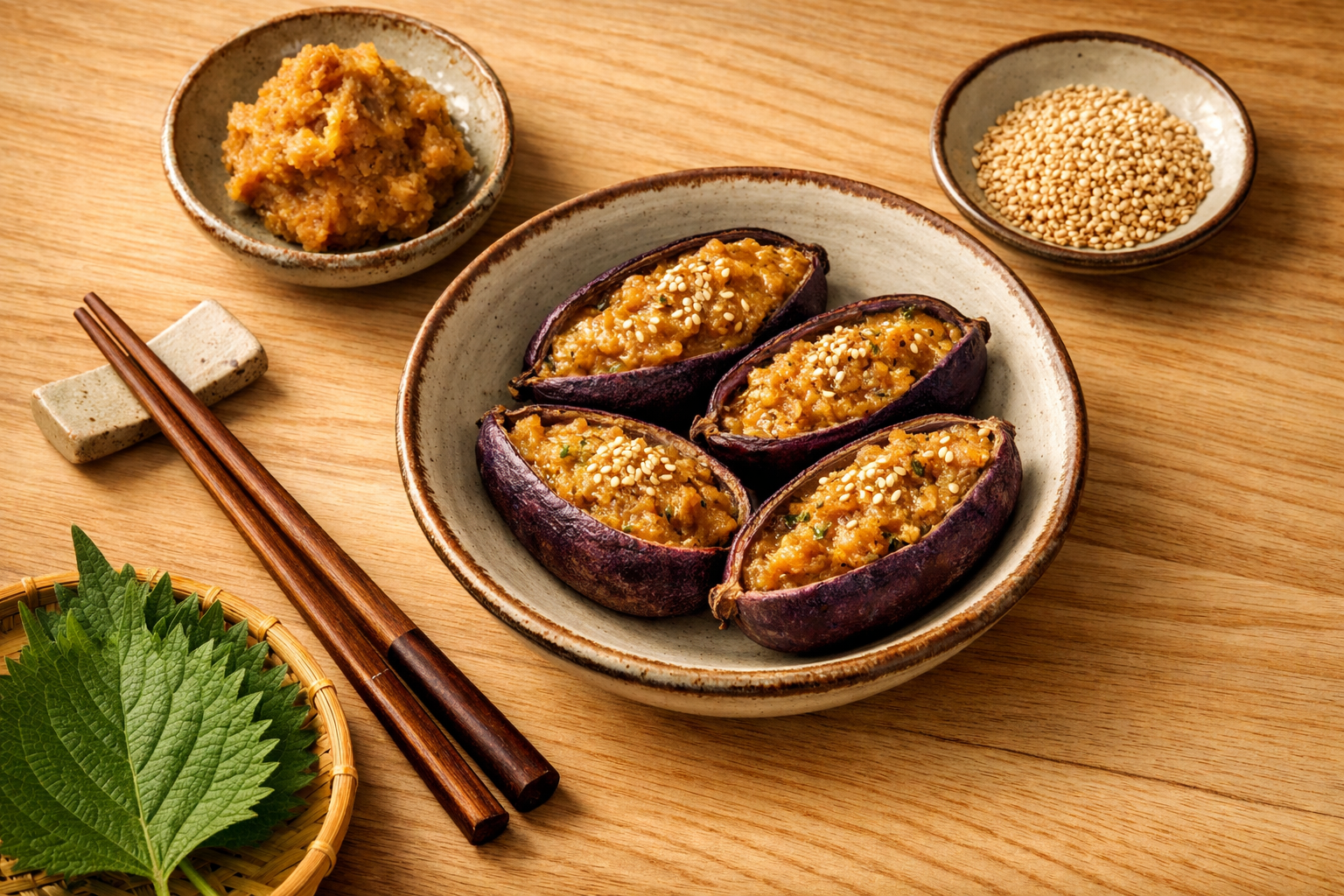
Best flavor pairings for akebi fruit [1]:
- Miso paste and sesame oil
- Shiso leaf
- Ham, bacon, or poultry
- Fish and seafood
- Rice and noodles
- Vegetables like spinach and broccoli (for a balanced meal, see our spinach day guide for inspiration)
- Sake (as a beverage pairing)
If you enjoy making preserves from seasonal fruits, akebi pulp can also be incorporated into jams. Browse our lip-smacking jam recipes for ideas that translate well to unusual fruit bases.
How Is Akebi Fruit Used in Japanese Cuisine?
In Japan, akebi is both a foraged wild food and a cultivated regional specialty. Its use varies by prefecture, but it’s most prominent in the Tohoku region of northern Japan [3].
Traditional uses:
- Tono, Iwate: Boiled akebi skin with sugar is a well-known local dish [3]
- Yamagata and Akita: Akebi skin stuffed with miso and pan-fried is a popular autumn dish
- Foraging culture: Wild akebi is still gathered from forests and hillsides each September [3]
The fruit’s brief season makes it a celebrated sign of autumn in Japanese culture, similar to how matsutake mushrooms or new-harvest rice signal seasonal change.
For those interested in exploring other traditional or regional food preparations, our marmalade day history and recipes page shows how preserved fruit traditions share common threads across cultures.
How Does Akebi Fruit Compare to Similar Exotic Fruits?
Akebi fruit is often compared to a few other exotic or unusual fruits because of its appearance and texture.
| Fruit | Texture | Flavor | Edible Skin? | Availability |
|---|---|---|---|---|
| Akebi | Jelly-like interior | Sweet, mildly bitter | Yes (cooked) | Very rare, 2-week season |
| Lychee | Firm, juicy | Sweet, floral | No | Seasonal, widely available |
| Dragon Fruit | Soft, seedy | Mild, slightly sweet | No | Year-round in many regions |
| Passion Fruit | Pulpy, seedy | Tart, tropical | No | Seasonal, moderate availability |
| Pawpaw | Custard-like | Sweet, tropical | No | Rare, short season |
Akebi’s closest comparison in texture is dragon fruit, but its bitter skin and miso-friendly flavor profile make it far more suited to savory cooking applications.
FAQ: Akebi Fruit
What does akebi mean in Japanese? Akebi (あけび) is the Japanese name for the Akebia quinata vine and its fruit. The name has ancient roots in Japanese language and refers specifically to this climbing plant.
Can you grow akebi fruit outside Japan? Yes. Small-scale cultivation exists in Europe, New Zealand, and the United States, but commercial availability remains very limited [1]. The vine grows in temperate climates and is sometimes planted as an ornamental.
Is akebi fruit safe to eat raw? Yes. The interior pulp and seeds are safe to eat raw directly from the fruit [1]. The skin is edible but typically cooked to reduce bitterness [3].
Why does akebi fruit split open? The pod splits naturally when the fruit reaches full ripeness. This is the plant’s mechanism for seed dispersal — the white pulp attracts birds and animals that eat the interior and spread the seeds.
What is the best way to store akebi fruit? Fresh akebi should be eaten within a few days of purchase. Store at room temperature if nearly ripe, or refrigerate briefly to slow ripening. It does not keep well long-term.
Is akebi the same as the chocolate vine? Yes. Akebia quinata is commonly called the chocolate vine in English, referring to the faint chocolate scent of its spring flowers, not the fruit’s flavor.
Are there different varieties of akebi fruit? Yes. Varieties include reddish-purple, brown, grey, violet, and white/ivory types, each with slightly different sweetness levels and appearances [1].
Where can akebi fruit be bought outside Japan? Specialty Asian grocery stores, high-end produce markets, and online importers occasionally carry akebi during the harvest season (September to early October). Availability is not guaranteed year to year.
Can the seeds be eaten? Yes. The small black-brown seeds inside the pulp can be swallowed or spat out — both are fine [1].
Is akebi fruit used in desserts? The sweet pulp can be used in desserts, though savory preparations using the skin are more traditional. The pulp could work in a fruit compote or jam alongside other seasonal fruits.
Conclusion
Akebi fruit stands out as one of the most distinctive seasonal foods in East Asian cuisine. Its two-week harvest window, split-open pod, jelly-like interior, and edible bitter skin make it genuinely unlike anything found in most Western markets. For food lovers and culinary explorers, tracking down fresh akebi in September is well worth the effort.
Actionable next steps:
- Source it early: Contact specialty Asian grocers or Japanese importers before September to get on a notification list
- Start with the pulp raw: Eat the interior fresh before experimenting with the skin
- Try the miso preparation: Stuff the skin with miso paste and pan-fry — it’s the most accessible introduction to cooked akebi
- Pair thoughtfully: Use sesame oil, shiso, or sake-based sauces to complement the fruit’s natural bitterness
- Explore related seasonal recipes: Check out our fruit compote recipes and jam-making guides for ideas on preserving seasonal fruit flavors year-round
Akebi fruit rewards patience and curiosity. Once found, it offers a flavor experience that’s both ancient and completely fresh.
References
[1] White Akebi Fruit 14315 – https://specialtyproduce.com/produce/White_Akebi_Fruit_14315.php
[2] Akebi – https://growagarden.fandom.com/wiki/Akebi
[3] Foraging For Wild Fruit In Tsukuba Akebi あけび The Fruit Of The Chocolate Vine – https://tsukublog.wordpress.com/2024/09/27/foraging-for-wild-fruit-in-tsukuba-akebi-%E3%81%82%E3%81%91%E3%81%B3-the-fruit-of-the-chocolate-vine/