
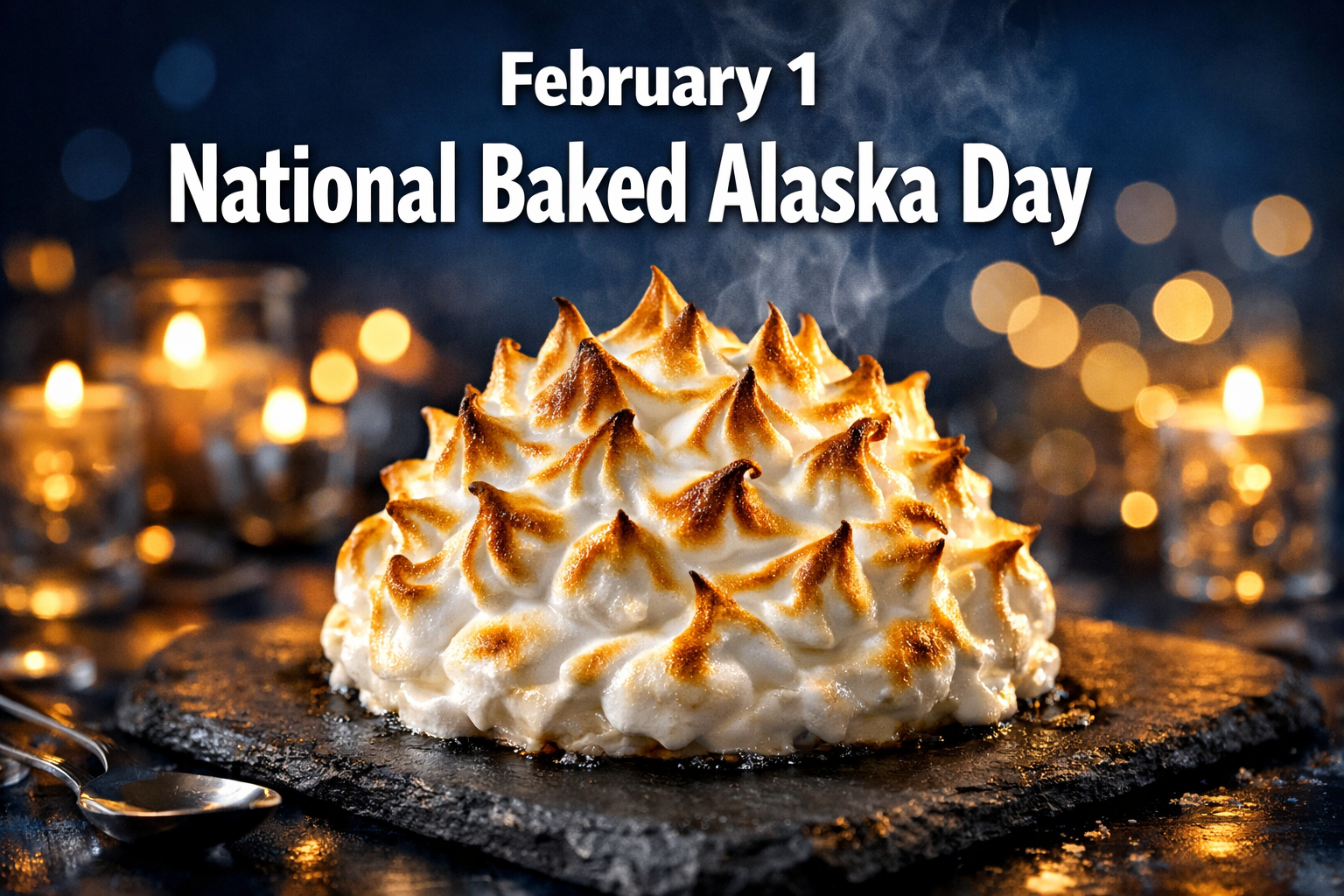
Every February 1, dessert lovers across the country celebrate February 1 National Baked Alaska Day — a delicious tribute to one of the most theatrical and technically impressive desserts ever created. Hot on the outside, frozen on the inside, and stunning on any table, Baked Alaska is a true culinary paradox. Whether you’re a seasoned home baker or simply curious about this iconic treat, this guide covers the history, science, recipes, and best ways to celebrate this sweet holiday.
Key Takeaways 📌
- February 1 National Baked Alaska Day is an annual food holiday celebrating one of America’s most iconic desserts.
- Baked Alaska consists of ice cream and cake covered in meringue, then briefly baked or torched to create a golden exterior while the ice cream stays frozen inside.
- The dessert has roots dating back to the 1800s and gained fame at Delmonico’s restaurant in New York City.
- The science behind Baked Alaska relies on meringue acting as an insulating layer that protects the ice cream from heat.
- Celebrating is easy — you can make it at home, visit a restaurant, or share the fun on social media.
What Is Baked Alaska? A Dessert Like No Other
Baked Alaska is a show-stopping dessert made of three key components:
| Layer | Description |
|---|---|
| Base | A thin slice of sponge cake or brownie |
| Middle | A dome of firm ice cream (one or more flavors) |
| Outer Shell | Whipped meringue, toasted golden brown |
The magic happens when the meringue-covered dessert goes into a very hot oven — or is hit with a kitchen torch — for just a few minutes. The meringue browns beautifully while the ice cream inside stays completely frozen. The result is a dessert that is simultaneously warm and cold, crispy and creamy.
“Baked Alaska is not just a dessert — it’s a performance. The moment you bring it to the table, everyone stops and stares.”
The Rich History Behind February 1 National Baked Alaska Day
Origins in the 19th Century
The story of Baked Alaska stretches back further than most people realize. The concept of baking ice cream inside an insulating shell was first explored by physicist Benjamin Thompson (Count Rumford) in the early 1800s. He demonstrated that beaten egg whites were poor conductors of heat — a discovery that would eventually make Baked Alaska possible.
However, the dessert as we know it today is most closely linked to Delmonico’s Restaurant in New York City. In 1867, chef Charles Ranhofer reportedly created the dish to celebrate the United States’ purchase of Alaska from Russia. He called it “Alaska, Florida” — a nod to the contrast of cold and hot in a single bite.
How It Got Its Famous Name
The name “Baked Alaska” became widely popular in the late 19th century. By the early 20th century, it had become a staple of fine dining menus across America and Europe. The dessert’s dramatic presentation — often flambéed tableside with rum or brandy — made it a favorite for special occasions.
The Modern Revival
After decades of being seen as old-fashioned, Baked Alaska experienced a major comeback in the 2000s and 2010s, thanks to cooking shows, food blogs, and a renewed interest in retro cuisine. Today in 2026, it remains a beloved classic that continues to inspire creative variations.
The Science That Makes Baked Alaska Possible 🔬
Understanding why Baked Alaska works makes it even more impressive. The secret lies in the insulating properties of meringue.
Meringue is made from whipped egg whites and sugar. When beaten, it traps millions of tiny air bubbles. Air is an extremely poor conductor of heat, which means the meringue layer acts like a thermal blanket around the ice cream.
Here’s what happens during baking:
- The oven or torch heats the outer meringue to temperatures above 300°F (150°C).
- The air pockets in the meringue slow down heat transfer dramatically.
- The ice cream inside barely warms at all during the short baking time (typically 2–5 minutes).
- The result: a perfectly browned exterior with a frozen, creamy interior.
This is the same principle used in thermos flasks and building insulation — just applied to a dessert. Pretty brilliant! 🧠
How to Make Baked Alaska at Home
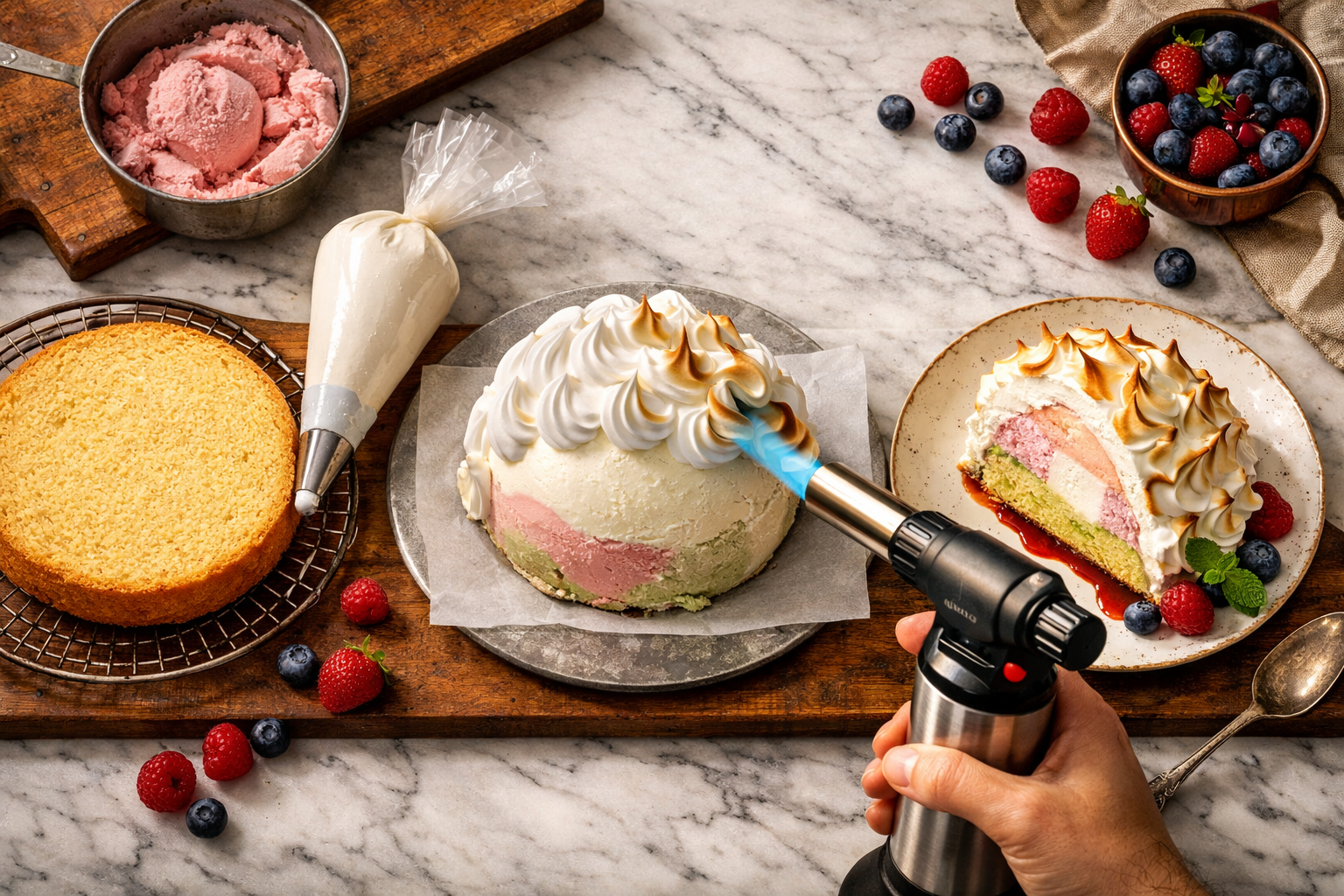
Making Baked Alaska at home is easier than it looks. Here’s a simplified roadmap:
Ingredients You’ll Need
- 1 round sponge cake (store-bought or homemade)
- 1 quart of ice cream (any flavor — or multiple flavors for a layered effect)
- 4 large egg whites
- 1 cup granulated sugar
- ¼ teaspoon cream of tartar
- 1 teaspoon vanilla extract
Step-by-Step Instructions
Step 1 — Build the ice cream dome: Line a bowl with plastic wrap. Pack ice cream firmly into the bowl and freeze overnight until very solid.
Step 2 — Assemble the base: Place the sponge cake on a parchment-lined baking sheet. Unmold the ice cream dome on top of the cake. Return to the freezer for at least 1 hour.
Step 3 — Make the meringue: Beat egg whites and cream of tartar until soft peaks form. Gradually add sugar and beat until stiff, glossy peaks form. Add vanilla.
Step 4 — Cover and torch (or bake): Completely cover the ice cream dome with meringue, sealing all edges. Either use a kitchen torch to brown the peaks, or bake in a preheated 500°F (260°C) oven for 3–5 minutes.
Step 5 — Serve immediately for maximum drama! 🎉
Pro Tips for Success ✅
- Freeze everything solid before applying meringue — this is the most important step.
- Work quickly when applying meringue and getting it into the oven.
- Seal the meringue completely — any gaps will let heat reach the ice cream.
- Try flavored meringue by adding a teaspoon of almond extract or citrus zest.
Creative Variations to Try in 2026 🎨
The classic recipe is just the beginning. Here are some exciting twists on the traditional Baked Alaska:
| Variation | Description |
|---|---|
| Chocolate Lover’s | Brownie base + chocolate and raspberry ice cream |
| Tropical Twist | Coconut cake + mango sorbet + toasted coconut meringue |
| Mini Baked Alaskas | Individual portions using muffin tins — perfect for parties |
| Flambéed Classic | Pour warm rum over the meringue and ignite for a dramatic finish |
| Vegan Version | Aquafaba meringue + dairy-free ice cream + gluten-free cake base |
How to Celebrate February 1 National Baked Alaska Day 🎊
Celebrating this food holiday doesn’t require any special equipment or culinary training. Here are some fun and easy ways to mark the occasion:
- 🍽️ Make it at home using the recipe above — invite friends or family for a memorable dessert experience.
- 🍴 Visit a local restaurant that serves Baked Alaska and support a small business.
- 📱 Share on social media using hashtags like #BakedAlaskaDay and #February1 to connect with fellow dessert fans.
- 📚 Learn the history by watching a documentary or reading about classic American cuisine.
- 👨🍳 Host a baking challenge with friends to see who can create the most creative variation.
- 🎁 Gift a dessert experience — book a cooking class focused on classic French and American pastry techniques.
Why February 1 National Baked Alaska Day Matters
Food holidays like February 1 National Baked Alaska Day do more than just give people an excuse to eat dessert. They serve several meaningful purposes:
- Preserving culinary heritage — keeping classic recipes alive for new generations.
- Supporting the food industry — restaurants, bakeries, and specialty shops often see increased traffic on food holidays.
- Building community — shared food experiences bring people together.
- Encouraging creativity — themed days inspire home cooks to try something new.
In 2026, with food culture more vibrant and connected than ever through social media and cooking platforms, food holidays like this one have a genuine cultural impact. They spark conversations, inspire content creators, and remind people of the joy found in simple pleasures.
Conclusion: Celebrate with a Slice of History 🏆
February 1 National Baked Alaska Day is a perfect blend of science, history, and culinary artistry wrapped in a golden meringue shell. From its 19th-century origins at Delmonico’s to its modern-day comeback in home kitchens and trendy restaurants, this dessert has earned its place in the pantheon of American classics.
Actionable Next Steps:
- Mark your calendar for February 1 and plan your Baked Alaska celebration in advance.
- Gather your ingredients this week — ice cream, eggs, sugar, and a sponge cake base are all you need.
- Share the experience on social media to inspire others and join the national conversation.
- Experiment with flavors — try a new variation each year to keep the tradition fresh and exciting.
Don’t let this delicious food holiday pass by unnoticed. Whether baking from scratch or ordering from a favorite restaurant, take a moment on February 1 to appreciate the remarkable dessert that has delighted diners for over 150 years. 🍦🔥
References
- Ranhofer, C. (1894). The Epicurean. Ranhofer.
- Trager, J. (1995). The Food Chronology. Henry Holt and Company.
- McGee, H. (2004). On Food and Cooking: The Science and Lore of the Kitchen. Scribner.
- National Day Calendar. (2023). National Baked Alaska Day – February 1. Retrieved from nationaldaycalendar.com
- Albala, K. (Ed.). (2011). Food Cultures of the World Encyclopedia. Greenwood.