

Every year on February 2, millions of people across France and around the world flip thin, golden crepes in celebration of one of the most delicious food holidays on the calendar. February 2 Crepes Day — known in France as La Chandeleur — is a day steeped in centuries of history, folklore, and, most importantly, incredible food. Whether you’re a seasoned chef or a first-time crepe maker, this holiday offers a perfect excuse to gather in the kitchen and enjoy a beloved tradition.
Key Takeaways
- 📅 February 2 Crepes Day (La Chandeleur) is celebrated annually on February 2nd, primarily in France and French-speaking cultures.
- 🏛️ The holiday has ancient roots tied to both pagan agricultural festivals and the Christian feast of Candlemas.
- 🥞 Crepes are eaten on this day because their round, golden shape symbolizes the returning sun and prosperity.
- 🪙 A popular tradition involves flipping a crepe with one hand while holding a gold coin in the other to bring good luck.
- 🌍 The celebration has spread globally, inspiring crepe-themed events, restaurant promotions, and home cooking traditions worldwide.
What Is February 2 Crepes Day?
February 2 Crepes Day is the popular name for La Chandeleur, a French holiday celebrated every year on February 2nd. In France, it is also called Jour des Crêpes (Crepes Day) and is one of the most beloved culinary traditions in the country.
The day falls exactly 40 days after Christmas and coincides with the Christian feast of Candlemas (La Chandeleur literally means “Candles Festival”). However, the roots of this celebration go far deeper than Christianity alone.
“La Chandeleur is not just about eating crepes — it is about welcoming light, abundance, and hope after the dark winter months.”
The Ancient Origins of February 2 Crepes Day
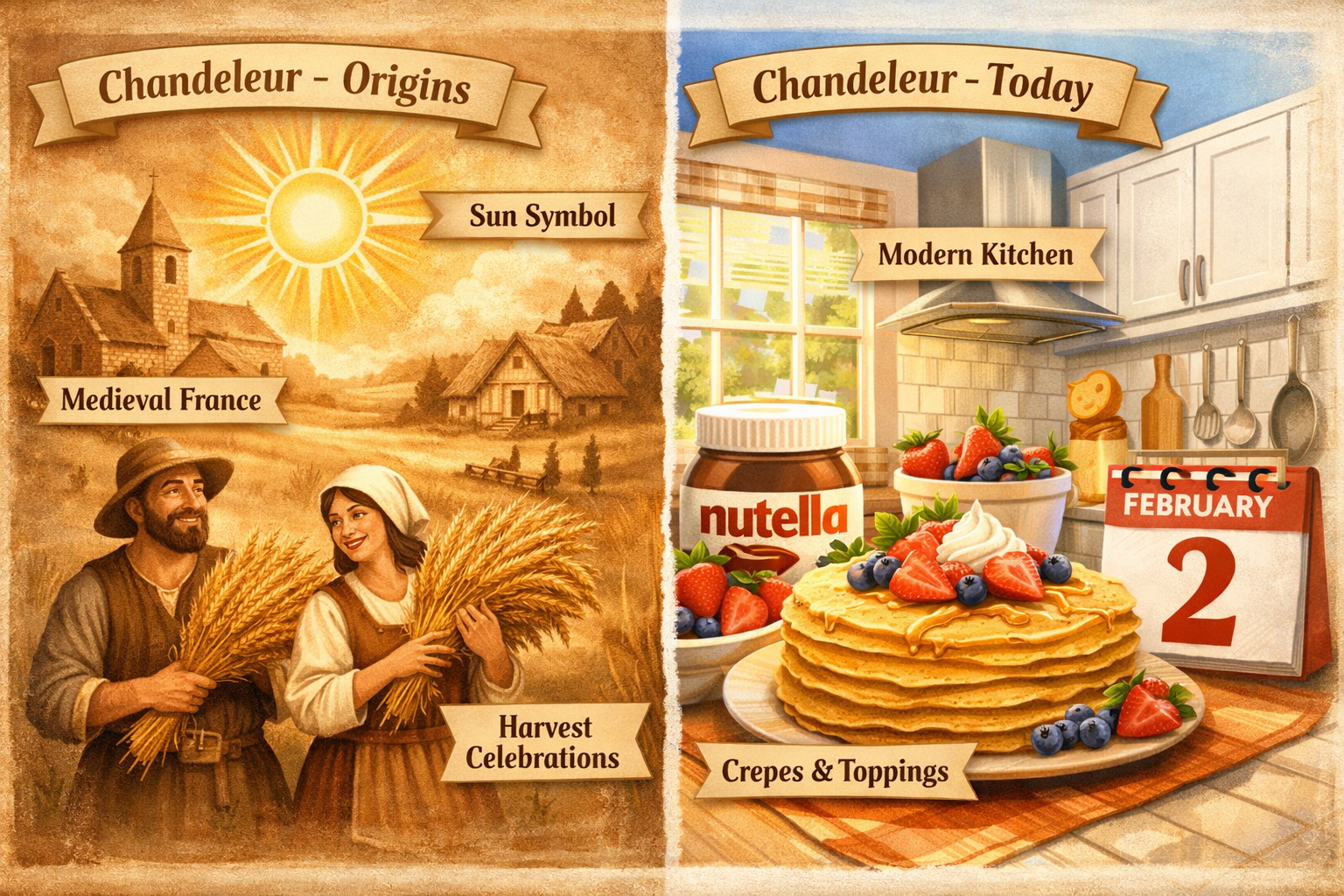
The story of February 2 Crepes Day is a fascinating blend of pagan traditions, Christian observance, and agricultural folklore.
Pagan and Roman Roots
Long before Christianity spread through Europe, early February was already a time of celebration. The Romans observed Lupercalia, a fertility festival, around this time of year. Ancient Celts celebrated Imbolc, marking the midpoint between the winter solstice and the spring equinox — a hopeful sign that warmer days were coming.
When Christianity spread across Gaul (modern-day France), the Church incorporated many of these existing traditions into its own calendar. The result was Candlemas, a feast celebrating the presentation of Jesus at the Temple and the purification of the Virgin Mary.
The Symbolism of the Crepe
So why crepes specifically? The answer lies in symbolism:
| Symbol | Meaning |
|---|---|
| 🌞 Round shape | The returning sun after winter |
| 🟡 Golden color | Warmth, prosperity, and harvest |
| 🌾 Wheat flour | Agricultural abundance and fertility |
| 🔥 Cooking over fire | Light overcoming darkness |
The crepe’s circular, sun-like appearance made it the perfect food to celebrate the return of longer days and the promise of a good harvest. Farmers believed that eating crepes on February 2 would ensure a prosperous year ahead.
Pope Gelasius I and the Pilgrims
According to popular legend, Pope Gelasius I (492–496 AD) distributed crepes to weary pilgrims who arrived in Rome on Candlemas Day. Whether historically accurate or not, this story became deeply embedded in French cultural memory and helped cement the crepe as the official food of the holiday.
Traditions and Customs on February 2 Crepes Day
Over the centuries, February 2 Crepes Day has developed a rich set of customs that are still practiced today — especially in France.
🪙 The Gold Coin Tradition
Perhaps the most famous tradition involves a test of skill and luck. The custom goes like this:
- Hold a gold coin (or any coin) in your dominant hand.
- Hold the crepe pan in your other hand.
- Flip the crepe successfully with a single toss.
- If the crepe lands perfectly in the pan, good luck and prosperity will follow for the entire year.
This tradition is practiced by families across France, turning the kitchen into a place of laughter, competition, and celebration.
🕯️ Candlelight and Processions
In its more religious observance, Candlemas involves candlelight processions at churches. Candles blessed on this day were traditionally kept in homes as protection against storms, illness, and bad fortune throughout the year.
🥞 Making and Sharing Crepes
At its heart, the day is about gathering together. Families and friends make batches of crepes with a wide variety of fillings and toppings. The act of sharing food is central to the celebration.
Popular crepe fillings and toppings include:
- 🍫 Nutella and banana
- 🍓 Fresh strawberries and whipped cream
- 🍋 Lemon juice and sugar (a French classic)
- 🧀 Ham and melted cheese (savory galettes)
- 🍯 Honey and butter
- 🍎 Caramelized apples and cinnamon
How France Celebrates La Chandeleur in 2026
In 2026, February 2 Crepes Day continues to be one of France’s most warmly anticipated food traditions. Celebrations take place across the country:
- 🏪 Bakeries and crêperies offer special menus and discounts on crepes throughout the day.
- 🏫 Schools often incorporate crepe-making into classroom activities, teaching children about the holiday’s history.
- 📺 Media and social platforms are flooded with crepe recipes, flip challenges, and festive content.
- 🏡 Families gather at home to make crepes together, keeping the coin-flipping tradition alive.
In the Brittany region — considered the heartland of French crepe culture — the holiday is celebrated with particular enthusiasm. Brittany is famous for its buckwheat galettes (savory crepes), which are just as popular as their sweet counterparts.
February 2 Crepes Day Around the World 🌍
While La Chandeleur is most deeply rooted in French culture, the celebration of crepes on February 2 has spread internationally.
Global celebrations include:
- 🇧🇪 Belgium — Shares the French tradition closely, with crepe-making a family staple.
- 🇨🇦 Canada (Quebec) — French-Canadian communities celebrate with traditional crepe feasts.
- 🇺🇸 United States — French restaurants and food bloggers promote the day, and it has gained traction on social media.
- 🇧🇷 Brazil — Some regions with French cultural influence observe the day.
- 🌐 Worldwide — Food enthusiasts, French expats, and culinary lovers in dozens of countries use the occasion to celebrate French cuisine.
The rise of social media has turned February 2 Crepes Day into a global food event, with hashtags like #Chandeleur and #CrepesDay trending each year.
How to Make Classic French Crepes at Home
Celebrating February 2 Crepes Day at home is easy and rewarding. Here is a simple, foolproof recipe:
Basic Crepe Batter Recipe
Ingredients (makes approximately 10–12 crepes):
| Ingredient | Amount |
|---|---|
| All-purpose flour | 1 cup (125g) |
| Eggs | 2 large |
| Milk | 1.5 cups (350ml) |
| Butter (melted) | 2 tablespoons |
| Salt | Pinch |
| Sugar (optional, for sweet crepes) | 1 tablespoon |
Steps:
- Mix flour and salt in a bowl.
- Whisk in eggs, then gradually add milk to avoid lumps.
- Stir in melted butter and sugar (if making sweet crepes).
- Rest the batter for 30 minutes at room temperature.
- Cook in a lightly buttered non-stick pan over medium-high heat for about 1–2 minutes per side.
💡 Pro Tip: Resting the batter is the secret to silky, thin crepes. Don’t skip this step!
Why February 2 Crepes Day Matters Today
In a fast-paced world, February 2 Crepes Day offers something genuinely valuable: a reason to slow down, connect with loved ones, and share a meal rooted in thousands of years of tradition. The holiday bridges the ancient and the modern, the sacred and the everyday.
It also celebrates French culinary heritage at its finest. The humble crepe — made from just a few simple ingredients — has become a symbol of creativity, comfort, and community. Whether eaten plain with a squeeze of lemon or loaded with decadent toppings, crepes bring people together in a way that few foods can.
Conclusion: Celebrate February 2 Crepes Day With Purpose 🥞
February 2 Crepes Day is far more than a fun food holiday. It is a living tradition that connects modern celebrations to ancient rituals of light, abundance, and community. From the Roman festivals of early February to Pope Gelasius’s legendary gift of crepes, from Breton buckwheat galettes to Nutella-filled street food — this day carries centuries of meaning in every thin, golden bite.
Actionable Next Steps:
- ✅ Mark your calendar for February 2 and plan a crepe-making gathering with family or friends.
- ✅ Try the coin-flipping tradition for a fun, luck-filled experience.
- ✅ Experiment with both sweet and savory crepe recipes to discover your favorites.
- ✅ Share your crepes on social media using #Chandeleur or #CrepesDay to join the global celebration.
- ✅ Teach the history to children or friends — the story behind the crepe makes it taste even better.
This February 2, flip a crepe, make a wish, and enjoy one of the world’s most delicious traditions. 🌞
References
- Hutton, R. (1996). The Stations of the Sun: A History of the Ritual Year in Britain. Oxford University Press.
- Muchembled, R. (2003). A History of the Devil: From the Middle Ages to the Present. Polity Press.
- Ségalen, M. (1979). Mari et femme dans la société paysanne. Flammarion.
- Forbes, B. D. (2008). Christmas: A Candid History. University of California Press.
- Kelly, J. N. D. (1986). The Oxford Dictionary of Popes. Oxford University Press.