

Every year on February 11, coffee lovers across the country put down their plain drip coffee and reach for something a little more indulgent. February 11 Latte Day — also known as National Latte Day — is an unofficial food holiday that celebrates one of the world’s most popular espresso-based drinks. Whether enjoyed at a local café, a major coffee chain, or made at home with a milk frother, the latte has earned its own special day on the calendar — and millions of people are happy to raise their cups in celebration.
Key Takeaways
- 📅 February 11 Latte Day (National Latte Day) is celebrated annually on February 11.
- ☕ A latte is made from espresso and steamed milk, topped with a small layer of microfoam.
- 🎉 Coffee shops, brands, and home baristas all participate with special deals and creative recipes.
- 🌍 The latte has deep Italian roots but has evolved into a global coffee culture icon.
- 💡 Celebrating is easy — visit a café, try a new latte recipe, or share your cup on social media.
What Is February 11 Latte Day?
February 11 Latte Day, commonly referred to as National Latte Day, is an annual informal observance dedicated to celebrating the classic latte. Like many food holidays in the United States, it does not have a single founding organization or official government recognition. Instead, it grew organically through social media buzz, coffee brand promotions, and the enthusiasm of everyday coffee drinkers.
The holiday falls in mid-February — just days after Valentine’s Day — making it a natural extension of the warm, cozy feelings associated with that time of year. It gives coffee enthusiasts one more reason to treat themselves to their favorite cup.
“A latte is not just a drink — it’s a ritual, a comfort, and for many people, the best part of waking up.”
The History and Origins of the Latte
To fully appreciate February 11 Latte Day, it helps to understand where the latte came from.
Italian Roots
The word latte is simply the Italian word for milk. The drink known as caffè latte — espresso mixed with steamed milk — has been a staple of Italian breakfast culture for centuries. Italians traditionally enjoyed it at home in the morning, rarely ordering it at a café after 11 a.m.
The American Evolution
The latte as most people know it today was popularized in the United States during the 1980s and 1990s, largely through the rise of specialty coffee culture in cities like Seattle. Coffee shops began offering customizable lattes with flavored syrups, alternative milks, and artistic foam designs. This transformed the humble caffè latte into a cultural phenomenon.
| Era | Key Development |
|---|---|
| Pre-1980s | Traditional Italian caffè latte at home |
| 1980s–1990s | Specialty coffee shops popularize lattes in the U.S. |
| 2000s | Flavored lattes and seasonal drinks go mainstream |
| 2010s–present | Latte art, plant-based milks, and social media drive global popularity |
What Makes a Latte a Latte?
Not all espresso drinks are created equal. Understanding what sets a latte apart helps explain why it deserves its own celebration on February 11 Latte Day.
Core Ingredients
A traditional latte consists of three components:
- Espresso — typically one or two shots (1–2 oz)
- Steamed milk — usually 6–8 oz, creating a creamy, smooth texture
- Microfoam — a thin layer of velvety frothed milk on top
How It Differs from Similar Drinks
| Drink | Espresso | Milk | Foam |
|---|---|---|---|
| Latte | 1–2 shots | 6–8 oz steamed | Thin microfoam layer |
| Cappuccino | 1–2 shots | 2–3 oz steamed | Thick, dry foam |
| Macchiato | 1–2 shots | Splash only | Minimal |
| Flat White | 2 shots (ristretto) | 4 oz steamed | Very thin microfoam |
The latte’s higher milk ratio gives it a milder, creamier flavor — making it one of the most approachable espresso drinks for new coffee drinkers.
How People Celebrate February 11 Latte Day
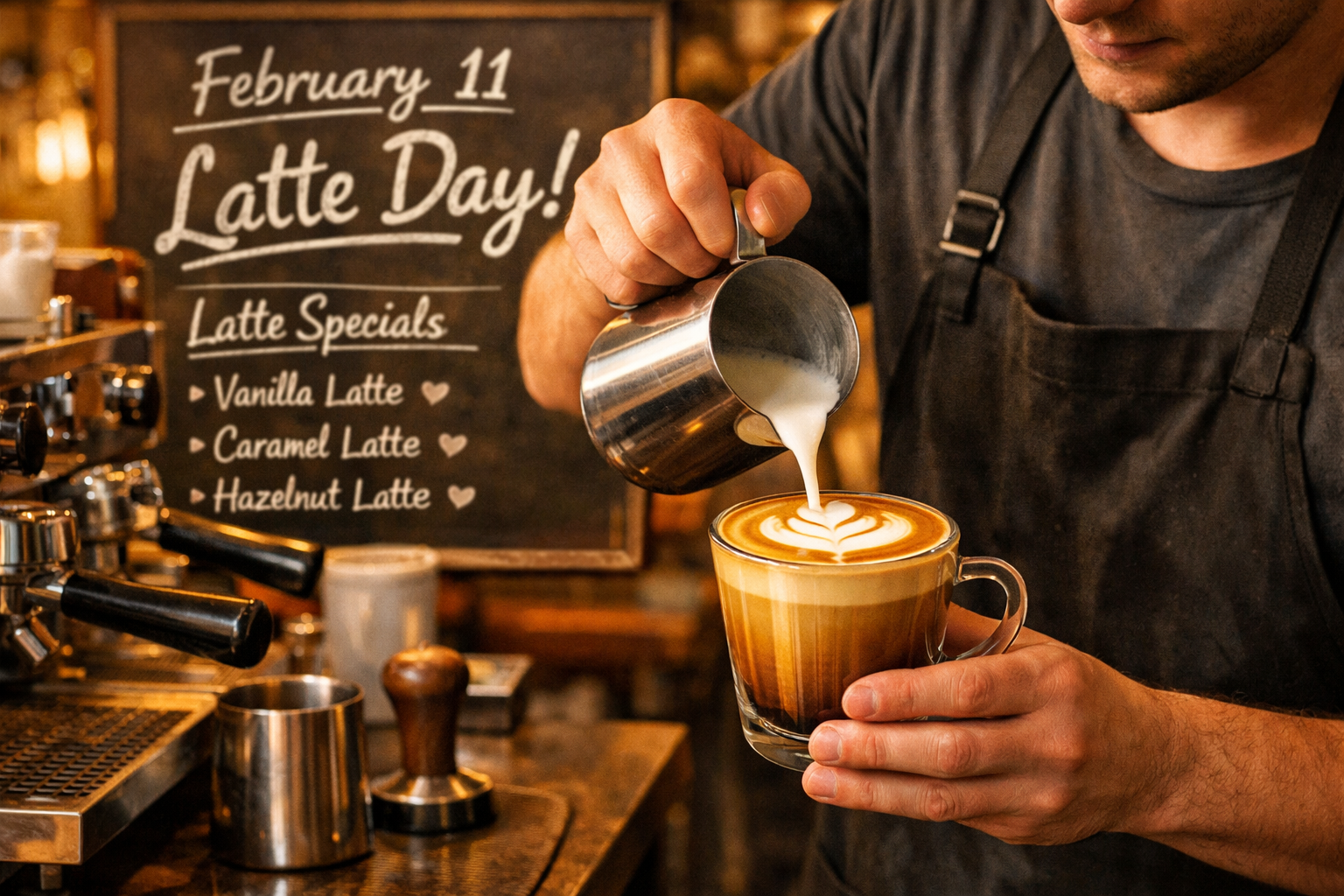
One of the best things about February 11 Latte Day is how accessible it is. There are no special decorations required, no elaborate meals to prepare — just a great cup of coffee and the people (or quiet moments) you enjoy it with.
🏪 At Coffee Shops
Many local and national coffee chains use National Latte Day as an opportunity to:
- Offer discounts or buy-one-get-one deals on lattes
- Launch limited-edition seasonal flavors
- Host latte art competitions or demonstrations
- Feature barista spotlights on social media
🏠 At Home
Home baristas have embraced February 11 Latte Day as a chance to experiment. Popular at-home activities include:
- Practicing latte art with a milk frother or espresso machine
- Trying new flavor combinations (lavender, brown sugar, matcha, cardamom)
- Making iced lattes or cold brew lattes for a different twist
- Exploring plant-based milk options like oat, almond, or coconut milk
📱 On Social Media
Social media plays a huge role in amplifying the holiday. Hashtags like #NationalLatteDay and #LatteLove trend on platforms like Instagram and TikTok each February 11, with users sharing photos of their latte art, café visits, and homemade creations.
Popular Latte Variations Worth Trying
If the classic latte feels too familiar, February 11 Latte Day is the perfect excuse to branch out. Here are some crowd favorites:
- ☕ Vanilla Latte — A timeless classic with sweet vanilla syrup
- 🎃 Pumpkin Spice Latte — Seasonal favorite (typically fall, but worth recreating)
- 🌿 Matcha Latte — Green tea powder with steamed milk; no espresso required
- 🌸 Lavender Latte — Floral and calming, popular in specialty cafés
- 🍫 Mocha Latte — Espresso, chocolate syrup, and steamed milk
- 🧡 Brown Sugar Oat Milk Latte — A modern favorite with a caramel-like sweetness
- 🧊 Iced Latte — Espresso over ice with cold milk; refreshing year-round
The Cultural Significance of the Latte in 2026
In 2026, the latte remains one of the top-selling espresso drinks in the United States and globally. The specialty coffee industry continues to grow, with consumers showing strong interest in:
- Sustainability — ethically sourced beans and eco-friendly packaging
- Customization — personalized syrups, milk alternatives, and strength preferences
- Craft coffee culture — supporting independent roasters and local cafés
The latte has also become a symbol of self-care and daily ritual for millions of people. Taking a moment to enjoy a well-crafted latte — whether alone or with friends — represents a small but meaningful pause in a busy day.
“The latte is proof that simple ingredients, combined with skill and care, can create something truly extraordinary.”
Tips for Making the Perfect Latte at Home
Celebrating February 11 Latte Day at home is easier than ever. Follow these steps for a café-quality result:
- Use fresh espresso — A good espresso machine or stovetop moka pot works well.
- Choose your milk wisely — Whole milk froths best; oat milk is the top plant-based choice for texture.
- Steam to 150°F (65°C) — Avoid scorching the milk, which creates a bitter taste.
- Pour slowly — Hold the cup at an angle and pour the steamed milk in a steady stream for latte art.
- Add flavor last — Stir in syrups after brewing for even distribution.
Conclusion
February 11 Latte Day is more than just a fun excuse to drink coffee — it’s a celebration of craft, culture, and community. From its Italian origins to its modern-day status as a global coffee icon, the latte represents the perfect balance of simplicity and artistry. Whether visiting a favorite café, experimenting with new flavors at home, or sharing a beautifully crafted cup on social media, there are countless ways to participate.
✅ Actionable Next Steps
- Mark your calendar for February 11 and plan a café visit or home brewing session.
- Follow local coffee shops on social media to catch National Latte Day deals and promotions.
- Try one new latte variation this year — step outside the usual order.
- Share your latte on social media with #NationalLatteDay to join the global celebration.
- Support local roasters by purchasing specialty beans and learning more about where your coffee comes from.
Every February 11, the world gets a little warmer — one latte at a time. ☕
References
- National Day Calendar. (n.d.). National Latte Day – February 11. Retrieved from https://nationaldaycalendar.com
- Specialty Coffee Association. (2023). Coffee market trends and consumer insights. SCA Publications.
- Pendergrast, M. (2010). Uncommon Grounds: The History of Coffee and How It Transformed Our World. Basic Books.
- International Coffee Organization. (2022). Coffee report and outlook. ICO.
- Rao, S. (2014). The Professional Barista’s Handbook. Scott Rao Coffee.