
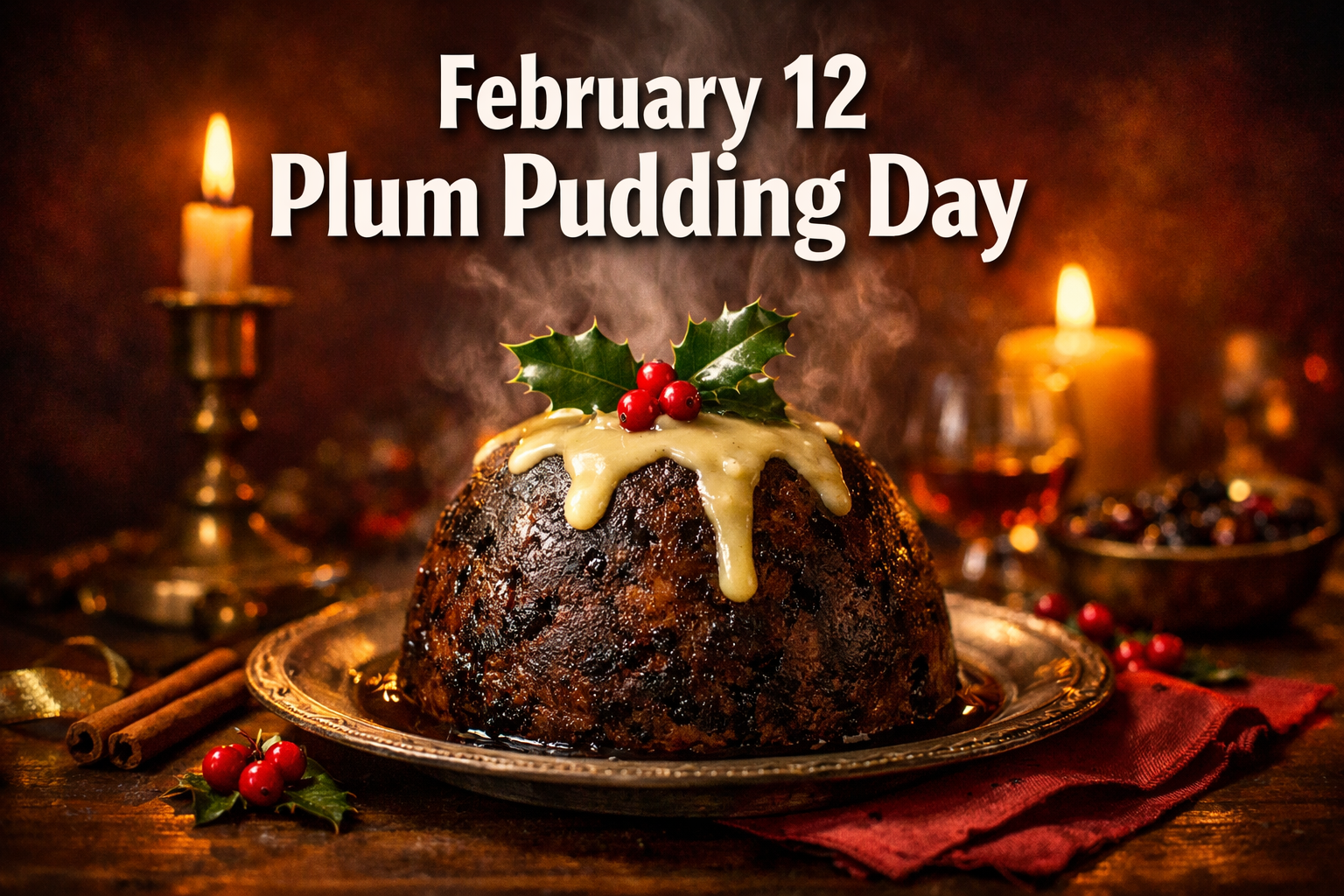
Every year, a surprisingly delightful food holiday arrives in the middle of February — and it has nothing to do with chocolates or roses. February 12 Plum Pudding Day invites food lovers, history buffs, and curious cooks alike to rediscover one of Britain’s most iconic desserts. Whether you’ve never tasted plum pudding or you grew up watching it arrive at the table in a blaze of blue flame, this day is worth marking on your calendar. 🎉
Key Takeaways
- 📅 February 12 Plum Pudding Day is an annual food holiday celebrating the rich history of traditional plum pudding.
- 🍮 Plum pudding has deep roots in medieval British cuisine and became a Christmas staple by the Victorian era.
- 🌍 The holiday encourages people to bake, taste, and share this classic dessert outside the typical holiday season.
- 📖 Despite its name, traditional plum pudding contains no fresh plums — the term “plum” historically referred to raisins or dried fruits.
- 🕯️ Celebrating this day is a fun, accessible way to connect with culinary heritage and explore classic British baking traditions.
What Is February 12 Plum Pudding Day?
February 12 Plum Pudding Day is an unofficial food observance celebrated annually on February 12. It shines a spotlight on plum pudding — a dense, steamed dessert packed with dried fruits, warming spices, and often a splash of brandy or rum. The holiday sits in a long tradition of quirky American and British food days that celebrate beloved dishes year-round, not just during their “official” seasons.
The day encourages people to step away from the usual Valentine’s Day preparations and instead honor a dessert with centuries of cultural significance. It’s a moment to bake from scratch, visit a bakery, or simply learn more about a dish that shaped British culinary identity.
“Plum pudding is more than a dessert — it’s a time capsule of history, tradition, and community.”
The Rich History Behind Plum Pudding
Origins in Medieval Britain
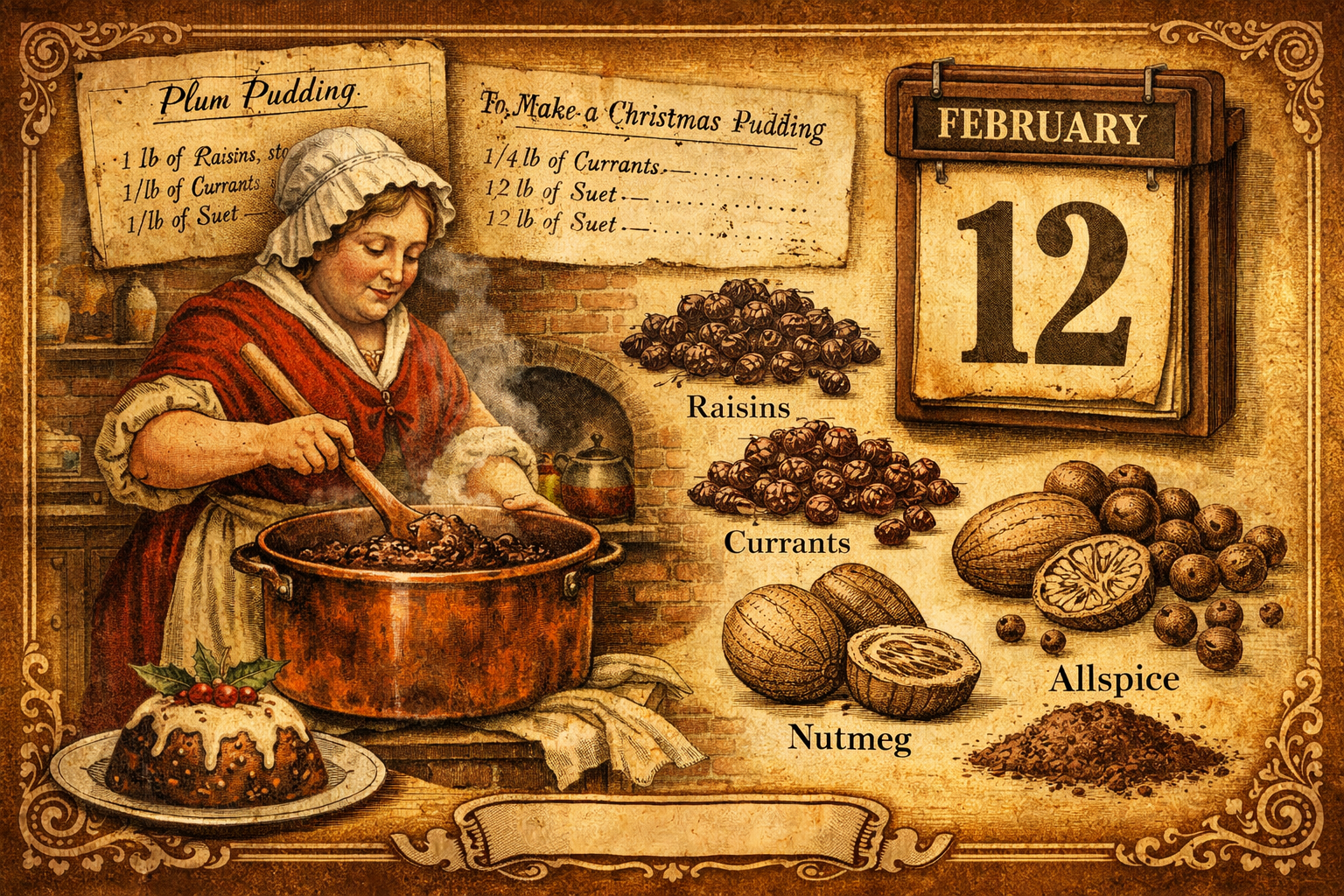
Plum pudding’s story begins long before the Victorian Christmas table. Its earliest ancestors were pottages — thick, savory stews made with meat, oatmeal, dried fruits, and spices. By the 15th and 16th centuries, cooks began sweetening these mixtures, gradually moving toward a dessert format.
The word “plum” in the pudding’s name is a common source of confusion. In older English, “plum” was a catch-all term for dried fruits, particularly raisins and currants. Fresh plums were rarely, if ever, used. This naming convention explains why modern plum pudding contains no actual plums.
The Victorian Golden Age
Plum pudding reached its peak popularity during the Victorian era (1837–1901). Queen Victoria’s court helped cement it as the centerpiece of the Christmas feast. Charles Dickens famously immortalized the dish in A Christmas Carol (1843), where Mrs. Cratchit’s pudding arrives at the table “like a speckled cannon-ball, so hard and firm, blazing in half of half-a-quartern of ignited brandy.”
The tradition of flaming the pudding — pouring warmed brandy over it and setting it alight — became a beloved ritual, symbolizing prosperity and celebration.
Key Ingredients Through the Ages
| Era | Key Ingredients |
|---|---|
| Medieval (1300s–1400s) | Meat, oatmeal, dried fruits, spices |
| Tudor (1500s–1600s) | Dried fruits, suet, breadcrumbs, ale |
| Victorian (1800s) | Suet, raisins, currants, eggs, brandy |
| Modern (2000s–present) | Suet or butter, mixed dried fruits, spices, stout or brandy |
Why February 12? Understanding the Holiday’s Timing
At first glance, celebrating plum pudding in mid-February seems unusual. After all, this dessert is most closely associated with Christmas. However, February 12 Plum Pudding Day makes a compelling case for enjoying this classic treat year-round.
Several food historians and culinary enthusiasts suggest that mid-February is a perfect time to revisit winter comfort foods before spring arrives. It also provides a fun, food-focused alternative to Valentine’s Day celebrations for those who prefer a cozy kitchen tradition over commercial gift-giving.
3 Reasons to Celebrate in February 🍮
- Beat the post-holiday slump — February can feel long and grey; a warm, spiced pudding brings comfort and cheer.
- Explore culinary history — It’s an ideal time to connect with British food traditions in a relaxed, low-pressure setting.
- Share with others — Plum pudding is designed to be made in large quantities and shared, making it a natural social activity.
How to Celebrate February 12 Plum Pudding Day
Celebrating this food holiday doesn’t require a formal dinner party or professional cooking skills. Here are practical ways to mark the occasion in 2026:
🥄 Bake a Traditional Plum Pudding
Making plum pudding from scratch is a rewarding project. A classic recipe typically includes:
- Suet or butter (for richness)
- Mixed dried fruits — raisins, currants, sultanas, mixed peel
- Breadcrumbs and flour (for structure)
- Eggs and brown sugar (for binding and sweetness)
- Warming spices — cinnamon, nutmeg, allspice, cloves
- Brandy, rum, or stout (for flavor and preservation)
The mixture is packed into a pudding basin, covered tightly, and steamed for several hours. Many bakers prepare puddings weeks or months in advance, allowing the flavors to deepen over time.
🛒 Buy From a Local Bakery or Specialty Shop
Not everyone has hours to spend steaming a pudding. Many British bakeries, specialty food shops, and online retailers offer high-quality plum puddings ready to heat and serve. Supporting a local business while exploring this tradition is a win-win.
📚 Host a Plum Pudding History Night
Gather friends or family for an informal evening centered on British culinary history. Pair slices of plum pudding with:
- Brandy butter or clotted cream
- A pot of strong English tea
- Readings from Dickens or Victorian food writing
🌐 Share on Social Media
Use the hashtag #PlumPuddingDay to connect with others celebrating around the world. Sharing photos of homemade puddings, vintage recipes, or historical facts helps keep this tradition alive and visible online.
Nutritional Profile and Modern Adaptations
Traditional plum pudding is an energy-dense dessert, rich in carbohydrates, fats, and natural sugars from dried fruit. A typical serving (approximately 100g) contains:
| Nutrient | Approximate Amount |
|---|---|
| Calories | 280–330 kcal |
| Carbohydrates | 45–55g |
| Fat | 8–12g |
| Protein | 3–5g |
| Fiber | 2–4g |
Modern bakers have developed lighter and dietary-friendly versions, including:
- Vegan plum pudding — replacing suet with coconut oil and eggs with flax eggs
- Gluten-free versions — using rice flour or almond flour
- Lower-sugar recipes — relying on the natural sweetness of dried fruits
These adaptations ensure that February 12 Plum Pudding Day remains inclusive and accessible for people with a wide range of dietary needs.
Plum Pudding in Popular Culture and Literature
Few desserts have left as deep a mark on literature and culture as plum pudding. Beyond Dickens, the dish appears in:
- Lewis Carroll’s Through the Looking-Glass (1871) — Alice meets a talking plum pudding at the Queen’s dinner table.
- Traditional English Christmas carols — references to pudding appear in festive songs dating back centuries.
- Wartime Britain — during World War II rationing, plum pudding became a symbol of resilience and home; families saved precious dried fruits and sugar to maintain the tradition.
“Few foods carry the emotional weight of plum pudding — it connects generations through taste, memory, and shared ritual.”
Conclusion: Make February 12 Plum Pudding Day Count
February 12 Plum Pudding Day is more than a quirky food holiday. It’s an invitation to slow down, connect with culinary history, and enjoy a dessert that has nourished and delighted people for centuries. In 2026, whether the plan is to bake a pudding from scratch, visit a specialty shop, or simply read about the dish’s fascinating origins, there are meaningful ways to participate.
✅ Actionable Next Steps
- Mark February 12 on your calendar and plan your celebration in advance.
- Source a traditional plum pudding recipe from a trusted cookbook or reputable food website.
- Gather ingredients early — dried fruits, suet, and brandy may need to be ordered online or found at specialty stores.
- Invite others to join — share the history and the dessert with friends, family, or colleagues.
- Post your experience online using #PlumPuddingDay to inspire others and keep the tradition growing.
Plum pudding has survived centuries of changing tastes, wars, and shifting food trends. Celebrating it on February 12 is a small but meaningful act of cultural appreciation — and it tastes wonderful, too. 🍮✨
References
- Dickens, C. (1843). A Christmas Carol. Chapman & Hall.
- Carroll, L. (1871). Through the Looking-Glass, and What Alice Found There. Macmillan.
- Davidson, A. (1999). The Oxford Companion to Food. Oxford University Press.
- Mason, L. (2004). Food Culture in Great Britain. Greenwood Press.
- Wilson, C. A. (1973). Food and Drink in Britain: From the Stone Age to the 19th Century. Constable.
- Humble, N. (2010). Culinary Pleasures: Cookbooks and the Transformation of British Food. Faber & Faber.