Last updated: February 15, 2026
Quick Answer: February 15 National Gumdrop Day is an unofficial annual food holiday observed every year on February 15 in the United States. It celebrates the gumdrop, a gelatin-based, sugar-coated candy that has been a staple of American confectionery since the late 1800s. The holiday has no formal government recognition, but it appears consistently on food-day calendars and is widely observed through eating, baking, and sharing gumdrops.
Key Takeaways
- February 15 National Gumdrop Day falls every year on February 15, with the 2026 observance landing on a Sunday.
- The holiday is unofficial, with no congressional record or presidential proclamation backing it. [6]
- Gumdrops are typically gelatin-based, though pectin-based vegan versions exist.
- The exact origin of National Gumdrop Day is unknown; the gumdrop candy itself dates to the late 19th or early 20th century in the U.S. [5]
- Popular ways to celebrate include eating gumdrops, baking with them, decorating cakes, and doing gumdrop crafts with kids.
- February 15 also shares calendar space with National I Want Butterscotch Day, making it a minor confectionery double-header. [4]
- Most major grocery stores, candy shops, and online retailers carry gumdrops year-round, making the holiday easy to observe.
- Standard gumdrops contain sugar, corn syrup, gelatin, and food coloring; they are not vegan in traditional form.
What Is National Gumdrop Day?
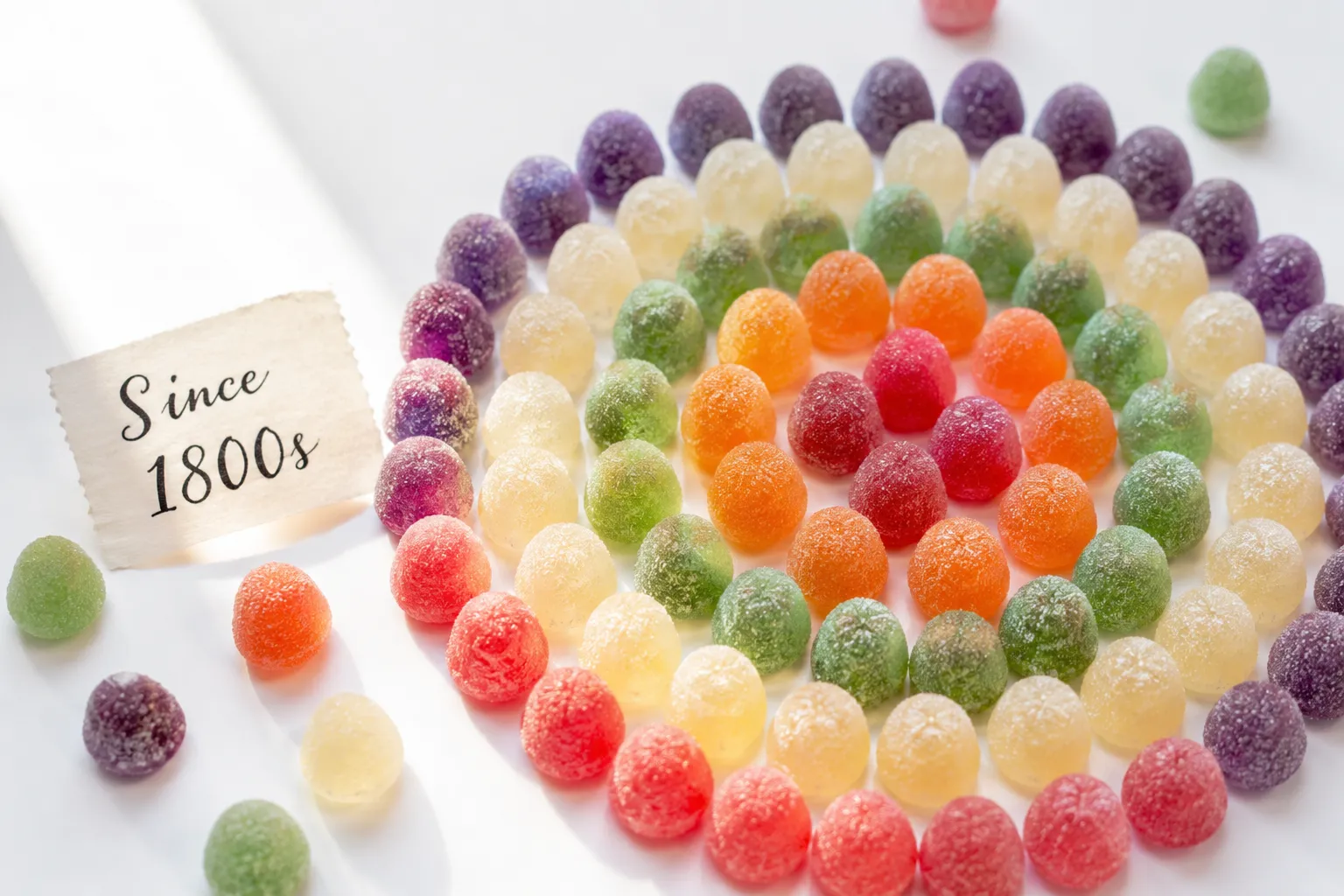
National Gumdrop Day is an unofficial U.S. food holiday dedicated to celebrating gumdrops, the small, jewel-colored, sugar-coated candies that have appeared in candy dishes, gingerbread houses, and holiday baking for well over a century. [3] It is observed every February 15 and is recognized by food-day calendars and confectionery enthusiasts across the country, even though no government body formally sponsors it. [6]
Gumdrops themselves are defined by a few consistent traits:
- Base: Gelatin or pectin, which gives the candy its chewy, firm texture
- Coating: A generous layer of granulated sugar on the outside
- Flavors: Typically fruit-flavored (cherry, orange, lemon, lime, grape) or spice-flavored (cinnamon, clove, anise)
- Shapes: Classic dome or teardrop shape, though novelty shapes exist
- Uses: Eaten as a snack, used in baking, or pressed into gingerbread house decorations [4][5][7]
The holiday sits within a busy February calendar that includes Black History Month, Valentine’s Day (February 14), and various other food observances. If you enjoy exploring February food holidays, check out the National Plum Pudding Day guide for February 12 and the February 11 Peppermint Patty Day celebration for more sweet inspiration leading up to the 15th.
When Did National Gumdrop Day Start, and Who Invented Gumdrops?
The exact founding date of National Gumdrop Day as an observance is unknown, and no single creator has been identified. [5][7] What is clear is that the holiday has appeared on food-day calendars for many years and continues to be listed consistently on February 15 through at least 2035. [6]
As for the candy itself, gumdrops are believed to have become popular in the United States during the late 19th or early 20th century. [5] The candy’s rise tracks with the broader industrialization of American confectionery, when sugar became more affordable and candy manufacturing scaled up. Spice drops, a close relative of the gumdrop, were a common penny candy in that era.
Key timeline context:
- Late 1800s: Gelatin-based candy technology matures in the U.S.
- Early 1900s: Gumdrops become a staple penny candy in American shops
- Mid-20th century: Gumdrops appear prominently in holiday baking and gingerbread decoration
- Present: February 15 National Gumdrop Day recognized annually on food-holiday calendars [1][6]
No candy manufacturer or trade group has been credited with establishing the holiday, which is consistent with many informal food observances that emerged organically through food-day calendar culture. [6]
Why Is February 15 Gumdrop Day?
February 15 is the designated date for National Gumdrop Day, though no documented explanation exists for why this specific date was chosen. [5][7] The most practical theory is that it was placed the day after Valentine’s Day to extend the candy-themed holiday spirit, since gumdrops are colorful, festive, and gift-friendly.
February 15 also coincides with National I Want Butterscotch Day on some calendars, suggesting that food-day compilers treat mid-February as a general confectionery window rather than a date reserved for one specific candy. [4]
“National Gumdrop Day is always February 15, an unofficial observance with no known founding body, but a consistent presence on food holiday calendars year after year.” [6]
Upcoming observance dates:
| Year | Date | Day of Week |
|---|---|---|
| 2026 | February 15 | Sunday |
| 2027 | February 15 | Monday |
| 2028 | February 15 | Tuesday |
How Do People Celebrate February 15 National Gumdrop Day?
Celebrating February 15 National Gumdrop Day is straightforward and flexible. The most common approaches involve eating gumdrops, baking with them, or using them in crafts and activities. [4][9][14]
Popular ways to celebrate:
- Eat them straight from the bag. Buy a classic bag of gumdrops and enjoy them as-is. This is the simplest and most direct way to honor the day.
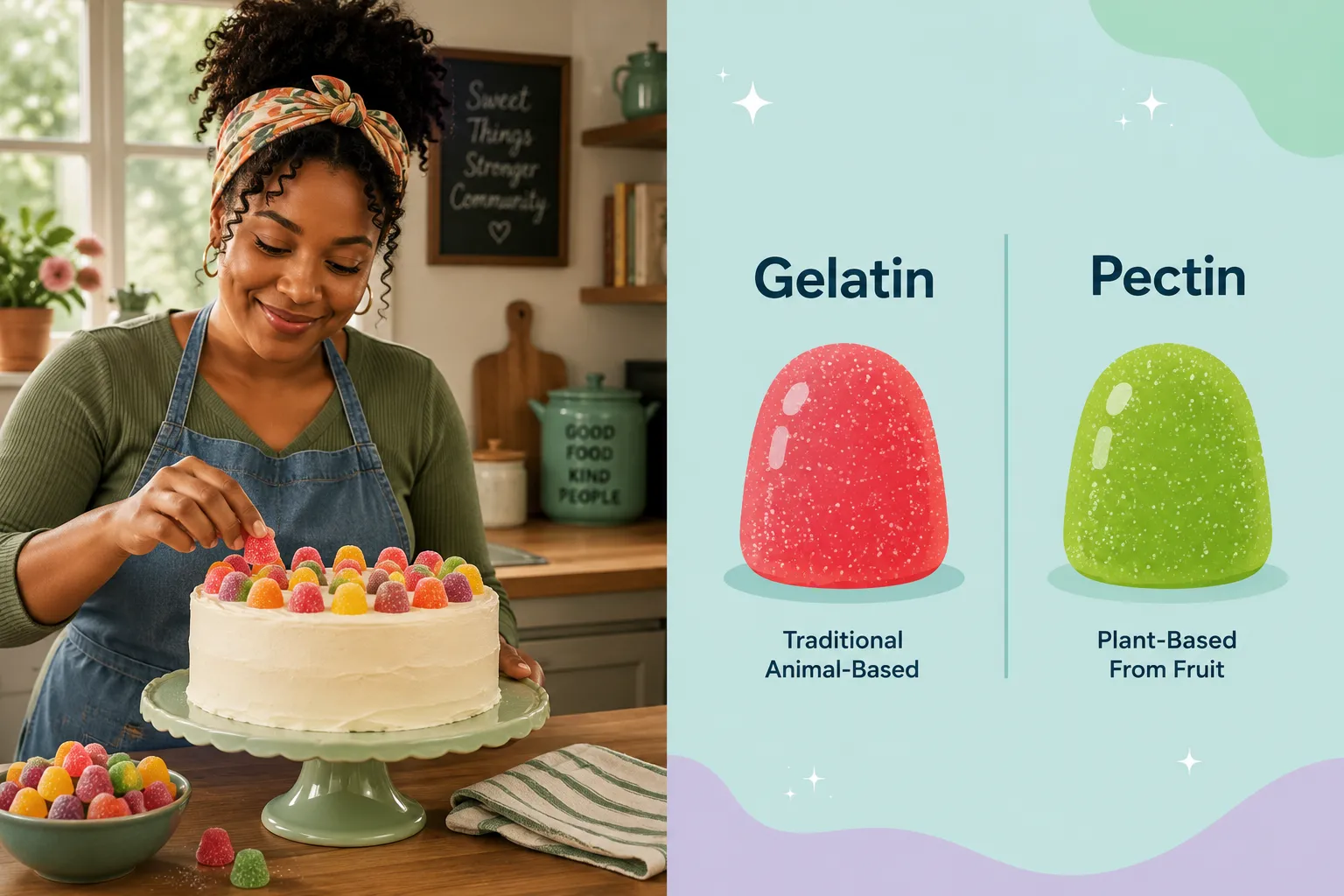
- Bake gumdrop cookies or cakes. Fold chopped gumdrops into sugar cookie dough or use them to decorate a frosted cake.
- Build a gumdrop gingerbread house. Use gumdrops as the primary decoration material on a pre-built gingerbread structure.
- Share a bag with coworkers or friends. Gumdrops travel well and make an easy, low-cost treat to share.
- Host a gumdrop tasting. Set out several brands or flavor varieties and compare them side by side.
- Do gumdrop crafts with kids. Gumdrops and toothpicks are a classic building material for geometric shapes and simple sculptures (more on this below).
For those who enjoy the broader February food holiday calendar, the February 5 National Chocolate Fondue Day guide pairs well with gumdrop celebrations, since gumdrops can be dipped in chocolate fondue for a creative twist.
Homemade Gumdrop Recipes
Making gumdrops at home is entirely achievable with basic pantry ingredients. Homemade versions allow for custom flavors, natural colorings, and dietary adjustments. [9]
Basic Homemade Gumdrop Recipe
Ingredients:
- 2 envelopes unflavored gelatin (or agar-agar for vegan version)
- 1/2 cup cold water
- 2 cups granulated sugar, divided
- 1/2 cup light corn syrup
- 1 teaspoon flavored extract (lemon, orange, cherry, or peppermint)
- Food coloring of your choice
Steps:
- Sprinkle gelatin over cold water in a small bowl and let it bloom for 5 minutes.
- Combine 1.5 cups sugar and corn syrup in a saucepan over medium heat, stirring until the sugar dissolves.
- Add the bloomed gelatin to the hot sugar mixture and stir until fully dissolved.
- Remove from heat, stir in extract and food coloring.
- Pour into a lightly oiled 8×8 inch pan and refrigerate for at least 3 hours until firm.
- Cut into small squares or use small cookie cutters for shapes.
- Roll each piece in the remaining 1/2 cup of granulated sugar to coat.
- Allow to air-dry on a wire rack for 1-2 hours before serving or storing.
Tips:
- For firmer gumdrops, increase gelatin by half an envelope.
- Natural food colorings (beet juice for red, turmeric for yellow) work but produce softer hues.
- Store in an airtight container at room temperature for up to two weeks.
Are Gumdrops Vegan or Gelatin-Based?
Most traditional gumdrops are not vegan because they contain gelatin, which is derived from animal collagen. [5] This is a key consideration for anyone following a vegan or vegetarian diet.
Gumdrop ingredient breakdown:
| Ingredient | Source | Vegan? |
|---|---|---|
| Gelatin | Animal collagen (pork or beef) | No |
| Pectin | Plant-based (fruit peels) | Yes |
| Sugar | Cane or beet sugar | Usually yes |
| Corn syrup | Corn starch | Yes |
| Food coloring | Synthetic or natural | Varies |
Choose pectin-based gumdrops if: you follow a vegan or vegetarian diet, keep kosher or halal, or have dietary restrictions around animal products.
Several brands now produce pectin-based gumdrops specifically marketed as vegan. Surf Sweets and YumEarth are two commonly cited options available at natural food stores and online retailers. Always check the ingredient label, as formulations can change.
Best Gumdrop Brands to Buy and Where to Find Them
Gumdrops are widely available year-round at grocery stores, candy shops, and online retailers. [3] The best brand for you depends on whether you want classic flavor, a vegan option, or a premium artisan product.
Top gumdrop brands in 2026:
- Brach’s: The most widely recognized mass-market gumdrop brand in the U.S., available at virtually every grocery chain. Classic spice drops and fruit flavors.
- Black Forest: Known for fruit-flavored gumdrops made with real fruit juice. Widely available at major retailers.
- Surf Sweets: Organic, pectin-based, and vegan-friendly. Found at Whole Foods, Sprouts, and online.
- YumEarth: Allergy-friendly and vegan, made with plant-based pectin. Available at Target, Amazon, and natural food stores.
- Albanese: Known for vibrant flavors and a softer texture than traditional gumdrops. Available online and at specialty candy stores.
Where to buy gumdrops near you:
- Major grocery chains (Kroger, Safeway, Publix, Walmart)
- Target and Walgreens candy aisles
- Specialty candy stores
- Amazon and brand websites for bulk or specialty orders
- Natural food stores for vegan options
Gumdrop Day Deals and Discounts
National Gumdrop Day does not typically generate the same level of retailer promotion as larger candy holidays like Valentine’s Day or Halloween. However, there are still ways to find savings around February 15.
Practical tips for finding deals:
- Post-Valentine’s Day sales: February 15 is the day after Valentine’s Day, and many retailers discount candy heavily on this date to clear seasonal inventory. Check for mixed candy bags that may include gumdrops.
- Bulk buying: Stores like Costco and Sam’s Club often carry large bags of Brach’s or similar brands at a lower per-ounce cost.
- Online retailers: Amazon and candy-specific sites like CandyWarehouse.com frequently offer bulk pricing.
- Coupon apps: Ibotta and Fetch Rewards sometimes feature candy brand offers that apply to gumdrop purchases.
Common mistake: Waiting until February 15 to shop. Post-Valentine’s candy sells out quickly. Buy your gumdrops on February 14 or earlier to ensure availability.
Gumdrop Day Activities for Kids
Gumdrops are one of the most versatile craft materials for children, and February 15 National Gumdrop Day is a natural occasion to combine a sweet treat with a hands-on activity. [9]
Top kid-friendly gumdrop activities:
- Gumdrop and toothpick engineering: Challenge kids to build geometric shapes, bridges, or towers using gumdrops as connectors and toothpicks as beams. This is a classic STEM activity that develops spatial reasoning.
- Gumdrop gingerbread decorating: Use pre-made gingerbread panels or graham crackers as a base and let kids decorate with gumdrops and frosting.
- Gumdrop sorting and counting: For younger children, sorting gumdrops by color and counting them is a simple math activity.
- Gumdrop painting: Press a gumdrop into paint and use it as a stamp to create colorful dot art.
- Gumdrop taste test: Set up a blind taste test with different flavors and brands, then have kids rank their favorites.
These activities work well in classroom settings, birthday parties, or as a simple after-school project on February 15.
Gumdrop Nutrition Facts
Gumdrops are a sugar-forward candy with minimal nutritional complexity. They are low in fat but high in simple sugars and calories relative to their small serving size.
Typical nutrition for a 1.4 oz (about 10 pieces) serving of standard gumdrops (estimate based on standard candy labeling):
- Calories: approximately 130-150
- Total fat: 0g
- Sodium: 10-15mg
- Total carbohydrates: 33-38g
- Sugars: 25-30g
- Protein: 1-2g (from gelatin)
Key considerations:
- Gumdrops are gluten-free in most formulations, but always verify with the manufacturer if celiac disease is a concern.
- They are not a significant source of vitamins or minerals.
- The gelatin content provides a small amount of protein, but not enough to be nutritionally meaningful.
- Vegan pectin-based versions have a nearly identical nutritional profile to gelatin-based ones.
Gumdrops are best treated as an occasional treat rather than a regular snack, especially for children.
Do Gumdrops Go Bad or Expire?
Gumdrops have a relatively long shelf life compared to many other candies. Commercially produced gumdrops typically last 12 to 18 months from the manufacturing date when stored properly, though they remain safe to eat beyond that point in most cases.
Storage guidelines:
- Best storage: Airtight container at room temperature, away from heat and humidity
- Avoid: Direct sunlight, high humidity, and refrigeration (cold temperatures can cause sugar bloom and texture changes)
- Signs of spoilage: Mold (rare but possible if exposed to moisture), extreme hardening, or off smells
Shelf life by storage method:
| Storage Method | Estimated Shelf Life |
|---|---|
| Sealed original bag, room temp | 12-18 months |
| Opened bag, airtight container | 6-12 months |
| Homemade gumdrops, airtight container | 2-3 weeks |
| Refrigerated (not recommended) | Texture degrades; avoid |
Homemade gumdrops have a much shorter shelf life than commercial ones because they lack preservatives. Use them within two to three weeks for best texture and flavor.

How Does February 15 National Gumdrop Day Compare to Other Candy Holidays?
February 15 National Gumdrop Day is one of dozens of unofficial candy and food holidays spread across the calendar year. It is smaller in cultural footprint than major candy observances but holds a consistent place in the food-holiday ecosystem.
Gumdrop Day vs. other candy holidays:
- Halloween (October 31): The dominant candy holiday in the U.S. by far, driven by retail sales and cultural tradition. Gumdrops are one of many candies featured.
- Valentine’s Day (February 14): Chocolate-focused, with significant retail backing. Gumdrop Day falls the day after, benefiting from post-holiday candy sales.
- National Candy Day (November 4): A broader unofficial holiday celebrating all candy, not a specific type.
- National Lollipop Day (July 20): Similar in structure to Gumdrop Day, celebrating a single candy type with no formal backing.
- National Chocolate Day (October 28): More widely recognized due to chocolate’s dominant market position.
Compared to the National Dark Chocolate Day on February 1, which benefits from significant health-interest content and retailer promotion, Gumdrop Day is a quieter, more niche observance. Its charm lies in its simplicity and the nostalgia gumdrops carry for many people.
FAQ: February 15 National Gumdrop Day
Q: Is National Gumdrop Day a real holiday? A: It is a real unofficial food holiday observed annually on February 15. It has no government recognition or formal sponsor, but it appears consistently on food-day calendars and is celebrated by candy enthusiasts across the U.S. [6]
Q: What day is National Gumdrop Day in 2026? A: National Gumdrop Day 2026 falls on Sunday, February 15. [1][6]
Q: Who created National Gumdrop Day? A: The creator of National Gumdrop Day is unknown. No founding organization, individual, or company has been identified as the originator. [5][7]
Q: Are gumdrops the same as gummy bears? A: No. Gumdrops are firmer, sugar-coated, and dome-shaped. Gummy bears are softer, not sugar-coated, and shaped like bears. Both are gelatin-based, but the texture and coating differ significantly.
Q: Can diabetics eat gumdrops? A: Standard gumdrops are high in sugar and not suitable for people managing blood sugar without careful portion control. Consult a healthcare provider for personalized guidance.
Q: What flavors do gumdrops come in? A: Common flavors include cherry, orange, lemon, lime, grape, strawberry, and spice varieties like cinnamon, clove, and anise. [4][5]
Q: Are gumdrops gluten-free? A: Most commercially produced gumdrops are gluten-free, but individuals with celiac disease should verify with the specific manufacturer, as formulations and facility practices vary.
Q: How long do gumdrops last? A: Commercially sealed gumdrops last 12 to 18 months at room temperature. Once opened, store in an airtight container and use within 6 to 12 months for best quality.
Q: What is the difference between a gumdrop and a spice drop? A: Spice drops are a type of gumdrop flavored with spices (cinnamon, clove, anise, mint) rather than fruit. They share the same shape and sugar coating but have a more intense, herbal flavor profile.
Q: Can I use gumdrops in baking? A: Yes. Gumdrops can be chopped and folded into cookie dough, used to decorate frosted cakes, or pressed into gingerbread structures. They hold their shape reasonably well at room temperature but may melt slightly if baked directly in dough at high heat.
Q: Where can I find vegan gumdrops? A: Surf Sweets, YumEarth, and similar brands produce pectin-based vegan gumdrops. They are available at Whole Foods, Sprouts, Target, and Amazon.
Q: What other food holidays fall in mid-February? A: February 15 also shares space with National I Want Butterscotch Day on some calendars. [4] Nearby food holidays include National Plum Pudding Day on February 12 and Peppermint Patty Day on February 11.
Conclusion
February 15 National Gumdrop Day is a small but genuinely enjoyable food holiday that gives candy lovers a reason to celebrate one of America’s oldest confectionery staples. Whether the plan is to pick up a bag of Brach’s spice drops at the grocery store, bake gumdrop cookies with the family, or set up a toothpick-and-gumdrop engineering challenge for kids, the day is easy to observe and costs very little.
Actionable next steps for 2026:
- Buy gumdrops on February 14 to take advantage of post-Valentine’s Day candy sales and ensure stock is available.
- Check the label before buying if you or someone in your household follows a vegan diet, and opt for Surf Sweets or YumEarth.
- Try one homemade batch using the recipe above to experience the difference between store-bought and fresh gumdrops.
- Involve kids with the toothpick-and-gumdrop building activity for a screen-free afternoon project.
- Explore the broader February food holiday calendar for more celebration ideas, including the February 10 Cream Cheese Brownie Day and February 5 National Chocolate Fondue Day.
Gumdrops may not be the most glamorous candy on the shelf, but their staying power across more than a century of American confectionery history says something real about their appeal. February 15 is the perfect occasion to rediscover them.
References
[1] National Gumdrop Day 514 – https://www.wikidates.org/holiday/national-gumdrop-day_514.html [3] National Gumdrop Day – https://nationaltoday.com/national-gumdrop-day/ [4] National Gum Drop Day – https://www.punchbowl.com/holidays/national-gum-drop-day [5] National Gumdrop Day – https://nationalfooddays.org/national-gumdrop-day/ [6] Gumdrop Day – https://www.timeanddate.com/holidays/fun/gumdrop-day [7] February 15 National Gumdrop Day – https://web-holidays.com/blog/2014/02/15/february-15-national-gumdrop-day [9] National Gumdrop Day 2 – https://celebratewhat.com/national-gumdrop-day-2/
Leave a Reply