
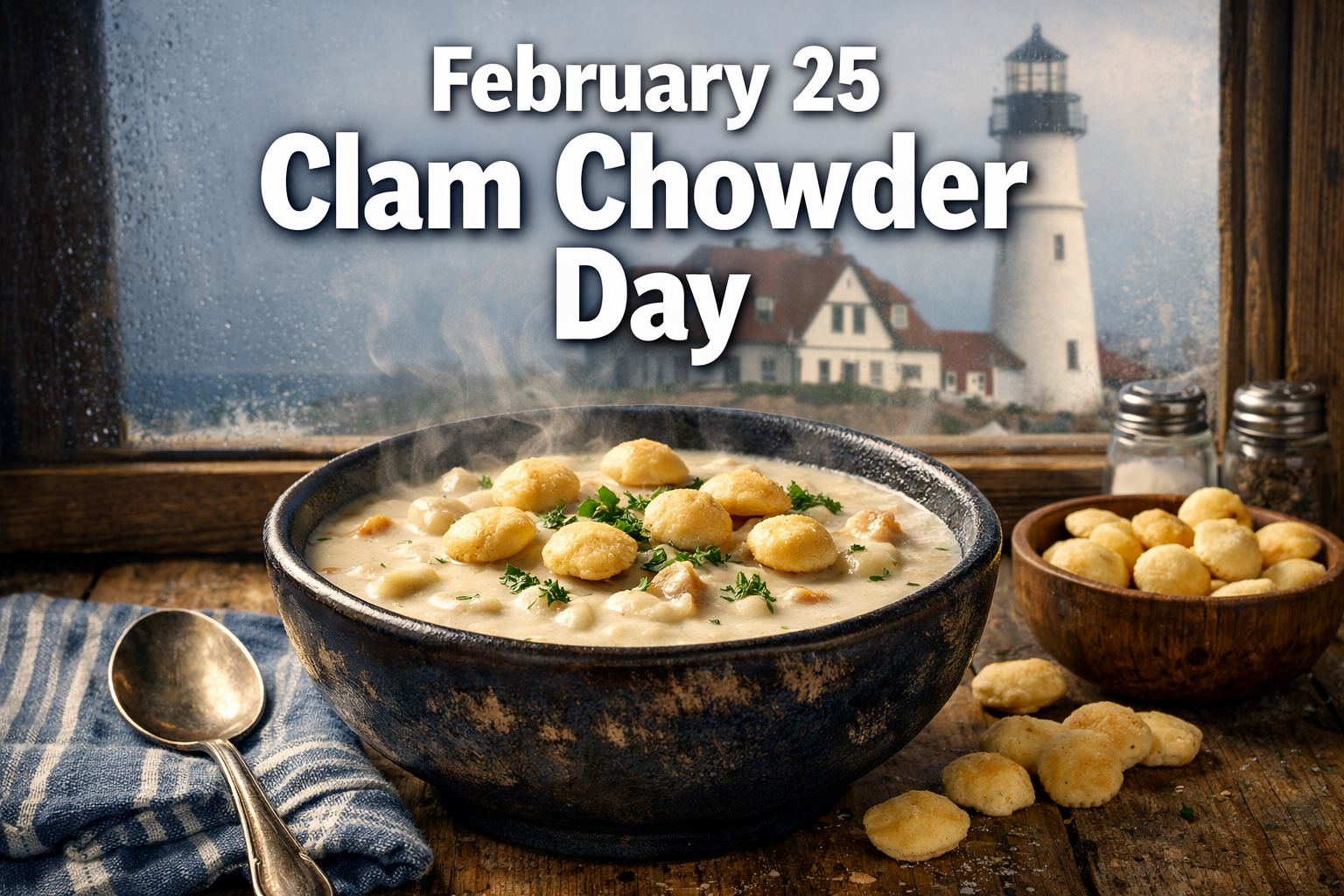
Every year on February 25, soup lovers across the United States have a delicious reason to celebrate. February 25 Clam Chowder Day — also known as National Clam Chowder Day — is a fun, food-focused holiday that honors one of America’s most iconic and comforting dishes. Whether you prefer a creamy New England style or a bold Manhattan version, this day invites everyone to grab a spoon and dig in. 🥣
Key Takeaways
- 📅 February 25 Clam Chowder Day is celebrated annually on February 25 in the United States.
- 🦪 Clam chowder has deep roots in American culinary history, dating back to the 1700s.
- 🍲 There are four main regional styles of clam chowder, each with a distinct flavor profile.
- 🎉 The holiday is a great opportunity to visit local seafood restaurants, cook at home, or attend chowder festivals.
- 🌊 Clam chowder is more than just soup — it is a cultural symbol tied to coastal American identity.
What Is February 25 Clam Chowder Day?
February 25 Clam Chowder Day is an unofficial but widely recognized food holiday in the United States. It falls in the heart of winter — a perfect time for a warm, hearty bowl of chowder. The holiday does not have a single founding organization or a formal declaration, which is common for many food-themed observances on the American calendar.
The day encourages people to:
- Visit their favorite seafood restaurant
- Cook a homemade batch of chowder
- Share recipes and photos on social media
- Learn about the history and regional varieties of clam chowder
“Clam chowder is not just a dish — it is a story of American coastal life, immigrant traditions, and regional pride all served in one bowl.”
Food holidays like this one have grown in popularity thanks to social media platforms, where hashtags like #ClamChowderDay and #NationalClamChowderDay trend every February 25.
A Brief History of Clam Chowder
To fully appreciate February 25 Clam Chowder Day, it helps to understand where clam chowder comes from.
Origins in Colonial America
Clam chowder is believed to have originated in the early 1700s along the northeastern coast of North America. French, British, and Nova Scotian fishermen are often credited with early versions of the dish. These coastal communities relied heavily on clams as a food source, and the thick, warming soup became a staple of their diet.
The word chowder itself is thought to come from the French word “chaudière”, meaning a large cooking pot or cauldron. This reflects the communal nature of early chowder-making, where fishermen would toss their catch into a shared pot.
Growing Popularity in the 1800s
By the mid-1800s, clam chowder had become a fixture of New England cuisine. Boston restaurants began featuring it on their menus, and it gained a reputation as a working-class comfort food. In 1939, the state of Maine even introduced a bill (which did not pass) to make it illegal to add tomatoes to clam chowder — a reflection of just how seriously New Englanders took their version of the dish.
Clam Chowder in Modern American Culture
Today, clam chowder is served in restaurants from coast to coast. It is especially popular in cities like Boston, San Francisco, and New York. The dish has also become a tourist attraction in its own right, with chowder competitions and festivals drawing thousands of visitors each year.
The Four Main Regional Styles of Clam Chowder
One of the most interesting aspects of clam chowder is how much it varies by region. Here is a quick breakdown:

| Style | Base | Key Characteristics | Most Popular In |
|---|---|---|---|
| New England | Cream/milk | Thick, creamy, potato-rich | Massachusetts, Maine |
| Manhattan | Tomato broth | Thinner, tangy, red-colored | New York City |
| Rhode Island | Clear broth | Light, briny, no cream or tomato | Rhode Island |
| San Francisco | Cream (bread bowl) | Served in sourdough bread bowl | California |
🥛 New England Clam Chowder
This is the most recognized style. It features a thick, creamy base made with milk or heavy cream, tender clams, diced potatoes, and often salt pork or bacon. It is the style most people picture when they hear the word “chowder.”
🍅 Manhattan Clam Chowder
Manhattan-style chowder swaps the cream for a tomato-based broth. It is thinner and has a more acidic, savory flavor. It often includes vegetables like celery, carrots, and onions.
💧 Rhode Island Clam Chowder
This lesser-known style uses a clear broth — no cream, no tomato. It lets the natural flavor of the clams shine through. It is considered the most traditional by some culinary historians.
🍞 San Francisco Sourdough Bowl
On the West Coast, clam chowder is famously served inside a hollowed-out sourdough bread bowl. This style became iconic at Fisherman’s Wharf in San Francisco and remains a top tourist experience.
How to Celebrate February 25 Clam Chowder Day in 2026
There are many ways to mark the occasion this year. Here are some ideas:
🍽️ Dine Out
- Visit a local seafood restaurant or clam shack
- Try a style you have never had before (Manhattan if you are a New England fan, or vice versa)
- Order a chowder flight if the restaurant offers one
🍳 Cook at Home
- Find a classic New England clam chowder recipe online
- Experiment with a Rhode Island clear broth version for something different
- Host a chowder cook-off with friends or family
📱 Share on Social Media
- Post your bowl with the hashtag #ClamChowderDay
- Share a recipe or restaurant recommendation
- Tag your favorite seafood spot
📚 Learn Something New
- Read about the history of chowder in your region
- Watch a cooking documentary or tutorial
- Visit a local food museum or maritime history exhibit
Fun Facts About Clam Chowder 🦪
- The first printed recipe for clam chowder in America appeared in the Boston Evening Post in 1751.
- The Newport Chowder Festival in Rhode Island is one of the longest-running chowder competitions in the country.
- Canned clam chowder was first mass-produced by Campbell’s Soup in the early 20th century, making it accessible to households nationwide.
- A single cup of New England clam chowder contains approximately 165–200 calories, depending on the recipe.
- Clam chowder is the official state food of no U.S. state, but it is deeply associated with Massachusetts and Rhode Island culture.
Why February 25 Clam Chowder Day Matters
Food holidays might seem lighthearted, but they serve a real cultural purpose. February 25 Clam Chowder Day helps:
- Preserve culinary heritage by drawing attention to traditional recipes
- Support local restaurants and seafood businesses, especially in winter months
- Build community around shared food traditions
- Educate younger generations about regional American cuisine
In 2026, with food culture more visible than ever on social media and streaming platforms, days like this one have an even bigger platform to celebrate American culinary identity.
Conclusion
February 25 Clam Chowder Day is more than just an excuse to eat soup — it is a celebration of history, regional identity, and the simple joy of a warm, satisfying meal. From the creamy bowls of Boston to the sourdough bread bowls of San Francisco, clam chowder tells the story of American coastal life in every spoonful.
Here are your actionable next steps for February 25:
- ✅ Mark your calendar and plan your chowder meal in advance
- ✅ Try a regional style you have never tasted before
- ✅ Share the holiday with friends and family on social media
- ✅ Support a local seafood restaurant or fishmonger
- ✅ Try making a homemade batch — it is easier than you think!
Whether you are a lifelong chowder fan or a curious first-timer, February 25 is the perfect day to pick up a spoon and celebrate one of America’s greatest comfort foods. 🌊🥣
References
- Stavely, K., & Fitzgerald, K. (2004). America’s Founding Food: The Story of New England Cooking. University of North Carolina Press.
- Quinzio, J. (2009). Of Sugar and Snow: A History of Ice Cream Making. University of Illinois Press. (for broader American food history context)
- Mariani, J. (1994). The Dictionary of American Food and Drink. Hearst Books.
- Boston Evening Post. (1751). Early clam chowder recipe reference. (Historical newspaper archive)
- Campbell Soup Company. (2020). Our History. campbells.com.
- Newport Chowder Festival. (2023). Event History and Overview. newportchowderfest.com.