
Every year on February 26, snack lovers, health enthusiasts, and food fans across the United States crack open their favorite green nut to celebrate February 26 Pistachio Day — also widely known as National Pistachio Day. It is a quirky yet surprisingly meaningful food holiday that shines a spotlight on one of the world’s oldest, most nutritious, and most beloved nuts.
Whether you are a lifelong pistachio fan or just discovering the joy of this crunchy green gem, this guide covers the history, health benefits, culinary uses, and the best ways to celebrate this delicious annual occasion.
Key Takeaways 📌
- February 26 Pistachio Day (National Pistachio Day) is celebrated annually on February 26 in the United States.
- Pistachios have a rich history stretching back over 9,000 years, originating in the Middle East and Central Asia.
- The pistachio is one of the most nutrient-dense nuts available, packed with protein, fiber, and healthy fats.
- The United States — particularly California — is one of the world’s largest pistachio producers.
- Celebrating is easy: eat them raw, cook with them, share them, or simply learn more about their fascinating story.
The History Behind February 26 Pistachio Day
Where Did National Pistachio Day Come From?
The exact origin of February 26 Pistachio Day is not tied to a single founding organization or legislative act. Like many food holidays in the United States, it grew organically through food industry promotions, social media enthusiasm, and the simple human love of celebrating favorite foods.
Food holidays in general became popular in the mid-20th century as a way for producers, marketers, and food associations to draw attention to specific ingredients. The pistachio industry — led by groups like the American Pistachio Growers (APG) — has long used occasions like this to educate consumers and boost awareness.
The Ancient Roots of the Pistachio
Long before February 26 became a day of celebration, the pistachio had already earned its legendary status:
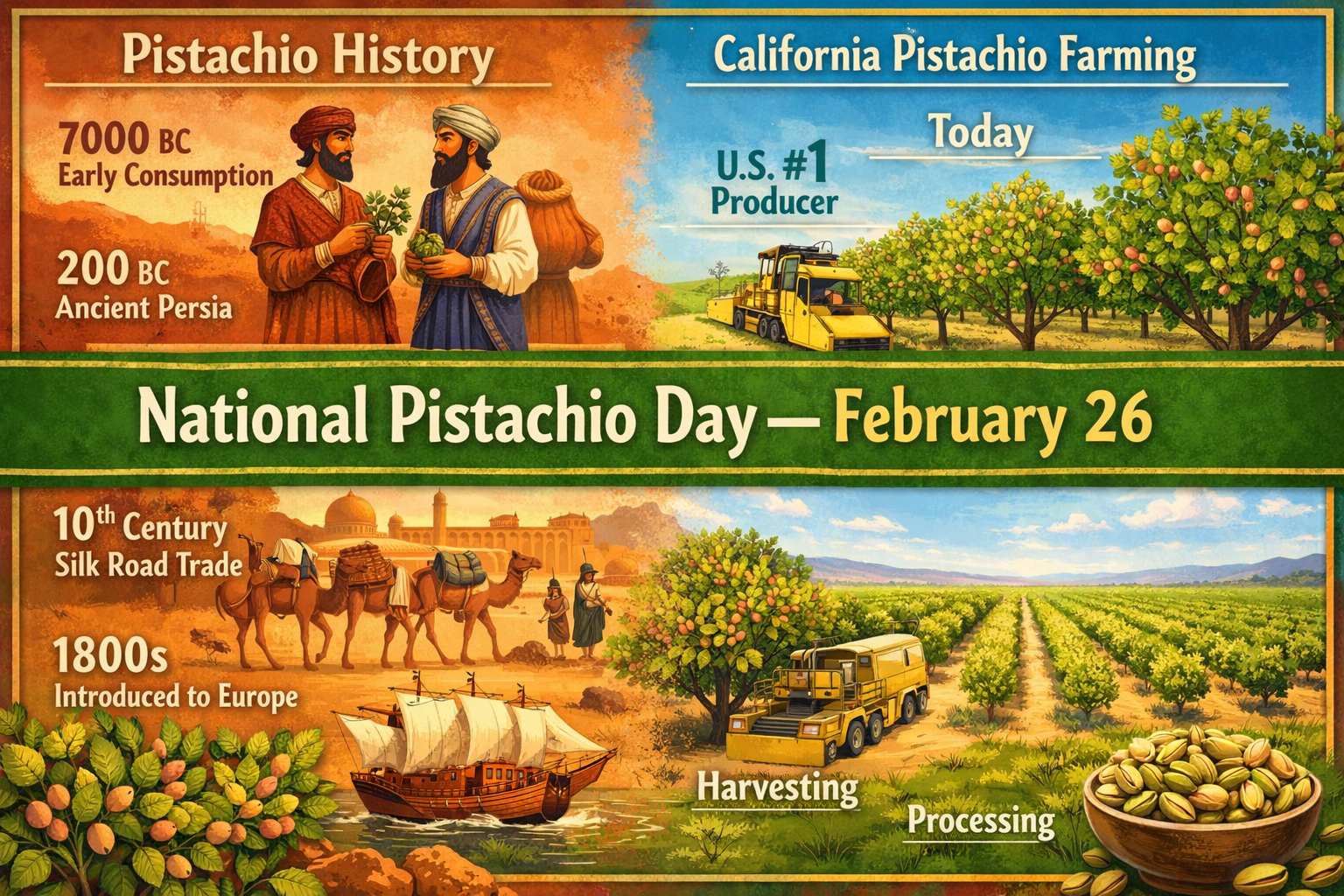
- 🌍 Origin: Pistachios are native to Central Asia and the Middle East, with archaeological evidence suggesting humans consumed them as far back as 7,000 BCE.
- 👑 Royal connections: According to legend, the Queen of Sheba declared pistachios an exclusive food reserved for royalty.
- 🕌 Silk Road staple: Traders carried pistachios along the ancient Silk Road, spreading them from Persia to the Mediterranean and beyond.
- 🇺🇸 American arrival: Pistachios were introduced to the United States in the 1880s as an imported snack. Commercial cultivation in California began in the 1970s.
“The pistachio is one of only two nuts mentioned in the Bible — a testament to its ancient cultural significance.”
Why Pistachios Deserve Their Own Holiday
Nutritional Powerhouse 💪
It is no exaggeration to call the pistachio a superfood. Here is a quick look at what a 1-ounce (28g) serving of shelled pistachios delivers:
| Nutrient | Amount Per 1 oz Serving | % Daily Value |
|---|---|---|
| Calories | 159 kcal | — |
| Protein | 6 g | 12% |
| Total Fat | 13 g | 17% |
| Fiber | 3 g | 11% |
| Vitamin B6 | 0.5 mg | 28% |
| Potassium | 291 mg | 6% |
| Copper | 0.4 mg | 41% |
| Manganese | 0.3 mg | 15% |
Source: USDA FoodData Central
Key health benefits include:
- ✅ Heart health: Rich in monounsaturated and polyunsaturated fats that support healthy cholesterol levels.
- ✅ Blood sugar management: A low glycemic index makes pistachios a smart choice for people managing blood sugar.
- ✅ Gut health: High fiber content feeds beneficial gut bacteria.
- ✅ Eye health: Contains lutein and zeaxanthin, antioxidants that protect against age-related eye conditions.
- ✅ Weight management: Despite being calorie-dense, the protein and fiber combination promotes satiety.
The “Skinny Nut” Reputation
Pistachios are sometimes called the “skinny nut” because they have fewer calories per serving than many other nuts. Their shells also slow down eating, which naturally encourages mindful snacking — a bonus for anyone watching their intake.
Pistachios by the Numbers: A Global Industry 🌐
The pistachio industry is a significant global enterprise, and February 26 Pistachio Day helps shine a light on its scale.
- 🇺🇸 The United States is the second-largest producer of pistachios in the world, after Iran.
- 🌴 California accounts for nearly 100% of U.S. pistachio production, primarily in the San Joaquin Valley.
- 📈 U.S. pistachio production has grown dramatically — from under 10,000 metric tons in the 1980s to over 450,000 metric tons in recent harvest years.
- 🌍 Other major producers include Turkey, Iran, and Syria.
- 💰 The global pistachio market was valued at over $3 billion USD and continues to grow as demand for healthy snacks rises worldwide.
How to Celebrate February 26 Pistachio Day 🎉
Celebrating February 26 Pistachio Day does not require anything elaborate. Here are some fun, accessible ideas:
🍽️ Eat Pistachios in New Ways
Most people enjoy pistachios straight from the shell, but there is a whole world of culinary possibilities:
- Pistachio pesto — swap pine nuts for pistachios in a classic pesto recipe
- Pistachio-crusted salmon or chicken — adds a satisfying crunch and nutty flavor
- Pistachio ice cream — a timeless classic enjoyed worldwide
- Pistachio baklava — a traditional Middle Eastern pastry layered with honey and nuts
- Pistachio smoothie bowl — blend with banana and top with granola
- Pistachio brittle or bark — a simple homemade treat
📚 Learn Something New
Use the day as a chance to explore pistachio culture and history:
- Watch a documentary about California’s agricultural industry
- Read about the pistachio’s role in Persian cuisine and culture
- Explore recipes from Middle Eastern, Mediterranean, and South Asian cuisines that feature pistachios prominently
🛒 Support Pistachio Farmers
- Choose American-grown pistachios to support domestic agriculture
- Look for sustainably farmed or organic options at your local store
- Share the day on social media using hashtags like #NationalPistachioDay and #February26PistachioDay
🎁 Share the Love
- Gift a bag of premium pistachios to a friend or coworker
- Bring pistachio-based treats to the office or classroom
- Host a small pistachio-themed tasting party
Fun Facts to Share on February 26 Pistachio Day 🤓
Here are some conversation-starting facts perfect for the occasion:
- 🟢 The green color of pistachios comes from chlorophyll, while the purple-red hue in some varieties comes from anthocyanins.
- 😄 Pistachios are sometimes called “smiling nuts” in Iran and “happy nuts” in China because of their naturally split shells.
- 🌡️ Pistachio trees can live for over 300 years and thrive in hot, dry climates with cold winters.
- 🐝 Pistachios are wind-pollinated, not bee-pollinated, making them unique among nut crops.
- 🎬 Pistachios have appeared in advertising campaigns, pop culture references, and even Super Bowl commercials.
Conclusion: Crack Open the Celebration 🌿
February 26 Pistachio Day is more than just a quirky food holiday — it is an opportunity to appreciate a nut with a remarkable history, outstanding nutritional value, and extraordinary culinary versatility. From ancient Persian royalty to modern California farms, the pistachio has earned its celebrated status.
Actionable Next Steps:
- Mark your calendar for February 26 and plan how you will celebrate.
- Try one new pistachio recipe — pesto, brittle, or a crusted protein dish are great starting points.
- Share the day on social media to spread awareness and connect with fellow pistachio fans.
- Read the label when buying pistachios — look for unsalted, dry-roasted varieties for the healthiest option.
- Explore the culture behind this ancient nut by diving into Middle Eastern or Mediterranean cuisine.
Whether enjoyed by the handful or incorporated into an elegant dish, pistachios deserve every bit of their February spotlight. 🥳
References
- USDA FoodData Central. (2019). Nuts, pistachio nuts, raw. U.S. Department of Agriculture. https://fdc.nal.usda.gov/
- American Pistachio Growers. (2023). Industry statistics and production data. https://www.americanpistachios.org/
- Dreher, M. L. (2012). Pistachio nuts: Composition and potential health benefits. Nutrition Reviews, 70(4), 234–240.
- Nuts.com. (2022). History of pistachios. https://nuts.com/
- Food and Agriculture Organization of the United Nations (FAO). (2022). FAOSTAT crop production data. https://www.fao.org/faostat/