
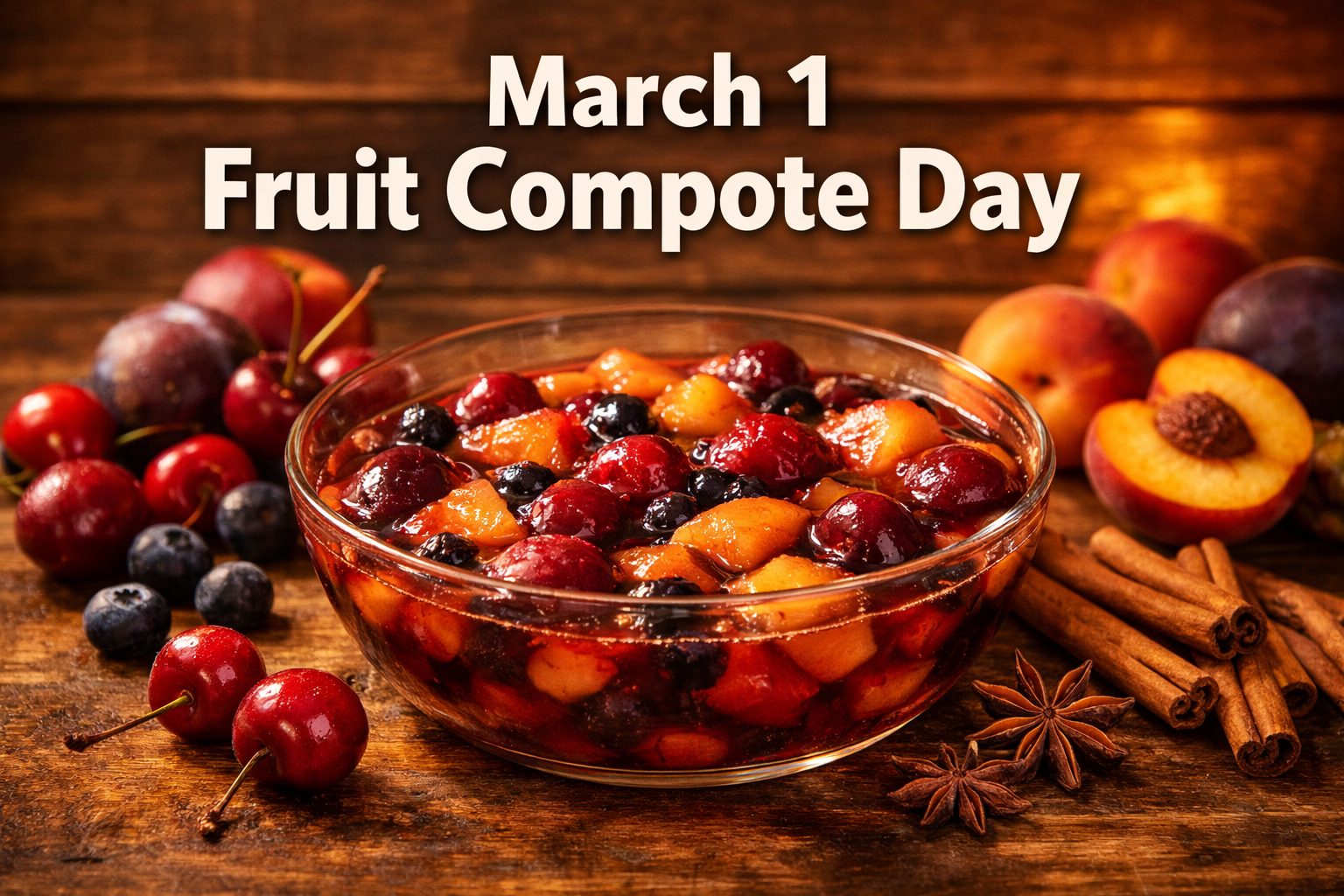
Every year on March 1, food lovers around the world have a sweet reason to celebrate — it’s March 1 Fruit Compote Day, a delightful occasion dedicated to one of the oldest and most comforting fruit preparations in culinary history. Whether you enjoy it warm over oatmeal, chilled alongside yogurt, or spooned over a scoop of vanilla ice cream, fruit compote is a timeless treat that deserves its moment in the spotlight.
Key Takeaways
- 🗓️ March 1 Fruit Compote Day is an annual food holiday celebrated on March 1st each year.
- 🍓 Fruit compote is a simple, versatile dish made by simmering fruits in sugar syrup, with roots stretching back centuries in European cuisine.
- 🌍 The dish appears in French, Eastern European, Middle Eastern, and American food traditions.
- 🥣 Compote can be made with fresh, frozen, or dried fruits — making it accessible year-round.
- 🎉 Celebrating is easy: cook a batch, share with friends, or explore new flavor combinations.
What Is Fruit Compote? A Quick Overview
Before diving into the holiday itself, it helps to understand what fruit compote actually is.
Fruit compote (from the French word compote, meaning “mixture”) is a dessert or condiment made by cooking whole or cut fruits in a sugar syrup, often with added spices like cinnamon, cloves, or vanilla. The result is a soft, lightly sweetened fruit preparation that retains much of the fruit’s natural shape and flavor.
Compote vs. Jam vs. Preserves
Many people confuse compote with jam or preserves. Here’s a quick comparison:
| Feature | Compote | Jam | Preserves |
|---|---|---|---|
| Texture | Chunky, loose | Smooth, thick | Chunky, thick |
| Cooking time | Short (15–30 min) | Longer | Longer |
| Shelf life | Days (refrigerated) | Months (sealed) | Months (sealed) |
| Sugar content | Lower | Higher | Higher |
| Fruit form | Whole or large pieces | Mashed/pureed | Whole pieces in gel |
💬 “Compote is the most honest form of cooked fruit — it lets the natural flavor shine through with minimal interference.”
Compote is notably lower in sugar than jam, making it a popular choice for health-conscious eaters who still want a touch of sweetness.
The History Behind March 1 Fruit Compote Day
Ancient Roots of Compote
Fruit compote has a long and flavorful history. Ancient Romans and Greeks preserved fruits in honey or grape syrup as a way to extend their shelf life through winter months. By the Middle Ages, European cooks were simmering fruits with sugar and spices, both for flavor and preservation.
The word compote entered the French culinary lexicon in the 17th century, and the dish quickly became a staple of French bourgeois cooking. It spread across Eastern Europe, where countries like Poland, Russia, and Ukraine developed their own versions — often served as a chilled drink made from dried fruits and water, especially popular during holiday feasts.
In the United States, fruit compote became associated with Southern cooking traditions and Sunday brunch menus, often paired with biscuits, pancakes, or pound cake.
Why March 1?
Like many food holidays, the exact origin of March 1 Fruit Compote Day is informal and community-driven rather than officially proclaimed by a government or culinary institution. March 1 marks the beginning of meteorological spring in the Northern Hemisphere — a symbolic moment when people begin to look forward to fresh fruits after the long winter months.
Celebrating compote on this date makes cultural sense: it bridges the gap between winter’s dried and preserved fruits and the fresh produce that spring and summer will bring. It’s a culinary “welcome” to the warmer seasons ahead.
How to Celebrate March 1 Fruit Compote Day

Celebrating this food holiday doesn’t require fancy equipment or professional cooking skills. Here are some easy and enjoyable ways to mark the occasion in 2026:
🍳 1. Make Your Own Compote at Home
The simplest way to celebrate is to cook a batch yourself. A basic fruit compote requires just three ingredients:
- Fruit (fresh, frozen, or dried)
- Sweetener (sugar, honey, or maple syrup)
- Liquid (water, juice, or wine)
Basic Compote Recipe (Serves 4):
- Combine 2 cups of mixed fruit with ¼ cup of sugar and ½ cup of water in a saucepan.
- Add a cinnamon stick or a splash of vanilla extract for depth.
- Bring to a gentle boil, then reduce heat and simmer for 15–20 minutes.
- Let cool slightly before serving warm, or refrigerate for a chilled version.
🍽️ 2. Try Creative Flavor Combinations
One of the best parts of March 1 Fruit Compote Day is experimenting with new flavor pairings. Consider these combinations:
- Strawberry & Rhubarb with a hint of lemon zest
- Peach & Ginger with brown sugar
- Blueberry & Lavender with honey
- Cherry & Orange with a splash of red wine
- Apple & Cardamom with maple syrup
🤝 3. Share It With Others
Compote is a wonderful gift. Pour a freshly made batch into a mason jar, tie it with a ribbon, and share it with a neighbor, coworker, or friend. It’s an affordable, heartfelt gesture that fits perfectly with the spirit of the holiday.
📱 4. Share on Social Media
Join the online conversation by posting your compote creations on social media. Use hashtags like #FruitCompoteDay and #March1 to connect with other food enthusiasts celebrating the same occasion around the world.
Nutritional Benefits of Fruit Compote
Beyond its delicious taste, fruit compote offers real nutritional value — especially when made with minimal added sugar.
Key Health Benefits
- Rich in antioxidants — Berries and stone fruits are packed with vitamins C and E, which support immune health.
- Good source of fiber — Whole fruit pieces retain dietary fiber that aids digestion.
- Lower glycemic impact than candy or processed sweets, especially when sweetened with honey or maple syrup.
- Hydrating — The water content in cooked fruit contributes to daily fluid intake.
- Versatile for special diets — Compote can easily be made vegan, gluten-free, and low-sugar, making it inclusive for many dietary needs.
💬 “A spoonful of compote over plain yogurt transforms a simple breakfast into something genuinely nourishing and satisfying.”
Fruit Compote Around the World 🌍
One of the most fascinating aspects of fruit compote is how many cultures have developed their own version of it:
| Country/Region | Local Name | Common Fruits Used | Typical Serving Style |
|---|---|---|---|
| France | Compote | Pears, apples, plums | Dessert or breakfast topping |
| Poland | Kompot | Cherries, plums, apples | Chilled drink |
| Russia/Ukraine | Компот (Kompot) | Dried apricots, prunes | Festive beverage |
| Middle East | Khoshaf | Dried figs, raisins, apricots | Ramadan dessert |
| United States | Fruit compote | Berries, peaches | Brunch topping |
| Germany | Kompott | Plums, cherries | Warm side dish |
This global reach shows that the love of simmered, sweetened fruit is truly universal.
Tips for the Perfect Compote Every Time
Whether you’re a beginner or an experienced home cook, these tips will help you get the best results:
✅ Don’t overcook — Fruit should be tender but not mushy. Check texture at the 15-minute mark.
✅ Balance sweetness with acid — A squeeze of lemon juice brightens the flavor and balances sugar.
✅ Use quality fruit — Ripe, seasonal fruit produces the best flavor. Frozen fruit works well too.
✅ Adjust sugar to your taste — Start with less and add more at the end if needed.
✅ Store properly — Refrigerate in an airtight container and use within 5–7 days.
✅ Experiment with spices — Cinnamon, star anise, cardamom, and vanilla all pair beautifully with fruit.
Conclusion: Embrace the Sweetness of March 1 Fruit Compote Day
March 1 Fruit Compote Day is more than just a quirky food holiday — it’s an invitation to slow down, get into the kitchen, and connect with a culinary tradition that spans centuries and continents. In 2026, this celebration is a perfect opportunity to try something new, share a homemade gift, or simply enjoy a bowl of warm, spiced fruit on a late winter day.
Actionable Next Steps 🎯
- Pick your fruits — Check your pantry or local market for fresh, frozen, or dried options.
- Try the basic recipe listed above, then customize with your favorite spices.
- Share the joy — Give a jar to someone you care about or post your creation online.
- Explore global versions — Try a Polish-style chilled kompot or a Middle Eastern khoshaf for a new experience.
- Mark your calendar — Set a reminder for March 1 every year so you never miss this sweet celebration again.
References
- Davidson, A. (1999). The Oxford Companion to Food. Oxford University Press.
- Toussaint-Samat, M. (1992). A History of Food. Blackwell Publishers.
- McGee, H. (2004). On Food and Cooking: The Science and Lore of the Kitchen. Scribner.
- Rombauer, I. S., Becker, M. R., & Becker, E. (2019). Joy of Cooking (75th Anniversary Edition). Scribner.
- National Day Calendar. (n.d.). Food Holidays and Observances. Retrieved from https://nationaldaycalendar.com