Last updated: March 16, 2026
Quick Answer: March 16 National Artichoke Hearts Day is an annual food holiday dedicated to celebrating the tender, edible center of the artichoke plant. It falls every year on March 16 and encourages home cooks, chefs, and food lovers to cook with, eat, and share artichoke hearts in any form, fresh, canned, or marinated.
Key Takeaways
March 16 National Artichoke Hearts Day is observed annually on March 16.
Artichoke hearts are the soft, edible inner core of the globe artichoke, prized for their mild, slightly nutty flavor.
The exact origin of the holiday is unclear, but it likely emerged from the broader American food holiday tradition in the late 20th century.
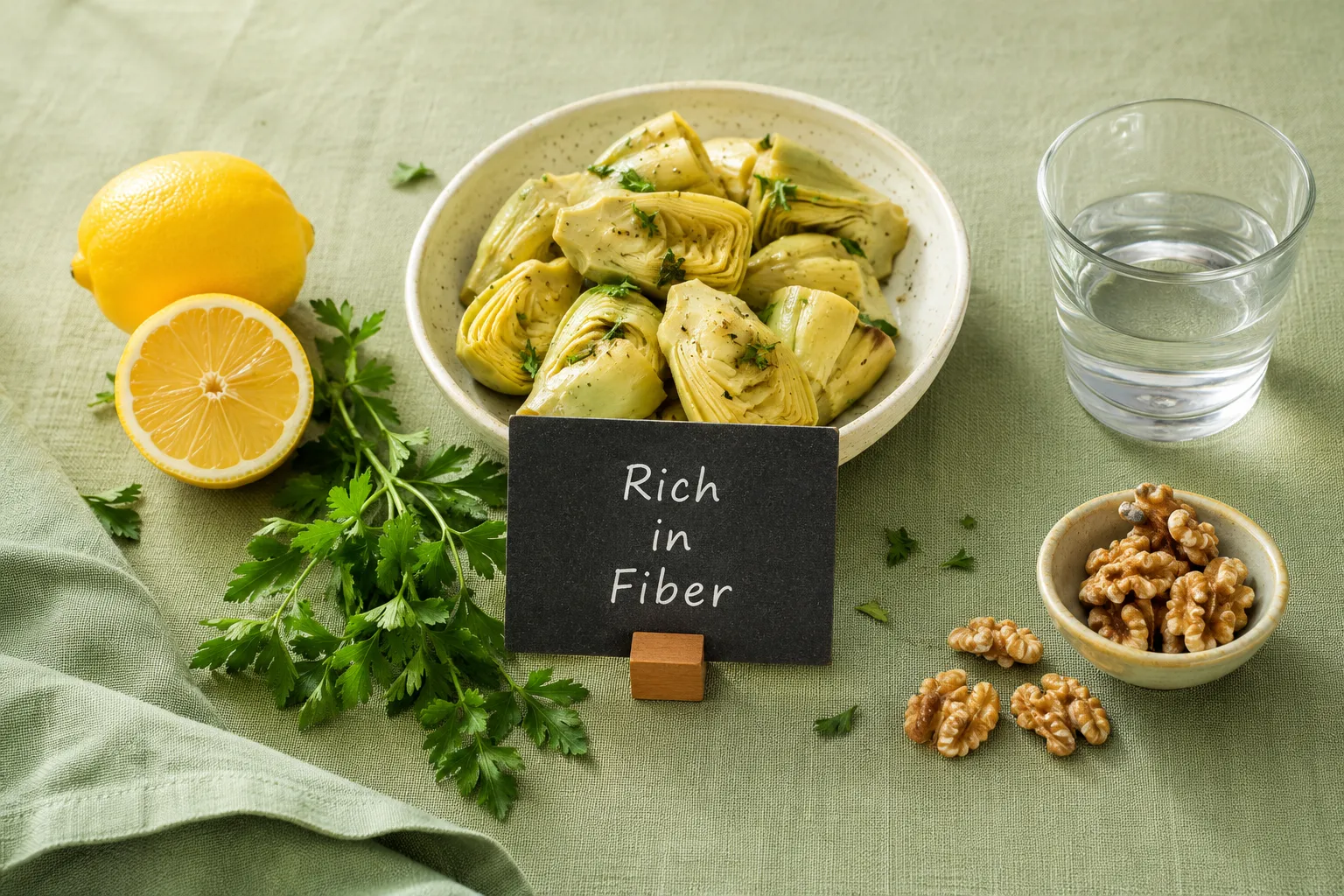
Artichoke hearts are rich in dietary fiber, antioxidants, and key minerals including magnesium and potassium.
Canned and marinated artichoke hearts are widely available year-round, making the holiday easy to celebrate any time.
Popular ways to celebrate include making spinach artichoke dip, adding artichoke hearts to pasta or pizza, or hosting a themed appetizer party.
Grocery stores and specialty food retailers sometimes offer deals on artichoke products around March 16.
Artichoke hearts work well in Mediterranean, Italian, and American cuisines, and fit vegetarian, vegan, and gluten-free diets.
What Is National Artichoke Hearts Day?
National Artichoke Hearts Day is a food observance dedicated specifically to the artichoke heart, the tender, pale interior of the globe artichoke plant. Unlike whole artichoke celebrations, this holiday focuses on the heart itself, which is the most versatile and widely used part of the vegetable.
The artichoke heart is what remains after the tough outer leaves and fuzzy choke are removed. It has a mild, slightly earthy flavor that pairs well with cheese, garlic, lemon, olive oil, and herbs. Because of this versatility, artichoke hearts appear in everything from dips and salads to pastas and flatbreads.
This holiday gives food lovers a reason to experiment with a vegetable that many people overlook in everyday cooking. Whether you use a can from the pantry or prepare fresh artichokes from scratch, March 16 is the day to put artichoke hearts front and center on the table.
When Is National Artichoke Hearts Day Celebrated?
National Artichoke Hearts Day is celebrated every year on March 16. The date does not shift or change, it is a fixed annual observance.
In 2026, March 16 falls on a Monday, making it a great opportunity to plan a weeknight dinner centered on artichoke hearts or to prepare a batch of spinach artichoke dip for a small gathering over the preceding weekend.
Where Did National Artichoke Hearts Day Come From, and Who Invented It?
The precise origin of March 16 National Artichoke Hearts Day is not well documented. Like many American food holidays, it most likely originated through food industry promotion, culinary enthusiast communities, or regional agricultural marketing efforts during the latter half of the 20th century.
California produces the vast majority of artichokes grown in the United States, and the town of Castroville, California has long called itself the “Artichoke Capital of the World.” It is plausible that artichoke-related food holidays grew out of the promotional culture surrounding California’s artichoke industry, though no single organization has been confirmed as the official founder of this specific date.
The broader pattern of American food holidays, which now number in the hundreds, typically traces back to trade associations, food brands, or grassroots food bloggers who register or popularize a date. Without a verified founding record, the holiday is best understood as a community-driven celebration rather than a formally chartered observance.
Artichoke Hearts vs. Whole Artichokes: What’s the Difference?
Artichoke hearts are the innermost, most tender part of the whole artichoke, not a separate variety of plant. The whole globe artichoke is a large thistle-like vegetable with tough outer leaves, a spiky choke (the fibrous center), and the heart buried beneath all of that.
Here is how the two compare:
FeatureWhole ArtichokeArtichoke HeartPreparation time30-45 minutes5 minutes (canned)Edible portionLeaf tips + heartEntire pieceFlavorEarthy, slightly bitterMild, nutty, tenderBest useSteamed, stuffedDips, pasta, pizza, saladsAvailabilitySeasonal (spring)Year-round (canned/jarred)
The key practical difference is convenience. Whole artichokes require significant prep work and are most available in spring. Artichoke hearts in cans or jars are available year-round at most grocery stores and require almost no preparation.
Artichoke Hearts Health Benefits and Nutrition Facts
Artichoke hearts are genuinely nutritious, not just flavorful. They are low in calories and fat while delivering meaningful amounts of fiber, vitamins, and minerals.
Key nutrients in a half-cup serving of canned artichoke hearts (approximately 84g):
Dietary fiber: Roughly 4-5 grams, supporting digestive health
Potassium: Supports heart and muscle function
Magnesium: Important for bone health and energy metabolism
Folate (Vitamin B9): Particularly valuable during pregnancy
Vitamin C: An antioxidant that supports immune function
Cynarin and silymarin: Natural plant compounds associated with liver support and antioxidant activity
Artichoke hearts are also naturally gluten-free, making them a strong ingredient choice for people managing celiac disease or gluten sensitivity. They fit vegetarian and vegan diets without any modification.
One important note: marinated artichoke hearts packed in oil will have higher fat and calorie counts than water-packed or brine-packed varieties. If you are watching fat intake, opt for water-packed canned artichoke hearts and add your own seasoning.
Canned vs. Fresh Artichoke Hearts: Which Is Better?
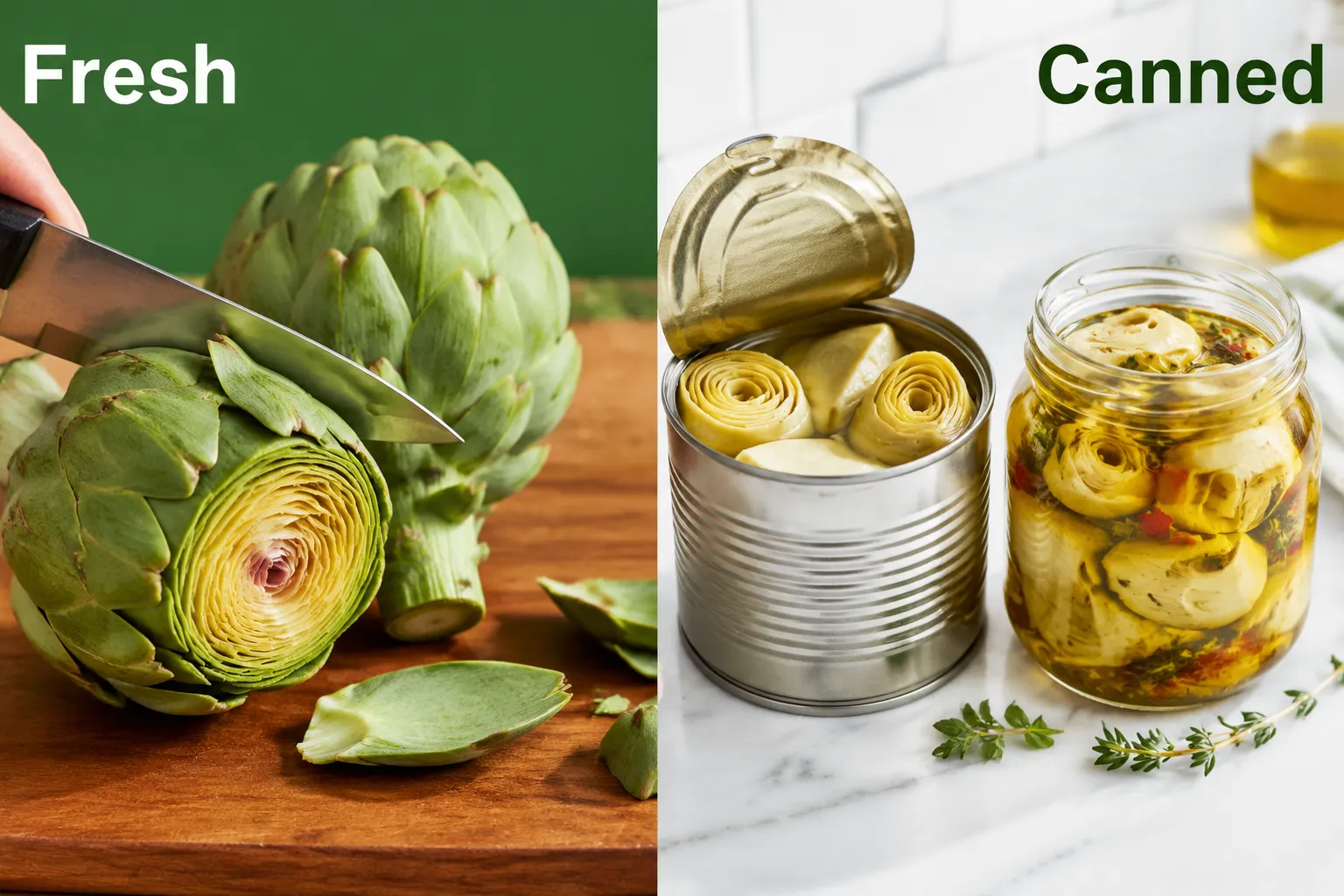
For most everyday cooking purposes, canned or jarred artichoke hearts are the practical choice. Fresh artichoke hearts are superior in texture and flavor when prepared carefully, but they require significantly more time and skill to prepare.
Choose fresh artichoke hearts if:
You want the best possible texture for a grilled or roasted dish
You are preparing a special meal and have 30-45 minutes for prep
Fresh globe artichokes are in season (typically spring and fall)
Choose canned or jarred artichoke hearts if:
You need a quick weeknight meal
You are making dips, soups, or cooked dishes where texture differences are minimal
Budget is a concern (canned is significantly cheaper per serving)
Marinated jarred artichoke hearts add extra flavor from herbs, garlic, and oil, which is an advantage in cold dishes like salads and antipasto platters. For hot cooked dishes, plain water-packed canned artichoke hearts give you more control over seasoning.
How to Cook Artichoke Hearts at Home
Cooking with artichoke hearts is straightforward, especially when starting from canned or jarred product. Here are the most reliable methods:
From canned or jarred artichoke hearts:
Drain and rinse thoroughly under cold water to remove excess brine or marinade.
Pat dry with a paper towel, this is critical for roasting or pan-frying.
Roast: Toss with olive oil, salt, and garlic. Spread on a baking sheet. Roast at 400°F (200°C) for 20-25 minutes until edges are golden and slightly crispy.
Saute: Heat olive oil in a skillet over medium-high heat. Add artichoke hearts cut-side down. Cook 3-4 minutes per side until browned.
Simmer in sauce: Add directly to pasta sauce, soup, or stew and cook for 10-15 minutes to absorb flavors.
From fresh artichokes:
Remove outer leaves until you reach the pale yellow-green inner leaves.
Cut off the top third of the artichoke.
Use a spoon to scoop out the fuzzy choke from the center.
Immediately place in acidulated water (water with lemon juice) to prevent browning.
Proceed with roasting, grilling, or sauteing as above.
Best Artichoke Hearts Recipes for the Holiday
March 16 National Artichoke Hearts Day is the perfect occasion to try at least one new artichoke heart recipe. These dishes range from simple to impressive:
Classic Spinach Artichoke Dip
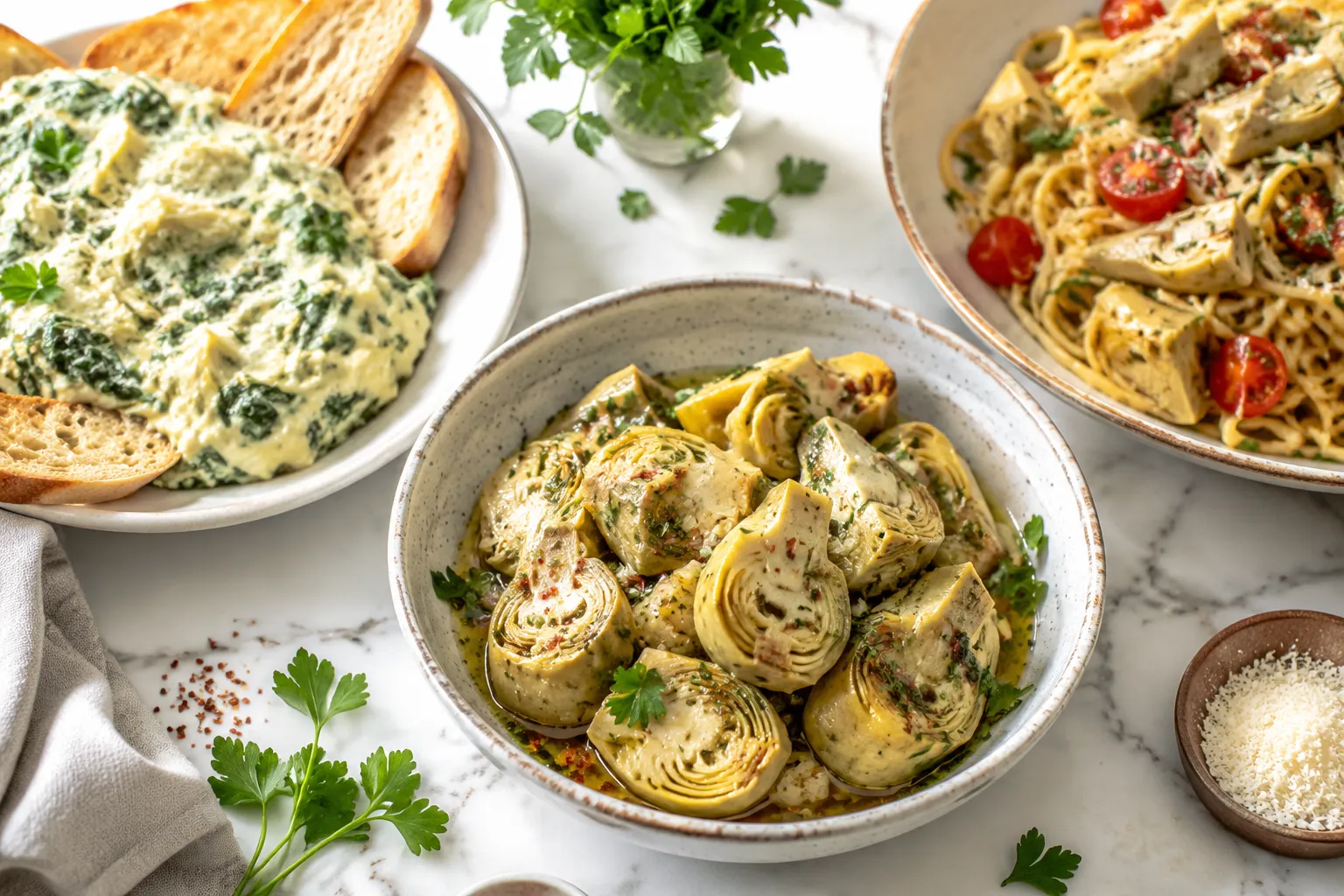
Combine drained artichoke hearts, thawed frozen spinach, cream cheese, sour cream, shredded mozzarella, and garlic. Bake at 375°F until bubbly. Serve with toasted bread or crackers. This is the most crowd-pleasing artichoke heart dish in American cooking.
Artichoke Heart Pasta
Saute garlic and artichoke hearts in olive oil. Add white wine, lemon zest, and capers. Toss with pasta and fresh parsley. Ready in under 20 minutes. For more pasta inspiration, check out the National Fettuccine Alfredo Day guide for sauce techniques that pair beautifully with artichoke hearts.
Artichoke Heart Flatbread
Spread a thin layer of ricotta on flatbread. Top with artichoke hearts, sun-dried tomatoes, and shredded mozzarella. Bake at 425°F for 12-15 minutes. For more flatbread and pizza topping ideas, the National Pizza Day guide covers complementary flavor combinations.
Greek-Style Artichoke Salad
Toss artichoke hearts with cherry tomatoes, cucumber, Kalamata olives, red onion, and feta. Dress with olive oil and red wine vinegar. Serve chilled. This pairs well with recipes from a Greek cookbook for a full Mediterranean spread.
Artichoke Heart Soup
Blend artichoke hearts with vegetable broth, garlic, and a splash of cream. Season with thyme and lemon. Serve warm. For more soup inspiration, the Homemade Soup Day guide has helpful techniques for building flavor in blended soups.
Easy Artichoke Hearts Appetizers for Parties
Artichoke hearts are one of the best ingredients for party appetizers because they require minimal prep and deliver strong flavor. Here are reliable options:
Artichoke bruschetta: Top toasted baguette slices with chopped marinated artichoke hearts, diced tomato, and fresh basil.
Stuffed artichoke hearts: Fill canned artichoke heart cups with herbed cream cheese or a breadcrumb-Parmesan mixture. Broil for 5 minutes.
Artichoke antipasto skewers: Thread artichoke hearts, olives, cherry tomatoes, and fresh mozzarella on small skewers. Drizzle with olive oil.
Artichoke heart crostini: Blend artichoke hearts with white beans, lemon, and garlic into a smooth spread. Serve on toasted crostini.
These appetizers work well alongside other Italian-inspired dishes. If you are planning a full Italian-themed spread, a dedicated Italian cookbook can round out the menu with complementary courses.
How to Celebrate March 16 National Artichoke Hearts Day
Celebrating March 16 National Artichoke Hearts Day does not require elaborate planning. The best approaches are direct and food-focused.
Practical ways to celebrate:
Cook one new artichoke heart recipe you have never tried before.
Host a small appetizer gathering built around artichoke heart dishes.
Share a photo of your artichoke heart meal on social media using the hashtag #NationalArtichokeHeartsDay.
Visit a farmers market or specialty grocery store to find fresh globe artichokes and prepare hearts from scratch.
Explore Mediterranean or Italian cuisine more broadly, artichoke hearts are a staple in both traditions.
Try a vegan artichoke heart preparation. For plant-based cooking ideas, a vegan cookbook offers creative ways to use artichoke hearts without dairy or meat.
If you enjoy celebrating food holidays throughout the year, March 16 fits naturally into a broader calendar of culinary observances. Other food holidays like National Plum Pudding Day on February 12 and National Tempura Day on January 7 offer similar opportunities to explore ingredients and techniques you might not use every day.
Artichoke Hearts Day Deals and Sales
Grocery stores, specialty food retailers, and online food brands sometimes run promotions tied to food holidays. Around March 16, it is worth checking for deals on:
Canned and jarred artichoke hearts (major brands and store brands)
Marinated artichoke products from specialty Italian or Mediterranean food companies
Fresh globe artichokes at farmers markets and produce sections
Prepared artichoke dips and spreads in the deli section
The best strategy is to check weekly circulars from grocery chains in the days leading up to March 16, search for digital coupons on store apps, and look for bundle deals on Mediterranean pantry staples (olive oil, capers, sun-dried tomatoes) that pair naturally with artichoke hearts.
Frequently Asked Questions About National Artichoke Hearts Day
What day is National Artichoke Hearts Day?
National Artichoke Hearts Day is celebrated every year on March 16. The date is fixed and does not change year to year.
Are artichoke hearts healthy?
Yes. Artichoke hearts are low in calories and fat, high in dietary fiber, and contain meaningful amounts of potassium, magnesium, folate, and antioxidant plant compounds. They support digestive health and fit most dietary patterns including vegan, vegetarian, and gluten-free.
Can you eat artichoke hearts straight from the can?
Yes. Canned artichoke hearts are fully cooked during the canning process and are safe to eat directly from the can after draining and rinsing. They are best served at room temperature or warmed through in a dish.
What is the difference between artichoke hearts and artichoke bottoms?
The artichoke heart includes the base and the innermost tender leaves, while the artichoke bottom refers specifically to the flat, round base of the artichoke with all leaves and the choke removed. Artichoke bottoms are slightly firmer and are often used as edible cups for stuffed preparations.
Are marinated artichoke hearts the same as plain artichoke hearts?
No. Marinated artichoke hearts are packed in a seasoned oil mixture (typically with garlic, herbs, and vinegar), while plain artichoke hearts are packed in water or brine. Marinated versions have more flavor but also more fat and calories.
How long do opened canned artichoke hearts last in the refrigerator?
Once opened, canned artichoke hearts should be transferred to a sealed container and refrigerated. They will keep safely for 3-5 days.
Can artichoke hearts be frozen?
Yes. Drain and dry them thoroughly, then freeze in a single layer on a baking sheet before transferring to a freezer bag. Frozen artichoke hearts keep well for up to 6 months and work best in cooked dishes after thawing.
What cuisines use artichoke hearts most often?
Italian, Greek, French, and broader Mediterranean cuisines use artichoke hearts extensively. They appear in pasta, risotto, pizza, salads, antipasto, and braised dishes across these traditions.
Is there a whole artichoke holiday separate from artichoke hearts day?
Yes. National Artichoke Day is observed on March 16 in some calendars, while other sources list it on different dates. The artichoke hearts-specific holiday focuses on the processed or prepared heart rather than the whole vegetable.
What wine pairs well with artichoke heart dishes?
Artichoke hearts contain cynarin, a compound that can make wines taste sweeter. Dry, high-acid whites like Sauvignon Blanc, Vermentino, or unoaked Chardonnay tend to pair best. Avoid tannic reds, which can clash with the artichoke’s natural compounds.
Conclusion
March 16 National Artichoke Hearts Day is a straightforward, food-forward holiday with genuine substance behind it. Artichoke hearts are nutritious, versatile, and available year-round in canned and jarred form, which means there is no barrier to celebrating, no special equipment, no hard-to-find ingredients, and no advanced cooking skills required.
Actionable next steps for March 16, 2026:
Stock your pantry with two or three cans of artichoke hearts before March 16.
Choose one recipe from this guide, spinach artichoke dip is the easiest entry point if you are new to cooking with artichoke hearts.
If you want to go further, buy fresh globe artichokes and practice trimming them down to the heart for a more hands-on experience.
Share your dish on social media to connect with the broader food holiday community.
Use the holiday as a starting point to explore Mediterranean and Italian cooking more broadly, artichoke hearts are a gateway ingredient to a rich culinary tradition.
The holiday is small in profile but big in culinary potential. A single can of artichoke hearts and 20 minutes in the kitchen is all it takes to mark the occasion well.
Leave a Reply