
Last updated: February 17 , 2026
Quick Answer: February 17 National Cabbage Day is an unofficial but widely recognized annual food holiday celebrated every February 17 in the United States. It honors one of the world’s oldest cultivated vegetables by encouraging people to cook with, eat, and learn about cabbage. No federal legislation created it, it lives on food holiday calendars, social media, and in kitchens across the country.
Key Takeaways
- February 17 is National Cabbage Day, observed annually in the United States.
- Cabbage has been cultivated for more than 4,000 years and remains one of the most widely eaten vegetables globally.
- There are several major cabbage varieties: green, red/purple, savoy, napa, and bok choy.
- Cabbage is rich in vitamin C, vitamin K, fiber, and antioxidants, with very few calories per serving.
- Common ways to celebrate include cooking new cabbage recipes, visiting farmers markets, and sharing dishes on social media.
- No single organization officially owns the holiday, it appears across multiple food holiday registries.
- Grocery stores and meal kit services sometimes offer cabbage-related deals around February 17.
- Cabbage compares favorably to other leafy greens in cost, shelf life, and nutritional density.
What Is National Cabbage Day?
National Cabbage Day is an informal food observance dedicated entirely to the cabbage plant (Brassica oleracea var. capitata). The day encourages home cooks, chefs, nutritionists, and food enthusiasts to spotlight cabbage in their meals, share recipes, and appreciate the vegetable’s long culinary and cultural history.
Unlike major federal holidays, this observance has no government backing. It functions similarly to other food holidays, such as National Plum Pudding Day on February 12 or National Fettuccine Alfredo Day on February 7, as a fun, food-forward reason to cook something specific and share it with others.
When Is National Cabbage Day Celebrated?
National Cabbage Day falls on February 17 every year. The date does not shift or rotate, it is fixed at February 17 on the food holiday calendar.
In 2026, February 17 falls on a Tuesday. That makes it a practical weeknight occasion for a quick cabbage stir-fry, a batch of homemade coleslaw, or a pot of cabbage soup. Because the holiday lands in mid-February, it also pairs naturally with the tail end of winter produce seasons in the Northern Hemisphere, when hearty vegetables like cabbage are at their best.
Why Is February 17 National Cabbage Day on This Specific Date?
The exact origin of the February 17 date is not tied to a documented founding event. Like most unofficial food holidays in the United States, it likely emerged from one of several food holiday registry websites that began cataloging daily food observances in the early 2000s. The date stuck through repetition across food blogs, social media calendars, and culinary publications.
What matters more than the date’s origin is what it represents: a mid-winter moment to celebrate a vegetable that has fed civilizations for millennia. Cabbage has been a dietary staple across Europe, Asia, and the Americas for thousands of years, so any day dedicated to it carries genuine historical weight.
Is National Cabbage Day a Real Holiday?
National Cabbage Day is a real observance in the sense that it is widely recognized and celebrated, but it is not a public holiday, a federal observance, or a legally designated day. No act of Congress created it, and no single organization holds exclusive ownership of it.
This is true of most food holidays in the United States. Days like National Dark Chocolate Day on February 1 and National Molasses Bar Day on February 8 operate the same way, informal, community-driven, and celebrated voluntarily. The value of February 17 National Cabbage Day is entirely in how people choose to mark it.
Where Did National Cabbage Day Come From?
Cabbage itself has a far older and richer history than the holiday that honors it. Historians trace the cultivation of wild cabbage back to at least 2,000 BCE in the Mediterranean and Asia Minor regions. Ancient Greeks and Romans prized it for both food and medicine. By the Middle Ages, cabbage was a cornerstone crop across Europe, prized for its ability to survive cold climates and store well through winter.
Cabbage arrived in the Americas with European colonists in the 1600s and quickly became a staple in North American cooking, particularly in German-American, Irish-American, and Eastern European immigrant communities. Dishes like sauerkraut, stuffed cabbage rolls (golabki), and corned beef and cabbage became deeply embedded in American food culture.
The modern food holiday likely grew out of this cultural familiarity. Food bloggers and calendar sites began assigning named days to popular foods in the 2000s, and cabbage, with its global reach and culinary versatility, earned its own day on February 17.
What Types of Cabbage Are There?
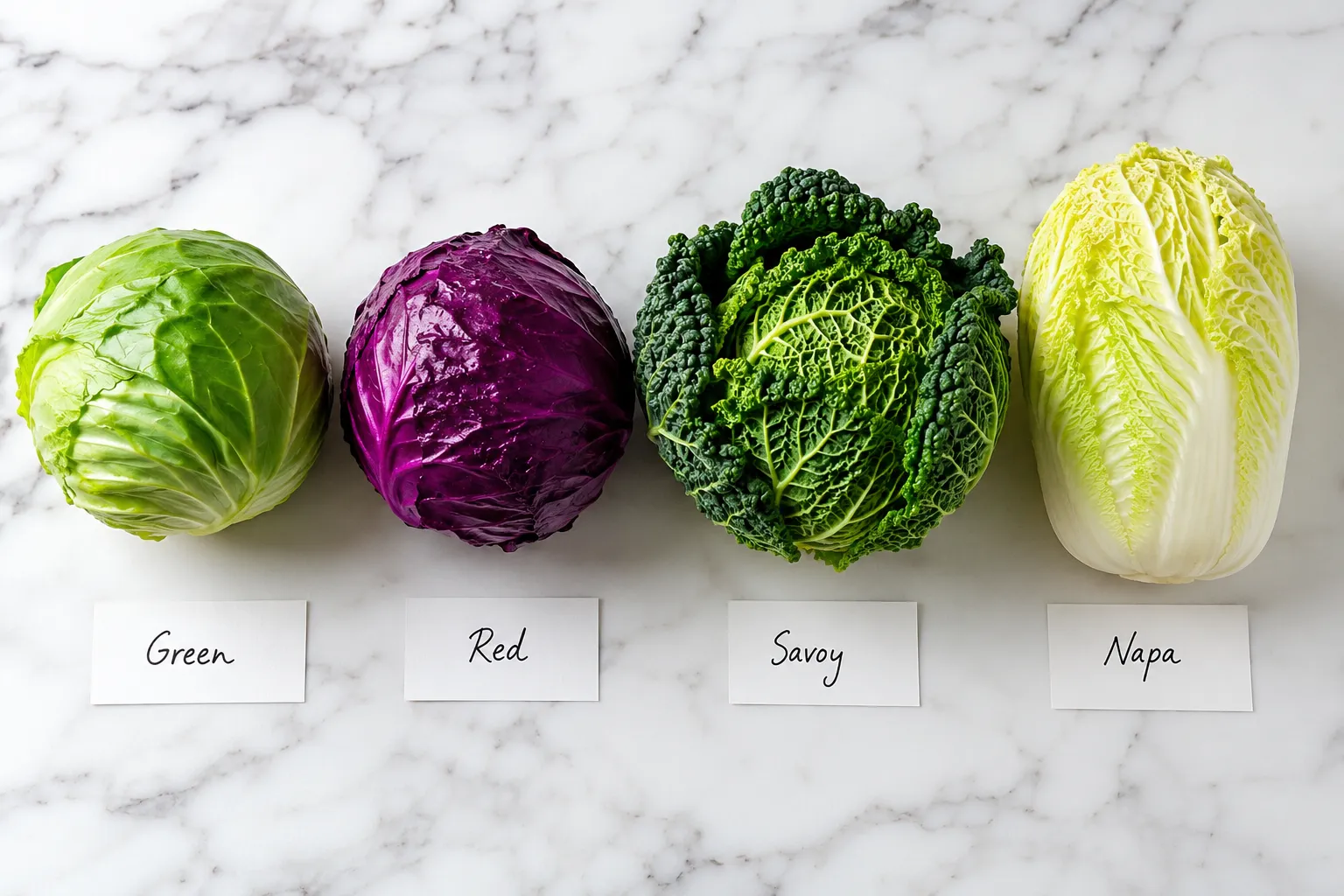
There are five main types of cabbage that home cooks commonly encounter, each with distinct textures, flavors, and best uses:
| Cabbage Type | Flavor Profile | Best Uses |
|---|---|---|
| Green cabbage | Mild, slightly peppery | Coleslaw, soups, stir-fries, sauerkraut |
| Red/Purple cabbage | Slightly earthier, firmer | Braised dishes, salads, pickling |
| Savoy cabbage | Delicate, sweet, crinkled leaves | Stuffed rolls, salads, light sautes |
| Napa (Chinese) cabbage | Very mild, tender | Kimchi, Asian stir-fries, dumplings |
| Bok choy | Fresh, slightly mustard-like | Stir-fries, soups, steamed dishes |
Choose green cabbage for everyday cooking and budget-friendly meals. Choose savoy when you want a more refined texture. Choose napa or bok choy for Asian-inspired recipes.
How Do People Celebrate February 17 National Cabbage Day?
Celebrating February 17 National Cabbage Day is straightforward, the goal is simply to bring cabbage into your day in a meaningful way. Here are the most common approaches:
- Cook a new cabbage recipe you have never tried before, such as kimchi, stuffed cabbage rolls, or a German-style braised red cabbage.
- Visit a farmers market or specialty grocery store to explore cabbage varieties beyond the standard green head.
- Share your dish on social media using hashtags like #NationalCabbageDay or #CabbageDay to connect with other enthusiasts.
- Host a cabbage-themed dinner featuring multiple dishes, a cabbage slaw appetizer, cabbage soup, and a main course with stuffed leaves.
- Teach kids about the vegetable by letting them help shred cabbage for coleslaw or observe how red cabbage changes color when it meets an acid like vinegar (a classic kitchen science experiment).
- Try fermentation by starting a small batch of sauerkraut or quick-pickled cabbage, both of which require minimal equipment.
If you enjoy exploring food holidays throughout February, check out the Homemade Soup Day guide for February 4, cabbage soup fits perfectly into that celebration as well.
Best Cabbage Recipes for National Cabbage Day
The best recipes for February 17 National Cabbage Day range from five-minute slaws to slow-cooked braises. Here are six reliable options organized by effort level:
Quick (under 20 minutes)
- Classic coleslaw, shredded green cabbage, carrots, mayo, apple cider vinegar, a pinch of sugar and salt. Serve immediately or refrigerate for up to three days.
- Cabbage stir-fry, slice napa cabbage thinly, stir-fry with garlic, ginger, soy sauce, and sesame oil for about eight minutes over high heat.
Medium effort (20-45 minutes)
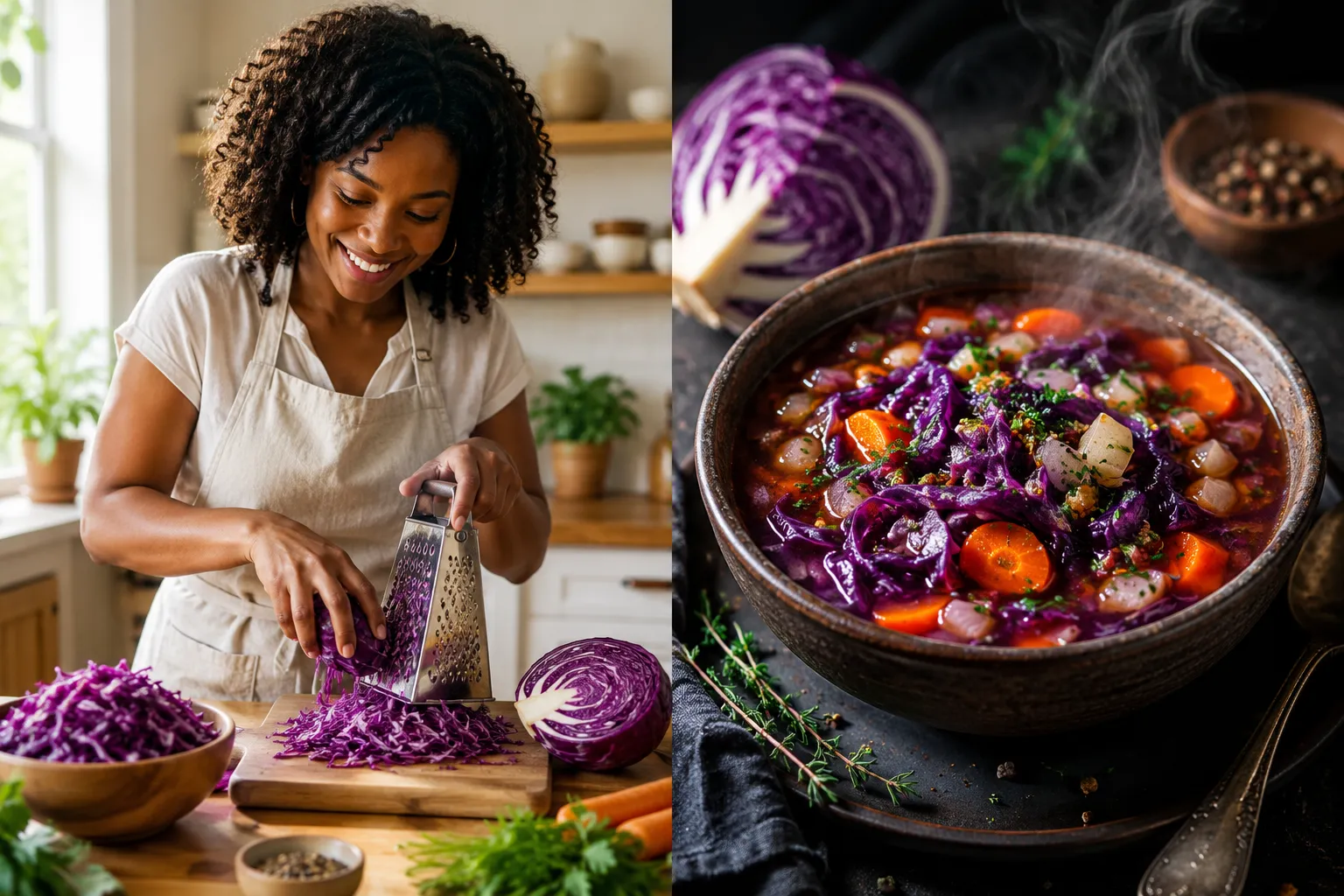
- Cabbage soup, saute onion, garlic, and carrots, add shredded green cabbage, diced tomatoes, broth, and simmer 25 minutes. Season with thyme and black pepper.
- Braised red cabbage, cook sliced red cabbage with apple, onion, red wine vinegar, a little brown sugar, and butter over low heat for 30-40 minutes. Classic alongside pork or sausage.
Longer projects (1+ hours)
- Stuffed cabbage rolls (golabki), blanch whole cabbage leaves, fill with a seasoned ground meat and rice mixture, roll tightly, and bake in tomato sauce for about 90 minutes.
- Homemade sauerkraut, massage shredded cabbage with salt until it releases liquid, pack tightly into a jar, and ferment at room temperature for 5-7 days.
Cooking tip: Avoid overcooking cabbage. The sulfur compounds that give it a strong, unpleasant smell are released only when cabbage is cooked too long. Keep cooking times short for stir-fries and blanching, and use low, slow heat for braises to manage the flavor.
Health Benefits of Eating Cabbage
Cabbage is one of the most nutritionally dense vegetables available at a low cost. A single cup (89g) of raw green cabbage contains roughly 22 calories, 2 grams of fiber, and over 50% of the recommended daily intake of vitamin C (according to USDA FoodData Central data).
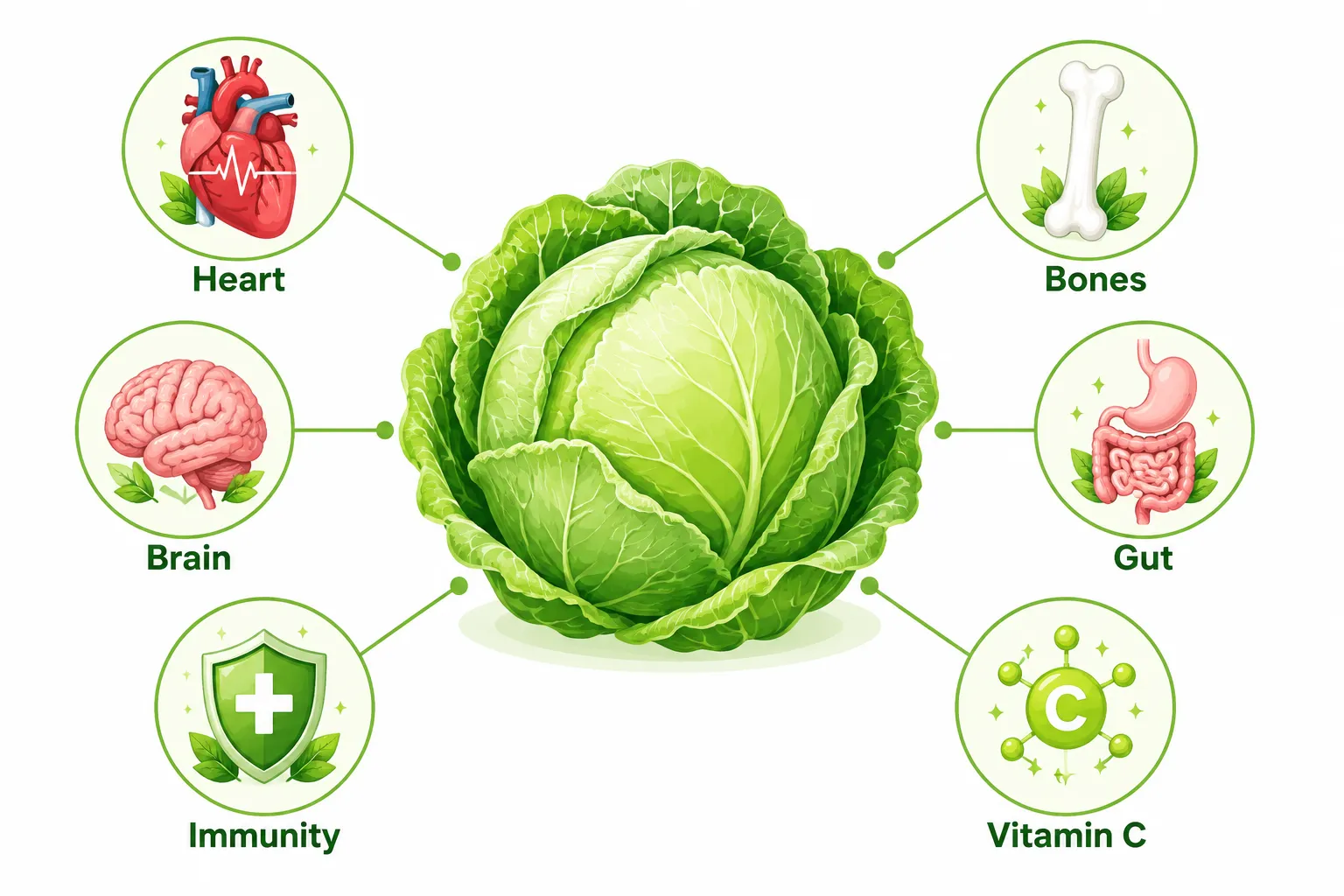
Key documented health benefits include:
- Vitamin C content supports immune function and collagen production.
- Vitamin K is essential for blood clotting and bone health. Red cabbage is particularly high in vitamin K.
- Fiber supports digestive regularity and feeds beneficial gut bacteria.
- Antioxidants including anthocyanins (especially in red cabbage) are associated with reduced oxidative stress in research studies.
- Glucosinolates are sulfur-containing compounds found in all brassica vegetables, including cabbage. Research published in peer-reviewed nutrition journals has examined their potential role in cellular health, though findings are ongoing.
- Low calorie density makes cabbage a practical choice for volume eating, large portions contribute minimal calories.
Fermented cabbage products like sauerkraut and kimchi also provide probiotics, which support gut microbiome diversity according to food science research.
Cabbage vs. Other Leafy Greens: How Does It Compare Nutritionally?
Cabbage holds its own against more fashionable greens. Per 100g of raw vegetable, here is a general comparison based on USDA nutritional data:
- Cabbage (green): ~25 kcal, 2.5g fiber, 36mg vitamin C, 76mcg vitamin K
- Spinach: ~23 kcal, 2.2g fiber, 28mg vitamin C, 483mcg vitamin K
- Kale: ~49 kcal, 3.6g fiber, 120mg vitamin C, 705mcg vitamin K
- Romaine lettuce: ~17 kcal, 2.1g fiber, 4mg vitamin C, 103mcg vitamin K
Bottom line: Kale beats cabbage on vitamin C and K density, but cabbage is far cheaper, stores longer (up to two months refrigerated), and is available year-round in virtually every grocery store. For everyday eating on a budget, cabbage is one of the most practical choices in the produce aisle.
How Much Cabbage Should You Eat?
Most nutrition guidelines do not set a specific daily limit for cabbage, and it is generally safe to eat in generous amounts for healthy adults. A practical target for most people is one to two cups of cabbage per day, several times a week, as part of a varied diet.
Edge case to know: People taking warfarin (a blood thinner) should keep their vitamin K intake consistent day to day, since large fluctuations can affect medication efficacy. If you plan to eat cabbage regularly, discuss portion consistency with a healthcare provider.
People with hypothyroidism are sometimes advised to moderate raw cruciferous vegetable intake, as goitrogens in raw cabbage may theoretically affect thyroid function in large amounts, though cooking largely deactivates these compounds. Again, individual medical advice applies here.
Cabbage Day Deals and Discounts
Grocery stores, meal kit services, and farmers markets sometimes run promotions around February 17 National Cabbage Day, though deals are not as widespread as those tied to major food holidays.
Where to look for deals in 2026:
- Check weekly circulars at major grocery chains in the days leading up to February 17.
- Meal kit services like HelloFresh or Green Chef occasionally feature cabbage-forward recipes in their weekly menus around food holidays.
- Local farmers markets may offer bulk pricing on whole heads of cabbage in mid-February.
- Specialty grocery stores (particularly those with Eastern European or Asian food sections) sometimes promote fermented cabbage products like sauerkraut and kimchi around the day.
The best “deal” on cabbage, honestly, is its everyday price: green cabbage regularly sells for under a dollar per pound at most U.S. grocery stores, making it one of the most affordable vegetables in any season.
Fun Facts About Cabbage
- Cabbage is approximately 92% water by weight, which contributes to its satisfying crunch when raw.
- Ancient Romans believed eating cabbage before a feast would prevent intoxication, a claim that has no scientific support, but speaks to how highly they valued the vegetable.
- The world record for the heaviest cabbage on record (as of available Guinness World Records documentation) exceeds 130 pounds, grown in Alaska where long summer daylight hours produce enormous brassicas.
- Sauerkraut was historically used by sailors, including on Captain James Cook’s voyages, to prevent scurvy due to its vitamin C content.
- Red cabbage acts as a natural pH indicator: it turns pink in acidic conditions and green or yellow in alkaline ones. This is a popular elementary school science demonstration.
- Cabbage is a member of the same species as broccoli, cauliflower, Brussels sprouts, kale, and kohlrabi, all are cultivars of Brassica oleracea.
Cabbage Cooking Tips and Tricks
Getting the best results from cabbage comes down to a few consistent principles:
Prep tips:
- Remove the outer leaves before cutting, they are often tougher and may carry residue.
- For coleslaw, salt shredded cabbage and let it sit for 10-15 minutes, then squeeze out excess water. This prevents a watery slaw.
- Cut cabbage into wedges (keeping the core intact) for roasting, the core holds the wedge together in the oven.
Cooking tips:
- High heat, short time for stir-fries. Low heat, long time for braises. Avoid the middle ground, which produces mushy, sulfurous results.
- Add acid (vinegar, lemon juice, or wine) when braising red cabbage. Without acid, red cabbage turns an unappetizing blue-gray color due to its anthocyanin pigments.
- Blanch cabbage leaves for stuffed rolls by immersing the whole head in boiling water for 2-3 minutes, then peeling leaves off as they soften.
Storage tips:
- A whole, uncut head of cabbage keeps in the refrigerator for up to two months. Once cut, wrap tightly and use within a week.
- Cooked cabbage dishes freeze well for up to three months.
FAQ
What day is National Cabbage Day? National Cabbage Day is celebrated on February 17 every year. The date is fixed and does not change.
Who created National Cabbage Day? No single person or organization is documented as the official creator of February 17 National Cabbage Day. It emerged through food holiday calendars and food blogging communities in the early 2000s and spread organically.
Is National Cabbage Day only celebrated in the United States? The holiday originated in the U.S. and is most widely observed there, but food enthusiasts in other countries participate informally, particularly through social media.
What is the best way to celebrate National Cabbage Day at home? Cook a cabbage dish you have never made before, stuffed cabbage rolls, kimchi, or braised red cabbage are all excellent choices. Share your result on social media with #NationalCabbageDay.
Is cabbage healthier raw or cooked? Both forms have value. Raw cabbage retains more vitamin C. Cooked cabbage (especially fermented) offers different benefits including probiotics and easier digestibility. Eating it in both forms across the week is a practical approach.
Can you eat cabbage every day? For most healthy adults, yes. Cabbage is low in calories and high in nutrients. People on blood thinners or with thyroid conditions should consult a healthcare provider about appropriate portions.
What is the difference between green cabbage and savoy cabbage? Green cabbage has smooth, tightly packed leaves and a firmer texture. Savoy cabbage has crinkled, loosely packed leaves with a more delicate, sweeter flavor. Savoy works better for stuffed rolls; green cabbage holds up better in slaws and fermentation.
Does cabbage cause gas? Cabbage contains raffinose, a complex sugar that some people digest poorly, which can produce gas. Cooking cabbage reduces this effect. Starting with smaller portions and building up gradually also helps.
What is sauerkraut and how is it related to cabbage? Sauerkraut is fermented cabbage, shredded cabbage mixed with salt and left to ferment via naturally occurring lactobacillus bacteria. It is one of the oldest and most nutritious ways to preserve cabbage.
Are there any cabbage deals on February 17? Some grocery stores and meal kit services run promotions around February 17 National Cabbage Day, but deals are not guaranteed. Check weekly store circulars and meal kit menus in the days leading up to February 17.
How long does cabbage last in the refrigerator? A whole, uncut head of cabbage lasts up to two months refrigerated. Once cut, wrap it tightly and use within five to seven days.
What other food holidays are in February? February has several food holidays, including National Dark Chocolate Day on February 1, National Pizza Day on February 9, and National Fettuccine Alfredo Day on February 7.
Conclusion
February 17 National Cabbage Day is a straightforward but genuinely worthwhile food holiday. Cabbage is inexpensive, nutritionally strong, globally versatile, and available year-round, qualities that earn it more respect than it typically receives in modern cooking conversations.
Actionable next steps for February 17, 2026:
- Pick one cabbage recipe you have never cooked before and make it on February 17. Stuffed cabbage rolls, kimchi, or a braised red cabbage are all achievable for home cooks at any skill level.
- Buy a whole head of cabbage before February 17 and experiment with at least two preparations, one raw (coleslaw or a salad) and one cooked (soup, stir-fry, or braise).
- Share your dish on social media with #NationalCabbageDay to connect with others celebrating the day.
- If you are interested in fermentation, start a small jar of sauerkraut on February 17, it will be ready within a week and will last months in the refrigerator.
- Browse the full national food days calendar to plan other food holidays throughout the year.
Cabbage has fed people through wars, winters, and long sea voyages. Dedicating one day a year to cooking with it is a small but satisfying way to connect with that history, and to eat well in the process.