
Last updated: March 28, 2026
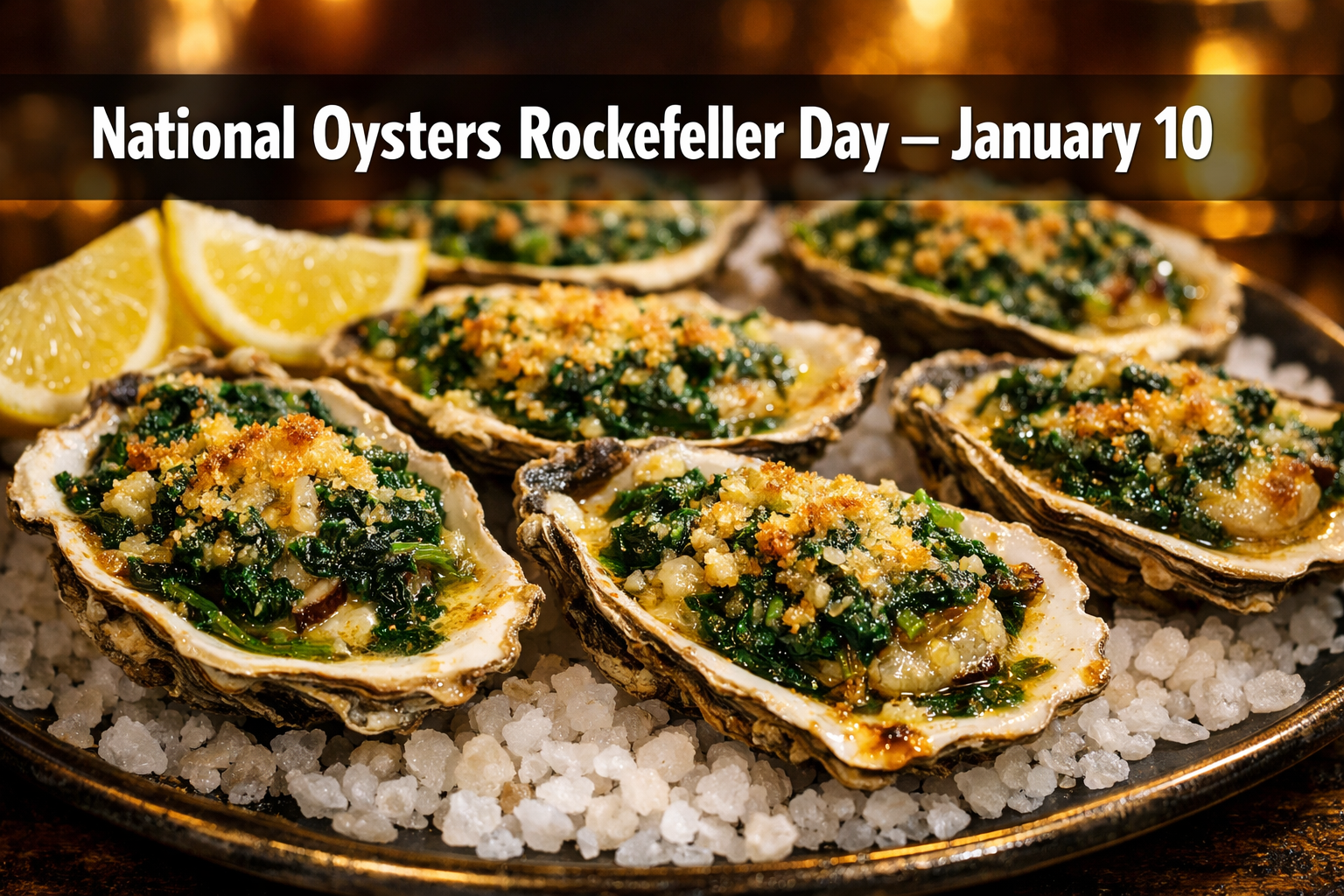
Quick Answer: January 10 National Oysters Rockefeller Day is an annual food holiday celebrated every January 10 in the United States, honoring one of American cuisine’s most iconic dishes: oysters baked on the half shell with a rich, herb-and-butter topping. It’s a day for seafood lovers, home cooks, and restaurant enthusiasts to cook, order, or simply learn about this classic New Orleans creation. Whether you’re a seasoned oyster fan or a first-timer, January 10 is the perfect occasion to explore this legendary dish.
Key Takeaways 🦪
- January 10 National Oysters Rockefeller Day is celebrated annually on January 10.
- Oysters Rockefeller was invented in 1899 at Antoine’s Restaurant in New Orleans, Louisiana.
- The dish is named after John D. Rockefeller because of its famously rich, indulgent topping.
- The original recipe from Antoine’s remains a closely guarded secret to this day.
- The topping traditionally includes butter, herbs, and breadcrumbs — spinach is a common modern addition, though it was not in the original recipe.
- Oysters are a nutritionally dense food, providing zinc, vitamin B12, and lean protein.
- The holiday is a great excuse to visit a local seafood restaurant, host a dinner party, or try making the dish at home.
- National food holidays like this one are recognized informally across the U.S. and widely promoted by restaurants and food media.
What Is National Oysters Rockefeller Day?
January 10 National Oysters Rockefeller Day is an unofficial but widely recognized American food holiday. It falls every year on January 10 and celebrates Oysters Rockefeller, a dish that has been a cornerstone of fine American dining for well over a century.
The holiday gives people a reason to revisit a classic. It’s observed by seafood restaurants running special menus, food bloggers sharing recipes, and home cooks attempting the dish for the first time. No formal governing body created this holiday — like many national food days in the U.S., it grew organically through food culture and social media.
The History Behind Oysters Rockefeller
Oysters Rockefeller was created in 1899 by Jules Alciatore, the son of Antoine’s Restaurant founder Antoine Alciatore, in New Orleans, Louisiana. The dish was born out of necessity: a shortage of escargot (the snails traditionally used in a similar French preparation) led Jules to substitute locally abundant Gulf oysters.
The result was so rich and decadent that Jules named the dish after John D. Rockefeller, then the wealthiest man in America. The name was a direct nod to the topping’s extraordinary richness — not to any personal connection with the Rockefeller family.
“So rich it was named after the richest man in America.” — the informal motto that followed Oysters Rockefeller into culinary legend.
What makes the history especially fascinating:
- Antoine’s Restaurant still serves Oysters Rockefeller today, more than 125 years later.
- The original recipe has never been officially published by the restaurant.
- Many food historians note that the original topping did not include spinach — a misconception that became widespread over the decades.
- The green color of the topping comes from a blend of herbs, likely including parsley, tarragon, and watercress.
What Are Oysters Rockefeller? (The Dish Explained)
Oysters Rockefeller are oysters served on the half shell, topped with a savory, herb-rich butter mixture, then baked or broiled until the topping is golden and bubbling. The dish is served hot, typically on a bed of rock salt to keep the shells stable.
Core components of the dish:
| Component | Traditional Role |
|---|---|
| Fresh oysters (half shell) | The base — briny, tender, and rich |
| Butter | Creates the indulgent, creamy topping |
| Fresh herbs (parsley, tarragon, watercress) | Provides the signature green color and flavor |
| Breadcrumbs | Adds texture and helps the topping brown |
| Anise-flavored liqueur (e.g., Pernod or Herbsaint) | Adds depth and a subtle licorice note |
| Rock salt | Used as a bed to stabilize shells during baking |
Modern versions often include spinach, bacon, Parmesan cheese, or hot sauce. These are acceptable variations, but they differ from the original Antoine’s preparation.
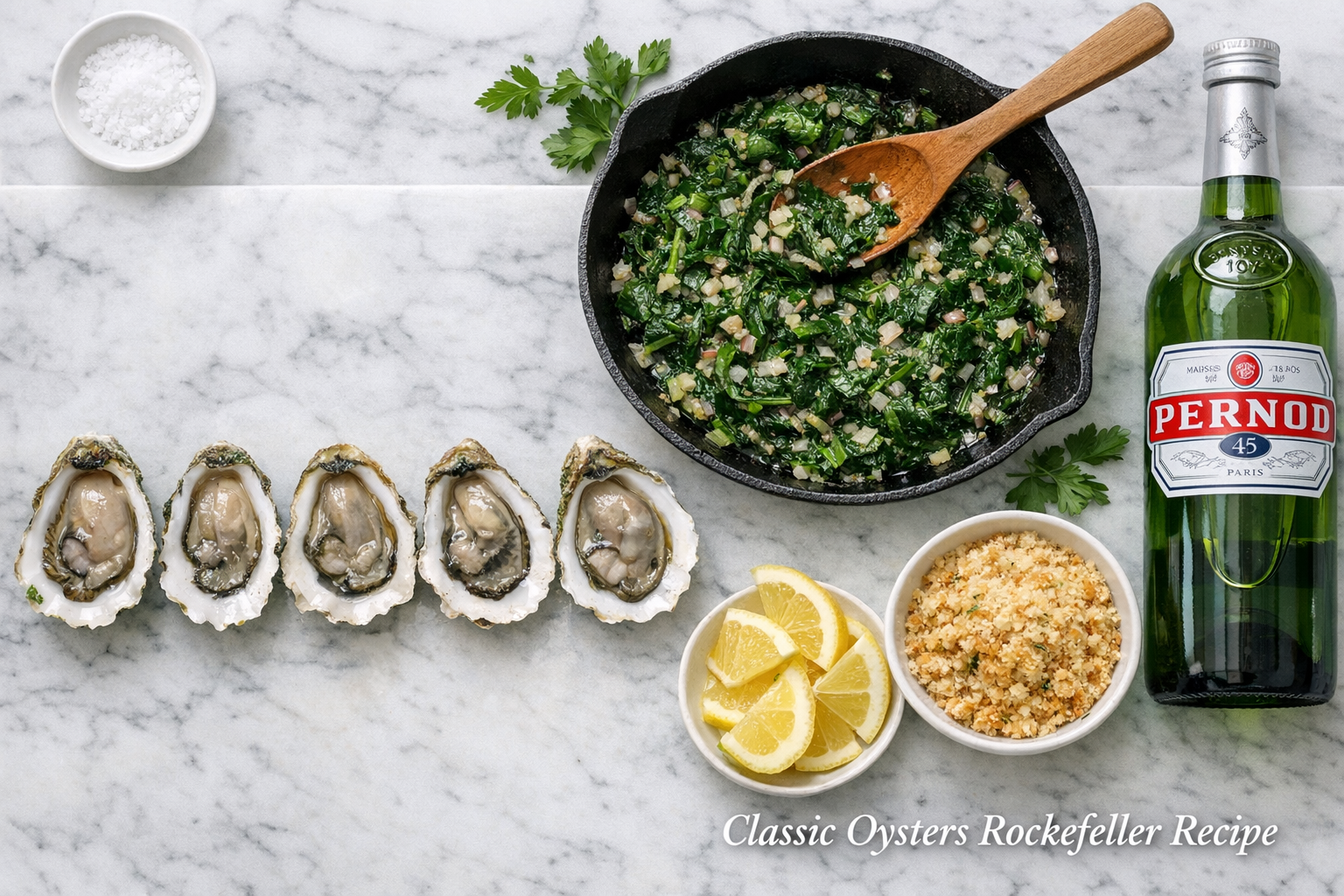
How to Make Oysters Rockefeller at Home
Making Oysters Rockefeller at home is achievable for most cooks with basic kitchen skills. The most challenging step is shucking the oysters — everything else is straightforward.
Step-by-step overview:
- Source fresh oysters. Buy live oysters from a reputable fishmonger or grocery seafood counter. Plan for 6 oysters per person as an appetizer.
- Shuck the oysters. Use an oyster knife and a thick towel for safety. Detach the oyster from the top shell, then loosen it from the bottom shell. Discard the flat top shell.
- Make the topping. Sauté finely chopped shallots in butter until soft. Add fresh herbs (parsley, tarragon, and/or watercress), a splash of Pernod or Herbsaint, salt, and pepper. Pulse briefly in a food processor with breadcrumbs until combined.
- Top the oysters. Place a generous spoonful of the herb-butter mixture on each oyster.
- Bake or broil. Arrange on a baking sheet lined with rock salt. Bake at 450°F (232°C) for 8–10 minutes, or broil for 4–5 minutes until the topping is golden.
- Serve immediately. Oysters Rockefeller are best eaten hot, straight from the oven.
Common mistake: Overcooking the oysters causes them to shrink and turn rubbery. Watch the oven closely — the goal is a golden topping, not a shriveled oyster.
How to Celebrate January 10 National Oysters Rockefeller Day
Celebrating January 10 National Oysters Rockefeller Day doesn’t require a reservation at a fine-dining restaurant, though that’s certainly one option.
Ways to mark the occasion:
- Dine out: Many seafood restaurants and New Orleans-style eateries run Oysters Rockefeller specials on January 10. Call ahead or check menus online.
- Cook at home: Follow the steps above. Invite friends or family for a small dinner party — the dish is impressive and relatively quick to prepare.
- Order online: Some specialty seafood suppliers ship pre-shucked oysters directly to consumers, making home preparation easier.
- Learn the history: Watch a documentary or read about Antoine’s Restaurant and New Orleans culinary history. Food history is genuinely interesting.
- Share on social media: Use hashtags like #NationalOystersRockefellerDay or #OystersRockefeller to join the broader conversation.
Choose dining out if you’ve never shucked an oyster before and don’t have the tools. Choose cooking at home if you want the full experience and have access to fresh oysters.
Nutritional Value of Oysters
Oysters are one of the most nutrient-dense foods available, making Oysters Rockefeller more than just an indulgent treat. The dish does add butter and breadcrumbs, so the overall calorie count rises, but the oysters themselves are genuinely nutritious.
Key nutrients in raw oysters (per 3 oz / 85g serving), according to the USDA FoodData Central:
- Zinc: Oysters are among the highest natural sources of zinc, which supports immune function.
- Vitamin B12: Supports nerve function and red blood cell production.
- Protein: Approximately 9–10 grams per 3 oz serving (lean, complete protein).
- Iron and selenium: Both present in meaningful amounts.
- Calories: Roughly 69 calories per 3 oz serving (raw, before preparation).
The Rockefeller preparation adds calories through butter and breadcrumbs, but the dish remains a reasonable indulgence when enjoyed as an appetizer.
FAQ: January 10 National Oysters Rockefeller Day
Q: Is January 10 National Oysters Rockefeller Day an official U.S. holiday? A: No. It’s an informal food holiday, not recognized by federal or state governments. It’s celebrated through food culture, restaurants, and social media rather than any official proclamation.
Q: Who invented Oysters Rockefeller? A: Jules Alciatore, son of Antoine’s Restaurant founder, created the dish in New Orleans in 1899.
Q: Does Oysters Rockefeller contain spinach? A: The original Antoine’s recipe does not include spinach. The green color comes from herbs like parsley, tarragon, and watercress. Spinach became common in modern adaptations.
Q: Can Oysters Rockefeller be made ahead of time? A: The topping can be prepared up to a day in advance and refrigerated. Shuck and top the oysters just before baking for best results.
Q: Are Oysters Rockefeller served hot or cold? A: Hot. The dish is baked or broiled and served immediately. It’s not a raw oyster preparation.
Q: Where can someone eat Oysters Rockefeller on January 10? A: Antoine’s Restaurant in New Orleans is the most historically significant option. Most seafood restaurants and oyster bars across the U.S. serve a version of the dish, especially around January 10.
Q: What wine pairs well with Oysters Rockefeller? A: Dry, crisp white wines work best — Chablis, Muscadet, or a dry Champagne complement the briny oysters and rich topping without overpowering them.
Q: Is it safe to eat oysters in January? A: Yes. January falls outside the traditional warm-water months when oyster safety risks increase. Cold-water oysters in winter are generally considered safe and often at peak flavor.
Conclusion
January 10 National Oysters Rockefeller Day is more than a quirky calendar entry. It’s a genuine celebration of American culinary history, rooted in a dish that has endured for over 125 years because it genuinely delivers: rich, savory, and deeply satisfying.
Actionable next steps for 2026:
- Mark January 10 on your calendar and decide in advance whether you’ll cook at home or dine out.
- Source fresh oysters early — call your local fishmonger a few days before to ensure availability.
- Try the classic herb-butter preparation before experimenting with modern variations like spinach or bacon.
- Share the experience with friends or family — Oysters Rockefeller is a social dish, best enjoyed with good company and a cold glass of Chablis.
Whether the goal is culinary adventure, historical appreciation, or simply a great meal, January 10 is the perfect occasion to give this iconic dish its due.
References
- USDA FoodData Central. (2019). Oysters, eastern, wild, raw. U.S. Department of Agriculture. https://fdc.nal.usda.gov/
- Fitzmorris, T. (2012). Tom Fitzmorris’s New Orleans Food: More Than 225 Recipes from the City That Care Forgot. Stewart, Tabori & Chang.
- Antoine’s Restaurant. (n.d.). Our history. https://www.antoines.com/history
- Bienvenu, M., Brasseaux, C. A., & Brasseaux, R. A. (2005). Stir the Pot: The History of Cajun Cuisine. Hippocrene Books.