
Quick Answer
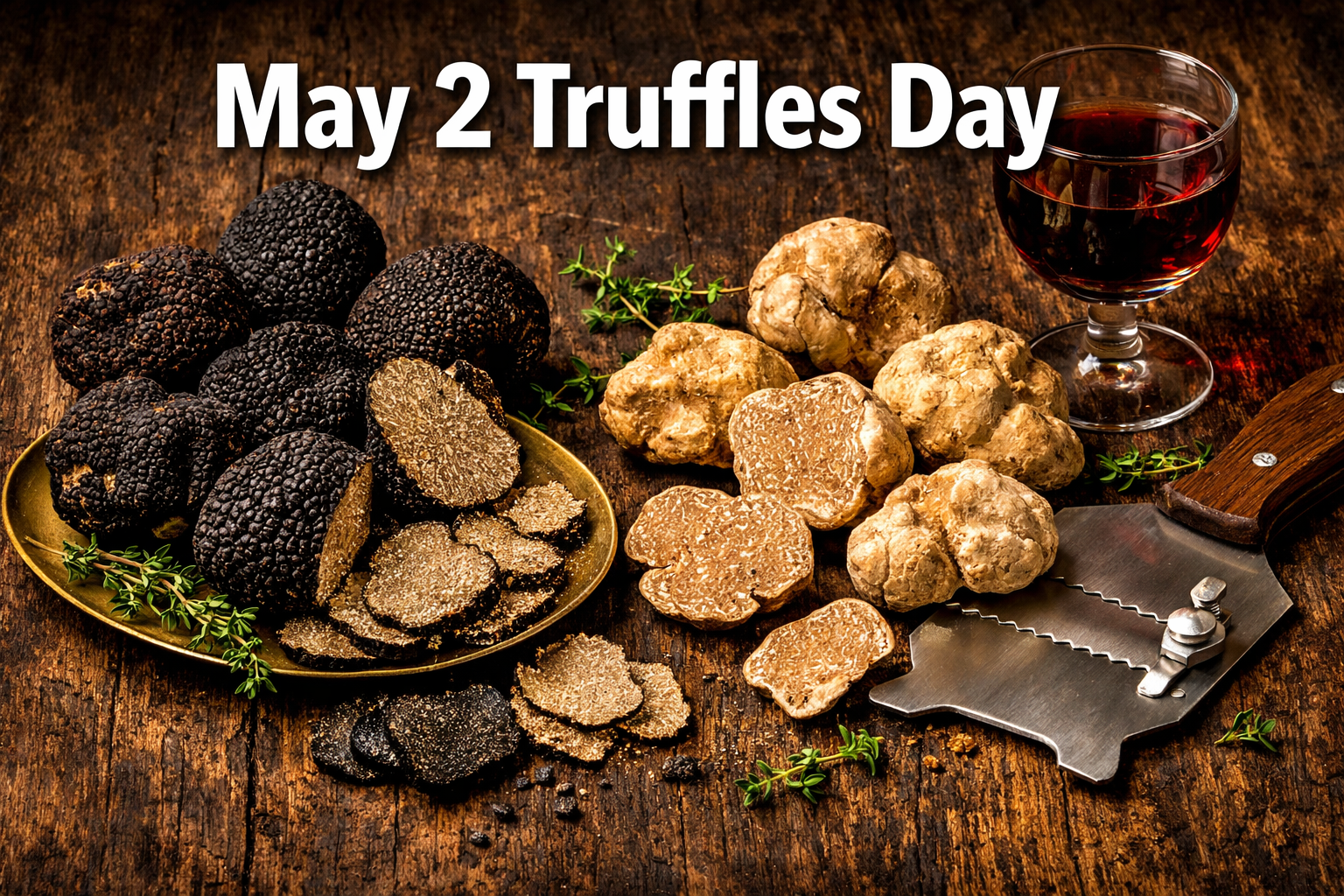
May 2 Truffles Day is an annual food holiday celebrated every May 2nd that honors the truffle, one of the world’s most prized and expensive culinary ingredients. The day encourages food lovers to explore truffle-based dishes, learn about truffle foraging traditions, and appreciate the fungi’s complex flavor profile. It is observed informally by home cooks, restaurants, and food communities across the United States and beyond.
Key Takeaways 🍄
- May 2 Truffles Day falls on May 2nd each year and celebrates truffles as a culinary treasure.
- Truffles are subterranean fungi, not to be confused with chocolate truffles (though both share the name).
- The two most celebrated varieties are the black Périgord truffle (Tuber melanosporum) and the white Alba truffle (Tuber magnatum).
- Fresh truffles can sell for hundreds to thousands of dollars per pound, making them one of the priciest foods on earth.
- Truffle dogs (and historically, pigs) are trained to sniff out truffles underground near oak and hazelnut trees.
- Truffle oil, truffle salt, and truffle paste are affordable alternatives for everyday cooking.
- The holiday is a great occasion to try a truffle-forward recipe at home or visit a restaurant featuring seasonal truffle menus.
- Truffles have been prized since ancient Rome and appear throughout centuries of European culinary history.
What Is May 2 Truffles Day?
May 2 Truffles Day is an informal food holiday dedicated to celebrating the culinary truffle — the rare, aromatic fungus that grows underground near the roots of specific trees. The day gives food enthusiasts a reason to seek out truffle experiences, whether that means shaving fresh truffles over pasta, ordering a truffle tasting menu, or simply learning more about where these remarkable fungi come from.
This holiday refers specifically to culinary truffles (genus Tuber), not chocolate truffles, though the two share a name because the round chocolate confection resembles the lumpy fungus in shape.
A Brief History of Truffles as a Culinary Ingredient
Truffles have been eaten and revered for at least 2,500 years. Ancient Romans considered them a gift from Jupiter, believing lightning strikes near oak trees caused truffles to grow. During the European Renaissance, truffles appeared regularly on the tables of royalty and aristocracy. French gastronome Jean Anthelme Brillat-Savarin famously called the truffle “the diamond of the kitchen” in his 1825 work The Physiology of Taste.
By the 19th century, France was producing an estimated 1,000 metric tons of black truffles annually. Today, due to deforestation, changes in land use, and shifting climate patterns, production has dropped dramatically — which is a key reason prices remain so high.
Key milestones in truffle history:
| Era | Milestone |
|---|---|
| Ancient Rome | Truffles prized as luxury food and aphrodisiac |
| 14th–16th century | Truffles appear in European royal courts |
| 1825 | Brillat-Savarin coins “diamond of the kitchen” |
| 19th century | Peak French truffle production (est. 1,000 metric tons/year) |
| 20th–21st century | Production declines; global cultivation expands |
| 2026 | Truffles cultivated in Australia, USA, Chile, and beyond |
What Makes Truffles So Expensive?
Truffles are expensive because they cannot be reliably farmed like most crops, they have a very short shelf life, and they require years of careful ecosystem management before a harvest is possible.
Several factors drive the price:
- They grow underground and must be located by trained animals (dogs are the modern standard; pigs were used historically).
- Harvest windows are narrow. Black truffles peak from November to March; white truffles peak from October to December.
- They perish quickly. Fresh truffles lose aroma and weight within days of harvest.
- Supply is limited. Wild truffle habitats are shrinking globally.
- Demand is global. Fine dining restaurants worldwide compete for the same limited supply.
White Alba truffles regularly sell for $3,000–$5,000 per pound at auction (prices vary by season and quality). Black Périgord truffles are less expensive but still command $800–$1,500 per pound for top-grade fresh product, according to market reports from specialty importers.
“The truffle is not a food that can be mass-produced. Every gram represents years of ecological patience.”
— Common sentiment among truffle cultivators in France and Australia
The Main Types of Culinary Truffles
Not all truffles are equal. Choosing the right variety matters for flavor, availability, and budget.
Black Périgord Truffle (Tuber melanosporum)
- Origin: France, Spain, Australia (cultivated)
- Season: November to March
- Flavor: Earthy, musky, slightly garlicky; holds up well to heat
- Best for: Sauces, eggs, risotto, pasta
White Alba Truffle (Tuber magnatum)
- Origin: Northern Italy (Piedmont, Tuscany)
- Season: October to December
- Flavor: Intensely aromatic, garlicky, honey-like; delicate and raw-use only
- Best for: Shaved raw over pasta, eggs, or carpaccio
Summer Truffle (Tuber aestivum)
- Origin: Europe, widely available
- Season: May to August
- Flavor: Milder, nuttier; more affordable
- Best for: Everyday cooking, beginners
Oregon White Truffle (Tuber oregonense)
- Origin: Pacific Northwest, USA
- Season: November to March
- Flavor: Fruity, garlicky, pungent when ripe
- Best for: Supporting local producers; a great American alternative
Choose summer truffles if you’re new to cooking with truffles and want an accessible entry point without the premium price tag.
How to Celebrate May 2 Truffles Day
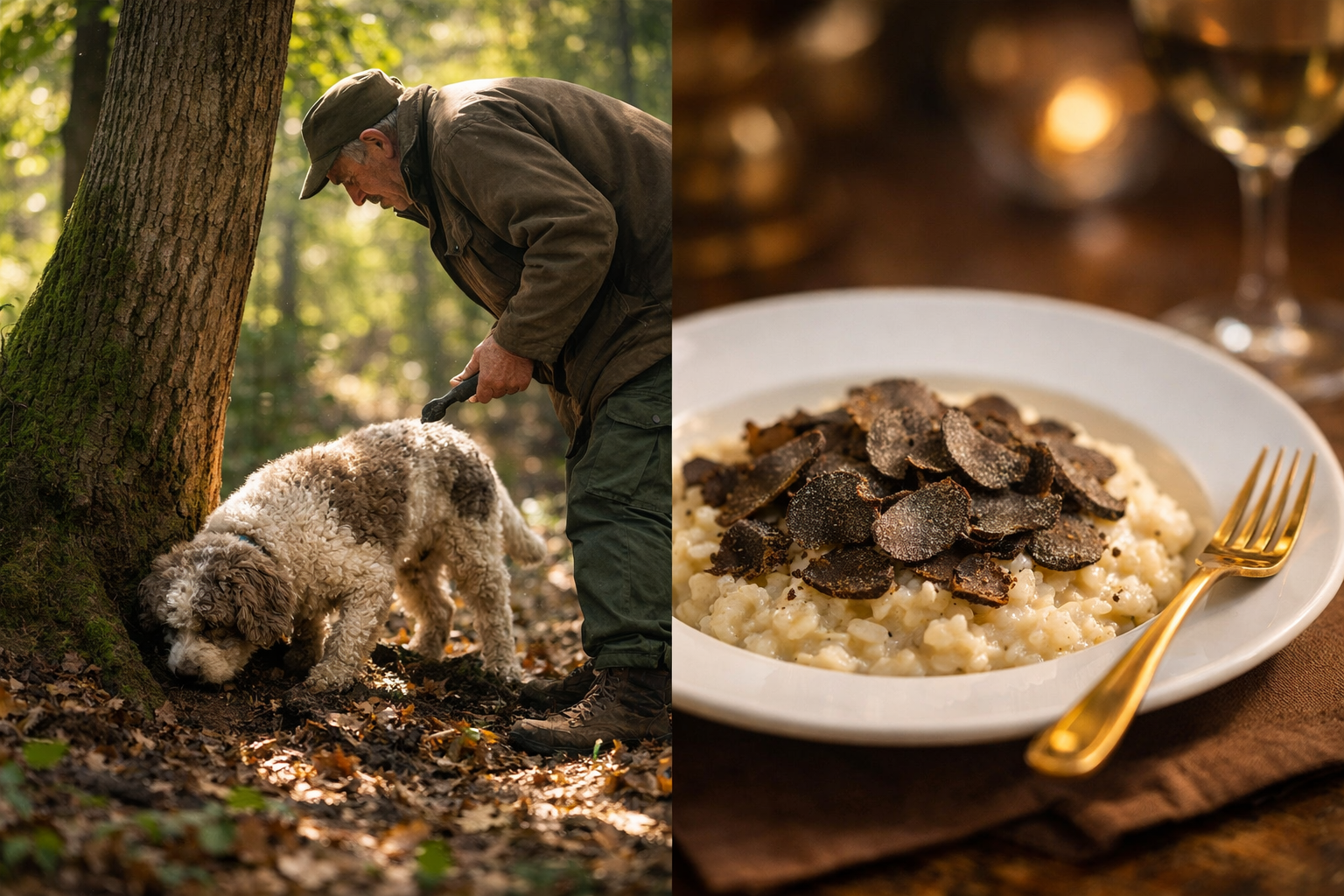
May 2 Truffles Day is best celebrated by doing something intentional with truffles — even on a modest budget. The goal is appreciation, not extravagance.
At home (budget-friendly options):
- Cook with truffle oil or truffle salt. Drizzle truffle oil over scrambled eggs, popcorn, or fries. These products are widely available and cost $10–$25.
- Make truffle pasta. Toss fresh pasta with butter, Parmesan, and a small amount of truffle paste or shaved fresh truffle.
- Try truffle cheese. Many specialty grocers carry aged cheeses infused with truffle, such as truffle pecorino or truffle gouda.
- Host a truffle tasting. Compare truffle salt, truffle oil, and a truffle-infused product side by side.
Dining out:
- Search for restaurants running May truffle specials or tasting menus.
- Ask your server which dishes feature real truffle versus truffle-flavored oil (there is a significant difference).
Learn and share:
- Watch a documentary about truffle hunting (several are available on major streaming platforms).
- Share a truffle dish photo with the hashtag #TrufflesDay on social media.
For more food holiday inspiration, check out how other culinary celebrations are observed, like April 8 Empanada Day or April 1 Sourdough Bread Day.
Truffle Pairings: What Goes Best with Truffles?
Truffles pair best with ingredients that are rich, fatty, or neutral enough to let the truffle’s aroma dominate.
Top truffle pairings:
- Eggs — scrambled, fried, or in an omelet; fat in the yolk carries truffle aroma exceptionally well
- Pasta — especially fresh egg pasta with butter or cream
- Risotto — the starchy, creamy base amplifies truffle flavor
- Potatoes — roasted, mashed, or in gratin form
- Aged cheeses — Parmesan, Comté, Pecorino
- Foie gras — a classic French pairing
- Mild white fish — halibut or sole with a truffle beurre blanc
Avoid pairing truffles with:
- Strong spices (cumin, chili, curry) — they overpower the truffle
- Acidic sauces — high acidity dulls the aroma
- Overly sweet components
If you enjoy exploring bold, aromatic ingredients in cooking, you might also appreciate April 19 Garlic Day — another celebration of a pungent culinary staple.
Truffle Oil: Real vs. Synthetic — What You Should Know
Most commercial truffle oils do not contain real truffles. This is one of the most common misconceptions among home cooks.
Real truffle oil is made by infusing a neutral oil (usually olive oil) with actual truffle pieces or truffle extract. It is expensive and has a shorter shelf life.
Synthetic truffle oil uses a lab-created compound called 2,4-dithiapentane, which mimics one aromatic note of real truffles. It is far cheaper but lacks the full complexity of the real thing. Most truffle oils on supermarket shelves fall into this category.
How to tell the difference:
- Check the ingredient label. If it lists “truffle aroma” or “natural flavoring” without specifying truffle pieces, it is likely synthetic.
- Real truffle oil is typically labeled with the truffle species (Tuber melanosporum, etc.) and costs noticeably more.
Choose real truffle oil or truffle paste for cooking on May 2 Truffles Day if you want an authentic flavor experience.
For more ideas on cooking with specialty ingredients, browse culinary delights or explore the list of cookbooks for truffle-focused recipe inspiration.
Fun Facts About Truffles Worth Sharing
- The word “truffle” comes from the Latin tuber, meaning “lump” or “swelling.”
- Truffles reproduce by releasing spores, which animals spread after eating the fungi — a symbiotic relationship with the forest.
- The largest white truffle ever recorded weighed approximately 2.86 pounds (1.3 kg) and sold at auction for over $300,000 in 2007, according to auction records cited by multiple food media outlets.
- Australia has become a significant producer of black Périgord truffles, with the Southern Hemisphere harvest running from June to August — opposite to Europe’s season.
- Truffle dogs (especially the Lagotto Romagnolo breed) can be trained in as little as six months and can detect truffles up to three feet underground.
Other food holidays that celebrate equally storied culinary traditions include January 12 National French Onion Soup Day and January 9 National Cassoulet Day — both rooted in deep French culinary heritage.
FAQ: May 2 Truffles Day
Q: When is May 2 Truffles Day celebrated? A: May 2 Truffles Day is celebrated annually on May 2nd.
Q: Is May 2 Truffles Day an official national holiday? A: No. It is an informal food holiday, not a federally recognized observance. It is celebrated by food communities, restaurants, and enthusiasts.
Q: Are culinary truffles the same as chocolate truffles? A: No. Culinary truffles are subterranean fungi. Chocolate truffles are a confection named for their resemblance to the fungus. May 2 Truffles Day refers to the culinary fungus.
Q: Where can you buy fresh truffles in 2026? A: Fresh truffles are available from specialty food retailers, farmers’ markets in major cities, and online importers. Availability depends on the season and variety.
Q: What is the most affordable way to celebrate May 2 Truffles Day? A: Cook with truffle salt, truffle paste, or a quality truffle oil. Truffle-infused cheese from a specialty grocer is another low-cost option that delivers real flavor.
Q: Can you grow truffles at home? A: It is possible but difficult. Truffle cultivation requires inoculated tree seedlings, specific soil conditions, and several years of growth before any harvest. It is not a practical option for most home gardeners.
Q: Why do truffles smell so strong? A: Truffles produce aromatic compounds — including androstenol and various sulfur-based molecules — that are designed to attract animals to eat and disperse their spores. The scent is a biological reproductive strategy.
Q: Are truffles healthy to eat? A: Truffles are low in calories and contain protein, fiber, and antioxidants. They are used in small quantities, so their direct nutritional impact is modest, but they add significant flavor without added fat or sugar.
Q: What is the difference between black and white truffles? A: Black truffles (Périgord) are earthier and can be cooked; white truffles (Alba) are more intensely aromatic and are always served raw, shaved over food. White truffles are generally more expensive.
Q: Is truffle oil a good substitute for fresh truffles? A: It is a convenient substitute, but most commercial truffle oils use synthetic flavoring rather than real truffles. Real truffle oil or truffle paste is a better substitute than synthetic versions.
Conclusion: Make May 2 Truffles Day Count
May 2 Truffles Day is a genuine opportunity to engage with one of the culinary world’s most fascinating ingredients. Whether the goal is a simple truffle egg at home or a full restaurant tasting menu, the day rewards curiosity and intentionality.
Actionable next steps for 2026:
- Pick one truffle product — truffle salt, truffle paste, or a truffle-infused cheese — and cook something with it on May 2nd.
- Read the label on any truffle oil in your pantry. Check whether it contains real truffle or synthetic flavoring, and upgrade if needed.
- Book a restaurant that features a truffle menu for May 2nd — reservations at specialty restaurants fill quickly around food holidays.
- Share the experience. Post a photo, tell a friend, or explore more food holidays throughout the year to keep culinary curiosity alive.
For more food holiday guides and recipe inspiration, explore the culinary delights section or browse the complete library of cooking for ideas that pair well with a truffle-focused meal.
References
- Brillat-Savarin, Jean Anthelme. The Physiology of Taste. 1825.
- Bonito, A., et al. “Truffle production in Europe: historical trends and current status.” Mycorrhiza, 2010.
- Oregon Truffle Festival. “Oregon Truffle Varieties.” oregontrufflefestival.org (accessed 2024).
- Australian Truffle Traders. “Australian Black Truffle Season.” australiantruffletraders.com.au (accessed 2024).
- Sotheby’s auction records. “Record truffle sale, 2007.” Referenced in multiple food media reports.