
Last updated: May 3, 2026
Quick Answer: African mango refers both to the fresh tropical fruit (Mangifera indica) grown across West and Central Africa and to the seed extract of the wild Irvingia gabonensis tree, which is marketed as a dietary supplement. Africa produces roughly 4 million metric tons of mangoes annually, holds approximately 70% of the European mango import market, and is actively expanding export infrastructure — with Senegal alone targeting 35,000 tons of exports for the 2026 season. [1][3]
Key Takeaways
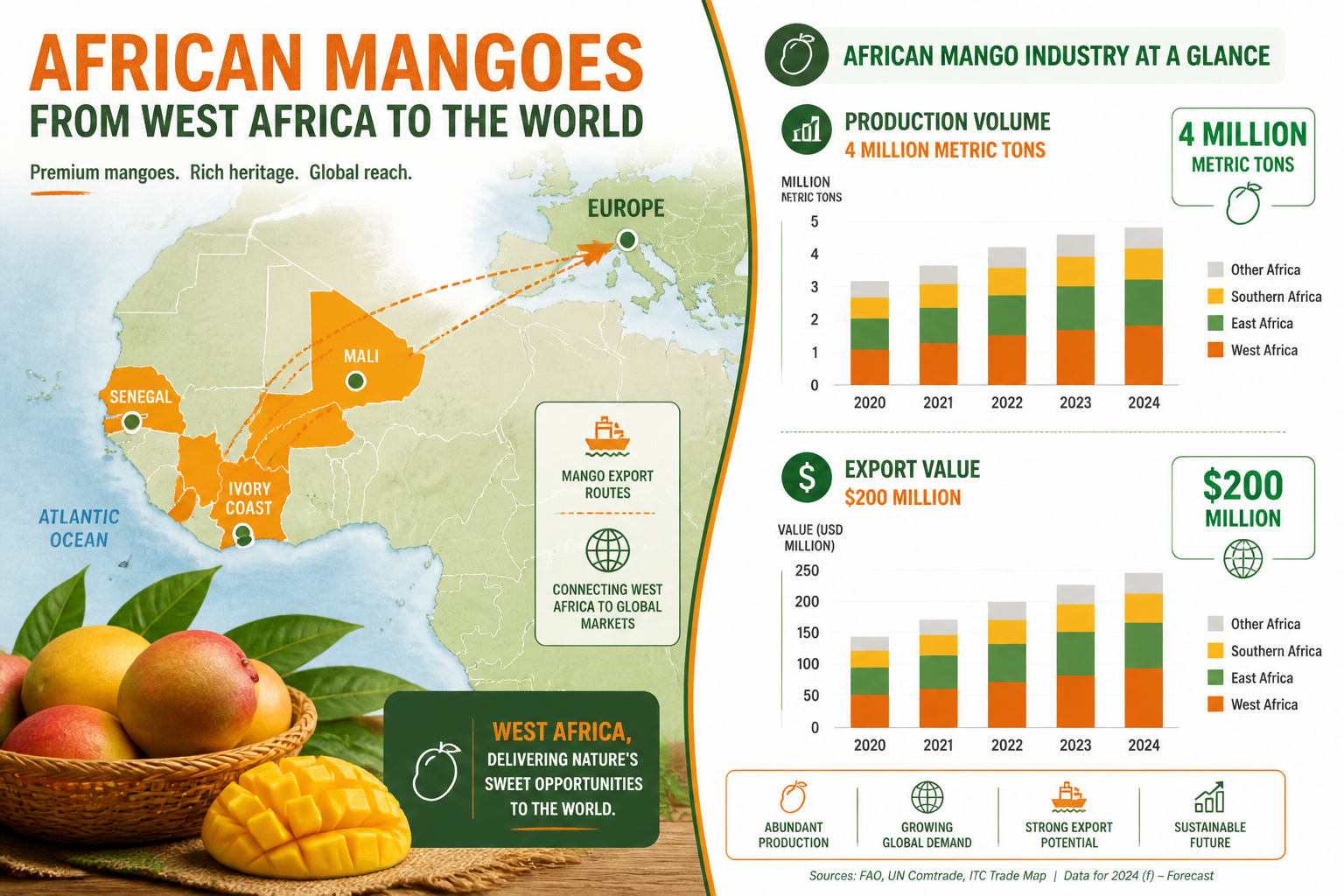
- 🌍 Africa produces around 4 million metric tons of mangoes per year, with West Africa contributing nearly 1.5 million tons. [3]
- 🇪🇺 African nations supply approximately 70% of Europe’s imported mangoes, worth an estimated $200 million annually. [3]
- 🌱 Senegal is targeting 35,000 tons of mango exports for 2026, with the season opening around May 20. [1]
- 🪰 Fruit fly is the single biggest threat to West African mango exports, capable of causing 50–80% crop losses. [1]
- 💊 Irvingia gabonensis — often sold as “African mango seed extract” — is a separate product from fresh mangoes, used in weight management supplements.
- 📈 The processed mango products market (juices, dried fruit, purees) represents a multi-billion-dollar global opportunity. [3]
- 🏛️ Countries like Côte d’Ivoire, Nigeria, and Benin offer tax incentives and subsidies through special economic zones to attract agri-investment. [3]
- ⚠️ Mali faced an EU import suspension in 2025 due to repeated fruit fly interceptions — a warning that shaped Senegal’s 2026 pest strategy. [1]
What Exactly Is African Mango?
African mango is not a single product — it’s two distinct things that share a name, and confusing them leads to poor purchasing decisions.
Fresh African mango refers to commercially grown Mangifera indica fruit harvested across West, Central, and East Africa. Countries like Senegal, Côte d’Ivoire, Mali, and Burkina Faso grow large volumes for both domestic consumption and European export. Popular export varieties include Kent, Keitt, and Amélie.
African mango seed extract refers to a supplement derived from Irvingia gabonensis, a wild tree native to Central and West African rainforests. The seeds (sometimes called “bush mango” or “dika nuts”) are pressed or extracted and sold in capsule form, primarily marketed for appetite control and weight management.
Choose fresh African mango if you’re interested in culinary uses, nutritional value, or sourcing fruit. Choose Irvingia gabonensis extract if you’re researching dietary supplements — and consult a healthcare provider before use.
How Big Is the African Mango Industry?
African mango production is a major agricultural sector, not a niche market. The continent produces approximately 4 million metric tons of mangoes annually, supported by over 4 million hectares of cultivation land. West Africa alone accounts for nearly 1.5 million of those tons. [3]
The export side is equally significant:
| Metric | Figure | Source |
|---|---|---|
| Annual African mango production | ~4 million metric tons | Africa for Investors [3] |
| West Africa production share | ~1.5 million metric tons | Africa for Investors [3] |
| Africa’s share of EU mango imports | ~70% | Africa for Investors [3] |
| Annual export value | ~$200 million | Africa for Investors [3] |
| Senegal’s 2026 export target | 35,000 tons | FreshPlaza [1] |
| Certified Senegalese exporters (2026) | ~20 companies | FreshPlaza [1] |
The processed mango products sector — covering dried mangoes, juices, and purees — represents a substantial global market opportunity, with projections pointing to significant growth through the late 2020s. [3]
For those interested in other tropical and exotic fruits, the guide to akebi fruit and the acerola cherries overview offer useful comparisons on lesser-known produce with growing market interest.
Which African Countries Lead Mango Production?
West Africa dominates African mango exports to Europe, with four countries accounting for the bulk of volume and phytosanitary attention.
Top producing and exporting nations:
- Côte d’Ivoire — The largest volume exporter to Europe; season typically runs through early August.
- Senegal — Positioned as an early-season supplier, with the 2026 season opening around May 20. About 20 exporters are certified by Senegal’s Plant Protection Department for 2026. [1]
- Mali — A significant producer, but faced EU import suspension in 2025 following repeated fruit fly interceptions. [1]
- Burkina Faso — A major growing region, though landlocked status adds logistical complexity.
- Nigeria and Benin — Growing export capacity, with government incentives through special economic zones. [3]
📌 Senegal’s strategic advantage in 2026: By opening its export season before Ivory Coast operations wind down, Senegal can capture early European market demand. The country’s plant protection authorities have also strengthened pest controls specifically to avoid the import ban that hit Mali in 2025. [1]
What Threatens African Mango Exports?
The single biggest threat to African mango exports is the fruit fly (Ceratitis spp. and Bactrocera spp.). Left unmanaged, fruit fly infestations can destroy 50–80% of a mango crop and trigger immediate phytosanitary bans from importing countries. [1]
The pest is heavily concentrated across Ivory Coast, Mali, Burkina Faso, and Senegal — the same countries that dominate West African exports. Mali’s 2025 EU suspension demonstrates how quickly a pest problem can shut down an entire country’s market access. [1]
Senegal’s 2026 pest management action plan includes: [1]
- Stepped-up inspection controls at multiple operational levels
- Identification and certification of approved packing centers
- Regional monitoring programs with shared data
- Drone-based treatment as a new protective method
- An explicit industry goal of “zero flies and therefore zero interceptions”
This kind of coordinated, multi-layer approach is increasingly standard for African mango exporters who want to maintain EU market access long-term.
What Are the Nutritional Benefits of African Mango?
Fresh African mango is a nutrient-dense fruit that fits well into a balanced diet. Like other mango varieties, it provides a solid range of vitamins and dietary fiber.
Key nutrients in fresh mango (per 100g serving, approximate values):
- Vitamin C — Supports immune function; mangoes are a reliable source
- Vitamin A (as beta-carotene) — Important for eye health and skin
- Dietary fiber — Aids digestion and promotes satiety
- Folate — Relevant for cell growth and prenatal nutrition
- Potassium — Supports heart and muscle function
Fresh mango pairs well in smoothies, salsas, and fruit salads. For recipe inspiration, the smoothie cookbook collection and sauce cookbook both include tropical fruit applications worth exploring.
A note on Irvingia gabonensis supplements: Some small clinical studies have examined seed extract for weight management, but the evidence base is limited and inconsistent. No major health authority has approved African mango extract as a treatment for any condition. Anyone considering supplementation should speak with a qualified healthcare provider first.
How Is African Mango Used in Cooking?
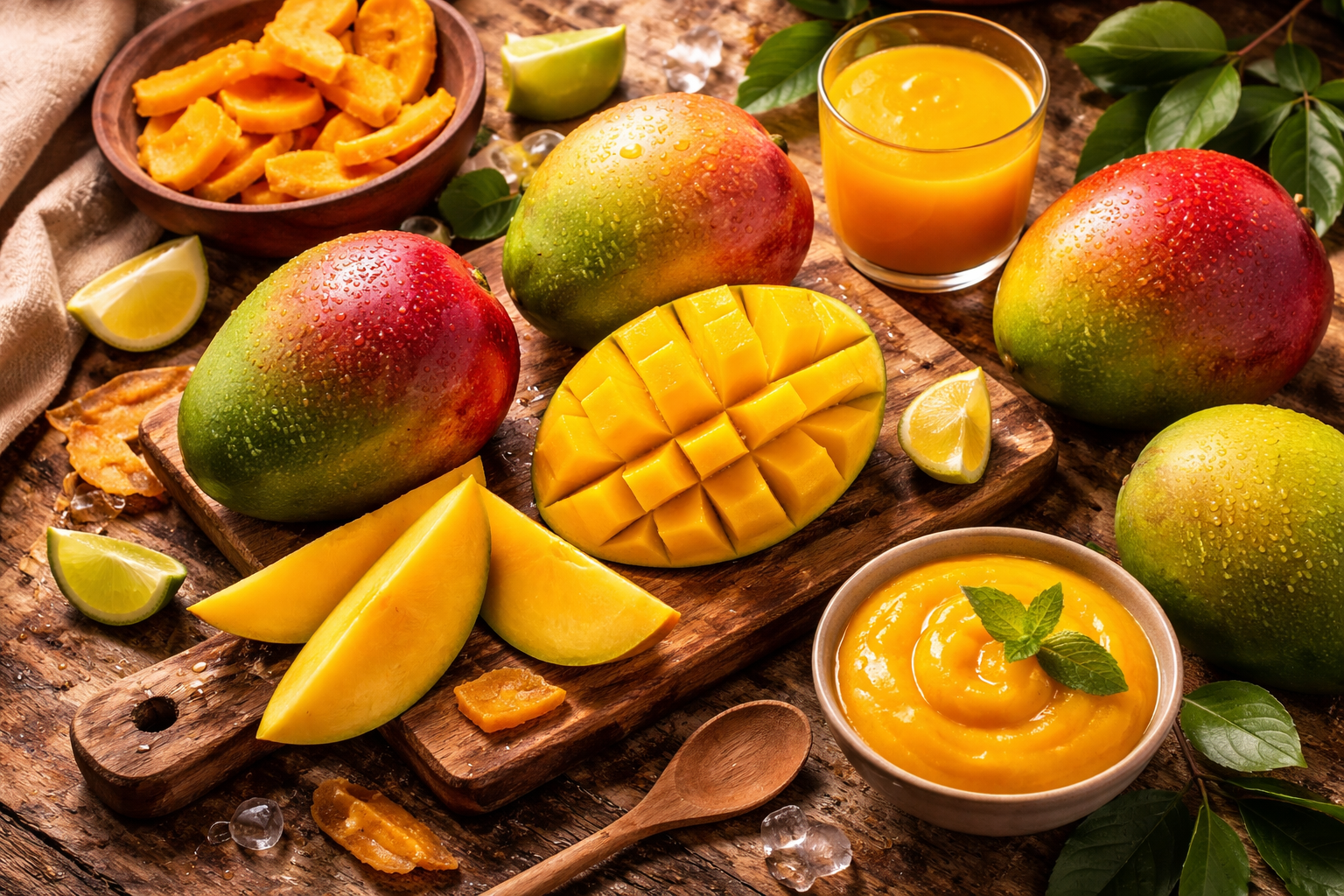
African mango is versatile in the kitchen. Fresh fruit works across sweet and savory preparations, while dried and processed forms extend its culinary range considerably.
Common culinary applications:
- Fresh: Eaten out of hand, sliced into salads, or blended into smoothies and lassis
- Dried: A popular snack and ingredient in trail mixes; also used in baked goods
- Puree: Base for sauces, ice cream, and yogurt toppings
- Juice: Sold fresh and commercially processed
- Pickled/fermented: Common in West African home cooking
- Chutney and relish: Pairs well with grilled proteins — the steak cookbook and chicken cookbook both include fruit-based accompaniment ideas
Unripe African mango has a tart, acidic flavor that works well in chutneys and spiced preparations — similar to how green mango is used across South and Southeast Asian cuisines. Ripe fruit is sweet, aromatic, and fiber-rich.
For those interested in building a broader fruit-forward recipe repertoire, the banana day feature and spinach day guide highlight how whole foods fit into everyday cooking.
Is African Mango a Good Investment Opportunity?
For agricultural investors, African mango presents a credible opportunity — provided the phytosanitary and logistics challenges are taken seriously.
Investment case summary:
- Africa holds roughly 70% of the European mango import market, a dominant position unlikely to erode quickly. [3]
- The processed mango products sector (dried fruit, juices, purees) offers higher margins than fresh export. [3]
- Government incentives in Côte d’Ivoire, Nigeria, and Benin — including tax exemptions and infrastructure support through special economic zones — reduce entry costs. [3]
- Early-season positioning (as Senegal demonstrates) can command premium pricing in European markets. [1]
Key risks to evaluate:
- Fruit fly pressure and phytosanitary compliance costs
- Landlocked logistics for Mali and Burkina Faso
- EU import suspension risk (as seen with Mali in 2025)
- Currency and political stability in producing nations
Choose African mango investment if you have agricultural supply chain experience, can absorb 2–3 year development timelines, and have access to EU market distribution networks.
Frequently Asked Questions About African Mango
What is African mango? African mango refers to fresh mangoes (Mangifera indica) grown across West and Central Africa, or to seed extract from Irvingia gabonensis, a wild tree used in dietary supplements. The two products are distinct.
Which countries grow the most African mangoes? Côte d’Ivoire, Senegal, Mali, and Burkina Faso lead West African production. Nigeria and Benin are growing their export capacity. [3]
Does African mango help with weight loss? Some small studies on Irvingia gabonensis seed extract have shown modest effects on body weight, but the evidence is not strong enough for any health authority to endorse it as a weight loss treatment. Consult a doctor before using any supplement.
Why was Mali banned from exporting mangoes to the EU? Mali faced a temporary EU import suspension in 2025 after repeated fruit fly interceptions in its mango shipments. Fruit fly infestation is a phytosanitary violation that can trigger market bans. [1]
When is the African mango export season? West African mango exports to Europe typically run from approximately May through August. Senegal opens the season around May 20, with Ivory Coast operations continuing until around August 10. [1]
How much does Africa export in mangoes annually? Africa’s mango export value is estimated at approximately $200 million per year, with the continent supplying around 70% of European mango imports. [3]
What varieties of African mango are exported? Kent, Keitt, and Amélie are the primary export varieties from West Africa, chosen for their shelf life, flavor, and suitability for European consumer preferences.
Is African mango safe to eat? Yes. Fresh African mango is a safe, nutritious fruit for most people. Those with latex-fruit syndrome or mango allergies (related to urushiol in the skin) should exercise caution.
How is drone technology being used in African mango farming? Senegal’s 2026 pest management plan includes drone-based treatment as a method for applying pest controls across orchards more efficiently and with greater coverage than ground-based methods. [1]
What is the global market size for processed mango products? The processed mango products market — covering dried mangoes, juices, and purees — represents a multi-billion-dollar global opportunity, with Africa positioned as a key supplier. [3]
Conclusion
African mango is a significant agricultural commodity, a growing export sector, and — in its supplement form — a product that requires careful consumer scrutiny. The fresh fruit side of the story is straightforward: West Africa dominates European supply, production volumes are substantial, and the 2026 season looks promising for well-prepared exporters like Senegal. [1][3]
Actionable next steps based on your interest:
- Consumers: Buy fresh African mango in season (May–August) from certified retailers. For supplements, verify third-party testing and consult a healthcare provider.
- Cooks: Experiment with both ripe and unripe African mango — the flavor profiles are quite different and suit different applications. Explore the smoothie cookbook and sauce cookbook for practical starting points.
- Investors and traders: Study the phytosanitary compliance landscape carefully before entering the market. Mali’s 2025 EU ban is a clear signal that pest management is non-negotiable. [1]
- Health researchers: Treat Irvingia gabonensis supplement claims with appropriate skepticism until larger, independent clinical trials are published.
The African mango sector is growing — but sustainable growth depends on pest control, quality certification, and investment in processing infrastructure. Those who address those fundamentals stand to benefit most.
References
[1] We Are Expecting A Good Crop Of Mangos For The 2026 Season – https://www.freshplaza.com/north-america/article/9820269/we-are-expecting-a-good-crop-of-mangos-for-the-2026-season/
[3] Mango – https://africaforinvestors.com/opportunities/mango
[4] Interesting West African Mango Season Expected – https://www.freshplaza.com/latin-america/article/9818003/interesting-west-african-mango-season-expected/