
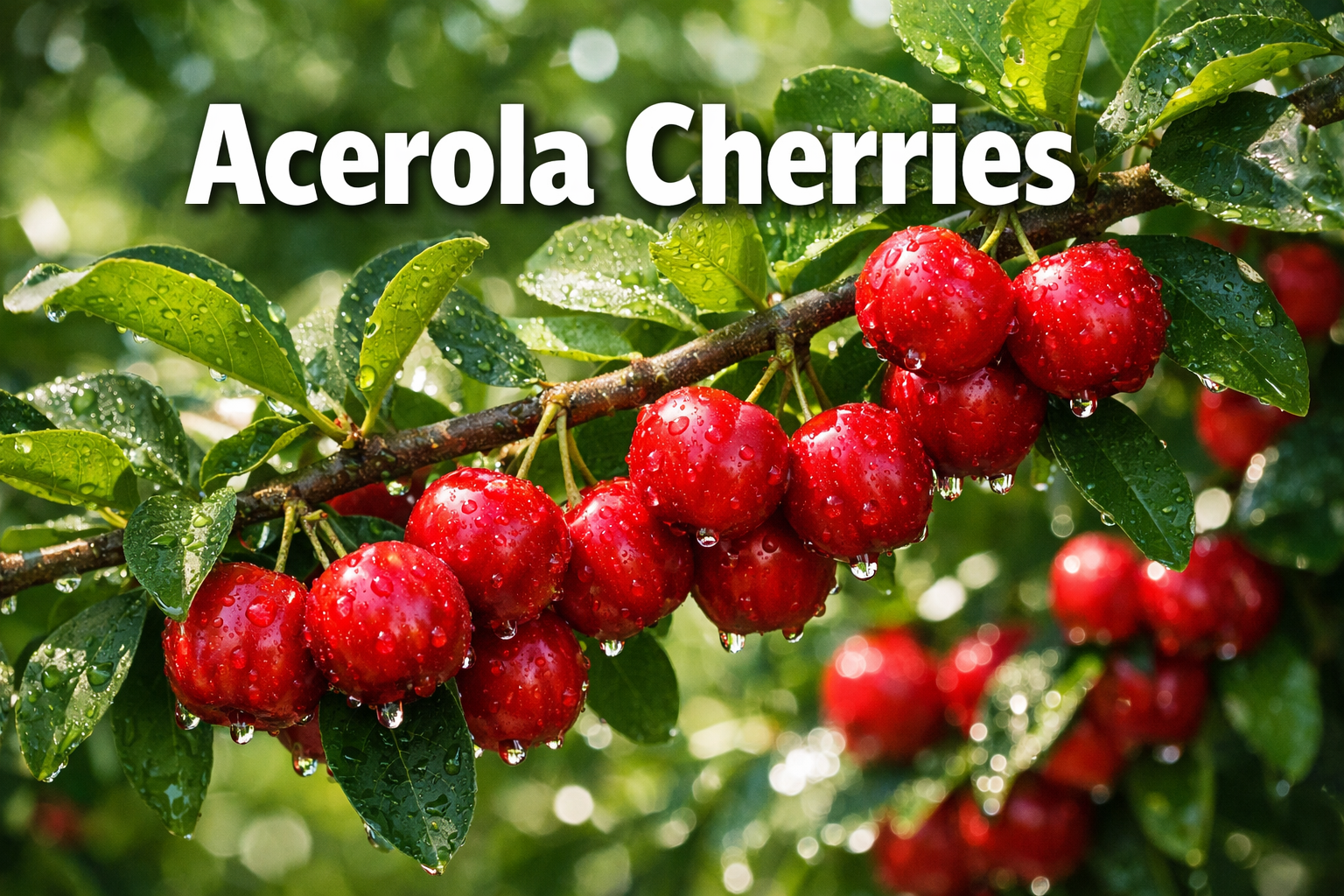
Quick Answer: Acerola cherries are a small, bright-red tropical fruit containing approximately 1,677 mg of vitamin C per 100 grams — up to 100 times more than an orange. Native to the Caribbean and Latin America, they are consumed fresh, juiced, and increasingly processed into supplements and functional beverages. The global acerola extract market is valued at an estimated US$24.4 billion in 2026 and growing fast.
Key Takeaways
- 🍒 Acerola cherries deliver roughly 1,677 mg of vitamin C per 100g of fruit, making them one of the most concentrated natural sources on earth [1]
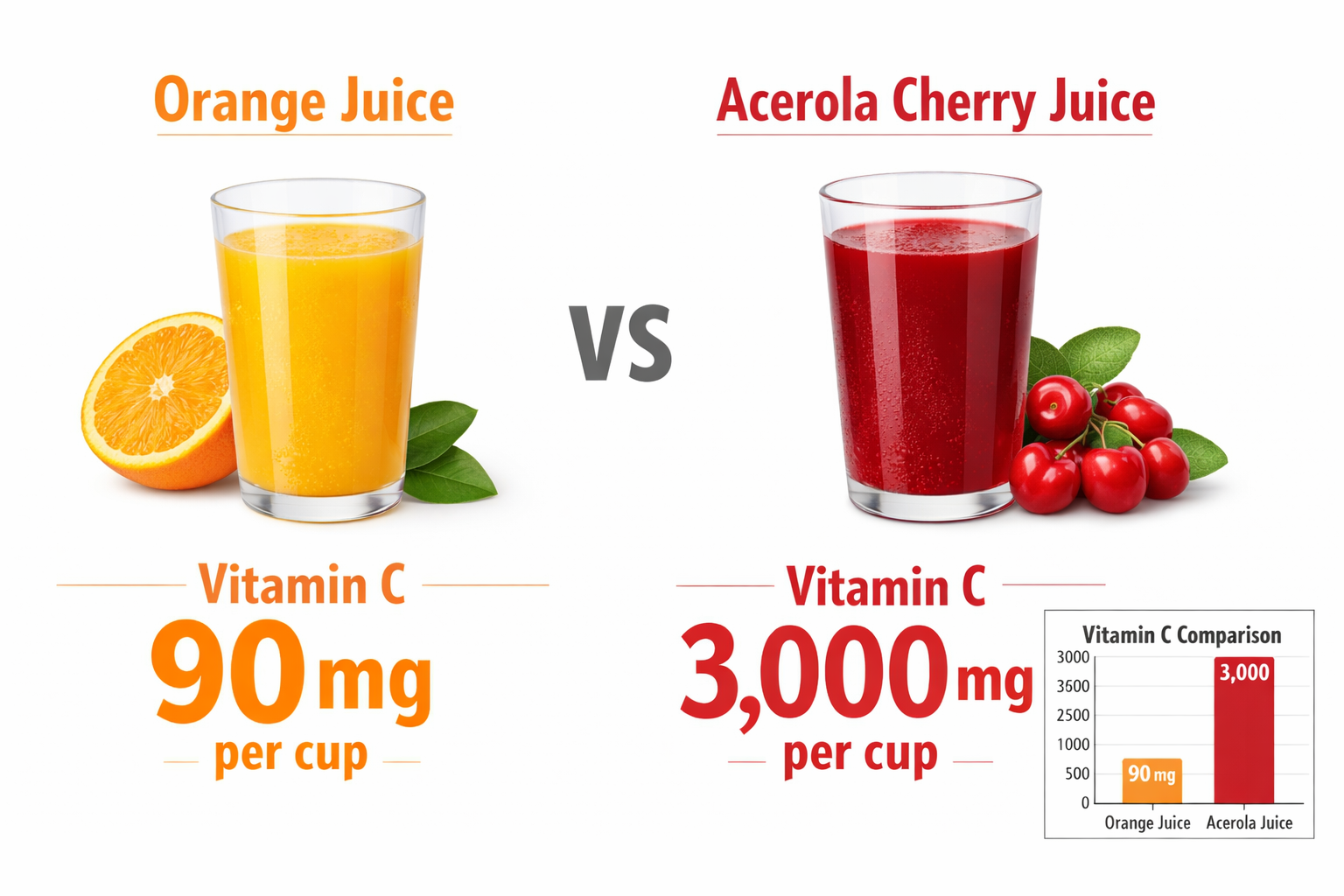
- One cup of acerola cherry juice provides over 3,000 mg of vitamin C — more than 2,900 mg more than a cup of orange juice [2]
- The fruit is also rich in carotenoids, anthocyanins, and phenolic compounds with antioxidant and anti-inflammatory properties [1]
- The global acerola extract market is projected at US$24.4 billion in 2026, with a forecasted CAGR of 7.8% through 2033 [5]
- North America holds an estimated 38% market share in 2026; Asia Pacific is the fastest-growing region [5]
- European demand for acerola currently exceeds available supply, signaling strong opportunity for new producers [3]
- University of Florida researchers are actively evaluating acerola as an alternative crop to replace struggling citrus orchards [1]
- The fruit goes by several names: Barbados cherry, semerucos, manzanitas, and cerecitas [2]
- Acerola is used in fresh fruit, juices, desserts, powders, and dietary supplements
- Beverages are the fastest-growing application segment for acerola extract globally [5]
What Are Acerola Cherries?
Acerola cherries (Malpighia emarginata) are a small, bright-red tropical fruit native to the Caribbean, Central America, and northern South America. They look similar to common cherries but belong to an entirely different plant family. The fruit is also sold and labeled as Barbados cherry, semerucos, manzanitas, or cerecitas depending on the market [2].
Key characteristics:
- Appearance: Round to slightly lobed, 1–3 cm in diameter, bright red when ripe
- Taste: Tart to mildly sweet, often described as a cross between a cherry and a cranberry
- Texture: Soft and juicy, with a thin skin that bruises easily — which is why fresh acerola is rarely found far from its growing region
- Plant type: A shrub or small tree that thrives in tropical and subtropical climates
Because the fruit is highly perishable, most consumers outside the tropics encounter acerola as a powder, juice concentrate, or supplement ingredient rather than fresh.
How Much Vitamin C Do Acerola Cherries Actually Contain?
Acerola cherries contain approximately 1,677 mg of vitamin C per 100 grams of fruit, according to USDA data. One cup of acerola cherry juice delivers over 3,000 mg — more than 2,900 mg more than a comparable serving of orange juice [2]. Researchers at the University of Florida note the fruit can contain up to 100 times more vitamin C than oranges [1].
To put that in perspective:
| Source | Vitamin C per 100g (approx.) |
|---|---|
| Acerola cherry | ~1,677 mg |
| Guava | ~228 mg |
| Kiwi | ~93 mg |
| Orange | ~53 mg |
| Lemon | ~53 mg |
Sources: USDA via FreshFruitPortal [2]; UF/IFAS [1]
💡 Pull quote: “One cup of acerola cherry juice provides over 1,800% of the daily recommended intake of vitamin C.” — UF/IFAS [1]
Important caveat: Vitamin C content varies significantly depending on the variety, ripeness, and growing conditions. Unripe acerola tends to have higher vitamin C concentrations than fully ripe fruit, which is one reason processors often harvest early.
What Other Nutrients and Compounds Are Found in Acerola Cherries?
Beyond vitamin C, acerola cherries offer a broad phytonutrient profile. The fruit is a meaningful source of carotenoids, anthocyanins, and phenolic compounds — all of which have documented antioxidant and anti-inflammatory properties [1].
Notable nutrients and compounds:
- Carotenoids (including beta-carotene): Support eye health and immune function
- Anthocyanins: The pigments that give acerola its red color; associated with cardiovascular and cognitive benefits
- Phenolic acids: Contribute to the fruit’s antioxidant capacity
- Vitamin A: Present in meaningful amounts
- Thiamine (B1) and riboflavin (B2): Found in small but useful quantities
- Magnesium and potassium: Trace minerals that support muscle and nerve function
The combination of vitamin C and polyphenols makes acerola particularly attractive to supplement formulators, because these compounds often work synergistically as antioxidants.
Who Should Consider Adding Acerola Cherries to Their Diet?
Acerola cherries are well-suited for anyone looking to increase their vitamin C intake from a natural, whole-food source rather than synthetic ascorbic acid. They are especially relevant for:
- People avoiding synthetic supplements who prefer plant-based vitamin C
- Athletes and active individuals seeking antioxidant support for recovery (see smoothies for athletes for practical ideas)
- Those with high vitamin C needs due to stress, smoking, or illness
- Formulators and food manufacturers looking for a clean-label natural vitamin C source
Who should be cautious:
- People with kidney disease should consult a doctor before consuming high-dose vitamin C from any source
- Those on blood-thinning medications should note that high vitamin C intake can interact with certain drugs
- Individuals with sensitive stomachs may find concentrated acerola powder or juice irritating in large amounts
Choose acerola powder if fresh fruit is unavailable. Choose fresh or frozen acerola if you want the full phytonutrient spectrum, not just vitamin C.
How Are Acerola Cherries Used in Food and Supplements?
Acerola’s applications span fresh consumption, culinary use, and industrial processing. The fruit has reached “superfood” status in many markets and is now found in a wide range of products [1].
Common uses:
- Fresh eating — primarily in growing regions; highly perishable
- Juice and juice blends — often mixed with other tropical fruits to balance tartness
- Frozen pulp — the most practical form for export; retains most nutrients
- Powder (spray-dried or freeze-dried) — used in supplements, smoothie blends, and functional foods
- Dietary supplements — capsules and tablets marketed as natural vitamin C
- Desserts and confections — ice creams, sorbets, and jams (see jam recipes for inspiration)
- Functional beverages — the fastest-growing application segment globally [5]
The fruit pairs well with other tropical flavors. If you enjoy experimenting with fruit-forward recipes, the smoothie cookbook at stillcooking.com includes ideas that translate well to acerola-based drinks.
What Does the Global Acerola Market Look Like in 2026?
The acerola extract market is projected at US$24.4 billion in 2026 and is forecast to reach US$41.2 billion by 2033, representing a 7.8% CAGR [5]. This growth is driven by rising consumer demand for natural, plant-based supplements and clean-label functional ingredients [4].
Regional breakdown (2026 estimates):
- North America: Leads with approximately 38% market share, driven by high supplement consumption and established supply chains [5]
- Europe: Strong demand that currently exceeds available supply — a significant gap for producers to fill [3]
- Asia Pacific: Fastest-growing region, fueled by rising health awareness and expanding middle-class spending on wellness [5]
Application trends:
- Beverages are the fastest-growing end-use segment [5]
- Dietary supplements remain the largest volume category
- Cosmetics and personal care are an emerging application, leveraging acerola’s antioxidant properties
The supply-demand imbalance in Europe is particularly notable. European buyers are actively seeking new sourcing partners, and producers who can establish reliable, high-quality supply chains are well-positioned [3].
Is Florida Becoming a New Acerola Growing Region?
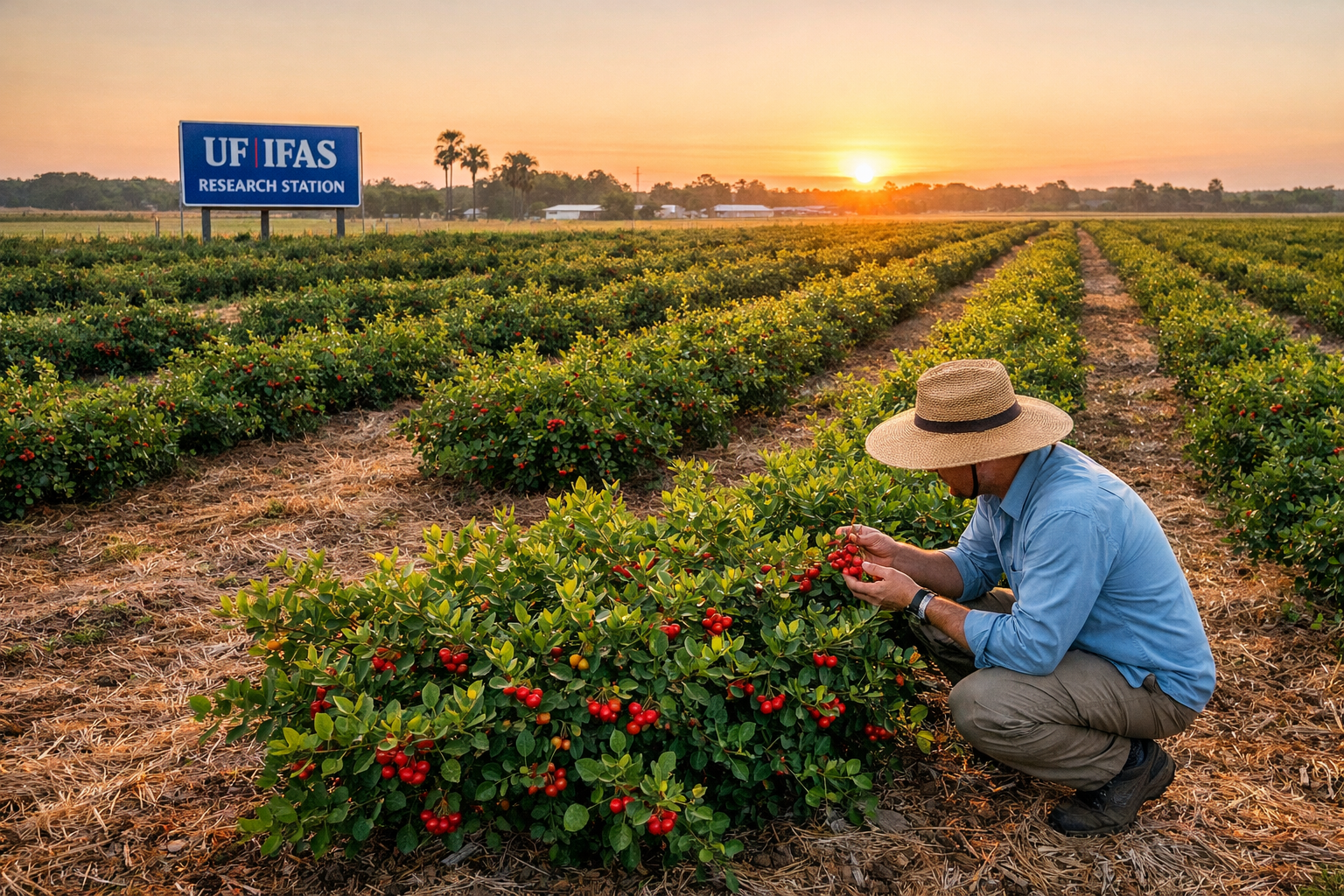
Yes — and it’s a deliberate response to Florida’s citrus crisis. University of Florida researchers, led by Felipe Ferrao at UF/IFAS, launched field trials in August 2025 to evaluate acerola’s potential as an alternative crop for Florida growers [1].
Three active research sites:
- Plant Science Research and Education Center in Citra
- A farm in Pierson
- Tropical Research and Education Center (TREC) in Homestead
The research focuses on evaluating genetic diversity among acerola varieties and adapting cultivation practices to Florida’s specific conditions. Crucially, approximately 90% of Florida’s oranges are grown for juice — meaning existing juice processing infrastructure could potentially be repurposed for acerola [1][6].
Why this matters for growers:
- Acerola thrives in subtropical climates similar to Florida’s
- The crop could leverage existing citrus infrastructure and supply chains
- Global demand, especially from Europe, currently exceeds supply [3]
- The fruit commands premium pricing as a superfood ingredient
This makes acerola a compelling option for Florida citrus farmers looking to diversify or transition away from orange production as citrus greening disease continues to impact yields.
How Do Acerola Cherries Compare to Other Vitamin C Sources?
Acerola cherries are unmatched as a natural vitamin C source. No commonly consumed fruit comes close to their concentration. However, the comparison matters most when choosing a supplement form.
Natural source vs. synthetic vitamin C:
- Acerola-derived vitamin C comes packaged with co-factors (bioflavonoids, carotenoids) that may improve bioavailability
- Synthetic ascorbic acid is chemically identical to natural vitamin C and is well-absorbed, but lacks the co-factors
- Cost: Synthetic ascorbic acid is significantly cheaper per milligram; acerola commands a premium
Common mistake: Assuming all “natural vitamin C” supplements are mostly acerola. Many products labeled “natural vitamin C” contain primarily synthetic ascorbic acid with a small amount of acerola added for labeling purposes. Always check the supplement facts panel.
If you enjoy other fruit-forward foods and are exploring ways to increase antioxidant intake, exploring cherry-based recipes or strawberry day celebrations can complement an acerola-rich diet. For cherry-themed baking ideas, Cherry Pie Day recipes are also worth exploring.
Conclusion: Actionable Next Steps for 2026
Acerola cherries are not a niche curiosity — they are a commercially significant, nutritionally exceptional fruit sitting at the intersection of the global wellness boom and a genuine supply shortage. Here’s how to act on what you’ve learned:
For consumers:
- Look for acerola powder or frozen pulp at health food stores or online; these are the most practical and nutrient-dense forms outside the tropics
- Check supplement labels carefully — “natural vitamin C” does not always mean primarily acerola-derived
- Add acerola powder to smoothies, yogurt, or juice for a concentrated antioxidant boost
For food and beverage professionals:
- Acerola extract is a clean-label, high-demand ingredient with strong consumer recognition; consider it for functional beverage formulations
- Monitor the European supply gap — it represents a real sourcing opportunity for reliable producers [3]
For growers and agricultural investors:
- The UF/IFAS research initiative in Florida is worth following closely; early movers in subtropical acerola cultivation have a significant market advantage [1][6]
- Existing citrus infrastructure can reduce startup costs for juice-focused operations
The acerola extract market’s projected growth from US$24.4 billion in 2026 to US$41.2 billion by 2033 reflects real, sustained demand — not a passing trend [5]. Whether you’re a consumer, a formulator, or a grower, acerola cherries deserve serious attention right now.
Frequently Asked Questions
What do acerola cherries taste like? Acerola cherries are tart and mildly sweet, similar to a cranberry crossed with a cherry. The flavor is bright and acidic, which is why they’re often blended with sweeter fruits in juices and smoothies.
Can you eat acerola cherries raw? Yes, fresh acerola can be eaten raw. However, the fruit is highly perishable and rarely available fresh outside tropical growing regions. Most people consume it as frozen pulp, powder, or juice.
How much acerola powder equals the daily vitamin C requirement? This depends on the product’s concentration, but roughly 1/4 teaspoon of high-quality acerola powder typically provides 100% or more of the adult daily recommended intake. Always check the product label.
Are acerola cherries the same as Barbados cherries? Yes. Acerola cherries are also known as Barbados cherries, semerucos, manzanitas, and cerecitas in different markets [2].
Is acerola safe during pregnancy? Acerola in food amounts is generally considered safe. However, high-dose acerola supplements should be discussed with a healthcare provider during pregnancy, as very high vitamin C intake is not recommended.
Why is acerola not widely available fresh in grocery stores? The fruit is extremely perishable and bruises easily, making long-distance shipping impractical. Most commercial production is processed quickly into frozen pulp or dried powder near the growing site.
What’s the difference between acerola powder and acerola extract? Acerola powder is typically dried and ground whole fruit or juice. Acerola extract is a more concentrated, standardized form often used in supplements and functional foods, with a specified vitamin C percentage.
Where is most acerola grown commercially? Brazil is the world’s largest producer, followed by other Latin American and Caribbean countries. Florida is emerging as a potential new growing region in the United States [1][6].
Does cooking destroy acerola’s vitamin C? Yes, heat degrades vitamin C significantly. For maximum nutritional benefit, consume acerola raw, frozen, or as a cold-processed powder rather than in cooked applications.
Is the acerola supplement market regulated? In the United States, acerola supplements fall under dietary supplement regulations (DSHEA), meaning they are not FDA-approved before sale. Quality varies widely between brands; look for third-party tested products.
References
[1] Acerola Cherry Could Be A New Nutritious Crop For Florida – https://blogs.ifas.ufl.edu/news/2025/08/14/acerola-cherry-could-be-a-new-nutritious-crop-for-florida/
[2] Florida Acerolas – https://www.freshfruitportal.com/news/2025/08/27/florida-acerolas/
[3] The Acerola Supply Cannot Keep Up With European Demand – https://www.freshplaza.com/north-america/article/9772067/the-acerola-supply-cannot-keep-up-with-european-demand/
[4] Acerola Extract Market – https://www.gminsights.com/industry-analysis/acerola-extract-market
[5] Acerola Extract Market – https://www.persistencemarketresearch.com/market-research/acerola-extract-market.asp
[6] Acerola Cherry Could Be New Opportunity For Florida Fruit Growers – https://www.growingproduce.com/fruits/acerola-cherry-could-be-new-opportunity-for-florida-fruit-growers/