
Last updated: April 28, 2026
Quick Answer: Açaí (Euterpe oleracea) is a small, dark-purple berry harvested from palm trees native to the Amazon River basin in Brazil. It’s recognized as one of the world’s most antioxidant-rich fruits, widely consumed as a frozen pulp, bowl topping, or supplement. In January 2026, Brazil officially designated açaí as its national fruit, cementing its cultural and economic significance on the world stage. [1]
Key Takeaways
- 🌿 Açaí is native to the Amazon basin and harvested almost exclusively along the Amazon River in Brazil.
- 🏆 Brazil declared açaí its national fruit through Law 15,330/2026 on January 8, 2026. [1]
- 📦 Brazil produced approximately 1.74 million tons of açaí in 2024, generating BRL 7.7 billion in revenue. [1]
- 🫐 Açaí ranks highest among fruits in antioxidant concentration, outperforming blueberries and cranberries. [3]
- 💰 The global açaí market has surpassed $750 million, with projections indicating continued strong growth through the late 2020s. [3]
- 🍽️ Açaí bowls are the most popular Western preparation, typically blended with frozen pulp and topped with granola, fruit, and honey.
- 📅 National Açaí Bowl Day is observed on April 6 each year, recognized across 30 U.S. states. [3]
- ⚖️ Companies conducting R&D on açaí must comply with Brazil’s access and benefit-sharing regulations under Law 13,123/2015. [1]
- 🌎 Açaí Republic, a U.S. franchise, expanded to 36 locations across four states as of April 2026. [2]
What Is Açaí and Where Does It Come From?
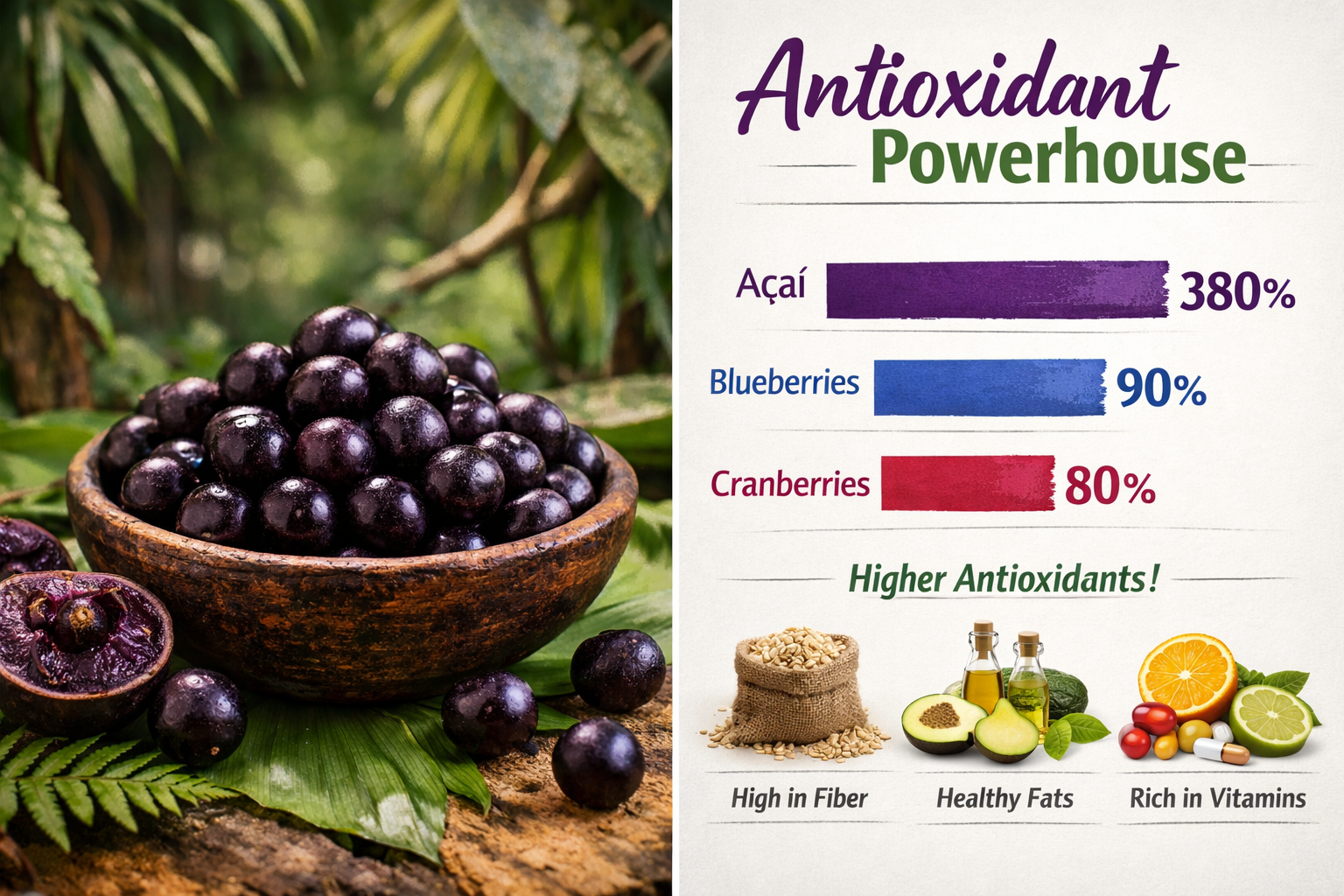
Açaí is a grape-sized, dark-purple berry that grows in clusters on Euterpe oleracea palm trees, which thrive in the floodplain forests of the Amazon River basin. The fruit has been a dietary staple for indigenous Amazonian communities for centuries, valued for its energy-dense nutritional profile.
The name “açaí” comes from the Nheengatu language (a lingua franca of the Amazon), roughly translating to “fruit that cries or expels water.” The berry is about 80% seed by volume, so only the thin outer pulp is consumed. Because açaí spoils within 24 hours of harvest, it’s almost always processed into a frozen pulp or freeze-dried powder before export.
Key origin facts:
- Native range: Northern Brazil, particularly the states of Pará, Amapá, and Maranhão
- Harvest season: July through December (peak months vary by region)
- Tree height: Açaí palms typically reach 15–30 meters
- Production scale: Brazil generated roughly 1.74 million tons in 2024 alone [1]
“Açaí production is concentrated almost exclusively along the Amazon River, making it one of the most geographically specific major food exports in the world.” [1]
Why Did Brazil Declare Açaí Its National Fruit in 2026?
On January 8, 2026, Brazil enacted Law 15,330/2026, officially designating açaí as the country’s national fruit. [1] The move is largely symbolic but carries meaningful political weight.
The designation does not create new legal rights. Brazil’s existing access and benefit-sharing framework, established under Law 13,123/2015 and aligned with the Nagoya Protocol, already governs how foreign entities can access and commercially use açaí’s genetic resources and traditional knowledge. [1]
What the 2026 designation does accomplish:
- Raises political visibility of biopiracy concerns, particularly regarding foreign companies extracting value from açaí without compensating Brazilian communities
- Signals enforcement intent to international trading partners and research institutions
- Strengthens national identity around one of Brazil’s most recognized agricultural exports
For EU and U.S. companies: If your organization conducts R&D using açaí genetic resources or traditional knowledge, Brazilian law requires compliance with access and benefit-sharing rules. Non-compliance can result in sanctions ranging from fines to temporary suspension of product sales. [1] The EU applies a narrower definition of “utilization” (limited to actual R&D activity), but companies should seek legal guidance before proceeding.
What Makes Açaí a Nutritional Standout?
Açaí surpasses most other fruits in antioxidant concentration, ranking highest among commonly tested fruits and outperforming blueberries and cranberries in head-to-head comparisons. [3] This is primarily due to its high anthocyanin content, the same class of pigments that give the berry its deep purple color.
Nutritional highlights per 100g of frozen açaí pulp (unsweetened, approximate values):
| Nutrient | Approximate Amount |
|---|---|
| Calories | 70–80 kcal |
| Total Fat | 5g (mostly monounsaturated and omega-9) |
| Carbohydrates | 6g |
| Dietary Fiber | 2g |
| Protein | 1g |
| Anthocyanins | 320–3,500 mg (varies by processing) |
| Vitamin C | Low (much is lost post-harvest) |
What sets açaí apart nutritionally:
- High healthy fat content (unusual for a fruit) — similar fatty acid profile to olive oil
- Significant fiber relative to calorie count
- Low sugar compared to most tropical fruits
- Antioxidant density that supports cellular health, though specific health claims require further clinical evidence
For those exploring plant-based nutrition, açaí pairs well with other nutrient-dense ingredients. Check out this vegan cookbook collection for recipe ideas that complement açaí’s nutritional profile.
How Is Açaí Consumed Around the World?
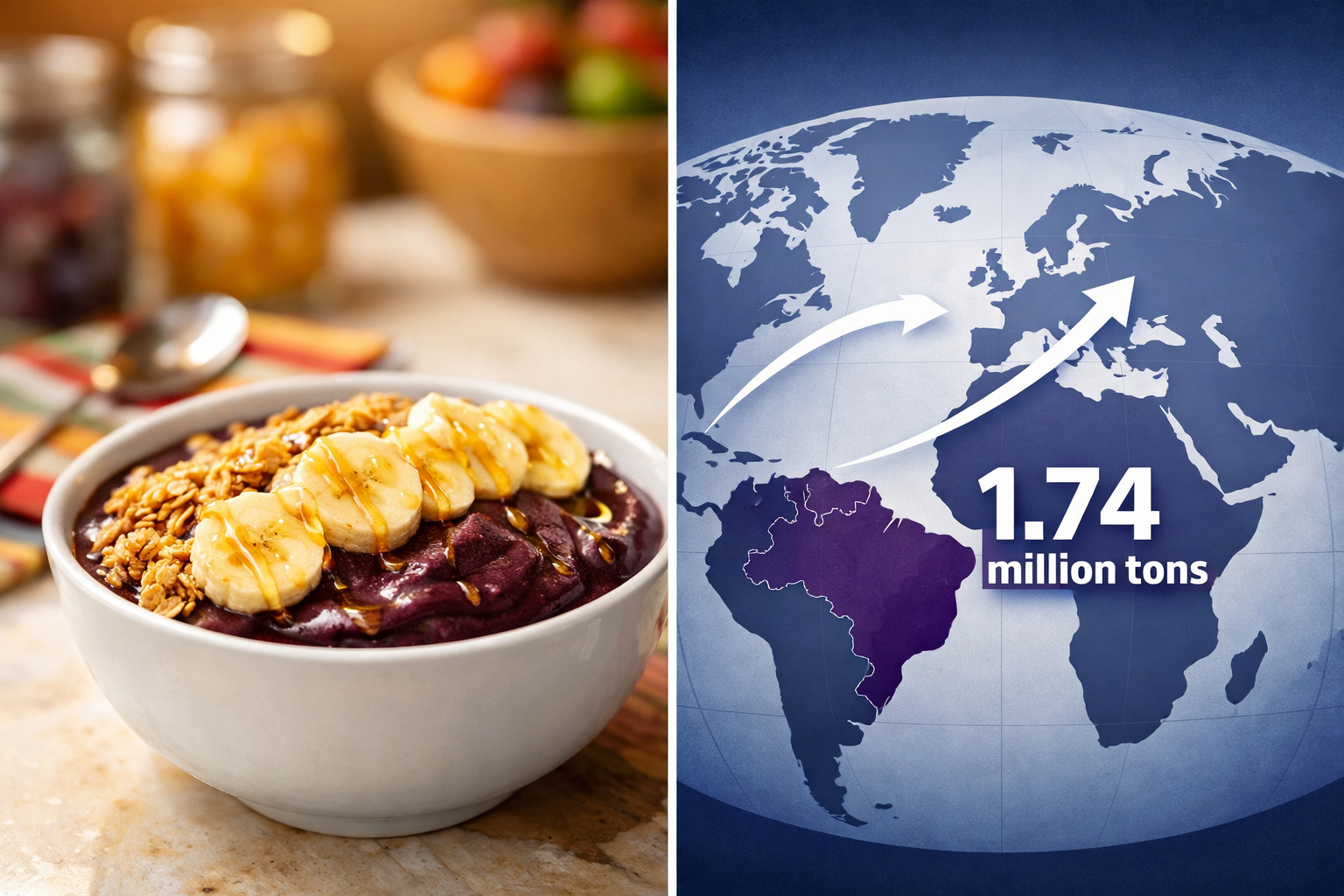
Açaí is consumed in several forms depending on the region and context. In Brazil, the traditional preparation is a thick, savory porridge eaten with fish or tapioca. In North America, Europe, and Australia, the sweet açaí bowl has become the dominant format.
Common consumption formats:
- Açaí bowl — frozen pulp blended thick, served in a bowl with granola, banana, berries, and honey
- Smoothie blend — mixed with other fruits and liquids for a drinkable format (great for athletes)
- Frozen pulp packs — sold in grocery stores for home preparation
- Freeze-dried powder — used in supplements, protein bars, and baked goods
- Juice and energy drinks — diluted açaí as a beverage base
If you’re making açaí smoothies for fitness purposes, our guide to smoothies for athletes covers blending strategies and ingredient pairings that maximize performance benefits.
Regional flavor preferences:
- Brazil: Savory, unsweetened, served with grilled fish or farinha (cassava flour)
- North America/Europe: Sweet, topped with granola and tropical fruits
- Japan: Popular in smoothie and dessert formats, often with matcha or mango
How Big Is the Global Açaí Market in 2026?
The açaí market has grown from a niche health food item into a mainstream global commodity. The market surpassed $750 million in recent reporting periods, with projections pointing to continued expansion well past $2 billion. [3]
Market drivers:
- Rising consumer interest in antioxidant-rich, plant-based foods
- Expansion of açaí-focused quick-service restaurants (QSRs) in the U.S.
- Growing export demand from Europe and Asia
- Social media visibility, particularly on platforms where açaí bowl aesthetics perform well
Franchise growth example: Açaí Republic, a U.S.-based QSR chain, expanded to 36 locations across California, Hawaii, Arizona, and Florida as of April 2026, and selected Square as its unified commerce platform to streamline in-store and mobile ordering. [2] This kind of franchise growth signals that açaí has moved well beyond specialty health stores into mainstream food service.
For context on how other regional foods have built similar cultural momentum, see our piece on culinary delights from around the world.
What Is National Açaí Bowl Day and How Is It Celebrated?
National Açaí Bowl Day falls on April 6 each year and is recognized across 30 U.S. states. [3] It’s one of the more commercially active food holidays in the U.S. health food calendar.
How brands and consumers typically celebrate:
- Major açaí chains offer discounted or free bowls
- Social media challenges around bowl-building creativity
- Grocery retailers promote açaí pulp packs with in-store signage
- Nutritionists and food bloggers publish recipe roundups
If you enjoy food holidays as a way to explore new cuisines, there are plenty of other dates worth marking on the calendar. For example, February 27 is Strawberry Day, another fruit-focused celebration with its own history and recipe traditions. Similarly, January 28 is National Blueberry Pancake Day, which pairs well with açaí’s antioxidant-berry theme.
How to Choose and Prepare Açaí at Home
Choosing the right açaí product matters because quality varies significantly between brands and formats.
Buying guide:
| Format | Best For | Watch Out For |
|---|---|---|
| Frozen pulp packs | Bowls, smoothies | Added sugar in flavored versions |
| Freeze-dried powder | Supplements, baking | Lower anthocyanin content post-processing |
| Bottled juice | Convenience | Often heavily diluted and sweetened |
| Sorbet/ice cream | Dessert use | High sugar content |
Choose unsweetened frozen pulp if: you want the most nutritional value and control over sweetness.
Basic açaí bowl method:
- Thaw one 100g frozen açaí pulp pack slightly (30 seconds at room temperature)
- Blend with 2–3 tablespoons of liquid (coconut water or almond milk works well)
- Keep the blend thick — it should hold a spoon upright
- Pour into a bowl and add toppings: granola, sliced banana, fresh berries, a drizzle of honey
For more inspiration on fruit-forward recipes and healthy preparations, explore quick and deliciously healthy recipes that complement an açaí-based diet.
Common mistake: Adding too much liquid turns the blend into a smoothie rather than the thick, spoonable bowl texture that makes açaí bowls satisfying. Start with less liquid than you think you need.
FAQ: Açaí Answered Directly
Q: How do you pronounce açaí? Ah-sah-EE. The cedilla (ç) creates a soft “s” sound, and the accent on the final “i” means the stress falls there.
Q: Is açaí safe for everyone? Generally yes, but people with pollen allergies (especially to palm pollen) should introduce it cautiously. Those on blood thinners should consult a doctor, as high antioxidant foods can interact with some medications.
Q: Does açaí help with weight loss? Açaí itself is calorie-dense due to its fat content. It’s not a weight-loss food on its own, but it fits well into a balanced diet when consumed without excessive added sugar.
Q: Why is açaí so expensive? Short shelf life, labor-intensive harvesting, and long cold-chain logistics from the Amazon to international markets all drive up cost. Frozen pulp packs are the most cost-effective retail format.
Q: Is açaí the same as blueberries? No. They’re unrelated botanically. Açaí is a palm fruit; blueberries are from the Vaccinium genus. Both are high in anthocyanins, but açaí has a higher fat content and a distinct earthy, chocolate-like flavor.
Q: Can açaí be grown outside Brazil? Açaí palms grow in tropical climates and have been cultivated in parts of Florida, Hawaii, and Southeast Asia, but commercial-scale production outside the Amazon basin remains minimal.
Q: What does açaí taste like? A combination of dark chocolate and mixed berries, with a slightly earthy undertone. Unsweetened açaí is notably less sweet than most fruits.
Q: Is the 2026 national fruit designation legally significant for importers? Mostly no. It’s symbolic. The substantive legal framework for açaí access and benefit-sharing was already in place under Brazilian Law 13,123/2015 and the Nagoya Protocol. [1]
Q: Where can I buy açaí in the U.S.? Most major grocery chains (Whole Foods, Trader Joe’s, Costco, Walmart) carry frozen açaí pulp packs. Açaí-focused chains like Açaí Republic (36 U.S. locations as of 2026) also serve fresh bowls. [2]
Q: How should açaí be stored? Keep frozen pulp packs in the freezer and use within the date on the package. Once thawed, consume within 24 hours and do not refreeze.
Conclusion: What to Do With This Information
Açaí has earned its status as one of the world’s most nutritionally significant fruits, and Brazil’s 2026 national fruit designation underscores how seriously the country treats its protection and promotion. [1] Whether you’re a consumer, a food entrepreneur, or a researcher, a few clear actions follow from understanding the full picture:
- Consumers: Choose unsweetened frozen pulp for maximum nutritional value. Treat açaí bowls as a nutrient-dense meal, not a dessert, by keeping added sugars in check.
- Food businesses: If you’re formulating products with açaí extracts or genetic material, consult legal counsel familiar with Brazil’s access and benefit-sharing framework before launch.
- Researchers: The 2026 national fruit designation signals heightened Brazilian enforcement attention. Ensure any R&D involving açaí genetic resources is properly documented and compliant with the Nagoya Protocol.
- Home cooks: Start with a simple bowl, master the texture, then experiment with savory applications — the traditional Brazilian approach is worth exploring.
Açaí’s trajectory from Amazonian staple to global superfruit is one of the more remarkable food stories of the past two decades, and in 2026, it shows no signs of slowing down.
References
[1] Brazil Declares Acai A National Fruit What Are The Real Practical Implications For EU Companies – https://www.globalpolicywatch.com/2026/04/brazil-declares-acai-a-national-fruit-what-are-the-real-practical-implications-for-eu-companies/
[2] Acai Republic – https://squareup.com/us/en/press/acai-republic
[3] National Acai Bowl Day – https://nationaltoday.com/national-acai-bowl-day/